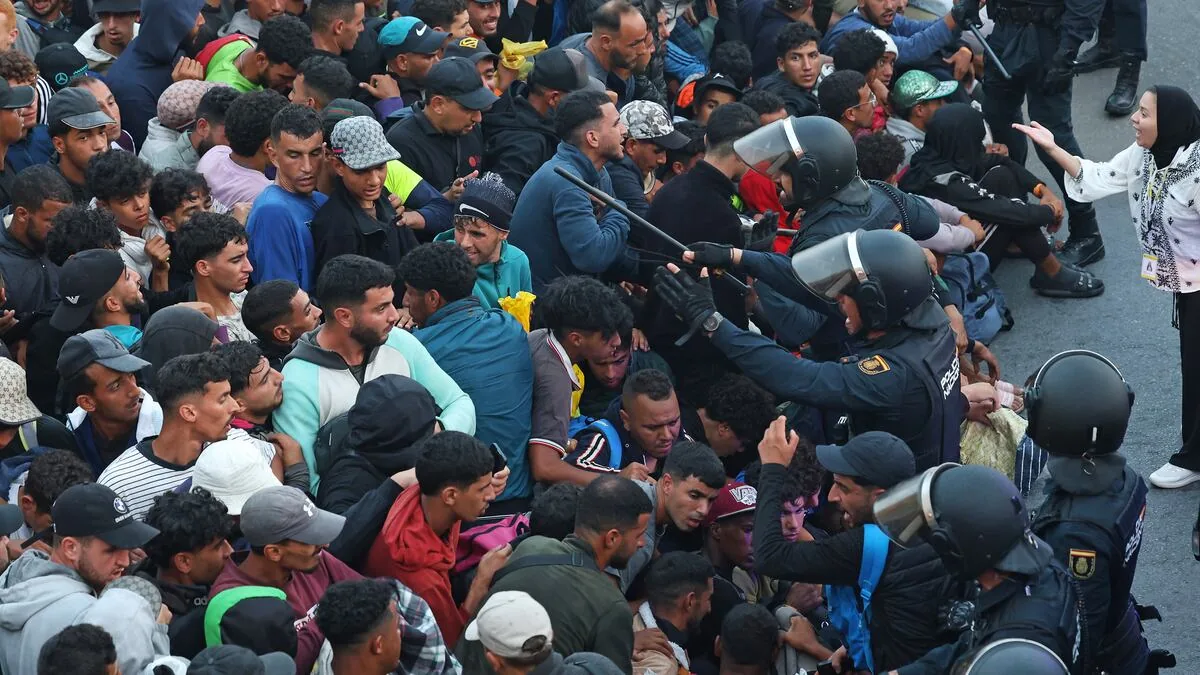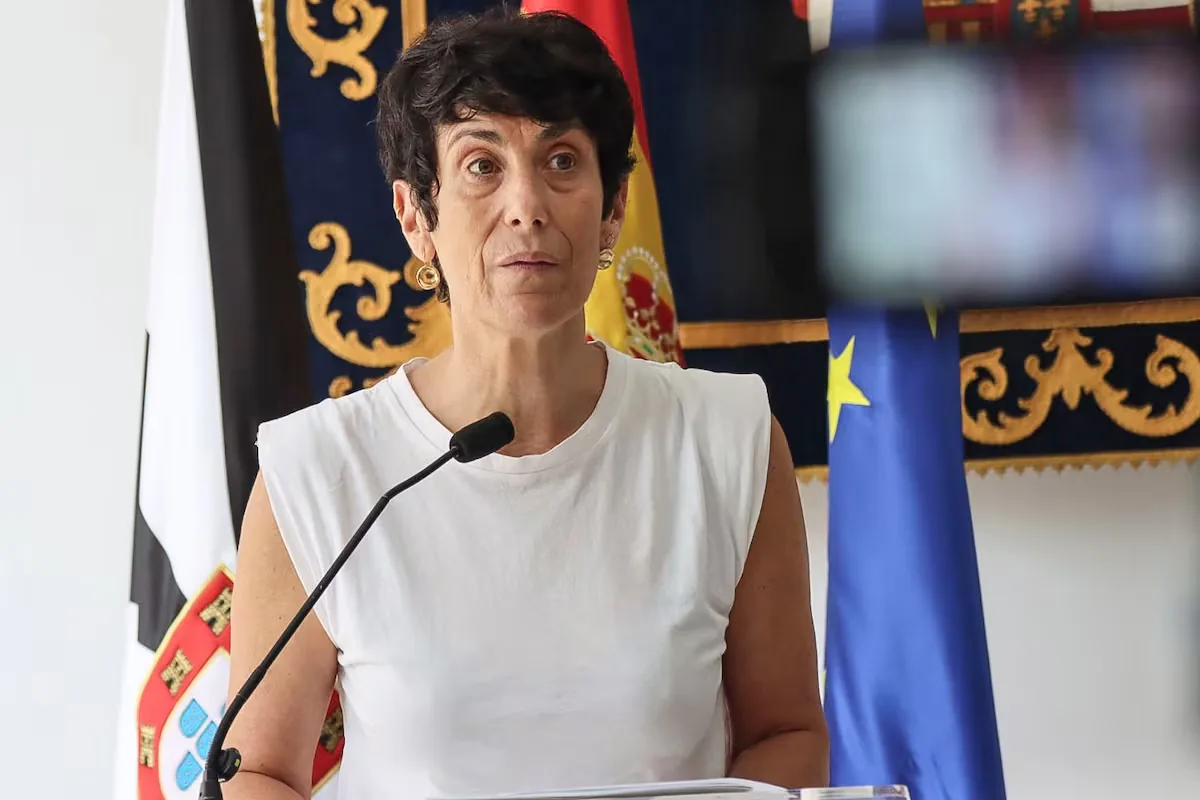
More than two weeks after the mass entry into Ceuta, the central government announced this Monday that four spaces will be enabled to accommodate the migrants. The facilities will have a capacity for 1,500 people, according to the Minister of Migrations and Inclusion, Elma Saiz, at the Government Delegation of the autonomous city. “Collaboration between institutions is essential to restore normality as soon as possible,” Saiz emphasized just a few hours after the Ceuta president, the Popular Party’s Juan Jesús Vivas, raised his tone against Pedro Sánchez’s management. Regarding the reception of hundreds of migrants who remain on the streets and beaches, the minister did not want to clarify what La Moncloa’s priority is, whether to return them to Morocco or process their asylum. She only detailed that the actions taken will always be under “current legislation.”
The central government is responsible for the reception of adult migrants; and the local government, for minors. Saiz explained this Monday that 1,500 places will be enabled for those who entered during the mass arrival and have been exposed for more than two weeks, although she did not provide data on how many people remain in Ceuta. It is estimated that about 80,000 arrived and that the first weekend about 70,000 were mass returned by the state security forces, plus about 600 who have been returning on their own since then.
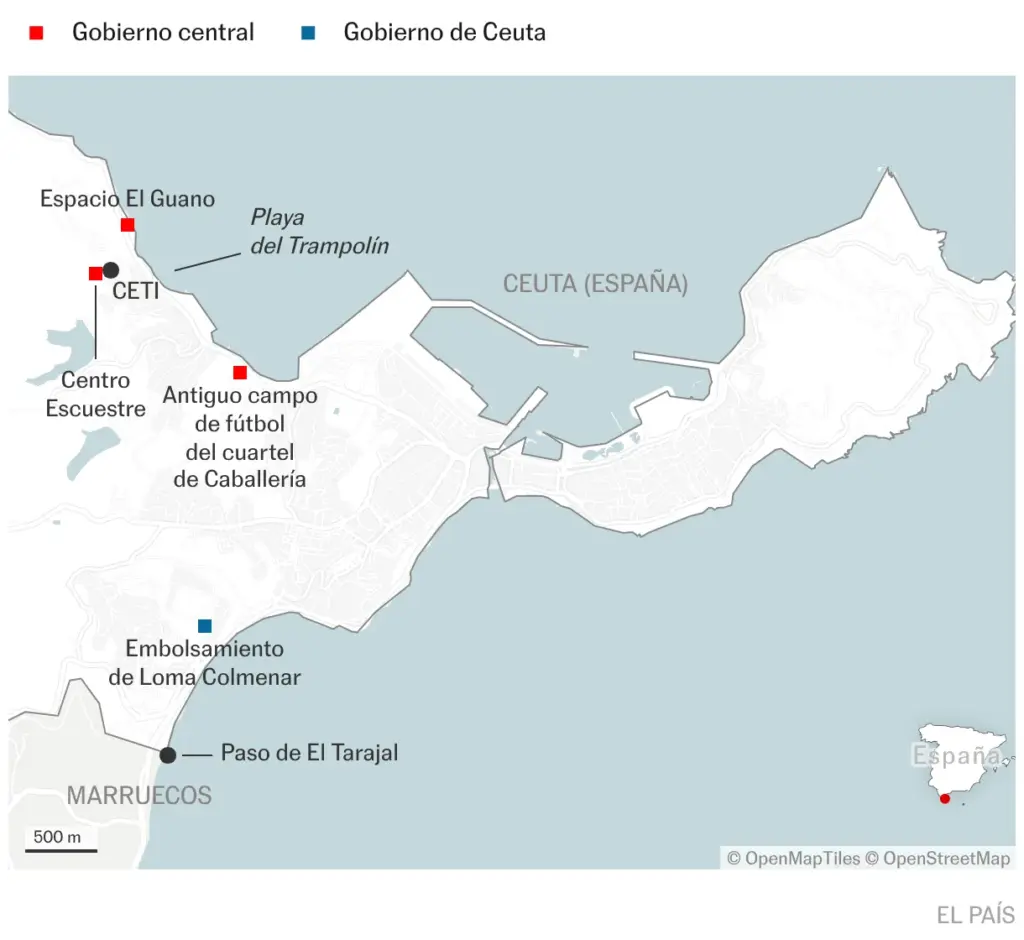
For the planned relocation of 1,500 people, the autonomous city government will provide a resource it owns, the aparking lot of the Embolsamiento, in Loma Colmenar, and the central government will provide three others: the equestrian facilities near the Temporary Stay Center for Immigrants (CETI), the old football field of the Cavalry barracks, and the El Guano space. During the negotiations to agree on the locations, frictions arose between the two administrations. Vivas refused to have migrants relocated in very central establishments, citing complaints from “neighbors.” They also did not want them to be sheltered in the port.
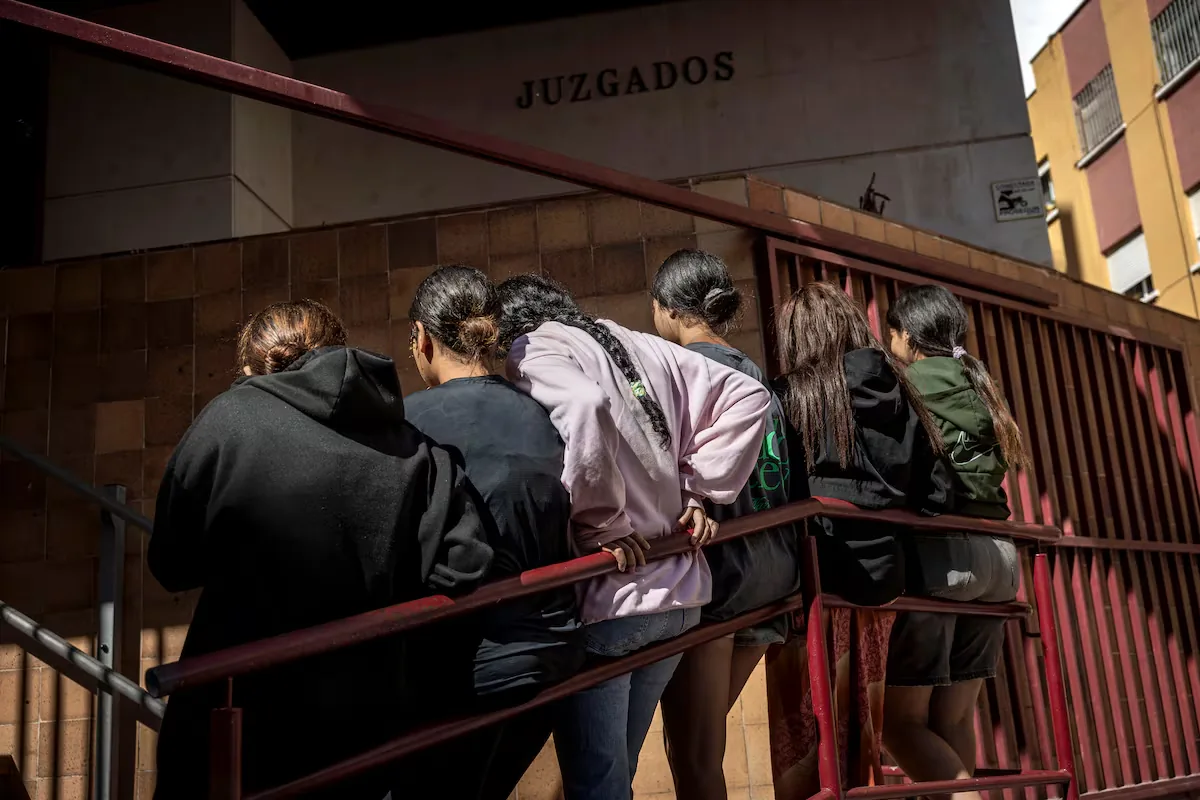
As EL PAÍS reported, the city government had already begun transferring about a hundred girls and adolescents who were sheltered with the neighborhood association of El Príncipe, one of the most disadvantaged in the country. The National Police have been moving the unaccompanied minors since last Friday to two industrial park warehouses that have been refurbished for this purpose with a total capacity of 500 places in two-bed bunk beds.
What is also unclear is what will happen to settlements like the one on El Trampolín beach if the four new sites are not enough to relocate them all. Tension has increased in recent hours, after dozens of Maghrebis refused on Sunday to take the daily food ration provided by the Red Cross, demanding “asylum” from the central government. This group considers that there is a difference with the legal situation of sub-Saharan citizens, whose political and social circumstances in their countries of origin are more favorable to receiving that asylum. “All migrants are equal,” they shouted on Sunday afternoon during a sit-in, closely monitored by dozens of National Police officers.
Read more The league is back, the daily menu is back
Maghrebi citizens are holding a sit-in today on El Trampolín beach at the time of the Red Cross food distribution. They refuse to eat in protest to avoid being returned and shout “asylum!”. In the distance, sub-Saharan citizens do receive the food https://t.co/rnZfxSCgOp pic.twitter.com/i9eyk2r4YU
— Virginia Martínez (@virmarcres) August 16, 2026
56% of beds free in the hospital
One day after Minister Mónica García insisted that healthcare in Ceuta was “strained” but not collapsed, the National Institute of Health Management (Ingesa) has assured that the autonomous city has the necessary resources to meet the increased healthcare demand derived from the migration crisis. According to the report presented this Monday on the healthcare device in the area, 205 migrants have been attended to “without significant incidents and guaranteeing at the same time the usual care to the Ceuta population.”
As García did on Sunday, the institute (dependent on the Ministry) emphasizes that the locals in Ceuta still have “all the necessary resources” at their disposal. “And scheduled and emergency activity continues to be attended to by the public health service,” it highlights. This Monday, the hospital center has 212 beds in operation, of which 92 are occupied (43.4%) and 120 remain free (56.6%).
Ingesa maintains level 1 of the disaster plan activated in the hospital, which corresponds to a scenario in which the healthcare center can still respond to the situation with the resources it has without needing additional personnel or material resources.