








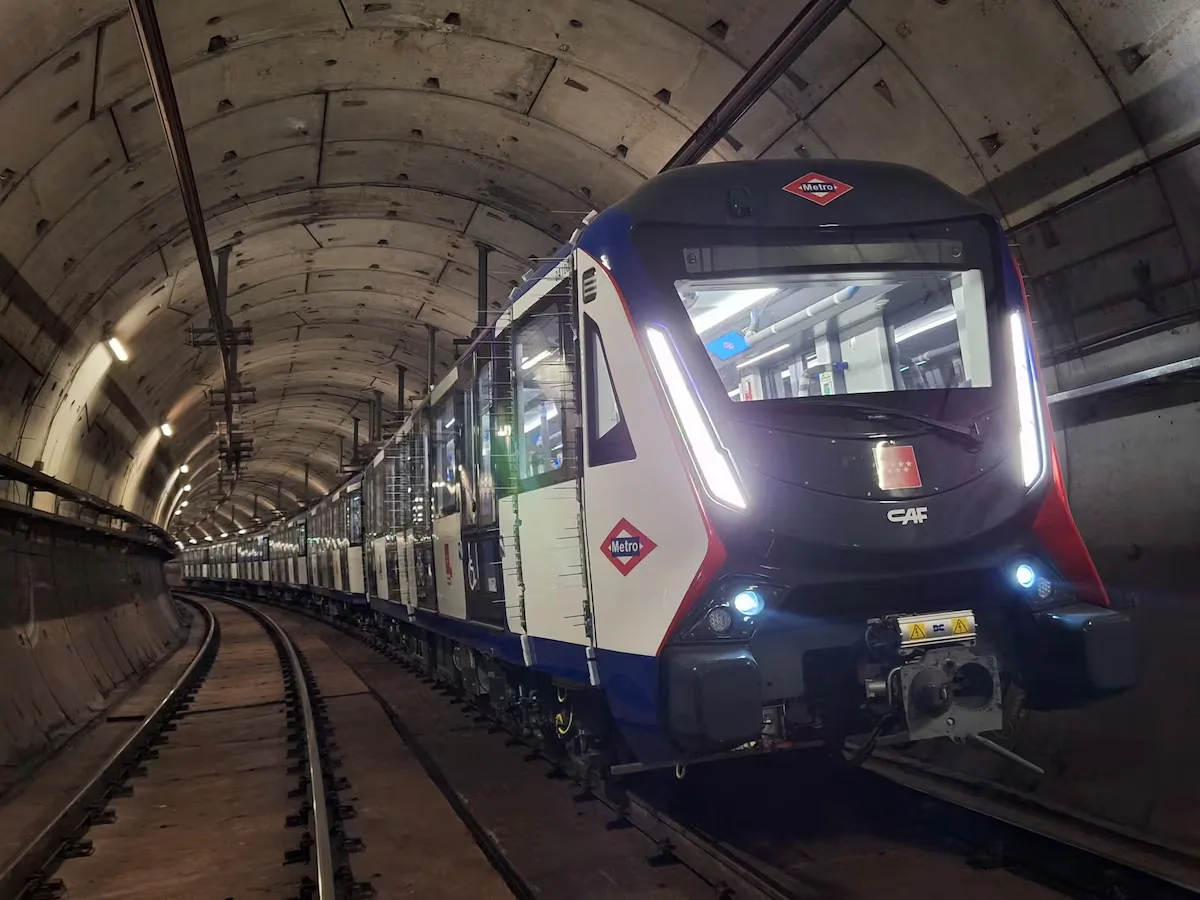
The future driverless trains are already a reality in Metro de Madrid, although for now they are in testing, at night, without passengers, monitored by a driver, and on other lines while the first one where they will be installed is under construction. According to the regional government on Monday, the trials of the automatic trains that will operate in 2027 on L6 (Laguna-Lucero), known as the Circular, have started on the tracks of lines 10 (Hospital Infanta Sofía-Puerta del Sur) and 11 (Plaza Elíptica-La Fortuna). Soon, they will also extend to L12 or Metrosur (Puerta del Sur-San Nicasio).
Read more The Government announces that it enables four spaces to accommodate 1,500 migrants in Ceuta
The tests began “without incidents two weeks ago,” according to sources from Metro told EL PAÍS, with the first of the 48 wide-gauge trains that are part of the new fleet, in which the regional government has spent more than 531 million euros. “They will continue to be carried out for several weeks from Monday to Thursday and always at night and without passengers,” the subway sources add.
The trials “have started on these lines 10 and 11 for several reasons, although the main one is that work is still ongoing at night on L6 for the installation of platform doors and other tasks. Later, when the works are finished, the tests will move to L6 itself but already in automatic mode,” the same sources indicate.
These tests allow the public company “to evaluate different parameters related to safety, reliability, dynamic performance, comfort, and interoperability of the entire railway system.” These first tests, however, are operated by a driver.
The Circular, which is undergoing a comprehensive renovation process, will thus become the first fully automated line in the entire network, which, according to the subway, which calls it “the Metro of the future,” “will improve the user experience with more capacity and frequencies of up to two minutes.” Metro officials chose this line to be the first driverless one because it has the most users in the network, with an annual demand of 116,054,842 passengers in 2024 and an average of 430,000 users on a working day, and because it connects with 10 other lines.
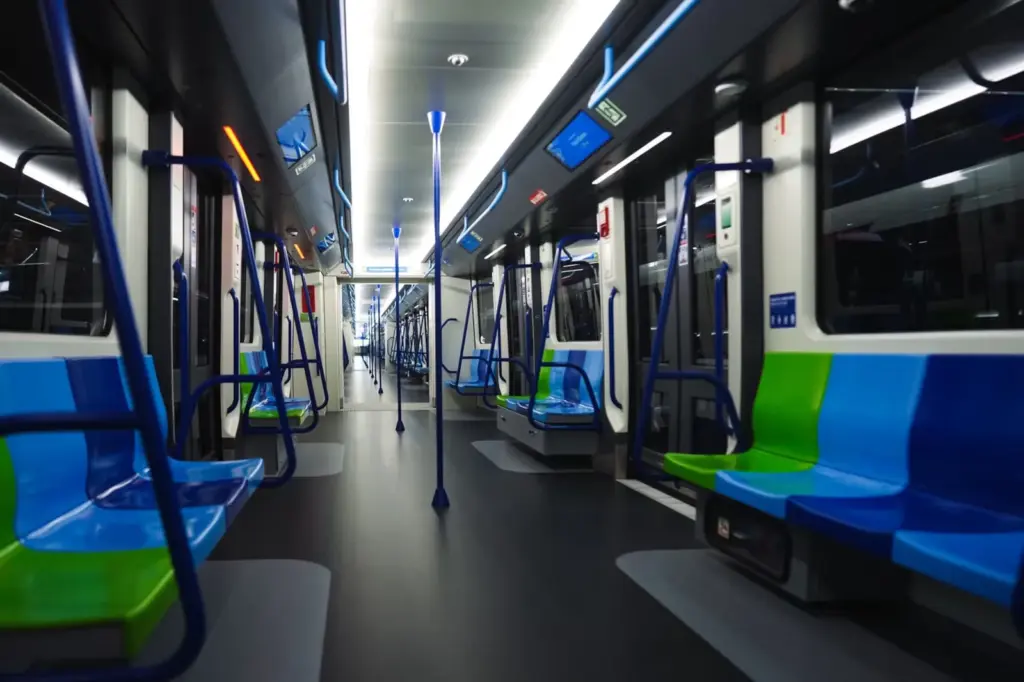
The new driverless trains consist of six cars and reach a total length of more than 109 meters and can carry up to 1,385 passengers ―165 of them seated―, 17% more than current models, which usually have three to six cars depending on whether it is a high or low demand line. Without a driving cab or partitions, the entire interior is interconnected from end to end and is a wide corridor, which allows for much more space. Other features of the train of the future include its top speed of 110 kilometers per hour, with a 33% increase, and its energy efficiency, which reduces consumption by 20%.
Meanwhile, on L6 the second phase of the works has begun and there are new tasks that “are not compatible with the usual operation” of the service, so all traffic on the southern arc of L6, between Sainz de Baranda and Laguna (17 stations), will be suspended on the weekend of August 22 and 23. “Both terminals will remain open as they operate as end stations, while this section will be fully operational again on Monday the 24th,” Metro details in a statement.
To alleviate the inconvenience that the closure may cause, the metropolitan company will provide free buses for users covering the surface route. During those days, work related to the installation of new platform doors to access the driverless trains will be carried out. Prior to the installation of these screens, more than 23 kilometers of track were renewed over six months and different facilities and systems were prepared, and later new signaling and control systems will be implemented.
🚇 Do you know all the new features that the L6 trains will bring? Come in and we’ll tell you!
— Metro de Madrid (@metro_madrid) August 12, 2026
✅ Digital real-time passenger information system.
✅ Reserved seats in all modules of each car.
✅ No cab. Retractable driving desk.
✅… pic.twitter.com/11FZny4E4T
In total, 70 platforms will be worked on along 6.4 kilometers, with the aim of “separating with these doors the waiting area of passengers from the train circulation zone” ensuring safe and orderly entry to the train, while, taking advantage of the reinforcement work carried out on the platforms to support the new doors, the gap between train and platform will be reduced.
The new doors will be transparent to maintain visibility at all times and offer a greater sense of spaciousness and feature accessibility innovations ―the status of each entrance can be known through different colors and they will have screen printing, safety bars, and anti-entrapment elements― and information ―they have LED screens at the top where the waiting time for the next trains or possible incidents can be seen―.
After the L6 closure over the weekend, the subway will return to normal next week in other infrastructures that have undergone renovation and maintenance tasks this summer, taking advantage of the decrease in passenger demand. Thus, the reopening of Cuzco (L10) is scheduled for August 25, while service on L7, between Gregorio Marañón and Pitis, will resume on the 29th.