









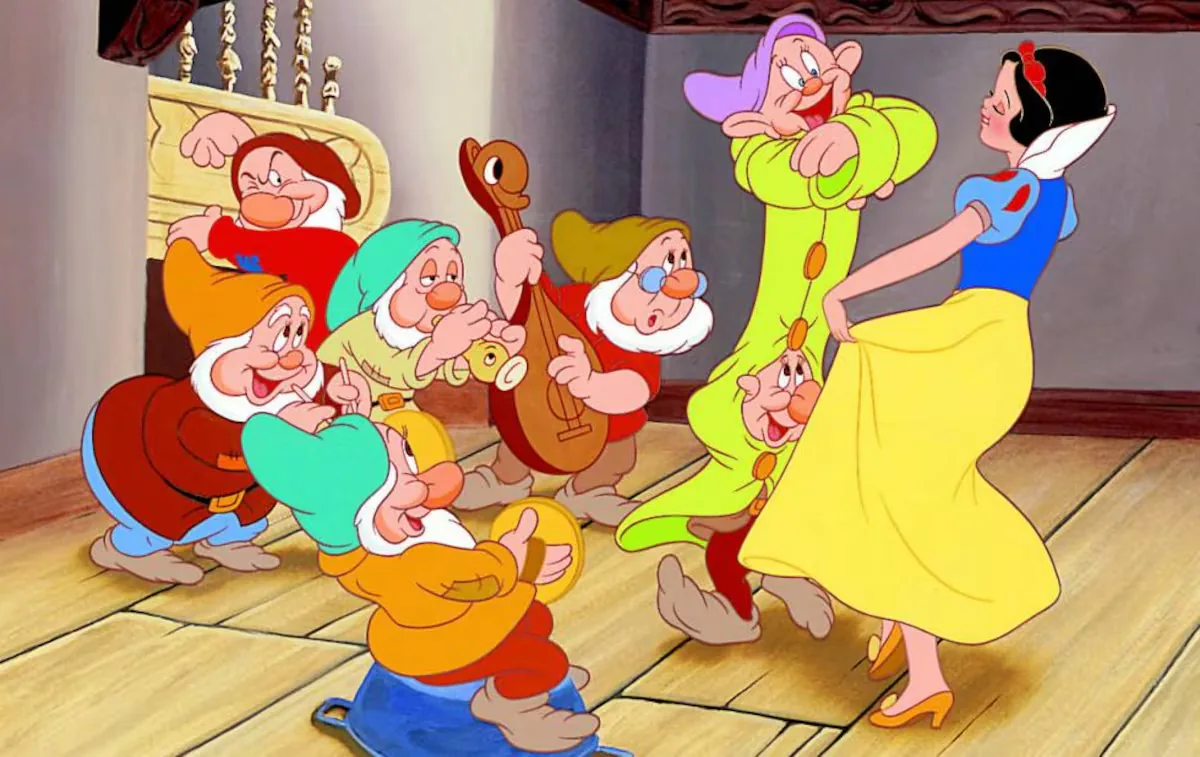
From Disney’s first experiment with Spanish dubbing, hardly any traces remain today. In 1938, the entertainment giant decided to record Snow White and the Seven Dwarfs with Spanish voices to expand into a Spanish-speaking market of about 100 million people at the time. The result, a jumble of accents to connect with all speakers, was so absurd that the studio quickly withdrew a version from the market, of which only small fragments are now preserved on the internet. They later tried again with a new language, much more effective, with phonetic homogeneity and no local words, which became the standard in the Spanish-speaking market: what is now called neutral Spanish.
Read more Qusra houses surrounded by Israeli settlers and soldiers: «I feel like I’m in a prison»
Entire generations of Spaniards and Latin Americans grew up listening to characters speaking a Spanish that had nothing to do with their variant. In Spain, it was maintained in animation until the 1990s, but today that construction has the almost unanimous approval of Latin America, a territory with about 550 million Spanish speakers. In the era of streaming and technological advances, this linguistic variant faces the deepest change in its history.
Neutral Spanish is nothing more than, according to Enrique Martínez, a postgraduate in Communication and researcher at the National Autonomous University of Mexico (UNAM), “a variant artificially created to unify audiovisual consumption in Latin America.” A version that minimizes “regional words” and is “emptied of content to try to cover a lot.” It is not only about what is said, with phrases without identity roots, but also how: the intonation is flat, very clear, and without melodic curves, which are very marked in the accents of certain countries. The key to its success is due to many factors. The most important, the researcher argues, is the “violent” and sustained imposition: “This doesn’t just happen for no reason. I want to think that the first times viewers heard this dubbing, it seemed strange to them. Although habit is what dictates taste.”
The battle for the consolidation of neutral Spanish began in the 1940s. “At the beginnings of sound cinema,” Martínez details. “Hollywood depended on the European market, but with the Second World War that market was paralyzed and the United States was forced to focus on Latin America.” Years after the failed experiment of Snow White, dubbed in the United States, American distributors found in Mexico — thanks to filmmaker Edmundo Santos, who became Disney’s representative in that country — an operations center. In the mid-20th century, while Spain and much of South America were going through dictatorships, censorship, or severe economic crises, Mexico was experiencing the golden age of its cinema and enjoyed stability that made it the ideal bridge between Hollywood and the Spanish-speaking market.
Therefore, the accent of the central part of the country, where the cultural fabric was concentrated, became the basis of this new commercial linguistic variant. “Mexico was the power. The rest of the countries did not have the infrastructure to do their dubbing, nor did American companies have the interest to spend on them. Much less to make a dubbing for each country. So they had no choice but to consume those products,” Martínez explains.
The Spanish Exception
In Spain, although dubbing — mandatory since 1941 — was usually done in national studios and under regime supervision, as another tool of censorship, Disney’s animated films already arrived in neutral Spanish. With the return of democracy, the American company opened studios in the country and decided to make one version for Latin America and another for Spain. From Beauty and the Beast (1991) onwards, all its films for Spain have been made with Spanish voices.
Also, at the end of the 1990s, actress Evangelina Elizondo, the neutral Spanish voice of Cinderella, sued the company for marketing the film on home video (VHS and later DVD) when she had only been paid for the cinema version. The studio preferred to redub that and other films rather than pay actors additional royalties. Therefore, all those classics that had already been established in the Spanish collective with neutral language, such as Cinderella (1950), Sleeping Beauty (1959), or Peter Pan (1953), were redubbed in two versions: the neutral for Latin America and the Peninsular Spanish. This division, the researcher Martínez says, “later also led to neutral dubbing being more successful among Latin Americans when contrasted with Spanish. It became a kind of banner of Latin unity.”
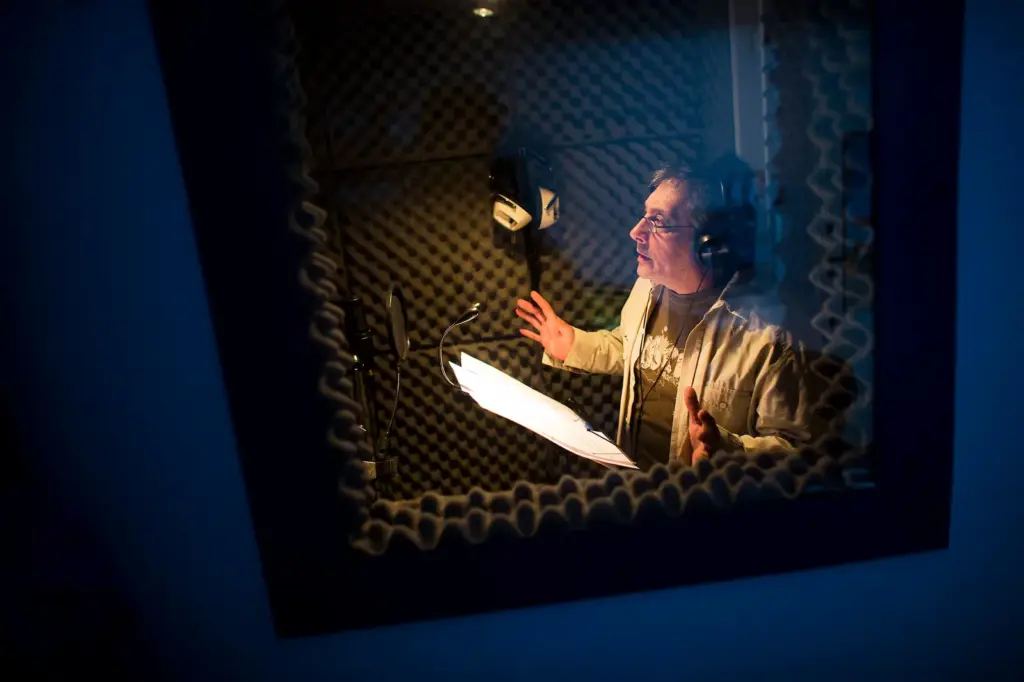
The path of neutral Spanish continued strongly in the American continent. Recording studios opened in Argentina and Colombia, but the neutral variant continued to prevail. “When dubbing arrived in Argentina, there were no actors to do it. A new important source of work was opening. They came from Mexico to give courses at the Argentine Actors Association,” recalls the director of the Argentine Dubbing School, Argentine dubbing actor Dany de Álzaga — the Latin voice of Anthony Hopkins, Tommy Lee Jones, and Liam Neeson. Besides teaching them voice synchronization techniques, they helped them shed their accent. That represented a disadvantage for local actors. They either subjected their voice to training to camouflage their identity or were marginalized from the commercial circuit.
Read more Isla Cristina, between fear and dismay after the triple homicide: “This is not our town”
Today, at the dubbing school that De Álzaga directs, the largest in Argentina, the actor teaches his students to “get mexicanized.” None, he assures, finds frustration in shedding their way of speaking. “On the contrary, all the students already have the chip in their heads that they have to speak like that.”
In the industry, Mexican Spanish and neutral dubbing are not understood as the same. It is common, and more allowed, for certain Mexicanisms and intonations to sneak into films — there is the very Mexican Donkey from Shrek (Burro in Latin America) voiced by Eugenio Derbez — but the language maintains its own lexicon and intonation, which is not the same as what is spoken on the streets of Mexico City, much less in other parts of the country. The next step in its path, explains Ricardo Tejedo, actor and dubbing director, and president of the new Mexican Association of Dubbing Producers (AMPR), is greater cultural diversity: “For me, neutral today is simply clear diction where all letters are pronounced. The norm has been breaking, and with globalization today we can work with actors from many countries. I look for good acting; the accent no longer affects me so much.”
The “clear trend” is confirmed by Álex González, studio director at Keywords Studios. What were once exceptions — like the Cuban accent of King Louie in The Jungle Book (1967) or King Julien in Madagascar — now happens more regularly. “Whether Colombian or Chilean, if the accent is well interpreted and immerses you in the story, diversity is welcome. In an audiovisual landscape that seeks to represent different identities, it no longer makes sense for all characters to speak exactly the same,” González says.
Could this make neutral evolve into dubbings, as happened in Spain, specific to each country? “I don’t think so,” says Tejedo. “Habit is very hard to break. The other day an Argentine friend of mine who does dubbing told me: ‘What happens is that in Argentina people don’t like dubbing with their own accent. We are very used to hearing normal dubbing.’” De Álzaga thinks the same: “If we look at dubbing as a work tool, I would leave it as it is. If we do it in Argentine, Chilean, Colombian, it will be very localist and will not expand to all Latin America.”
AI Regulation
In reality, the business seems threatened by only one thing: artificial intelligence, which finds in neutral and very well-articulated dubbing a perfect training ground. Voices developed through AI can already be heard in audiobooks, corporate videos, series, or video games. Often with direct copies of dubbing actors. “There is a permanent concern about the violation of actors’ rights and the legal vacuum regarding voice ownership,” warns Tejedo.
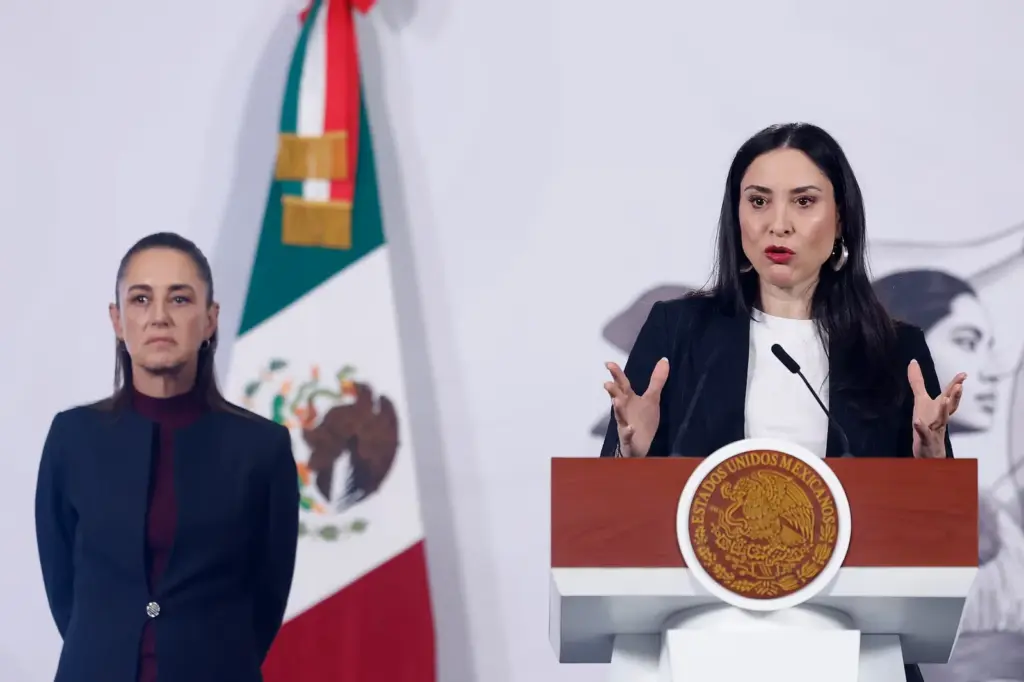
Thanks to initiatives from their guild, Mexico has just taken one of the most severe steps regarding technology regulation. In March of this year, the Chamber of Deputies approved a Federal Film and Audiovisual Law that prohibits the use of artificial intelligence in dubbing audiovisual projects. In Spain, on the other hand, the new draft of the Artist Statute left out the article that protected the rights of image, voice, and performance of artists against the creation and exploitation of AI-generated content.
Read more Minors who did not want to be moved to the Peninsula: “I already had half my life made in Tenerife”