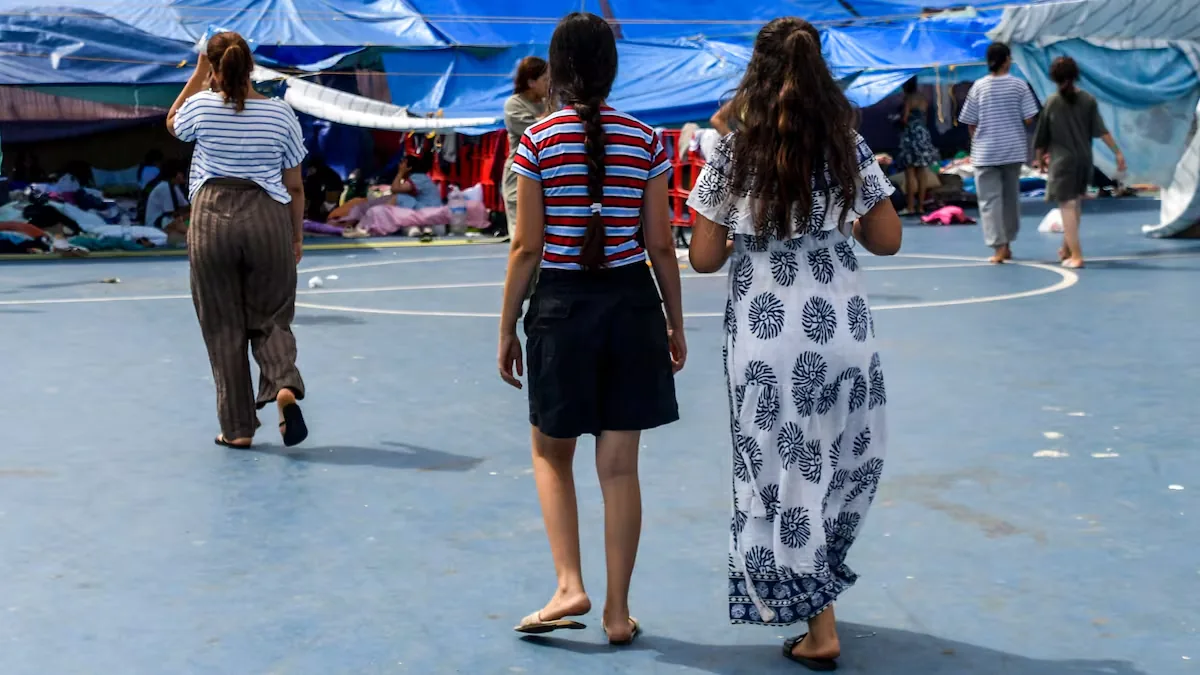
The Government is working on the transfer of at least 500 migrant girls from Ceuta to the Peninsula. Specifically, the Ministry of Youth and Childhood is looking for a way to accommodate hundreds of unaccompanied minors who have been in the autonomous city since the massive entry on July 30 and 31, as part of a comprehensive emergency plan coordinated between administrations, according to Cadena SER on Wednesday. Sources from the department led by Sira Rego state that “this plan includes compliance with the royal decree-law for binding and supportive reception by all autonomous communities or family foster care, but also other formulas that allow speeding up the reception.”
Read more Mono malo
Among these other formulas, these sources indicate, a route is considered for child protection organizations to host and care for the most vulnerable profiles without the need to transfer guardianship to the autonomous communities. At this moment, the Ministry adds, work is being done urgently on this route for a specific number of minors, estimated at approximately 500, although the number may vary during the process.
Although for Ceuta the solution to the migration crisis involves “the return to Morocco of all people who irregularly accessed the autonomous city at the end of July, including unaccompanied foreign minors,” the Executive led by Juan Jesús Vivas is willing to make an exception for those 500 migrant girls. Sources from the Government of Ceuta admit the need to “adopt extraordinary measures,” referring to the Youth and Childhood plan that seeks different alternatives for the reception of the minors. “The solution cannot only be to indefinitely expand reception capacity, but to advance in the return and, while this is materialized, adopt extraordinary measures,” they point out.
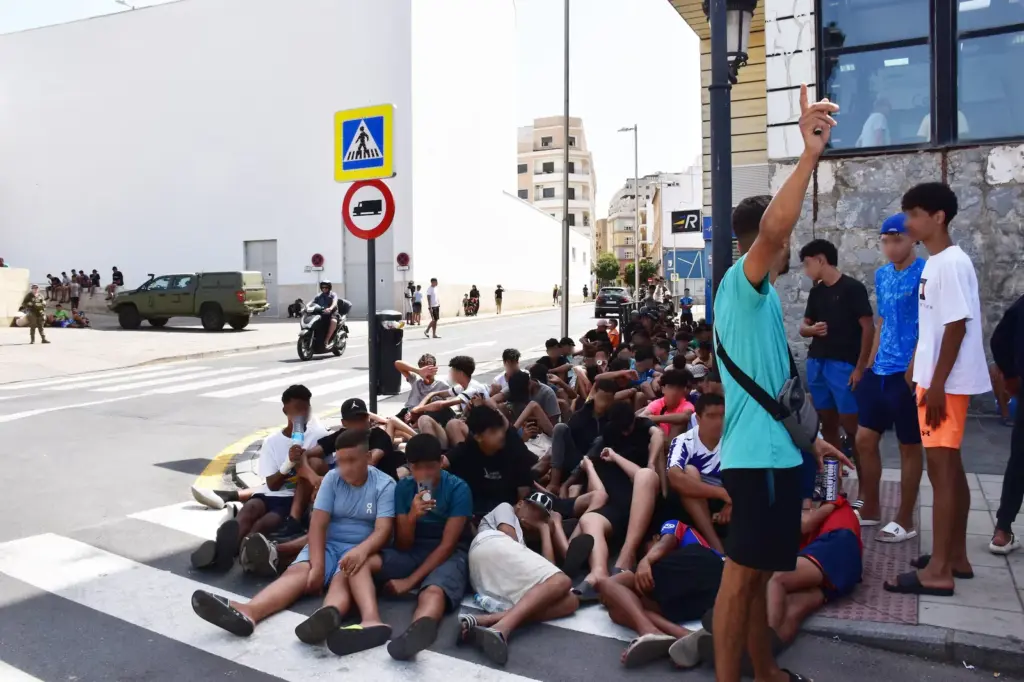
The PP also acknowledges that the case of the minors involves other assumptions. The Deputy Secretary of Finance, Housing, and Infrastructure of the PP, Juan Bravo, has questioned the plan the Ministry of Childhood and Youth is working on for this transfer and has defended that “the best interest of the minor is to be with their family.” In an interview on Antena 3, Bravo emphasized that the best place for minors is “in their environment” and recalled the endorsement of the European Commission for the return of minors who crossed the Ceuta border. He also wanted to recall the statements of the Minister of the Interior, Fernando Grande-Marlaska, and the Minister of Foreign Affairs, José Manuel Albares, in which, in his opinion, they assured that the minors would return to their place of origin.
Read more The price of gasoline and diesel rises for the seventh consecutive week
Therefore, Bravo has questioned whether the Government of Pedro Sánchez is looking out for the best interest of the minors, as stated this Wednesday by the Minister of Inclusion, Social Security, and Migrations, Elma Saiz, since “there is a request from Morocco for the children to return.” “If there is a request from Morocco for the children to return, if Europe has said please let the children and the non-children, those who entered irregularly, return, what more does the Government need?” questioned the PP deputy secretary.
Meanwhile, Unicef has warned of the situation of “insecurity and unhealthiness” in which hundreds of minors in Ceuta have been since the massive entry. The Director of Influence, Programs, and Alliances of the organization, Lara Contreras, has considered it “urgent” that children who are alone be properly identified. And she has denounced that “hundreds of them wander alone through the streets, in unhealthy conditions and with an urgent need for three meals a day and, in many cases, medical care.”
Read more The fire of crime ignites again in Michoacán with more than twenty road blockades