







Not even 24 hours. The reopening of the Strait of Hormuz announced this Friday by Iran has had a short, almost ephemeral life. Iranian authorities reversed course on Saturday morning (European time), announcing a new “strict control” over this waterway, through which about a fifth of the world’s consumed oil and liquefied natural gas passes. The measure, they argue, is a direct response to the blockade that the United States has announced it will maintain over the area, which practically disables Iran’s maritime trade, both inbound and outbound.
Read more Juan Carlos I: “With the current Government, things must not be easy for my son”
“Control of the Strait of Hormuz has returned to its previous state and this strategic route is under strict management and control by the Armed Forces,” announced Iranian Lieutenant Colonel Ebrahim Zolfagari on Saturday in a statement reported by the official Tasnim agency.
On Friday, Tehran had announced the reopening of the strait while the ceasefire with the US lasted, although shortly after it clarified that this would be “limited and managed” by the Revolutionary Guard and that it was a “gesture of good faith,” a direct consequence of the truce agreed upon by Israel and Lebanon, and framed within negotiations that may resume in the coming days in Islamabad (Pakistan), according to reports from the US network CNN and the Turkish agency Anadolu. An event from which at least an extension of the ceasefire between the US, Israel, and Iran, which expires next Wednesday, is expected.
Despite initially welcoming and celebrating the “full reopening” of Hormuz — “it is a BRILLIANT, GREAT DAY FOR THE WORLD,” he even wrote on his social network, Truth — US President Donald Trump immediately stated that he would maintain his own blockade of the maritime passage. Markets partially toned down the initial euphoria, which had caused oil and gas prices to plummet. This decision to maintain the US lockdown is, according to the Revolutionary Guard’s justification, what caused the Iranian reversal.
“As long as the United States does not restore full freedom of transit for vessels from and to Iran, the situation in the Strait of Hormuz will remain under strict control,” argued Lieutenant Colonel Zolfagari on Saturday.
A few hours earlier, the powerful speaker of the Iranian Parliament, Mohamad Baqer Qalibaf, had already warned on the US social network X (formerly Twitter) that the Strait of Hormuz “will not remain open” if the White House blockade continues. It will be carried out, he hinted, according to “designated routes” and with “Iran’s authorization.”
Qalibaf also denounced Trump’s “falsehoods” in celebrating the supposed reopening. “He made seven statements in one hour and none of them were true,” added the Iranian leader, who led the delegation sent by his country to Islamabad for the latest peace negotiations. “With these lies they did not win the war and, without a doubt, they will achieve nothing in the negotiations either.”
Some crossings, many doubts
In reality, neither the shipping companies nor the ship insurers — a key player: without their approval ships cannot sail — had accepted the reopening, fearing a reversal or simply that the navigability conditions were still far from those before the war began on February 28. Companies demand minimum safety guarantees, that they will not encounter naval mines on their way, and that they will not have to pay any toll. This last point also did not seem at all clear.
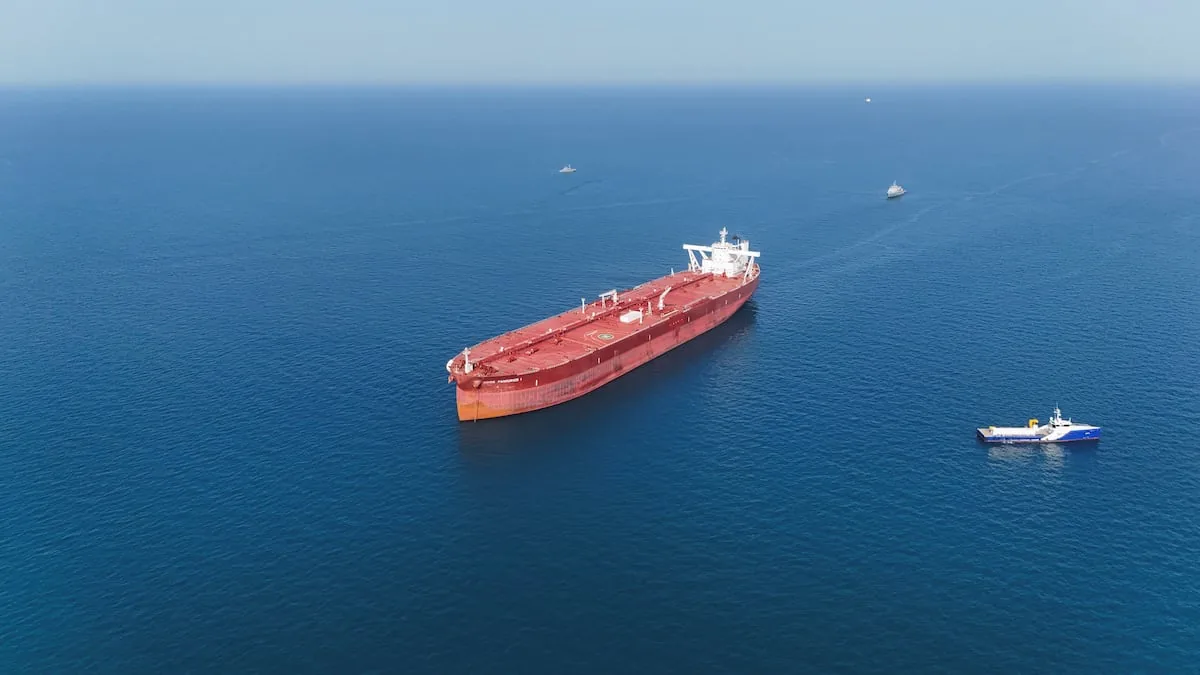
Maritime traffic tracking platforms had detected slightly more movement in the area in recent hours, especially of ships that have been waiting for weeks to leave the Persian Gulf to reach the Indian Ocean. At least four oil tankers have succeeded, according to information provided to EL PAÍS by the specialized firm Kpler. Another five Qatari-flagged LNG carriers (ships transporting natural gas) were also trying to head out.
The widespread attempt to exit, however, seems to have been aborted hours later, with some oil tankers, including two flagged Indian and Greek, reversing their maneuvers. In addition, at least one tanker in the area reported gunfire from two boats “linked to the Iranian Revolutionary Guard,” according to confirmation from the United Kingdom. One more example — one more — of the distrust about a supposed reopening that shortly after again fell through.