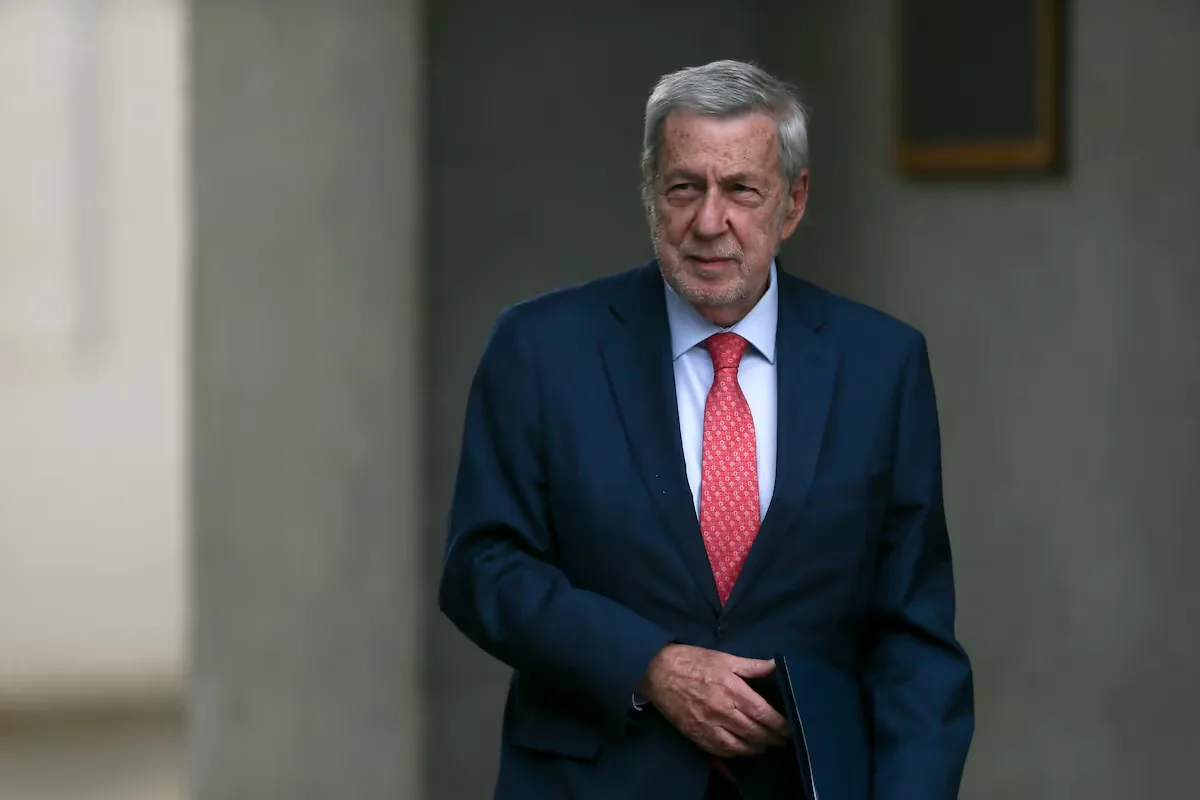
Gabriel Boric’s former Minister of Foreign Affairs (2022-2026), Alberto van Klaveren, questioned this Friday the public security reform promoted by José Antonio Kast, which includes a broad constitutional state of emergency with various restrictions on civil liberties and removes social rights, especially health, from those convicted of organized crime and terrorism, except in cases of medical emergencies. For the former chancellor, if this proposal is approved in Congress, there could be “significant reputational damage for Chile,” especially due to the “very positive” ties that have traditionally been maintained with countries in Latin America and Europe.
Read more Prison for a woman who beat her landlord in Torelló for fear of being evicted from the home
According to the former minister to CNN, if this proposal succeeds, the implications for Chile’s international reputation would be that “we would be very associated with illiberal regimes.” And he recalled that this Tuesday Kast said, precisely, that “he did not consider himself illiberal” and that he “is very glad he said that.” However, he added that “a project like the one being presented is an exception in terms of liberal institutionalism in the world. I believe that, indeed, it would be an illiberal institution if it were approved.”
For van Klaveren, “the approval of such an extreme measure would really be a very negative signal from the point of view of Chile’s prestige, reputation, and tradition”. And he added that “we also have to ask to what extent this coincides with a series of international instruments that Chile has signed and that are fully in force. I think of the United Nations Pact of Rights and Duties of States, economic and social rights, and the entire inter-American institutional framework. So, in that sense, we have to be careful.”
The former chancellor even said that “it is totally possible” that Chile could be denounced in international bodies, such as the inter-American human rights system, if the idea of depriving health care to prisoners convicted of organized crime and terrorism advanced.
He added that this initiative “is not a minor issue” and that it could lead to “a different characterization of our own system, which is complex.” And that leads him to observe the international connections that Chile currently has in the political sphere, recalling that on September 3 and 4 Chile will host the Madrid Forum, where a series of leaders “from illiberal movements will participate. We are talking about Vox, which is an extreme party, even within the Spanish political spectrum.”
Asked about what it would imply if the president, government authorities, or ruling party parliamentarians attended that forum, he said it would be “complex” because “wrong signals would be given, especially listening to President Kast yesterday [this Tuesday], who said he did not consider himself illiberal, but that is an illiberal group.”
When presenting his Agenda against Organized Crime and Terrorism (ACOT), which contains a package of legislative proposals, Kast added eight reforms to the Constitution. The most controversial, and which has generated cross-cutting criticism, even from the right, is his idea of adding a new constitutional state of emergency for serious threats to public security to the Law of Laws. The measure gives broad powers to the figure of the president of the Republic, as he can decree it without going through Congress, first for 120 days and then extend it for another 120. And, thereafter, continue extending it, but with the agreement of Parliament. It also stipulates that the president “may suspend or restrict personal freedom and movement and the right of assembly” and “restrict the exercise of the right of association, intercept, open or search documents and all kinds of communications and order requisitions of goods.”
Kast’s plan, proposed through a law, to remove some health benefits from those convicted of organized crime and terrorism cases is added. According to the Minister of Security, Martín Arrau, one of the motivations for this determination is to “send signals” to those who commit these types of crimes and discourage their participation in these offenses.