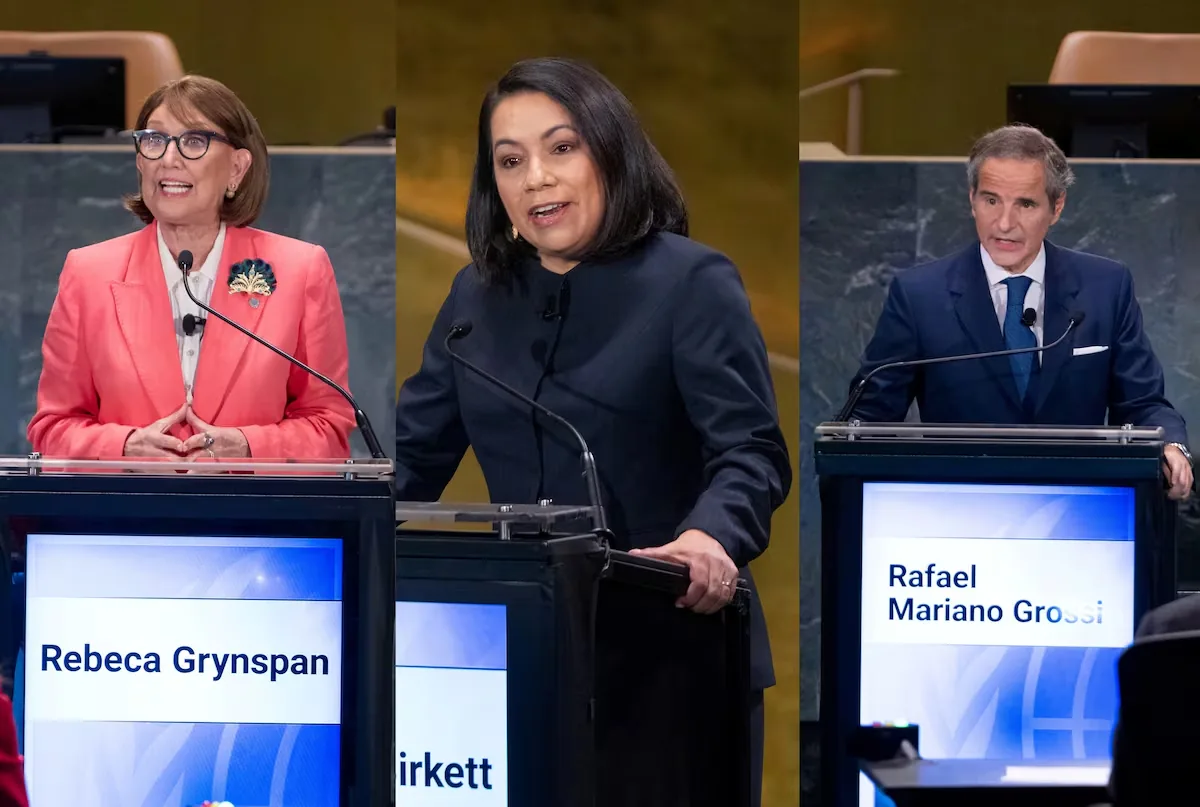
The race for António Guterres’ succession is gradually becoming clearer. Although there is still a long way to go before knowing who will lead the UN from next January 1st and the path may hold great surprises, two women currently stand out as favorites: Guyanese Carolyn Rodrigues-Birkett, the winner of the informal consultation held this Friday among the 15 members of the Security Council, and Costa Rican Rebeca Grynspan.
But be careful. It is not advisable to draw any definitive conclusions. The really important votes, in which it becomes clear which candidates the five permanent members of the UN’s highest body veto, have not yet begun. Until that moment arrives, the name of the next secretary-general will remain a mystery.
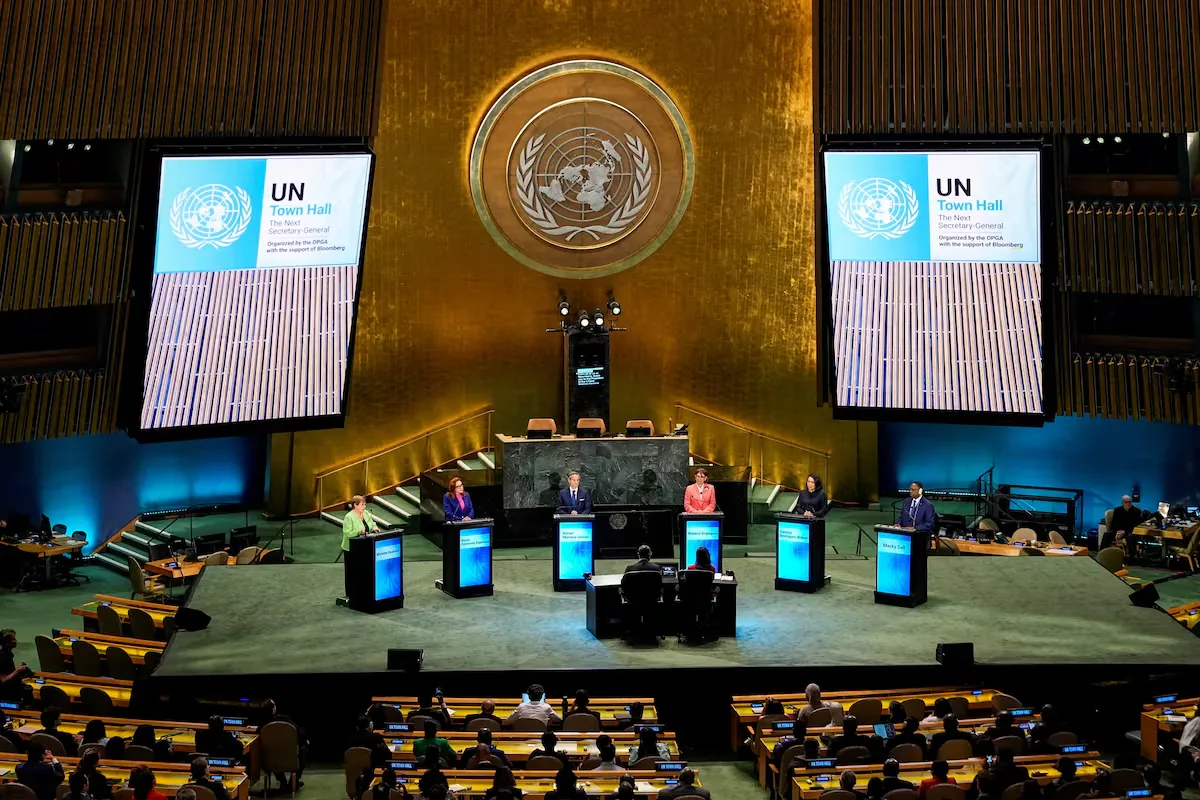
The good result of Rodrigues-Birkett — eight supports and only three votes against — confirms the strength of a candidacy that was presented later than most. The former foreign minister and current ambassador of Guyana to the UN already gave the impression that she was very serious in the candidate debate held in New York last July 23.
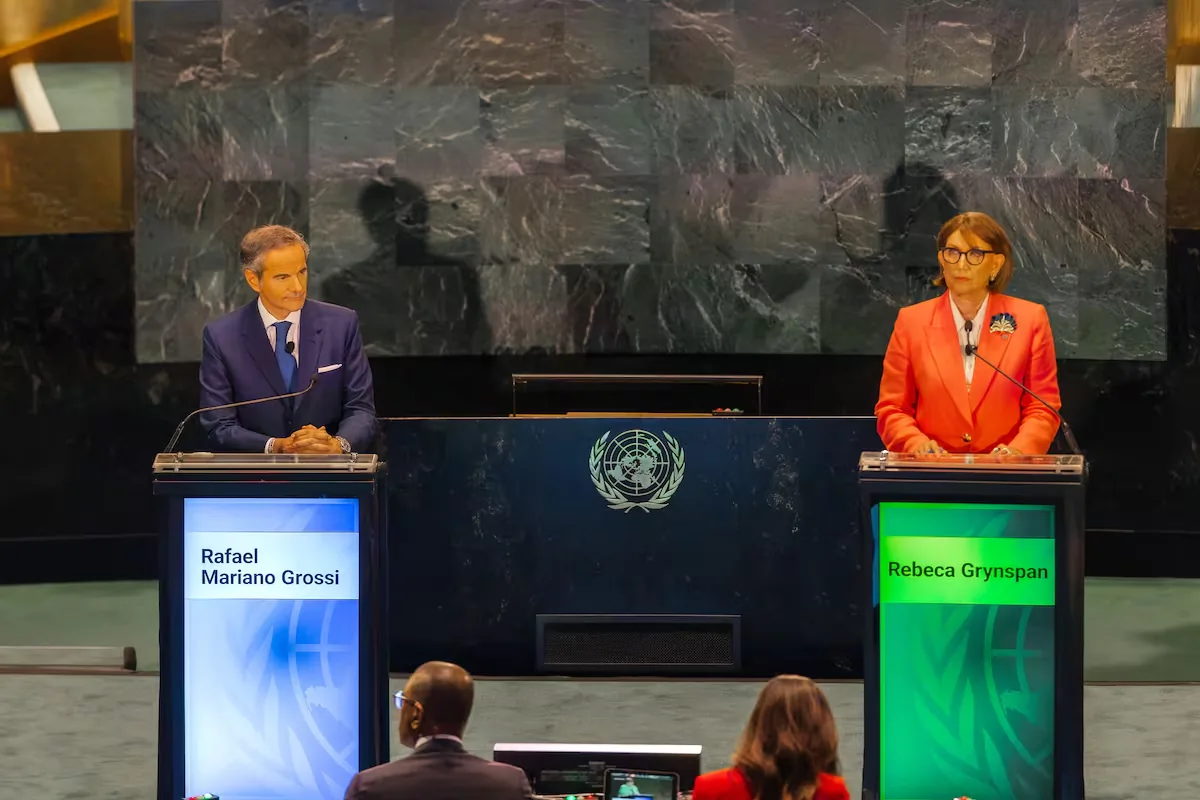
Rodrigues-Birkett now overtakes Grynspan, who in the previous vote, held on July 30, had been first. The candidacy of the former vice president of her country and current secretary of the United Nations Conference on Trade and Development (UNCTAD) has lost some momentum, with seven affirmative votes and four negative. But in any case, the July trend is confirmed. The two women exchange the two leadership positions. So, for now, the game is between them.
Woman and American
If either of the two achieves her goal, two of the conditions established at the start of the race would be met. For the first time in the more than 80 years of UN history, a woman would reach the top of the organization, which would be important news in the fight for equality. And it would also be someone from the Latin America and Caribbean region, respecting the regional rotation in the secretary-generalship.
Argentine Rafael Grossi, current director general of the International Atomic Energy Agency, has remained in third place on both occasions. This is a candidate who at some point was seen as a favorite, but who seems to be deflating.
Read more Belinda announces that she will play Florence Cassez in a series about the ‘Vallarta case’
The complicated and opaque process to choose who will lead the UN in this era of geopolitical turbulence has not yet entered the key phase. This will come when the so-called color votes begin. Then it will be known which candidates the five permanent members of the Security Council — United States, United Kingdom, France, China, and Russia — veto, as they are the ones who truly decide who wins in this chess game with almost as many players as there are countries in the world.
The process to choose the new UN leader may still take several months. Nothing is written, but the diplomats consulted consider that it would be desirable for it to conclude in October. This would give the chosen one a few months to form their team and prepare for a mandate starting January 1 of next year. But nothing guarantees this will be the case. It is not even certain that the chosen one is among the eight names currently on the table. At any moment, a new candidate may appear who disrupts plans and forces the cards to be dealt again.
Once the Security Council has decided on a name — a step requiring nine votes in favor and no veto from the five big powers — it will be presented for a vote by the 193 members of the General Assembly. Barring a major surprise, this body will confirm what the most powerful countries in the UN have previously arranged.
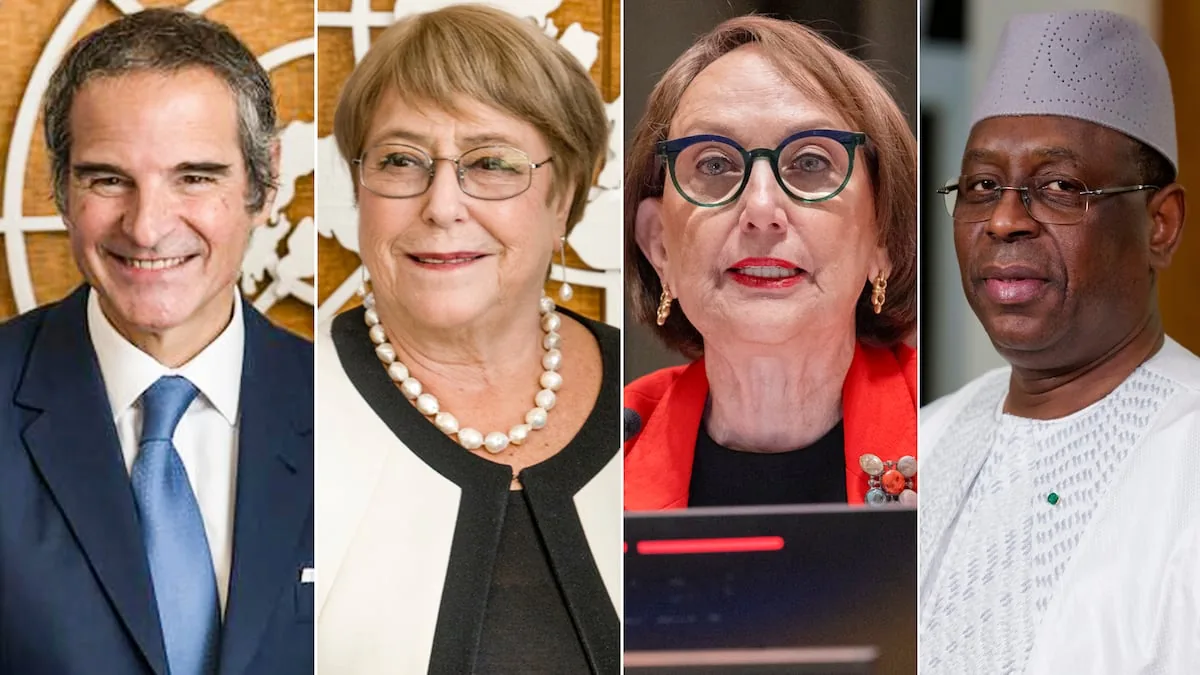
Besides Rodrigues-Birkett, Grynspan, and Grossi, five candidates continue in the race who are gradually seeing their chances fade. In this Friday’s vote, the two African candidates, Senegalese Macky Sall and Ugandan Olara Otunnu, came in fourth and fifth place. Former Chilean president Michelle Bachelet and the two Ecuadorian candidates, María Fernanda Espinosa and Yvonne Baki, also seem out of the race.
Baki was the last to join the group. The former Minister of Commerce and former president of the Ecuadorian Parliament presented her candidacy this week, seen as an attempt to test a name that might be to the liking of U.S. President Donald Trump. The Ecuadorian has praised the Republican leader, posed for photos wearing a cap with the phrase “Make the UN Great Again” — a play on Trump’s slogan “Make America Great Again” — and in her Thursday presentation before the General Assembly said phrases like “I am not a feminist, but feminine.” The experiment does not seem to have worked. This Friday she received a total of zero votes in favor, along with eight noes and seven abstentions.
Read more Riquelme’s strike and a great Valles boost Betis against Real Sociedad