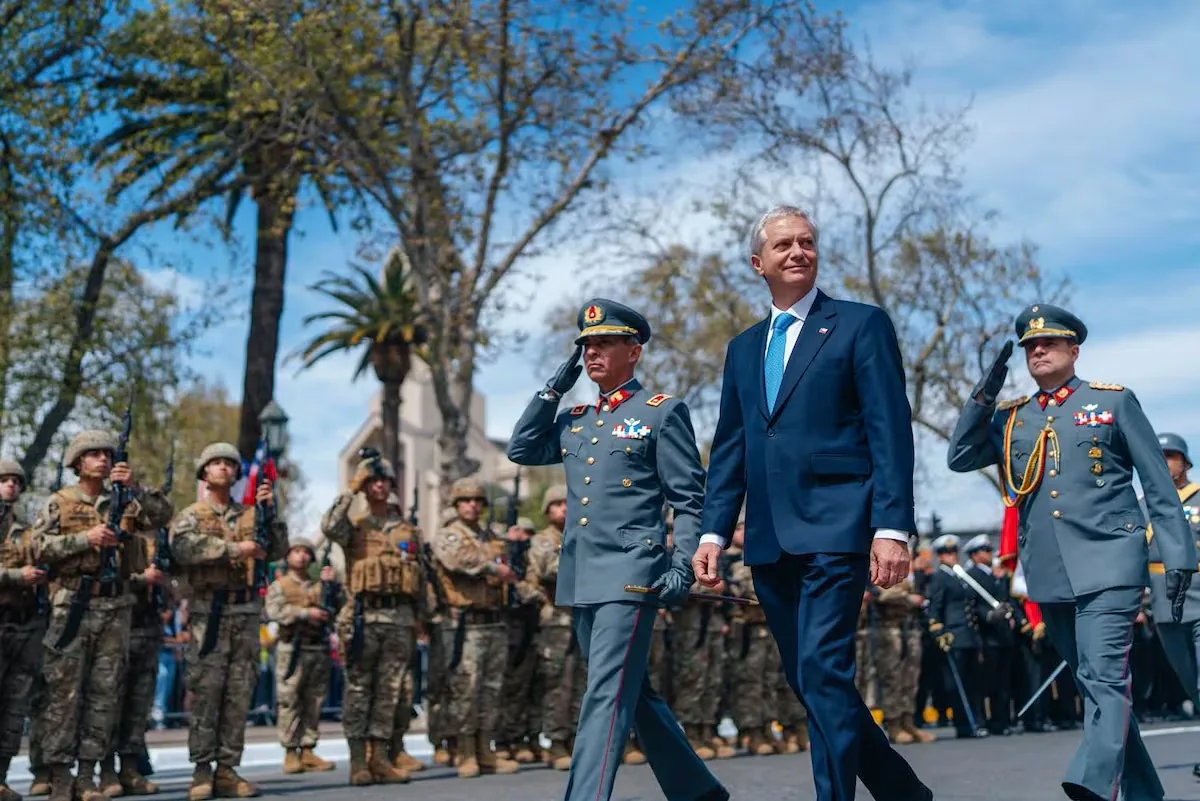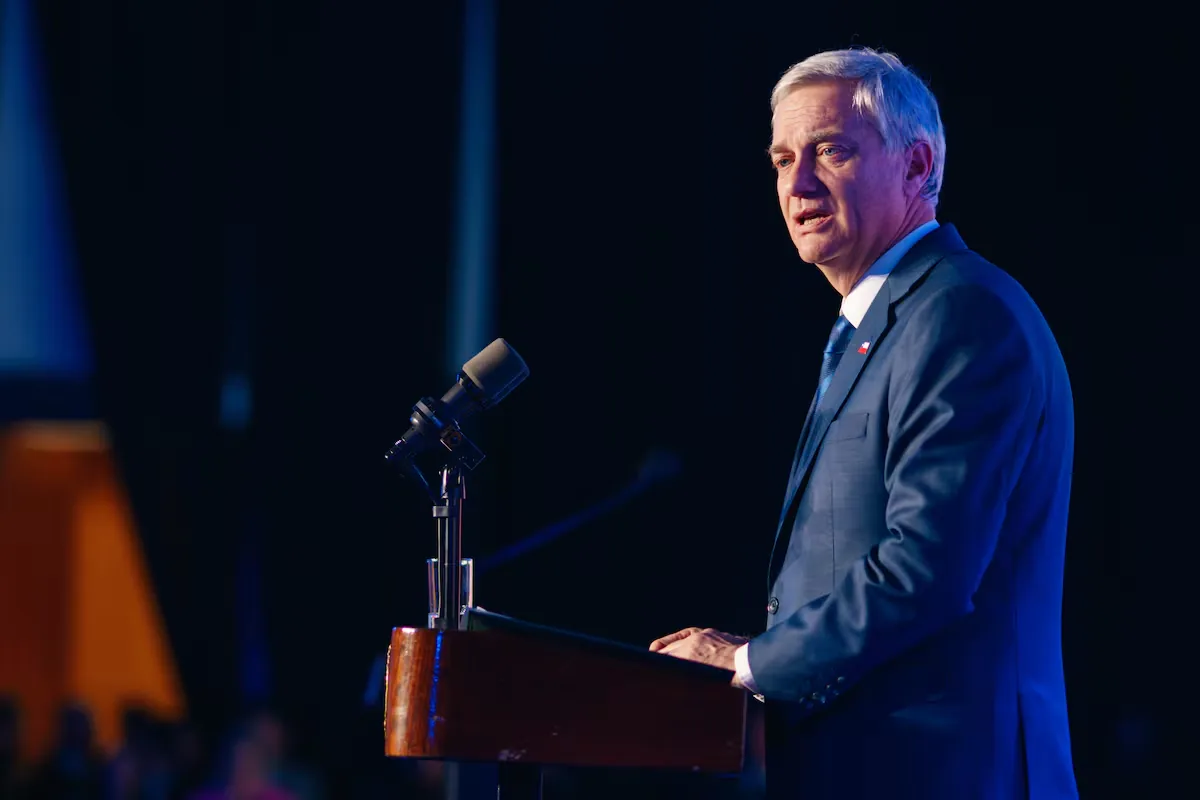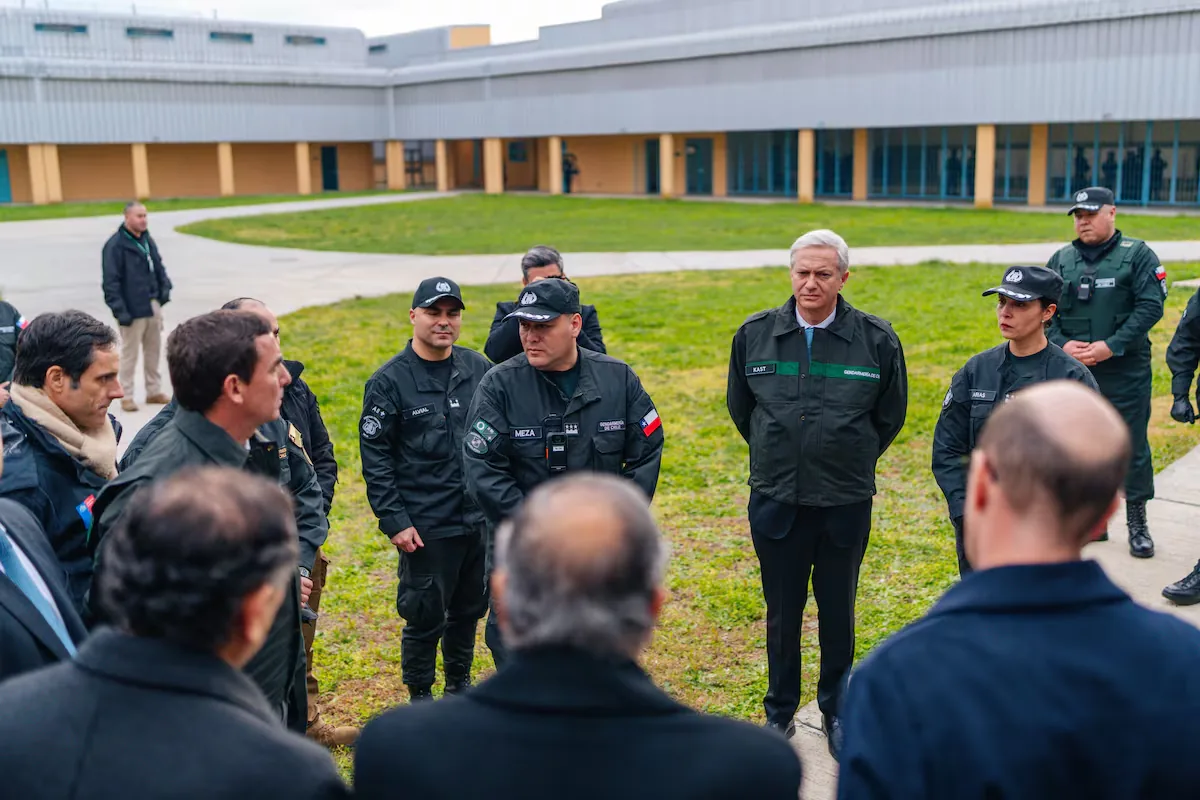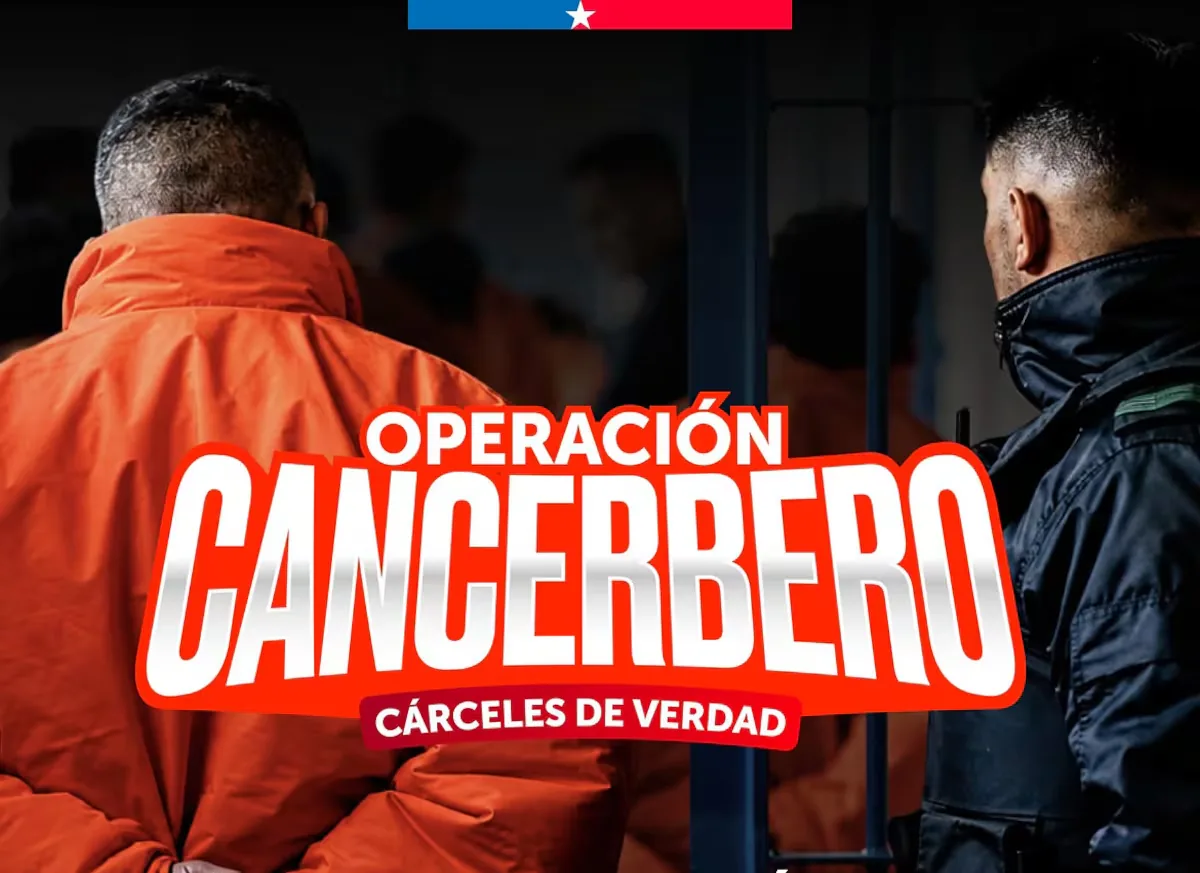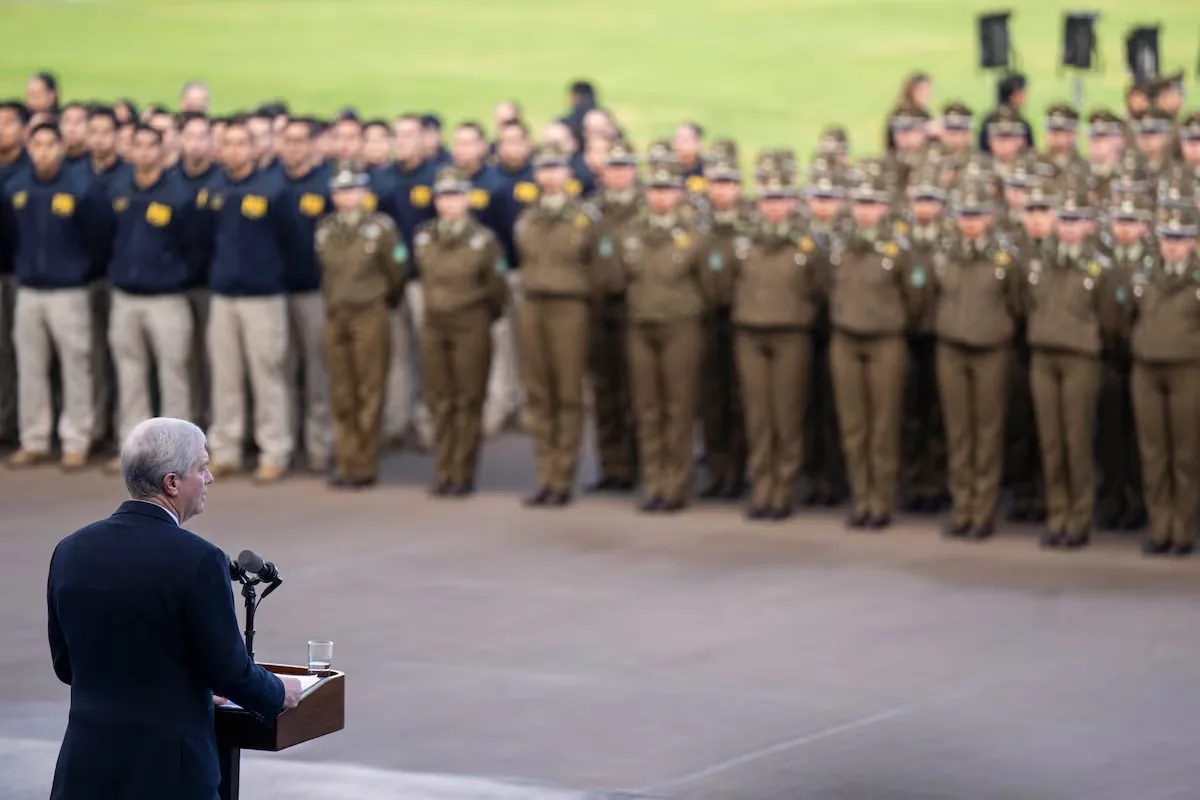
There is a tendency to assume that the far right bets on the inertial contraction of the State. Under that premise, reducing permisología, cutting capital taxes, and shrinking public spending would be just the reactivation of a familiar script. However, that narrative does not explain everything happening today in Chile. The government of José Antonio Kast does not withdraw the State; it redirects it. It dismantles its social protection arm while hypertrophying its punitive apparatus. The relevant question is not how much State, but whom it serves and whom it punishes.
Read more The return of Rocha Moya clouds the signals against impunity in the case of the Navy and fuel theft
There have been various attempts to classify Kast and the Republican Party. Political scientist Mudde placed them within the radical populist right, defined by its triad of nativism, authoritarianism, and populism. However, there is an atypical trait compared to the European pattern; their radical neoliberalism usually does not accompany exclusionary nationalism. Historian Forti reaches a similar conclusion, placing them in what he calls “far right 2.0,” alongside other global rights. Doubting the label is to remain in the synchronic — the global wave — and forget the diachronic, their local sources. Kast is not just a case of the global far right; he is the oldest part of the Chilean right.
On the night of July 9, 1977, seventy-seven torches climbed the slope of Chacarillas hill in a rigorously planned ritual. At the top, Pinochet read a speech that Jaime Guzmán had written for him, which set the strategy of the gremialist project, an “authoritarian, protected, integrative, technified” democracy. Protected not from just any interlocutor, the author would explain two years later: adversaries could govern, but they had to be “constrained to follow an action not so different from what one would desire oneself”; the field was designed to make the opposite almost impossible.
The dialogue remained open but confined within institutional limits that prevented popular alternatives from advancing, even through democratic means. To build that new republic, Guzmán built bridges inward.
The UDI itself was always an alliance between technocrats and integrists, united by family and class networks. But it also blew up others, a part of the Conservative Party and the agrarian world that, with a hacendado ethos, never accepted that institutional engineering and was left out. Kast does not inherit that tradition from outside. His own family always contained both lineages; modernizer with his brother Miguel, co-founder of gremialism, and hacendado with a father investigated, without conviction, for repression in Paine. It is not the new thing promised by the global far right, nor the simple continuity of the old. It is their reunion.
That Guzmanian republic was defended by the UDI. Despite its unconditional support for the dictatorship and systematic justification of human rights violations, it adhered to a democratic game of hard rules inaugurated with the Plebiscite. In 1990, it was Guzmán himself who decided that the UDI would give the votes for the Christian Democrat Valdés to preside over the Senate. In 2003, in the midst of the MOP overpayment crisis, the UDI president, Longueira, negotiated with Lagos the Agreement for the Modernization of the State. And in 2019, Senator Coloma, the last of the gremialist “colonels,” sealed with then-deputy Boric the final formula of the Agreement for Social Peace. Unlike in 1990 and 2003, that night the right in power chose between the military exit and the constituent path, and chose the latter. There the hiatus with Republicans was born, who never forgave either the UDI or the mobilized people.
That agreement, however, did not close the wound. Those who bet on protected democracy stayed in the UDI; the hacendado ethos migrated to the party that, ironically, calls itself Republican. One that did not sign the agreement and that Kast did not hesitate to label “illegitimate” and a “lying peace.” That exodus, of those who chose revenge over negotiation, ended up undermining the UDI. It is the resurgence of a trunk that never completely disappeared, that of the old oligarchic right, reactivated by the fear of the upper classes of popular revolt and emboldened by the Rejection in 2022. That is the ethos that governs today. Sectors of the UDI have offered to merge. Republicans rejected them. It aspires to replace it, not to be it.
Read more Families and rescuers question decisions of local authorities after the earthquake in Colombia
The Agenda Against Organized Crime and Terrorism (ACOT) translates that logic into the cancellation of rights and the refusal to negotiate them. Instead of a transversal solution to the security crisis, the government imposed its reform where it needs fewer opposition votes. It disables those convicted of organized crime from access to fundamental rights for up to 15 years after serving their sentence. According to former Interior Minister Elizalde, it is “the most expressly illiberal reform” of the government, enshrined permanently for any future government. The Constitution risks becoming a catalog of citizen exclusions. The government coalition itself questioned the reform, with UDI and Evópoli complaining about the breadth of powers.
It also militarizes internal order, a return, not a novelty: this is how the Armed Forces operated during the dictatorship, and before that the Executive, with the extraordinary powers granted by the 1833 Constitution in states of siege. Today they are structurally incorporated, not exceptionally, into the internal security scheme, which constitutionalist Jordán describes as a mutation towards “militarized public security.” Not even the Army itself is convinced. Its former commander-in-chief, Martínez, acknowledged that the military are not prepared for public security tasks. The power to intercept communications without judicial authorization, warned constitutionalist Couso, “can say it is spying on drug traffickers. But it can take advantage to spy on journalists or politicians.” Or, just as easily, on social and union leaders. The panopticon becomes a form of government. What is at risk is not just another reform, it is democracy itself.
The same employer logic also governs labor, control without union counterweights. The Labor Plan, with hourly work, multifunctionality, and annualization of the workday, disciplines without negotiation. The “permisología” that the government promises to cut yields quickly to attract data centers and artificial intelligence, as Kast promised, but not to protect those who work under the algorithm, the digital foreman who controls and precarizes relentlessly.
Faced with this offensive, we cannot retreat into nostalgia or a defensive discourse. What is at stake is the construction of a future democratic order. Security, in particular, is a legitimate demand of the working majorities, hit by territorial abandonment and criminal violence. It is built where the State invests, protects work, and guarantees schools, hospitals, and quality territorial presence, recognizing, not managing, those who inhabit them.
ACOT grants excessive power to the Executive, the same manual of the new global far right, but also settles its own scores, with those who dared to mobilize in 2019, and with the right that Kast calls, without disguise, “cowardly little right.” Guzmán calculated that there was a limit between power and revenge. Kast went further. He governs as if Chile were still the estate that his tradition always imagined, with landlords that the State continues to endorse, republican foremen who watch and punish in its name, and tenants who obey without question. Our responsibility is to oppose that project and finally build the national and popular alternative that the Guzmanian republic never allowed, the same one the country demanded in 2019.
Read more The broken world of a three-year-old child after the immigration detention of his dad