
At all times, the same topic: immigration, immigration, immigration. And similar terms: “saturation,” “insecurity,” even “invasion.” The Ceuta crisis is not only migratory, but it is also migratory. And it has caused immigration, associated with an emergency that daily provides shocking images and testimonies, to be on the front pages of newspapers, in their analyses and columns, opening the newscasts, starring radio news, igniting political debates, saturating social networks, reaching conversations in bars for nearly a month. Consuming long hours of attention throughout the country, day after day, almost a month now and counting. With the crisis still pending a resolution that is not expected in the short term, a strong candidate to become a political beneficiary is emerging: Vox.
Read more Video | Watch live Gustavo Dudamel’s concert to support the victims of the earthquake in Venezuela
Academic research has been accrediting the existence of a pattern across Europe for two decades: when media attention to immigration grows, especially linked to conflictive situations, and also when the importance voters give to the issue rises, a phenomenon intertwined with the former, the hardest anti-immigration parties usually come out strengthened.
It does not always happen, nor do they have to be the only beneficiaries, but that is the general rule. The conclusions of up to seven studies gathered for this article and the analyses of five public opinion experts consulted by EL PAÍS coincide in this diagnosis, summarized by sociologist Tarek Jaziri Arjona, a researcher at the NGO More in Common, which conducts both voting and immigration evaluation surveys: “When an issue greatly increases in importance, the actor perceived as the clearest on that issue, not necessarily the most competent, usually benefits.” So the last political course of the legislature will start with Spanish politics in the most favorable framework for the far right.
A European and Spanish phenomenon
The rise of the far right across the continent has run parallel to the growing prominence of immigration in public debate, with a notable milestone in the 2015 Syrian refugee crisis. “In the United Kingdom, Nigel Farage has just clearly renewed his seat while being investigated for corruption. If the star issue is immigration, the far right has the job done,” says political scientist David Hijón, from Dialoga Consultores, who extends his analysis to most of the main European countries. If Reform UK shares the lead in the polls with the Labour Party, revitalized by its new leadership, the surveys place Brothers of Italy, National Rally in France, or Alternative for Germany first alone.

In Spain, where the far right’s emergence is later, the situation is different. Vox is third in the polls, with an average of 17% of the vote. However, Santiago Abascal and his group have also had the opportunity, like their European counterparts, to see how the rise of immigration on the agenda increases their vote share. After breaking their regional pacts with the PP in July 2024, accusing their partner of breaching them by accepting foreign minors arriving from the Canary Islands, Vox has increasingly specialized as an anti-immigration party, doing everything possible to always keep the issue in the spotlight, chaining high-impact media initiatives. The latest is the defense of “national priority.”
Has it worked? The party has been rising in the polls for two years and is the only one that has increased in the last four regional elections, all while immigration consolidated as one of the problems perceived as most serious, according to the CIS series, where it is now second after housing. In September 2024, with the Canary crisis at its peak, the percentage of people who saw immigration as one of the three main problems jumped to 30.4% from 16.9%, becoming the most serious, while Vox began its polling climb. Hijón believes there are reasons to think this indicator will rise sharply from the current 23.4% in September. The more it does, he analyzes, the better for Vox, which matched its historical maximum in the CIS in February after the government announced a massive immigrant regularization.
“Problems” and “threats”
Rens Vliegenthart, professor of Strategic Communication at Wageningen University in the Netherlands, has a privileged position to observe this field. As early as 2007, he published in Electoral Studies research linking greater media attention to immigration with the rise of the far right. In his view, the Ceuta crisis constitutes a growth opportunity for Vox. Why? If the “anti-immigration populist right” benefits when its issue reaches the front pages, even more so if “the focus” is on “problems and threats.” This is what is happening now, with coverage marked by tumultuous scenes and testimonies of uncertainty.

Author of the essay The Media and the Far Right in Western Europe (Cambridge University Press, 2010), Antonis Ellinas sees in the Ceuta case “prime material” for “political actors opposed to immigration.” “Its relevance, amplified by the media and political confrontation, provides fertile ground for the electoral advance of those who have managed to appropriate the migration issue, at least in the short term,” says the researcher, professor of Comparative Politics at the University of Cyprus, who in 2018 published a work with conclusions in the same line as Vliegenthart, in his case about countries like Austria and Belgium.
Ellinas emphasizes that the prominence of immigration favors the far right but does not necessarily determine its rise, which can be hindered by multiple factors. However, he warns: the migration debate sparked by the Ceuta emergency mixes with “geopolitics” and “national sovereignty,” a formula that reminds him of the 2020 crisis at Greece’s northeastern border with Turkey and that “makes anti-immigration messages even harder to counter.”
Read more Sheinbaum lashes out at Rocha: “Power without principles becomes arrogance”
An emotional debate
“When voters begin to consider immigration as one of the most important political issues, their likelihood of voting for the radical right increases,” states British researcher James Dennison, co-author of the essay What Europeans Think About Immigration and Why It Matters (Oxford University Press, 2026) and professor at the European University Institute, who cautiously affirms —“it is not a prediction”— that the Ceuta crisis could create “favorable conditions for Vox.”
This dynamic favorable to the ultras is not easy to stop even if other parties address immigration with proposals and discourses different from xenophobic populism. Dennison, author of various studies on this field, including one in 2023 analyzing 28 European countries, including Spain, explains that “alternative narratives” —he states— can have the “general effect,” despite not intending to, of adding importance to immigration as a determinant of the vote, which favors parties specialized in the issue.
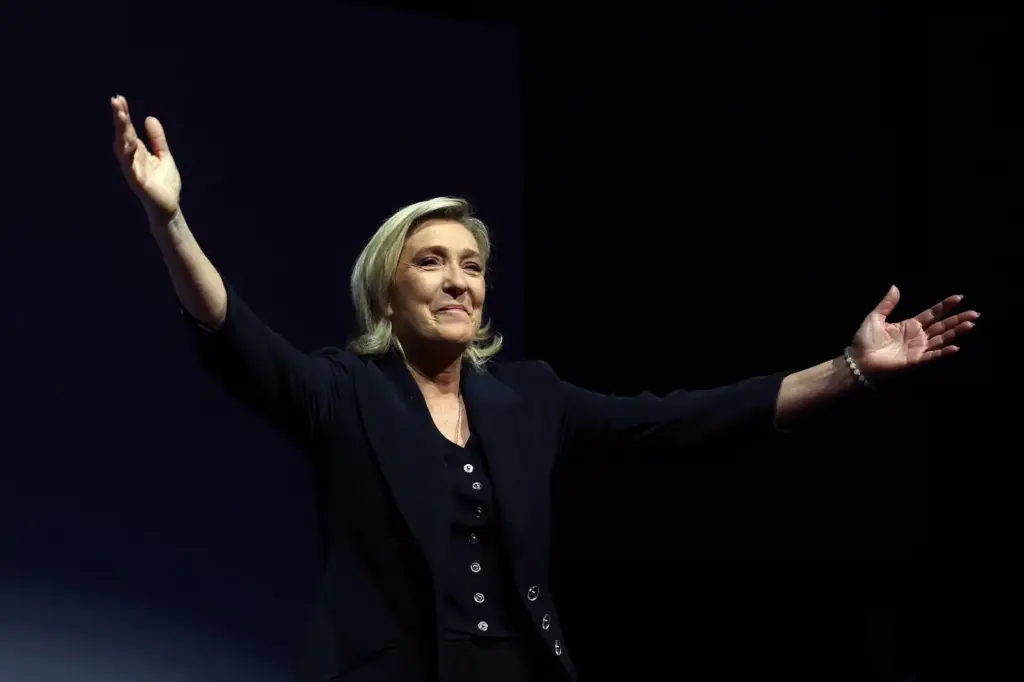
This aligns with the analysis published before the 2024 European elections by the European Council on Foreign Relations, a think tank chaired by Bulgarian intellectual Ivan Krastev, an authority on the analysis of the rise of populism. The report distilled a central idea: if pro-European parties wanted to contain the far-right rise, they should divert attention from immigration. In short, talk about other issues. The warning did not take hold. Moreover, the European Parliament approved a migration pact on the eve of the elections that was supposed to “take away arguments from the far right,” according to social democrat Ylva Johansson, then Interior Commissioner. In practice, it contributed to making immigration the big issue of a campaign that ended with a strong rise of the ultras. Despite Johansson’s calculations, the migration debate had not pivoted on arguments but on emotions.
No “rally round the flag” effect
“Immigration is a terrain where Vox has everything in its favor because, like all the far right, it specializes in mobilizing emotions against an external enemy, presented as a threat. The images from Ceuta are perfect for that. And also, although we live in a succession of crises and no one can guarantee that in two weeks we won’t be on another issue, the situation seems that it could mark the news for quite some time,” points out political scientist Hijón.
The difficulties in applying an “emotional” filter in a progressive key to the debate when it is determined by a crisis as serious —not only migratory— as Ceuta’s is one of the government’s burdens, adds Hijón. But not the only one. Pedro Sánchez, who in his view has overlooked that Morocco “at least has tolerated” the massive entry into Ceuta, has missed the opportunity to “build a strong narrative” based on “firmness” and to resort to a call for unity around the leader in the face of an external threat, which in political science jargon is called “rally round the flag” or “flag effect.” “The feeling is that the government has softened towards Morocco, and that firmness is on the right,” he notes.
A double-edged weapon for the PP
The competition in demanding “firmness” is fierce on the right, where Alberto Núñez Feijóo, president of the PP, has joined Abascal and his group’s proposal to expel all arrivals, including minors, despite the legal impossibility of this demand. “In Vox it is normal, it is pure propaganda, as if they did not know that deporting without guarantees is prevarication. But the PP, a governing party, behaves like this only to compete in toughness,” says Hijón.
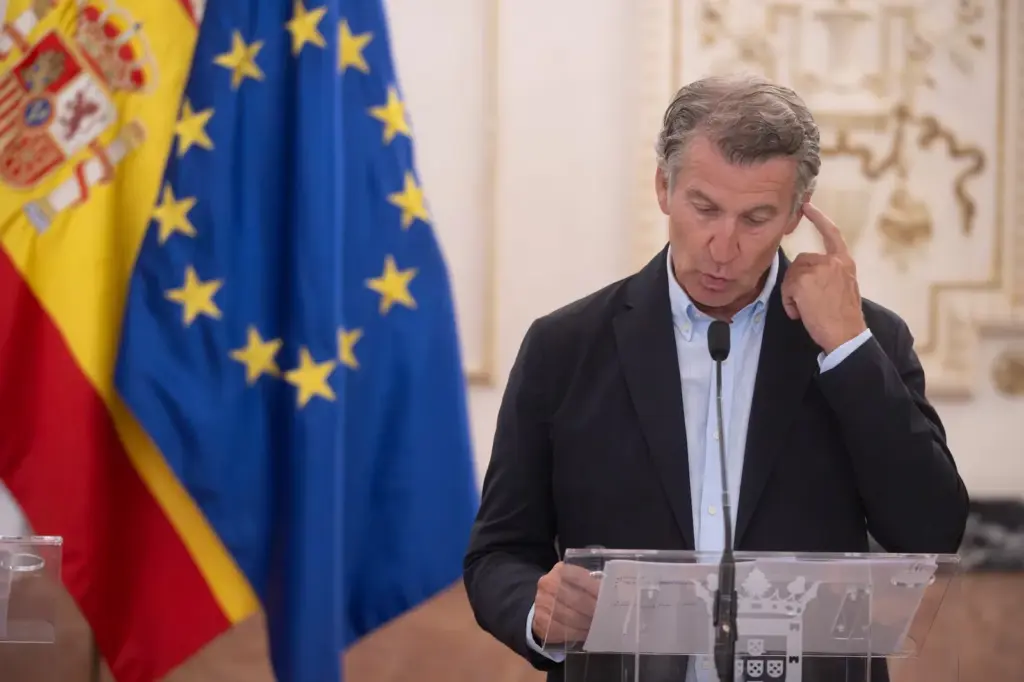
It is a decision, that of competing with Vox on a hard line, that for Jaziri Arjona entails risks. If the PP, he analyzes, “buys Vox’s ‘invasion’ frame but when it comes to the truth ‘defends weaker measures,’ what happens is that it first inflames the demand of the electorate alarmed by the images from Ceuta and then leaves them unsatisfied, a phenomenon accentuated by the normalization of the far-right ideology on immigration.” From Cyprus, Antonis Ellinas also advises against traditional parties entering bidding wars because “they legitimize the far right’s positions.”
Despite all these difficulties, sociologist Jaziri Arjona believes that the PP is also in a position to gain. Not only because it shares the same right-wing bloc with Vox, which the polls give an absolute majority, but also —he adds— because the PP can play the card of “party with government experience” if it manages to move the debate away from ideas of “insecurity and delinquency” in which the far right specializes and gain presence for the “loss of government control over the borders.” The optimal scenario for the PP, he concludes, is that the idea that takes hold in the majority of its potential electorate is: “This didn’t happen with the PP.”
Read more Business mistakes to learn from: from purple ketchup to the cola drink that no one bought