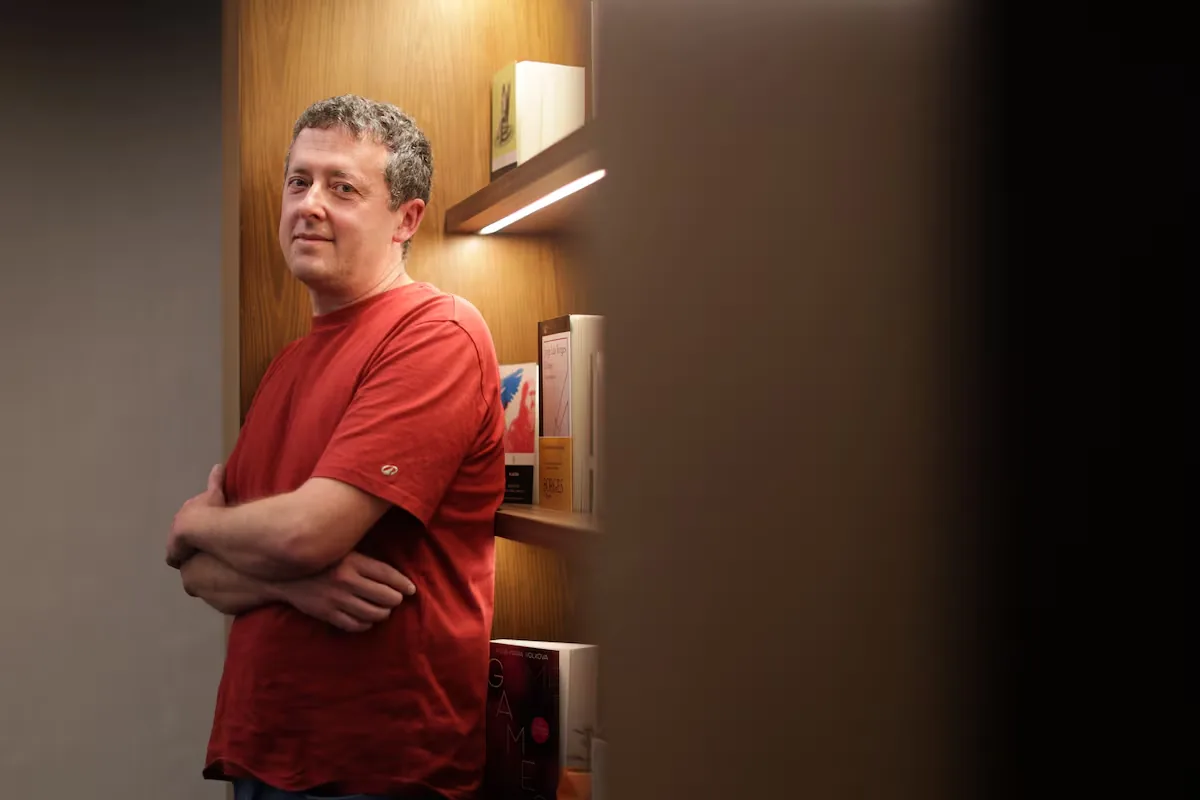
When Luis Noriega speaks, the risk of falling into deception is high. A deception, of course, far from being voluntary. Shy, he speaks softly and looks every bit the bookworm. What is not seen is the sharp pen with which he is capable of pricking, unsettling, and amusing in his stories. So, instead of a deception, a premise is revealed: behind every shy person there is, generally, a corrosive, sharp, sometimes cruel humor. And, in Noriega’s case (Cali, 54 years old), brilliant and witty. Thanks to that humor, there are his newly reissued novel Where the Clowns Die and also the collection of stories The Door of Happiness (Random House), which arrives in bookstores in October. Regarding both works, he left his home near Barcelona to visit Colombia for a few days.
Read more Six months without El Mencho in Mexico
Where the Clowns Die overflows with satire and humor. It is written with that aforementioned very sharp pen, which begins narrating the moment when a clown who invites passersby, megaphone in hand, to enter a chicken rotisserie is turned by chance, by fate (and by a journalist) into a presidential candidate. Beyond the obvious category of novel, this book falls into the category of political farce, and also editorial farce, due to its jabs at the functioning of the literary universe. In a country like Colombia, where humor struggles between being weak and nonexistent, a calm, thoughtful satire emerges as a kind of unsettling mirror.
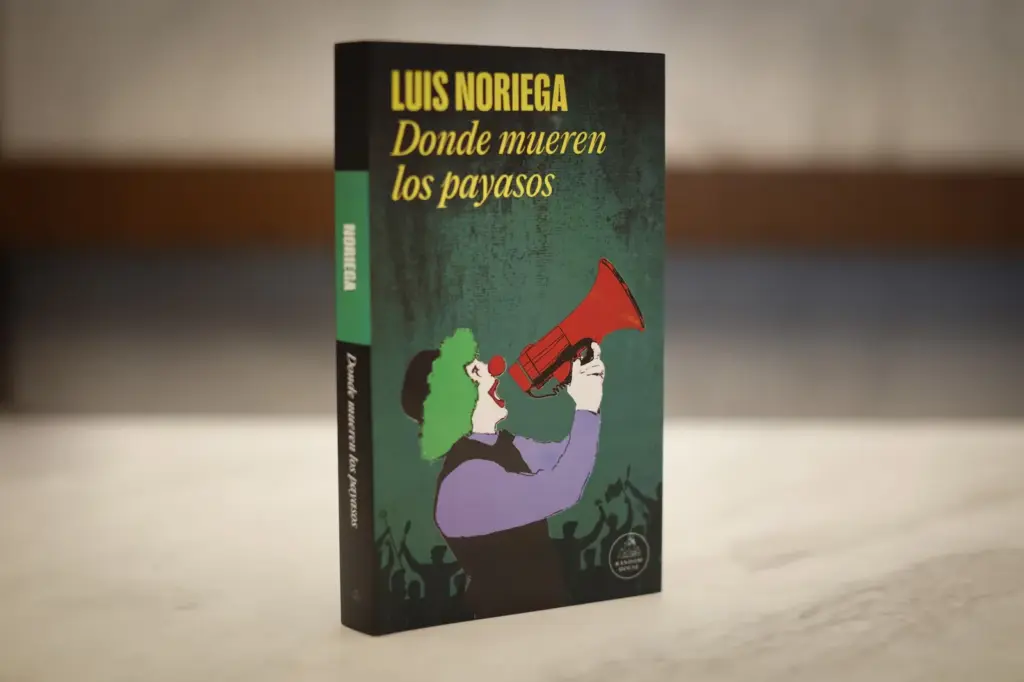
—Is the reissue of the novel due to the crisis of current times?
—I suppose so, that the political situation helps —he says, next to a window of his publisher’s offices, in northern Bogotá—. I am editorially grateful that the novel still seems relevant, although it seems to be our tragedy.
Although the book seems an attempt to be a grotesque X-ray of a country, its origins are much less ambitious. It was a joke among writer friends, a private matter, a motivation to force oneself to write 1,700 words a day to have a novel after a month. But it evolved in such a way that today someone could even read it as a prophecy. Its origins date back to the moment when then-president Álvaro Uribe sought a second re-election, in 2010. Since then, the dynamics of the world have surprised the author himself: “When I wrote this, I did not imagine that we would have as president of the free world a used car salesman. If they had told me that at that time, I would have said it would not happen. I think that was the attitude we all had in 2016. But then came Brexit, the peace referendum, and Trump’s victory. I mean, everything that could go wrong, went wrong.”
However, observed with the ease that looking back gives, Noriega finds that, although today there are exacerbated elements in politics —and in people’s relationship with it—, some of them could already be sensed when he wrote his novel. “Already in 2009 and 2010, one thing that surprised me is what today is like a cliché: polarization.” In several conversations, he says, he discovered that friends were “throwing insults” at each other due to the absence of nuances and moderation. “In some way, what I tried to do in Clowns with these caricatures –because it is clear they are caricatures of candidates– was to reflect that polarization, which seems to me to have worsened. My impression is that nuances have been completely lost and people simply vote against, and that seems like a drama to me.”
Not taking things seriously makes them less scary
Another characteristic that seems new is the fact that politics has stopped focusing on debates and proposals to become a noisy and pyrotechnic spectacle. “That is not so much a novelty as a development or an accentuation of certain factors. That is, before that politics, which is now evidently a spectacle, we also had people who did not vote for programs. Those who discussed the ideas of political programs were very few. That development has led to discovering that now, in political campaigns, there is a new way to appeal to the masses that can be exploited: there are no limits to insult, the opponent is disqualified without major reservations and, when the leader changes opinion, people do the same, they correct themselves. “In Colombia’s case, more defects are seen in the opponent, and that makes it easier to point them out in that spectacle plan,” he adds.
—Can satire contribute anything in such a polarized environment?
—I don’t know… I think literature is a branch of the entertainment industry, in principle. The goal of satire is for people to laugh, to see things with some distance and have a good time. Hopefully, it contributes something more, a different perspective. In my experience, humor tends to select its readers or viewers. In Clowns, specifically, I tried to make sure there was no absolutely good character because I think it is important that readers suspect their own candidates. That a neat and accessible candidate in many other facets is egocentric. Hopefully satire gives that distance, but I suspect it is very difficult, or that it is a fortunate coincidence.
Read more Gabriel Boric: the swift comeback operation of the Chilean left leader
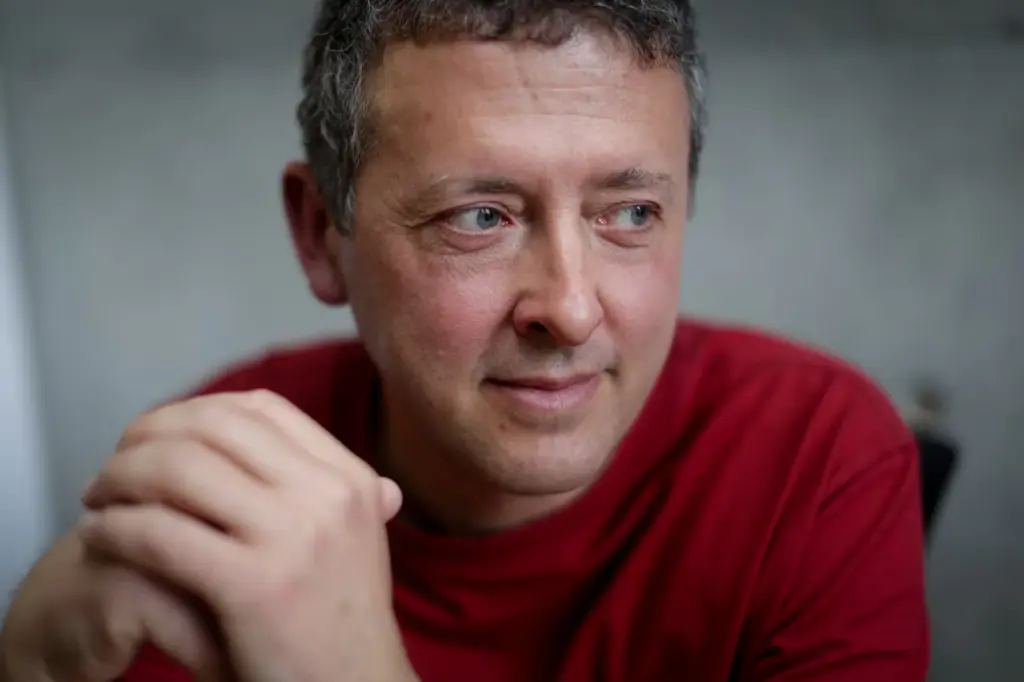
Despite the skepticism about the power of satire, Noriega identifies a risk in a society that takes itself too seriously, or that is incapable of having a ridiculous view of itself. “The risk is fascism, left or right. Both Stalin and Hitler took themselves too seriously. The inability to laugh at oneself leads to convincing oneself that one is right, that one is in a superior position,” he assures. And he explains that, generally, those who believe they occupy positions superior to the rest of the people are much more frightening than a person capable of perceiving nuances and shortcomings in each one. “That is the risk of believing that one can only laugh at others, because they are below, they are inferior. Those are the people we do not want to have in power,” he adds.
When Noriega talks about laughing at oneself, of course, he is not alien to that possibility, which his hypochondriac quality facilitates. “Not taking things seriously makes them less scary,” he says, before telling that with a group of friends, also hypochondriacs, they talk and laugh, even full of dread, about the three or four cancers they fear suffering each year. “We can laugh because, despite being scared shitless because we are convinced we have cancer, making jokes about it gives us distance and is like a relief.”
Varied Stories
Apart from the reissue (which is a symptom of its relevance) of Where the Clowns Die, the stories also brought Noriega back to Colombia. The Door of Happiness, the collection he began working on in 2016 and hopes to reach bookstores in October, moves away from the grotesque humor of the novel to open the range with stories that have elements of science fiction, others of horror, and others have a family air. And in others, of course, he resorts to amusement. “I like my story books to be very varied. I hope this one is even more varied than the previous one,” he explains. There is a unity in the book, he adds, hoping that this has helped make it a more mature one than the other story collections he has released.
Although his name in Colombia may be more associated with his work as a novelist, Noriega, if he had to choose, would stick with stories. “The novel has a price for authors like us who are not established. A psychological price, and that is that it involves a very large investment of time in something that one does not know how it will turn out,” he argues. The story, he adds, can take a day, a week, or a month to write, but after a much shorter (and manageable) time, the author knows if his creation has worked or not.
—In the end, a novel is like a coin toss…
—Yes. One can be working on a novel for years and, suddenly, discover two years later that it is no good or does not meet the standards. And it makes sense: my published novels are much fewer than the novels I have written, and that is a cost for any author.