Sitting under a newly built wooden and sheet metal shelter in the middle of a vacant lot, Wilfredo Guerrero chews the last pieces of plantain and the rice with beans from his lunch when he sees a red car enter the land that, for a month now, has been his home, his lookout post, and his place of resistance. He puts the plate on a concrete bench, stands up, and stealthily sticks to a sheet to observe the passengers without being seen. He puts his hand in the fanny pack he wears at his waist and waits a few seconds. Then, he turns around and relaxes again. “They are one of us. It’s just that these bastards change cars like they change their underwear,” he says laughing. And he goes back to his plate.
Guerrero arrived at this place exactly 30 days ago, when the Garifunas of the San Juan community, in the municipality of Tela, on the Honduran Caribbean coast, reclaimed these nine acres of land that they consider part of their ancestral territory. Since then, he sleeps here, eats here, and defends the place alongside other men and women from the community. The shelter under which he now protects himself from the sun was built together after the recovery. Around it are small huts, some barely held up by sticks and black plastics, as if their inhabitants only wanted to make it clear to anyone approaching that this land is not alone.
However, a month ago, this place was not so peaceful. In the early hours of July 6, the police arrived shooting and with no intention of talking to anyone. More than 200 officers participated in the operation. They arrived saying that the land belonged to a powerful Honduran business group and that they had to leave immediately. “It was around 6:00 in the morning. We hadn’t even had 24 hours since reclaiming the land when we were already surrounded. There were about 30 patrol cars, nearly 200 police officers, all heavily armed,” Guerrero recalls.
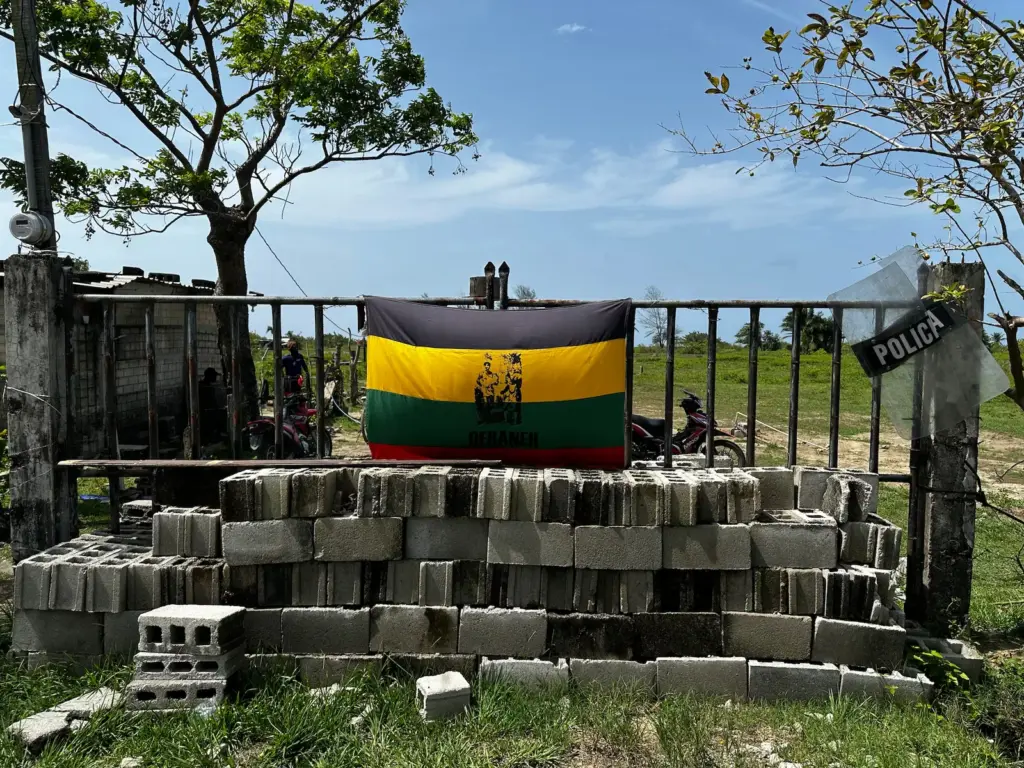
The police entered the land to execute an eviction order and detained five members of the community, members of the San Juan Land Defense Committee and the Honduran Black Fraternal Organization (OFRANEH). The authorities accused them of aggravated usurpation.
Guerrero, at 76 years old, says he has only one certainty: “This is the place where I was born and here I will die.” San Juan is a strip of land located in front of the turquoise waters of the Honduran Caribbean where he has spent his entire life. And, although since August 2023 there is a ruling from the Inter-American Court of Human Rights (IACHR) that ratifies its belonging to the Garifuna people, this has always been disputed land. “They have been fighting for years and years to get us out of here. But they won’t be able to,” he says.
The four men and the woman who were detained were taken to the police station in Tela, the nearest city, and released more than twelve hours later, around midnight. But while the Garifunas of San Juan were beating drums and raising their huts again on that vacant land, the Honduran Prosecutor’s Office continued the process against the detainees and increased the level of severity: the case was referred to a court with national jurisdiction in San Pedro Sula, the country’s second city, which handles organized crime files, a decision that defenders consider part of the criminalization against those who defend their territory.
The San Juan conflict, however, is just the most recent episode of a historical dispute that crosses much of the Honduran Caribbean coast, and just the tip of the iceberg that has sparked debate over the land conflict where some see their home and others a juicy business.
The story of Garifuna resistance, however, begins long ago.
The displaced
The Garifunas arrived in Honduras before Honduras was Honduras. At the end of the 18th century, England expelled the population then known as Black Caribs from Saint Vincent and the Grenadines, after decades of resistance to colonial rule. After a long journey, thousands disembarked on what are now the coasts of Trujillo, in the province of Colón, and from there they spread along the Caribbean coast.
By 1805, according to historians, there was already a Garifuna population in the place where Tela now stands, and since then, they made this coast their living territory. They fished, cultivated cassava, plantain, and other foods; traded with other coastal peoples and maintained ties with the Garifunas of Nicaragua, Guatemala, and Belize. When Tela began to become a city, the Garifunas occupied the so-called Barrio Abajo, next to the Tela River, while white merchants concentrated around the plaza and mestizos in Barrio Arriba. “They discriminated against us and looked down on our land. There was a president, Tiburcio Carías Andino, who went so far as to say that we were wild monkeys living in the trees, in the jungle,” Guerrero recalls.
During the 20th century, the land that was once looked down upon began to be valued as a treasure in the eyes of big businessmen. Foreign companies began to arrive, including the United Fruit Company, and dozens of merchants seeking to exploit the land and its wealth.
At the end of the 1990s, the beaches that for generations were the place where the Garifunas fished, cultivated, and built their communities began to be seen differently: as beachfront land, as tourist destinations, as real estate investments. And since then, the Garifunas began to be displaced again.
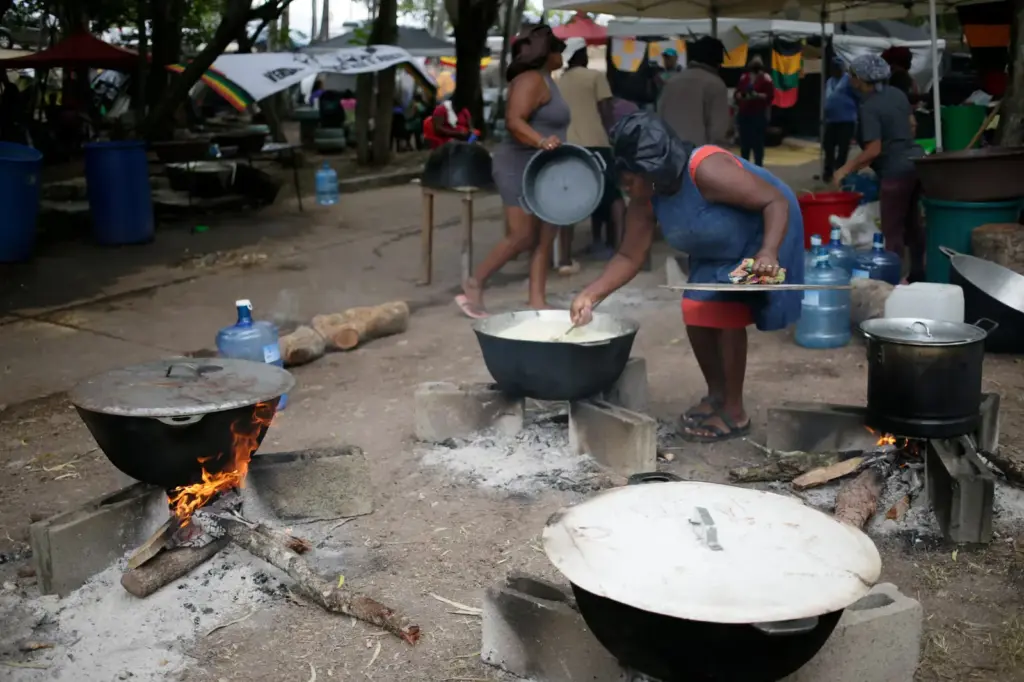
Marta and Sandra, two Garifuna women who cook for the resistance on the reclaimed land, remember it well. “Tourism entrepreneurs started arriving here in the late 90s. They started with a hotel and then expanded. It was slow, but they never stopped,” Marta says.
Read more The enzymatic cleaner in spray format that eliminates stains and bad odors at home
In Tela Bay, pressure on coastal lands intensified with the arrival of the 2000s. Entrepreneurs from Tegucigalpa and San Pedro Sula began buying beachfront land and fencing it off; then the first tourist projects appeared.
The Garifunas of San Juan maintain that they are not invading someone else’s land, but reclaiming part of an ancestral territory that the State never fully recognized. “Here we were born, our parents, our children. And here we will die,” Sandra says.
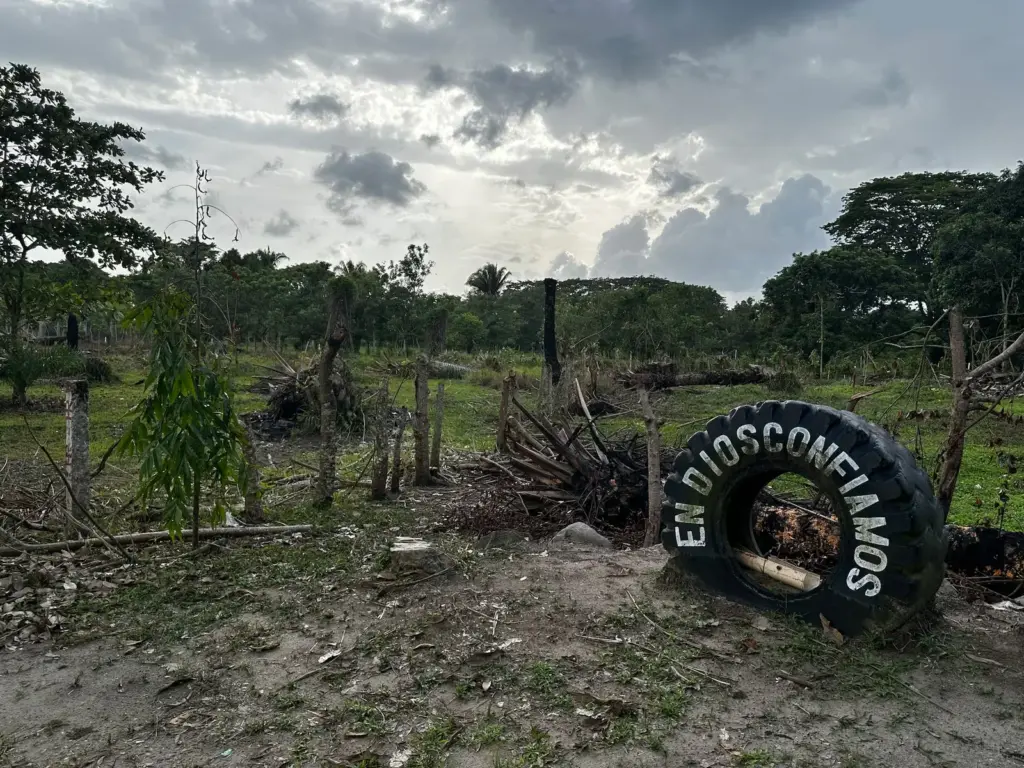
Between 2006 and 2023, the IACHR has issued four rulings on four Garifuna communities, including San Juan Tela, but in none of the cases have practical measures been implemented to protect them from invaders. “When we are invaded, the authorities never act. Years go by and no one does anything. But when we reclaim what is ours, they act in less than 24 hours,” Guerrero says.
The resistance
Since the early 2000s, three Garifuna communities in Tela (San Juan, Triunfo de la Cruz, and Tornabé) have lost at least half of their territory to “third parties,” as they call anyone who is not Garifuna. But they have also reclaimed some hectares, especially after the IACHR rulings.
The latest assault, the eviction of San Juan, occurred after the government of conservative Nasry Asfura promoted the new Law for the Strengthening and Protection of the Agroindustrial Sector, Energy Projects, Tourism, Livestock, and Small Agricultural Producers of Honduras, published last June. This law empowers both the Public Ministry and the National Police to act immediately in cases of “invasions” that threaten businessmen. The law exempts those territories that are Garifuna lands, although, in practice, this has not been fulfilled.
In some communities, the Garifunas have taken land from businessmen and even from monoculture landowners such as coconut or African palm. Every time they reclaim new territory, the Garifunas hurry to install small plantations or houses to begin populating and not leave the land alone again.
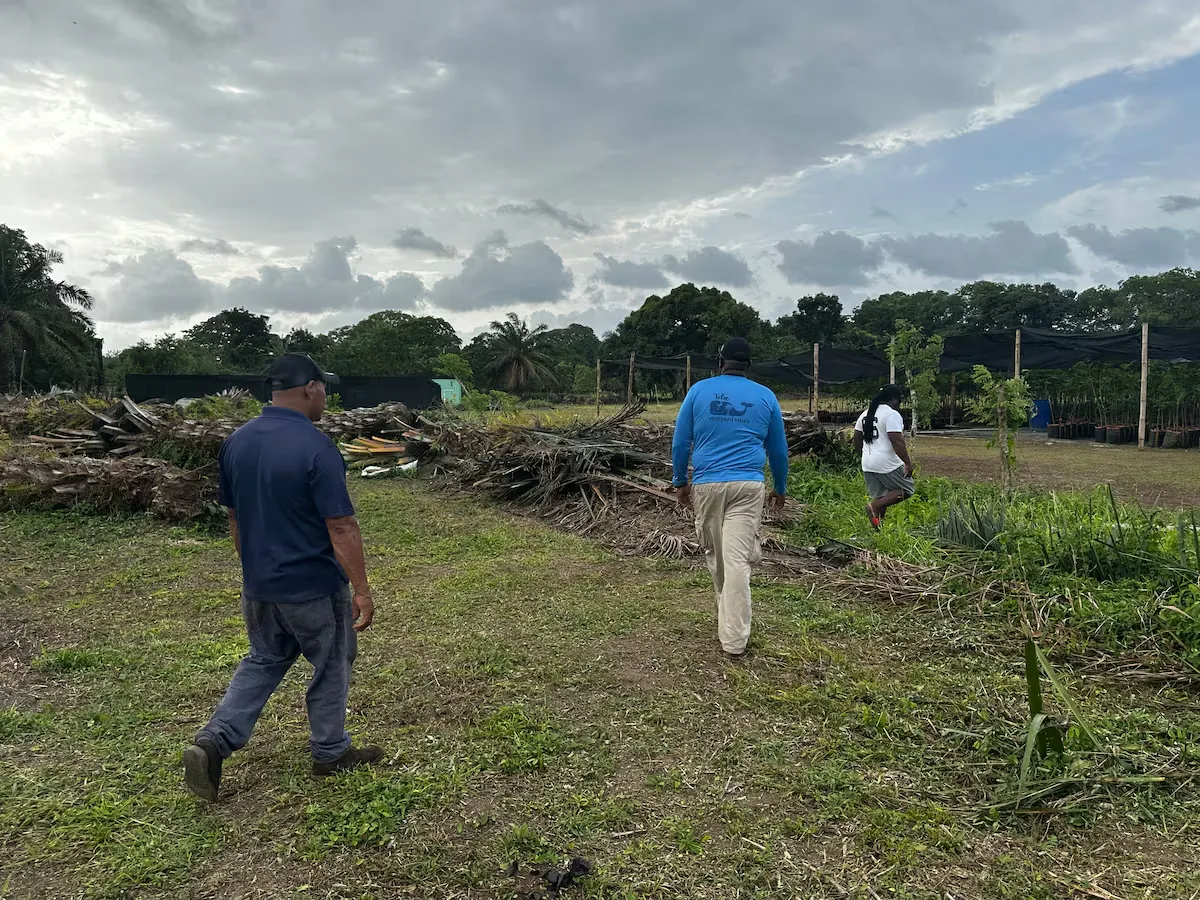
Osman López, community leader of Tornabé, says that in some cases they even clear the land to prevent landowners or businessmen from having reasons to try to reclaim it. “The new law says that territories that are in productive stage will be reclaimed. That’s why we remove the production,” he says.
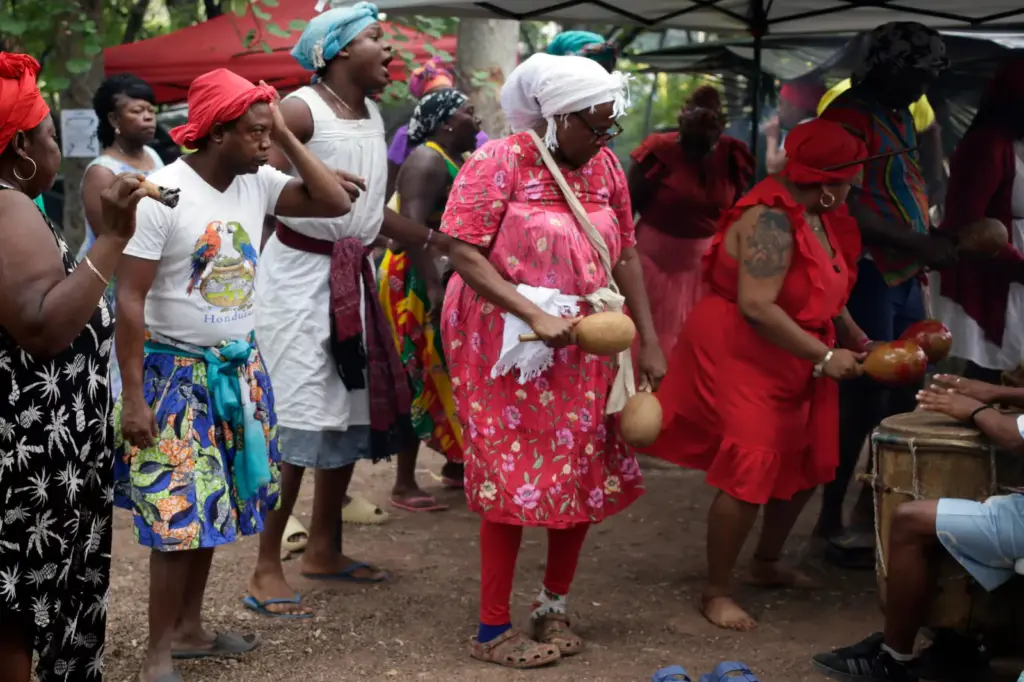
But Garifuna resistance is not only fought on the territory; another political and legal battle is also being fought. On August 10, for example, Miriam Miranda, leader of OFRANEH, coordinated a permanent demonstration in Tegucigalpa, in front of the Judiciary, to demand an end to the persecution against the leaders of San Juan who are being prosecuted.
After seven days of staying in the place, the Garifuna leaders denounced an attempt at intimidation by the authorities. “Tanks, military, and police arrived to intimidate us. It looked like they were going to war,” Miranda told the media.
From the San Juan Tela community, the land dispute does not seem close to ending. For the Garifunas, resisting means defending not only some plots but the possibility of continuing to exist in the place where their communities took root more than two centuries ago. While they await the next assault, they also continue planting, building, and claiming in the courts. Their fight, they say, is not to accumulate wealth but to prevent their freedom from being taken away. “This is a paradise where we were blessed to be born, and they will not take us out of here,” Guerrero states.