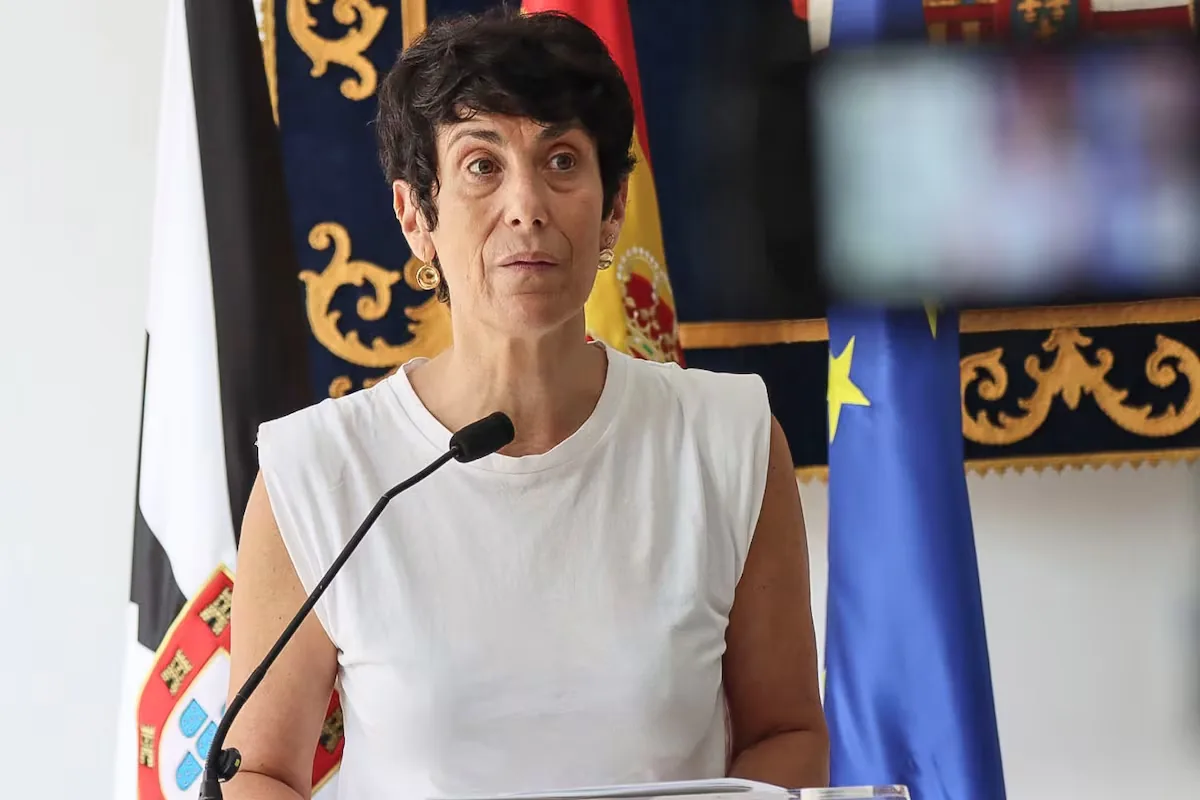
The Government spokesperson, Elma Saiz, considered on Monday the statements of the PP leader, Alberto Núñez Feijóo, who yesterday called for a lockdown in Ceuta due to a “health risk” related to migrants in the autonomous city, as a “major irresponsibility.” “Ceuta does not need to generate anxiety and fear. Feijóo did not come to propose solutions, but to spread anxiety,” Saiz criticized during an interview on La Hora de La 1. “There is no risk of contagion. What is contagious is xenophobia. It seems to me a major irresponsibility.” After the statements of the popular leader yesterday, the Minister of Health, Mónica García, responded that public health competencies are regional and that with the current data it would be “unjustified and totally disproportionate” to confine the migrants who arrived on July 30 and 31 in the autonomous city. Health is holding a meeting with the autonomous communities since 12:00 to specify the shipment of vaccines to the thousands of immigrants.
EL PAÍS offers the latest news on the migration crisis for free. If you want to support our journalism, subscribe.

EUROPEAN UNION
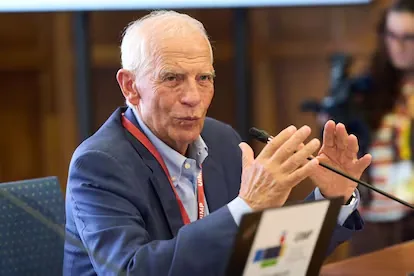
Borrell sees the EU’s reaction to the Ceuta crisis as “disproportionate, hysterical and absurd”
“Hysterical, disproportionate and absurd.” The former head of European (and Spanish) diplomacy, Josep Borrell, has lamented the EU’s reaction to the entry of 80,000 people in Ceuta at the end of July. The President of the European Commission, Ursula von der Leyen, harshly criticized Spain after that avalanche; only when the bulk of the crisis was resolved (more than 70,000 Moroccans returned to their country in just a few hours), did she congratulate both Spain and Morocco. And up to 22 countries, led by the far-right Italian Giorgia Meloni and the Danish social democrat Mette Frederiksen, linked the regularization of migrants and the more open Spanish migration policy compared to the rest of Europe with the Ceuta crisis. A Commission spokesperson went further and recently demanded that Spain return to Morocco all those still in Ceuta, several thousand people, despite 2,500 being minors and another 2,500 potential asylum seekers. Both groups are protected by Spanish laws and court rulings, as well as European legislation.
You can read the full information here
The Government delegate in Ceuta says the city is still “far from normality” and rules out resigning
The Government delegate in Ceuta, Miguel Ángel Pérez, has admitted that the city, 25 days after the massive entry of immigrants, is still “very far” from recovering normality and has ruled out resigning, considering that doing so now would be “an absolute irresponsibility and cowardice.”
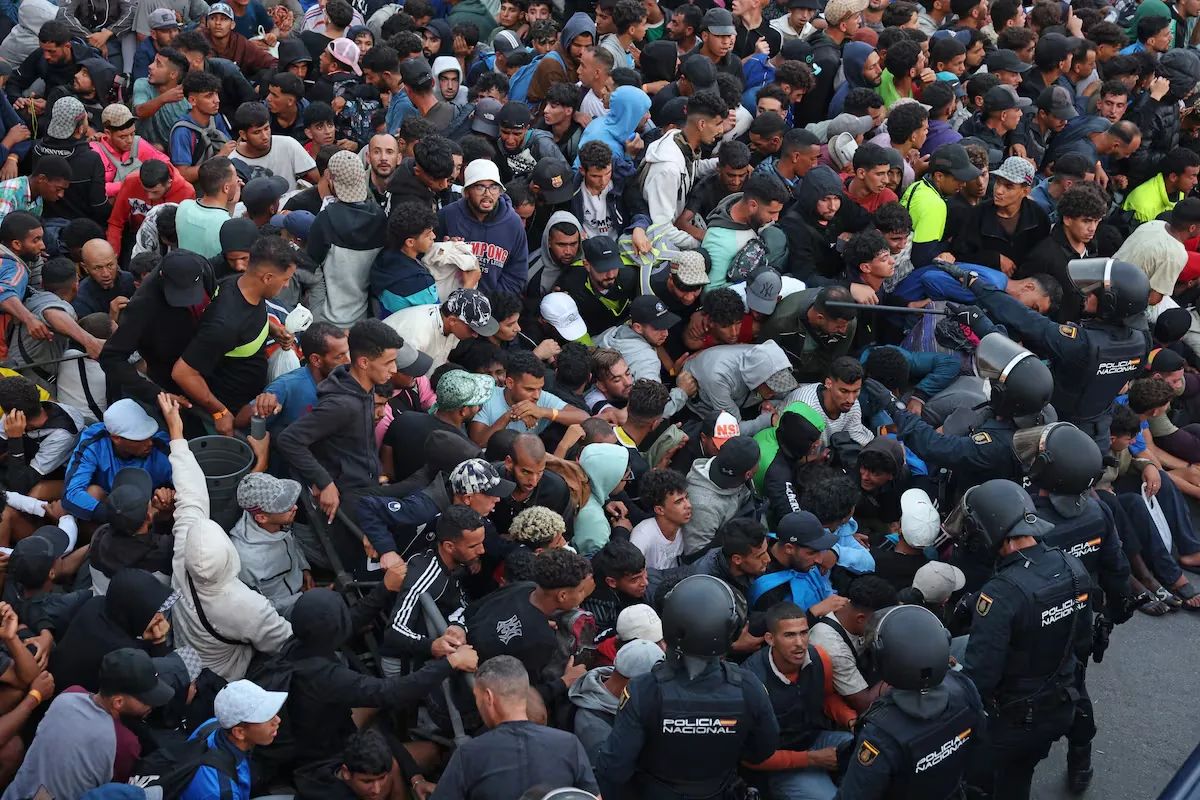
Pérez made these statements at a press conference after holding a meeting with officials from the Foreigners and Borders Brigade of the National Police, in which he addressed the situation generated after the irregular entry of more than 80,000 people through the Tarajal border. The delegate explained that the new Temporary Foreigners Care Center (CATE) is already operational, although it is not yet running at full capacity, and pointed out that its implementation was proposed by the Government Delegation itself before July 30 due to the increase in entries during the previous weeks.
“We are very far from achieving normality and there is still a lot of work ahead,” said the delegate, who rejected offering a triumphalist discourse and defended that the response to the crisis must be addressed from different fronts and with the available means. In this regard, he explained that the procedure to reverse the situation begins with triage and the corresponding notifications, continues with the processing of asylum applications that may be submitted and, once resolved, will allow activating return procedures when appropriate.
“What we want is for the people who entered illegally on July 30 to return the way they came,” he assured, although he warned that there are no immediate solutions and that all procedures must comply with the available legal instruments. (Efe)
The Health delegation is already in Ceuta to assess the impact of the migration crisis on healthcare
The delegation from the Ministry of Health, led by the Secretary of State for Health and President of the National Institute of Health Management (Ingesa), Javier Padilla, is already in Ceuta to assess the impact of the migration crisis on the University Hospital and Primary Care services of the autonomous city. The delegation will hold several meetings on Monday with technicians and some political officials from the Ministry, responsible for the health competencies of the autonomous city.
Padilla could stay several days in Ceuta during this visit, which takes place eight days after the one made by the Minister of Health, Mónica García, who will appear on Thursday before the Health Commission in Congress in an extraordinary session to explain her management of this crisis.
Her visit to Ceuta was marked by controversy, as after returning to Madrid she questioned the local Government’s management, stating that it was not “agile enough” to enable spaces for the immigrants who arrived. She also labeled as “xenophobia” the alerts about possible overcost or saturation in the city’s public health system.
The President of Ceuta, Juan Jesús Vivas (PP), responded the next day to the minister by reminding that “no one can give lessons to Ceuta on solidarity.” He also called her behavior “absolutely incorrect” and accused her of “trying to unload and evade responsibility by blaming the regional Government.”
Likewise, the Ministry of Health has convened the autonomous communities this Monday to supply vaccines to the thousands of immigrants settled irregularly in the autonomous city after the jump from Morocco starting July 30, involving about 80,000 people. As expressed by the Minister of Health, Mónica García, on the social network X, the meeting of the Public Health Commission takes place this Monday “in continuity with the vaccine panel meeting held last week” with the aim of “facilitating the donation of vaccines to the City of Ceuta while the city government acquires more doses within its competencies.”
The meeting, held from 12:00 by videoconference, has a single agenda item: ‘Solidarity mechanism for vaccines in relation to the situation in Ceuta.’ Among the most requested are the MMR vaccine, chickenpox, polio, tetanus, and diphtheria. (EP)
MIGRATION CRISIS
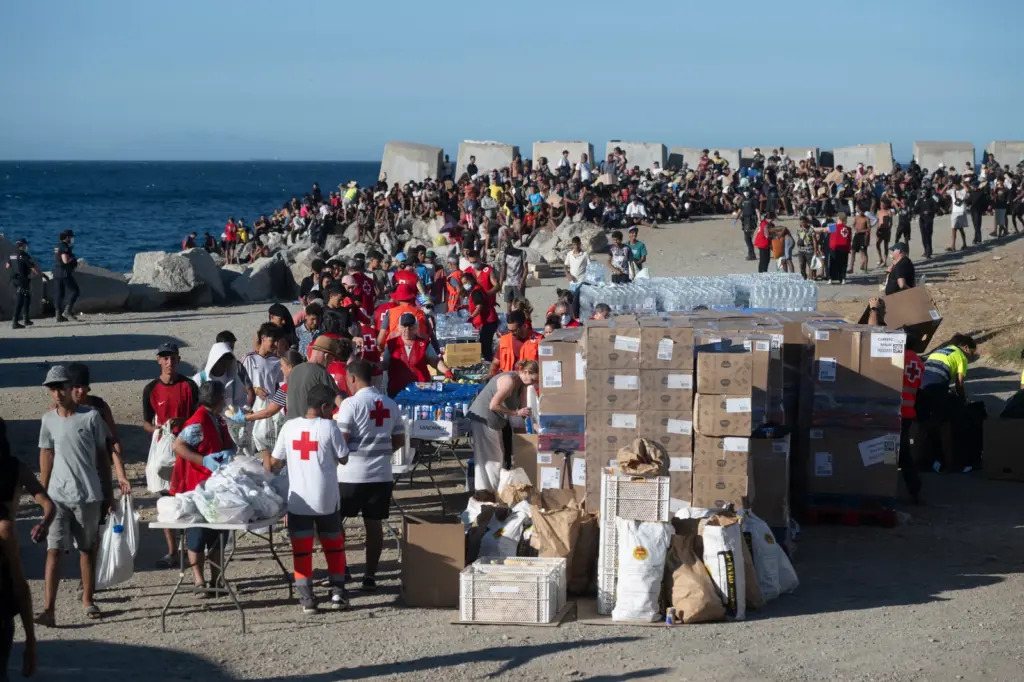
Justice urges the Judiciary to process reinforcements for Ceuta: “The Ministry has everything ready”
“The Ministry has everything ready.” The Secretary of State for Justice, Manuel Olmedo, has sent a letter to the General Council of the Judiciary (CGPJ) urging the governing body of judges to process reinforcements for the courts of Ceuta. In the letter, accessed by EL PAÍS, the number two of Félix Bolaños warns that once it receives the corresponding request along with the inspection service report, the Ministry is ready to approve the budget credit authorization.
You can read the full information here
France
Ceuta breaks into the campaign in France
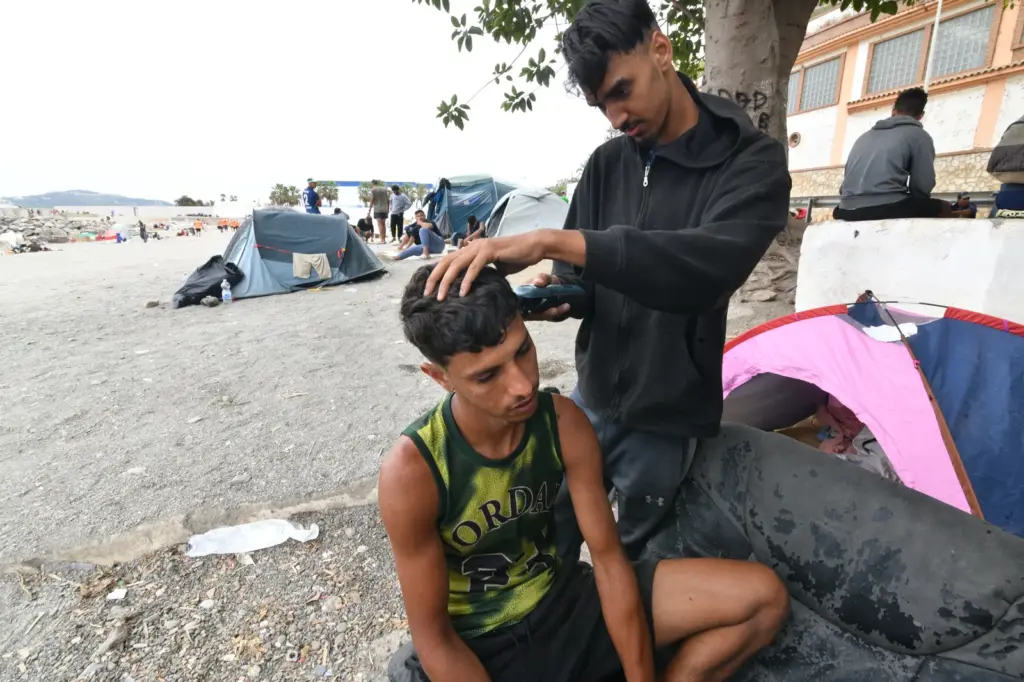
In the French electoral campaign, eight months before the presidential elections in the country, an unexpected actor has emerged these weeks: Ceuta. The migration crisis in the autonomous city unleashed at the end of July after the massive entry of immigrants from Morocco has triggered reactions from most of the declared candidates, who have taken the opportunity to bring the issue to the national level and position themselves on one of the central issues of the campaign and one of the greatest concerns of the French: immigration.
You can read the full information here
Migration crisis
The inner border of Ceuta
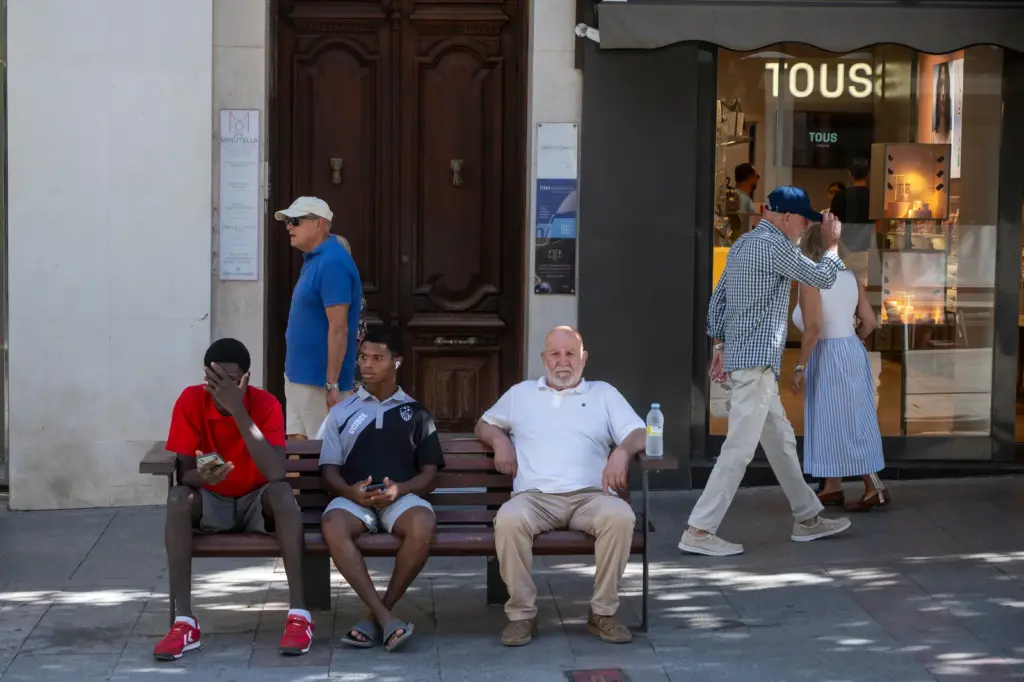
For a city like Ceuta, surrounded by coast, the beach is a good thermometer for an August Sunday. And that thermometer still showed a very hot social temperature. There are areas with air conditioning and others with fans. In one part, scenes of refugee camps unfold and in another, locals begin to bring out the cooler, play music, and open the umbrella with family on the sand. The crisis that overnight brought 80,000 people keeps a good stretch of coast unusable, but Calamocarro beach this Sunday finally looked relaxed. “It’s the only beach they have left us. Enough of staying at home. We have to recover the space because they have stolen the city from us overnight. Here, whoever arrives at this beach, we send them over there,” says a father spending the afternoon with two other couples, pointing to the border fence.
You can read the full information here

Murcia requests the Government to reinforce the Civil Guard’s resources to “protect the coasts” from the arrival of immigrants
The President of the Region of Murcia, Fernando López Miras, has sent a letter to the head of the Executive, Pedro Sánchez, requesting reinforcement of the Civil Guard forces in the Region, as well as its maritime and technological means used for surveillance and control of these incidents “in order to protect the coasts of the Region of Murcia and stop the arrival of boats with immigrants,” according to a message he published on the social network X.
In his letter, López Miras expresses his “great concern” about the situation occurring on the coasts of Murcia where “in just four days, the arrival of fast boats has been recorded that, with total impunity, have reached the shore transporting immigrants in broad daylight, without being intercepted by the State Security Forces and Corps,” something that, according to the Murcian head of government, is causing “great social alarm and a feeling of insecurity” among citizens.
Fernando López Miras talks in his letter about the lack of resources of the Civil Guard in the Region and emphasizes that “the only patrol boat available to stop this incessant arrival of illegal motorboats is currently not operational due to a breakdown,” a situation he calls “unacceptable.” “An increase in technological surveillance means, such as sensors, radars or drones, which allow controlling and preventing incidents of this nature, is also urgent,” the president of Murcia requests in his letter, where he also asks for “updated and real-time information about how many maritime means the State currently has for the surveillance of the Murcia Region’s coastline.”
“A clear and forceful signal must be sent now to these unscrupulous mafias so that they are aware that the coasts of the Region of Murcia are protected with close and permanent surveillance. Guaranteeing security must be an immediate priority,” concludes the Murcian president.

Elma Saiz considers Feijóo’s statements about confining Ceuta a “major irresponsibility”
The Government spokesperson, Elma Saiz, has considered the statements of the PP leader, Alberto Núñez Feijóo, who yesterday called for a lockdown in Ceuta due to a “health risk” related to migrants in the autonomous city, as a “major irresponsibility.” “Ceuta does not need to generate anxiety and fear. Feijóo did not come to propose solutions, but to spread anxiety,” Saiz criticized during an interview on La Hora de La 1. “There is no risk of contagion. What is contagious is xenophobia. It seems to me a major irresponsibility.”
Asked why she thinks the message that unaccompanied minors are a danger resonates, Saiz attributed the responsibility “to the leaders who make statements that misinform,” and criticized the PP for “embracing Vox’s xenophobic discourses.”
Migration crisis
The unresolved Ceuta crisis lands in a Congress heating up for elections
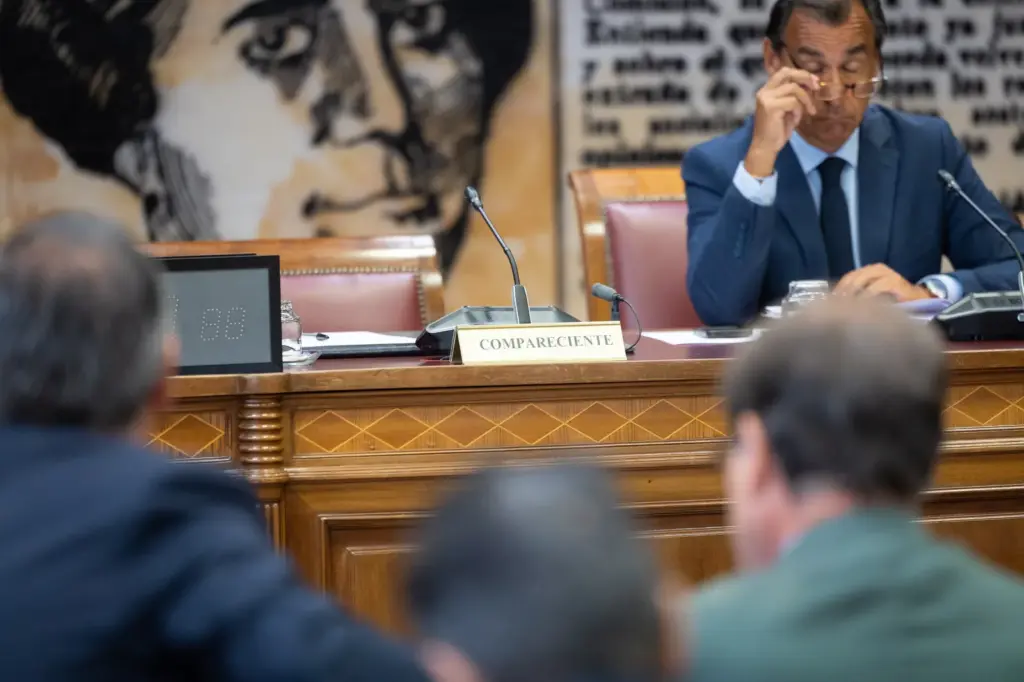
The Government will use Congress this week to offer, through the appearance of seven ministers, the first orderly account, with all available and verified data, about the origin and situation of the unresolved Ceuta crisis, and to debunk a good number of hoaxes. It will do so 26 days after the avalanche of about 80,000 immigrants in the autonomous city. The Executive does not yet have a single version of why that massive entry occurred, although it leans towards a call effect generated by mafias, multiplied on social networks and promoted from countries that do not have to be only Morocco. The theoretical approach that all immigrants who arrived return to the Alawite kingdom clashes with legal obstacles, political differences, and that country’s reluctance to host them all. Pedro Sánchez ruled out any call to Alberto Núñez Feijóo, due to their bad relationship and how the opposition leader reacted in the first hours after the crisis to politically exploit it for a long electoral year.
Read the full information here.
Cuerpo travels to Ceuta this Monday to discuss economic support with companies after the migration crisis
The First Vice President and Minister of Economy, Trade and Business, Carlos Cuerpo, visits Ceuta this Monday to discuss the necessary economic support for the city as a consequence of the migration crisis that began at the end of July. Cuerpo plans to hold working meetings with the Government of the autonomous city, business associations, social agents, and companies with the aim of supporting Ceuta, not only from a humanitarian and security perspective but also economically, according to sources from the Ministry of Economy, Trade and Business.
The Executive is working on an economic reactivation plan for the city, the amount of which is not yet closed and seeks to address the impact of the crisis on sectors such as commerce and tourism. Among the first estimates the Government handles are at least 15 million euros to reactivate commerce, through tax cuts, reductions in Social Security contributions, and direct aid to compensate for lost profits during the crisis period.
The plan will also include measures to boost tourism and new aid for an ongoing project that uses desalinated water in Ceuta. Most of the resources will likely be provided through various decrees in the coming weeks, rather than concentrated in the first Council of Ministers after the summer break, scheduled for tomorrow, August 25. (EP)
Migration crisis
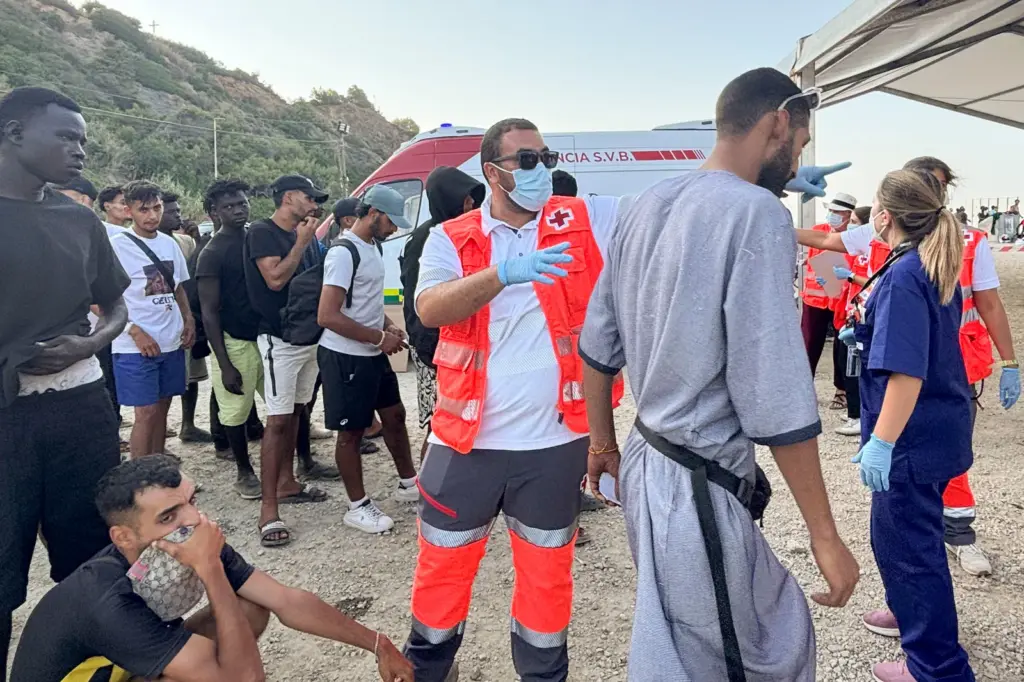
A key week begins for Ceuta’s health crisis, between noise and management
The Government and the opposition have been exchanging reproaches for days about the health situation in Ceuta. Meanwhile, quietly, they prepare to do what administrations usually do when there is a real problem: negotiate, cooperate, and find a practical solution. The Public Health Commission of the Ministry of Health urgently convenes the communities this Monday to agree on sending vaccines to the city. After a storm of tweets and statements, real management arrives.
Read the full information here.
Health convenes the autonomous communities this Monday for vaccine donation to Ceuta
The Public Health Commission of the Ministry of Health urgently convenes the autonomous communities this Monday to facilitate the donation of vaccines to Ceuta after the massive arrival of migrants since July 30. According to the Ministry of Health, the meeting will activate the solidarity mechanism for vaccine supply. Among the most requested are the MMR vaccine, chickenpox, polio, tetanus, and diphtheria.
The meeting will be held by teleconference from 12:00. In the call, the Director General of Public Health and Health Equity, Pedro Gullón, justifies the extraordinary meeting by the need to address, as soon as possible, the supply of units.
Also, this Monday, the Secretary of State for Health, Javier Padilla, returns to Ceuta to analyze the health situation caused by the migration crisis in the city, where professionals report care pressure and there is increasing confrontation with the National Institute of Health Management (Ingesa).
The visit takes place barely a week after the Minister of Health, Mónica García, traveled to the autonomous city and denied a “health collapse,” although she admitted that there are “especially strained” areas, including Emergency, Internal Medicine, and Primary Care.
Padilla’s return occurs amid an open discrepancy between the official version and that of health workers. While Health defends that ordinary activity has not been altered, the Medical Association, unions, and professional organizations warn that the pressure derived from the massive arrival of migrants has pushed already structurally problematic staff to the limit.
This Sunday, Minister Mónica García insisted, in a message published on X, that “the fundamental and most urgent” thing is to shelter people and provide them with basic hygiene and sanitation conditions, ensuring drinking water, access to hygiene measures, and food in good conditions. With that, the minister says, “the vast majority of the risk elements for outbreak development would be controlled.” (Efe)
Good morning. Here begins the live narration of the latest news this Monday about the arrival of migrants in Ceuta. More than three weeks later, attention focuses on the possible health consequences of the crisis. The PP leader, Alberto Núñez Feijóo, yesterday called for a lockdown in Ceuta due to a “health risk” from migrants sick with scabies and tuberculosis, to which the Minister of Health, Mónica García, responded that public health competencies are regional and that with the current data it would be “unjustified and totally disproportionate” to confine the migrants who arrived on July 30 and 31 in the autonomous city.
Read more The enzymatic cleaner in spray format that eliminates stains and bad odors at home