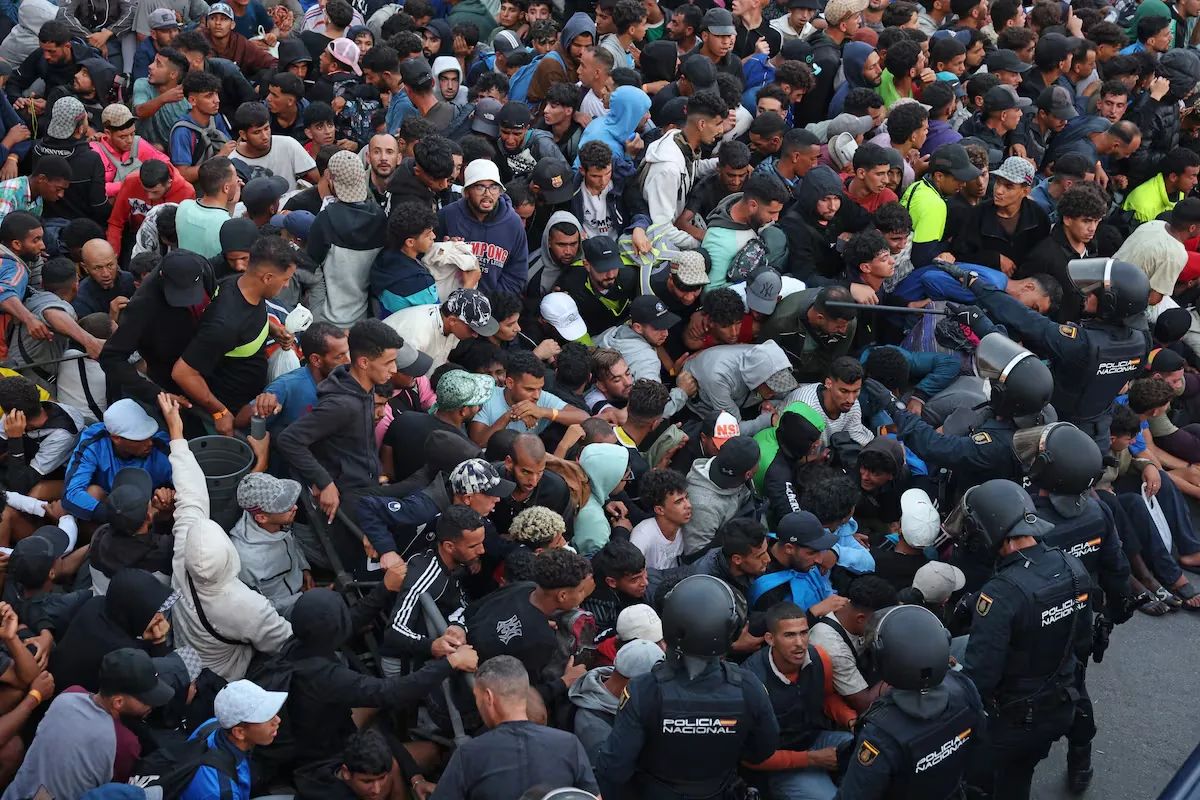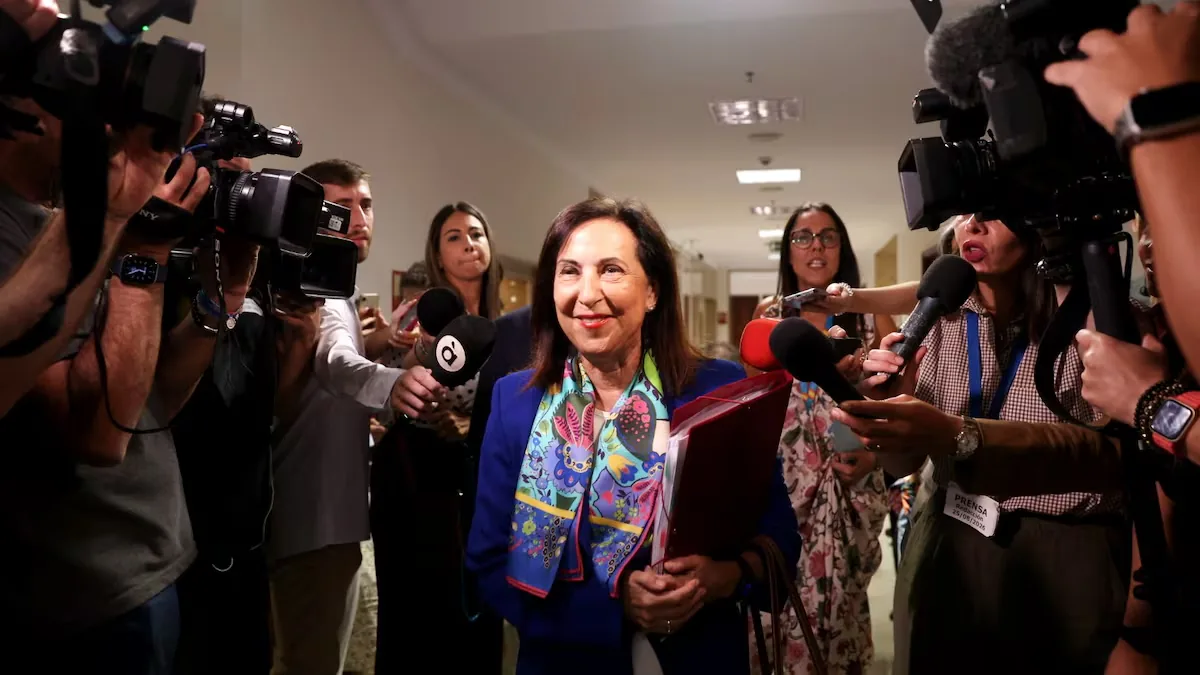
Defense Minister Margarita Robles apologized this Tuesday in Congress to the people of Ceuta who have felt “abandoned” during the migration crisis, and warned that Ceuta and Melilla “are Spanish and untouchable.” Her appearance opens the week in which a total of eight ministers will appear before the Lower House to account for the government’s management, in a schedule that will extend until next Monday, August 31, with the appearance of the Minister of Youth and Childhood, Sira Rego, and Ana Redondo. Meanwhile, the Prime Minister presided this Tuesday over the first meeting of the National Security Council dedicated to Ceuta, 26 days after the massive entry of about 80,000 migrants into the city. The president of Ceuta, Juan Jesús Vivas, connected telematically to the meeting, along with the three vice presidents, several ministers, and the state security leadership. The big news of the day is the creation of a unified command to manage the crisis, a request that Vivas had been making for weeks. It will be assumed by Minister Ángel Víctor Torres, with the backing of Moncloa, heading a committee that will also include Vivas himself, the government delegate in Ceuta, and representatives of the CNI.
Read more Haakon and Mette-Marit of Norway celebrate their silver wedding anniversary in private
EL PAÍS offers the latest news on the migration crisis for free. If you want to support our journalism, subscribe.
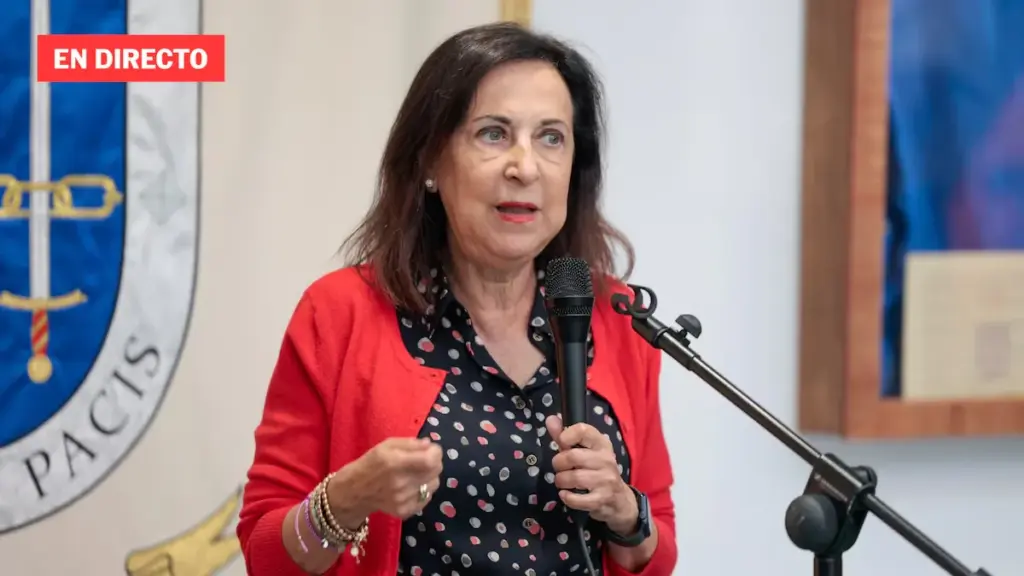

Robles admits that the Supreme Court ruling on swimming across the border caused a “call effect”
Defense Minister Margarita Robles explained that the “massive assault” on July 30 and 31 at the Ceuta border was orchestrated on social networks in three phases and was based on “self-management” by migrants who went to the border post in response to “a message of opportunity” and a message “transmitted on networks of supposed lack of obstacles” at the border.
According to Robles, who cited a report from the Defense Staff, the first phase, of “concentrated migration,” began with the Supreme Court ruling of July 8, 2026, which states that there can be no returns if the border crossing is done by swimming, and lasted until July 30. In that phase, “several hundred” migrants crossed by sea, which “gradually increased to thousands.” She spoke of a “call effect favored by an interested interpretation of the ruling,” which was further reinforced by a message on networks transmitting a supposed decrease in police forces on the Moroccan side due to the celebration of the Throne Day.

Robles points to the speed of social media communication as a difficulty in preventing migrant avalanches
Defense Minister Margarita Robles pointed to the “speed of digital communications” on social networks as a difficulty for the State security forces to “react in time to migratory attempts when they occur en masse.” Added to this is the impossibility of “physically and materially preventing these avalanches of hundreds or thousands of people through the use of force.” “The number of deaths would be countless,” she said.
Robles highlights the role of the Army and Civil Guard in managing the Ceuta crisis
Margarita Robles wanted to dedicate part of her appearance in Congress to thank those who have managed the crisis on the ground since July 30. “I want to recognize and thank all those who, during July 30 and 31 and afterwards, are doing their work with dedication, professionalism, prudence, and the utmost willingness to serve,” she said, extending her thanks to the Police and Civil Guard, and “as Defense Minister,” especially to the Armed Forces, the CNI, and the CIFAS, the latter “with the professionalism and duty of secrecy that legally characterizes them.”
Robles insisted that the connection of the Armed Forces with Ceuta and Melilla is “one of the highest expressions of the Spanishness of those autonomous cities.” The minister also reviewed the legal framework for military action at the border. She recalled that Article 8 of the Constitution assigns the Armed Forces the mission of “guaranteeing the sovereignty and independence of Spain, defending its territorial integrity and the constitutional order,” a provision developed by the 2005 Organic Law on National Defense, which establishes as basic Army actions the surveillance of maritime, air, and land spaces, rescue operations, and support to the State Security Forces in the fight against terrorism, among others.
Robles emphasized that, according to the regulatory framework, “the Armed Forces do not replace the State Security Forces,” to whom the Organic Law on Security Forces and Corps assigns border control and the application of immigration regulations. The Army, she explained, acts “within its own competencies in support of those state security forces” when requested by the competent authorities. This happened, she detailed, on the afternoon of July 30, when the Government Delegation in Ceuta requested the collaboration of the Armed Forces and the Chief of the Defense Staff issued support directives to the Ministry of the Interior for presence, surveillance, and deterrence tasks.
Robles calls for a “comprehensive and coordinated” migration policy in the European Union
Defense Minister Margarita Robles defended the need to advance towards “a comprehensive and coordinated migration policy within the European Union” that combines “effective and firm” border management with the protection of fundamental rights and the safeguarding of the lives of migrants.

Robles: “Any aggression or attempted aggression against Ceuta or Melilla is against all of Spain”
Defense Minister Margarita Robles reiterated several times during her appearance that Ceuta and Melilla are Spain: “Let no one have the slightest doubt: Ceuta and Melilla are Spain. You have heard me say that it is not just that they are Spanish, they are very Spanish. Ceuta and Melilla represent the best of Spain, an example of respect, maximum tolerance, and coexistence among religions.”
Robles warned that “we will not allow these values of coexistence and tolerance to be put in danger or questioned from any perspective”: “Any aggression or attempted aggression against Ceuta or Melilla is against all of Spain, because our sovereignty and our territorial integrity are untouchable.”
The minister insisted on this idea with a second formulation, emphasizing that it is a “responsibility of the State as a whole”: “Their sovereignty, territorial integrity, and the security of their citizens constitute a responsibility of the State as a whole, which will respond firmly to any violation of the same, within the law,” she added.
Robles apologizes to the people of Ceuta who have felt “abandoned”
Defense Minister Margarita Robles also wanted to express her “total and absolute solidarity with the anguish of the citizens of Ceuta,” as well as all her “empathy.” “I have firsthand knowledge of their feeling of anguish, abandonment, insecurity. I want to apologize to all those who may have felt or who even today continue to feel abandoned or not sufficiently supported.” She assured that “they will not be abandoned” in the future, and mentioned measures such as new physical barriers and signaling beacons at the border, as well as work in the EU to “increase the Union’s participation in defending the autonomous city and its border through Frontex.”
Robles expresses her “pain and solidarity” for the migrants who died in Ceuta
Defense Minister Margarita Robles began her appearance before the Defense Committee of Congress with a remembrance of those who died during the massive entry of migrants into Ceuta on July 30 and 31. “Almost 100 people died between Spain and the border, in the sea. We do not know the exact number of people who died, but that cannot leave us insensitive,” she said. “All our pain and our solidarity,” she added.

Esther Muñoz reproaches that the Government knew since 2021 the risk of a new migration crisis
The PP spokesperson in Congress, Esther Muñoz, reiterated that the Government ignored intelligence information that already warned of the situation on July 30. According to her, since the 2021 migration crisis there are at least three official documents proving that the Executive knew the risk and did not take the necessary measures.
Muñoz cited the National Security document approved in 2021, the 2024 Maritime Security Strategy, and the 2025 Annual National Security Plan, approved three months ago, in which, she explained, there was already a warning about the use of migratory flows as a hybrid warfare instrument against Spain and the increase in arrivals to Ceuta.
The spokesperson made these statements upon arriving at Congress, where Defense Minister Margarita Robles appears this Tuesday. Muñoz considered that the appearance comes “late” and reproached the Executive for its management: “If there is something all Spaniards have seen is that for the Government, first were the holidays and then Spain.”
The popular leader announced that she will ask Robles about “the abandonment and negligence of the Government” and the reasons why what happened was not foreseen, despite, she defended, there were reports for years warning that a similar situation could happen again.
Margarita Robles’ appearance in Congress on the Ceuta crisis begins
Defense Minister Margarita Robles appears in Congress to explain the migration crisis in Ceuta. Her intervention opens the week of appearances in which a total of seven ministers will appear before the Lower House to account for the government’s management, in a schedule that will extend until next Monday, August 31, with the appearance of the Minister of Youth and Childhood, Sira Rego, and Ana Redondo.

The Andalusian High Court strengthens Ceuta courts to face the migration crisis
The Andalusian, Ceuta, and Melilla High Court of Justice (TSJ) has issued two agreements to face the migration crisis in the autonomous city that on July 30 and 31 experienced the irregular entry of 80,000 migrants. The first is to establish reinforcement so that there are two judges on duty at the Ceuta Court of First Instance “while the extraordinary situation lasts.” The second is to offer a position on secondment to strengthen cases related to violence against women.
This was announced this Tuesday by the Permanent Commission of the General Council of the Judiciary (CGPJ), which took note of both TSJ Andalusian agreements and the letter sent on Monday by the Secretary of State for Justice, urging them to process reinforcements in the courts of the autonomous city.
The eight members of this commission also reiterated to the Government the need to convene the Mixed Commission to finalize the text of the support and reinforcement measures protocol (signed in 2019) so that “it can be ratified as soon as possible.” According to the Judiciary, ratifying this protocol “would speed up the adoption of these measures and avoid delays in their application, especially in urgent cases such as that affecting the autonomous city of Ceuta.”
In detail | From Robles to Rego: this will be the week of appearances in Congress on the Ceuta crisis
Eight ministers will appear in Congress at their own request to account for the management of the migration crisis in Ceuta, in a week of appearances starting this Tuesday.
August 25. The first to appear before the Chamber will be Defense Minister Margarita Robles, who opens the schedule in her corresponding committee.
August 27. Thursday will be the turn of Félix Bolaños, Minister of the Presidency, Justice, and Relations with the Cortes, who will report in the joint National Security committee, and Mónica García, Minister of Health, who will appear before the committee of her department to explain the activity developed by her department.
August 28. Friday will be the day with the most appearances: José Manuel Albares, Minister of Foreign Affairs, European Union, and Cooperation; Fernando Grande-Marlaska, Minister of the Interior; and Elma Saiz, Minister of Inclusion, Social Security, and Migration, will each appear before their respective committees.
August 31. The Minister of Youth and Childhood, Sira Rego, will report on the work carried out by her department in protecting the rights of unaccompanied minors who have arrived in Ceuta. Likewise, the Minister of Equality, Ana Redondo, will appear.
Miriam Nogueras asks that Catalonia not host minors from Ceuta or the Government “will not have a single vote” from Junts
The spokesperson of Junts in Congress, Miriam Nogueras, has demanded that Catalonia be excluded from the distribution of unaccompanied foreign minors who arrived in Ceuta. “Catalonia will be excluded from the distribution or the Spanish Government will not have a single vote from us,” she warned.
In a message on X this Tuesday, Nogueras attributed the Ceuta crisis to “negligence” by the Government in controlling the borders, and accused Pedro Sánchez’s Executive of wanting to share the consequences. “We cannot assume the neglect of a Spanish Government that does not control its borders, that promotes extraordinary regularizations unilaterally and then demands solidarity that it itself does not practice,” she stressed. (EP)
Saiz, Torres, and Marlaska will appear after the Council of Ministers
The Minister of Territorial Policy and coordinator of the unified command for managing the situation in Ceuta, Ángel Víctor Torres, will appear at the press conference following the Council of Ministers. Alongside him will be the Government spokesperson and Minister of Social Security, Inclusion, and Migration, Elma Saiz, and the Minister of the Interior, Fernando Grande-Marlaska.
Almost 9,600 hate messages detected on social networks during the days of the massive entry in Ceuta
Read more Coach arrested for raping and impregnating a minor in Palma
The Spanish Observatory of Racism and Xenophobia (Oberaxe) detected a total of 9,590 hate messages on social networks in just two days against the massive entry of migrants on July 30 and 31 in Ceuta, estimated by the Government at about 80,000 people. According to the Ministry of Inclusion, Social Security, and Migration, this “peak” of hate messages linked to the migration crisis in the autonomous city has driven the rise of discriminatory posts on networks during July, with 57,406 contents compared to 40,800 in June.
The monthly bulletin highlights that people from North Africa continue to be the main target group of hate speech detected on social networks during July, concentrating 68 percent of the analyzed content. (Efe)

Enrique Santiago: “There is no migratory call effect”
The parliamentary spokesperson of Izquierda Unida, Enrique Santiago, said during a working visit to Ceuta that the autonomous city “has been taken hostage by a hybrid attack organized by Morocco with the support of the United States and Israel.” In his opinion, “there is no migratory call effect,” according to statements released to the media on the party’s social networks. “It is essential to normalize the situation as soon as possible, respecting the right to asylum and humanitarian reception, providing dignified reception conditions to all asylum-seeking migrants and unprotected children, foreigners currently in Ceuta,” he demands.
Santiago sees it as “fundamental” to “decongest” the city and that all people who have not returned leave for the peninsula so that the different procedures can continue there. “What is not a problem on the peninsula is a serious problem in a very limited territory (…) At this moment, to end those racist xenophobic discourses, with that unjustified alarmism, it is essential to normalize the situation in Ceuta, guaranteeing those departures to the peninsula,” defends the Sumar deputy.

The PP assures that care for minors in Ceuta may cause a “call effect” so that “parents can neglect” their children
The PP spokesperson in Congress, Esther Muñoz, insisted on the idea that the Executive must “extend the shifts of officials” to speed up the management of returns of migrants who entered Ceuta on July 30 and 31 and also manage the return of minors. In her opinion, this situation may produce a “call effect that would cause the world to see that, in Spain, social services attend to any minor and that parents can neglect” their children. “What cannot happen is that thousands of irregular immigrants remain in Ceuta without any control and are not being returned to Morocco,” expressed the popular spokesperson, before indicating that asylum seekers’ cases must be studied “individually,” but that “asylum is not appropriate” for those coming from Morocco.
Regarding minors, Muñoz emphasized that the Government has changed its mind, as “it said that no one who had entered irregularly in Ceuta would stay and suddenly now they talk about distribution.” “What the Government cannot do is try to distribute problems to dissolve responsibilities,” she said before referring to the possible “call effect” this situation may cause. “The Government should have started these returns and administrative processes a long time ago and increased officials so they could be doing it. What they cannot do is chronify this problem in Ceuta and Spain,” she pointed out before warning that some PP-led communities will not attend the Childhood Sectoral Conference this Thursday because “what the Spanish Government is trying to do is to share the responsibility that the Spanish Government has.”
A few days ago, the Spanish Government said that no minor and no irregular immigrant would go to the peninsula and now they want to distribute them,” she concluded.
Verónica Barbero demands a “strong and swift reception” for migrants in Ceuta and avoids clarifying if Sumar asked for the unified command
The parliamentary spokesperson of Sumar, Verónica Barbero, has demanded a “strong and swift reception action by the Government” – of which her group is part – in Ceuta, 26 days after the entry of about 80,000 migrants. “Reception is an obligation,” she said during an interview on RNE. Barbero avoided answering whether the government’s minority partner asked to activate the unified command announced yesterday, although she said they find it “good.” “The important thing is to put people’s safety first,” she stressed before criticizing the “blackmail of PP and Vox” in the crisis and asking for “responsibility” from the communities governed by the Popular Party so they do not block the transfer of minors to the peninsula.
She is also the general coordinator of Movimiento Sumar, the party created by Vice President Yolanda Díaz in 2023 and part of the Sumar coalition, and considers that the basis of the crisis lies in Europe’s externalization of borders policy and the Moroccan Government’s action. “Morocco has shown that it is not a reliable partner. The EU should stop externalizing borders in countries that do not respect human rights and this crisis is one more example of why.”

Sémper insists on confining migrants with diseases in Ceuta
The Popular Party spokesperson, Borja Sémper, insisted this Tuesday from the courtyard of the Congress of Deputies on confining migrants in Ceuta who have diseases such as scabies or tuberculosis, relying, he said, on the health legislative framework. “We ask for the possibility of isolating people with infections,” he demanded despite authorities ruling it out for now. Then, Sémper asked a question: how many cases must there be to adopt such a measure. “The alternative is to do nothing,” he reproached the Government, in an interview on Telecinco.

Ester Muñoz (PP): “The Government is aware of the feeling of desertion they have given in Ceuta”
The PP spokesperson in Congress, Ester Muñoz, said in an interview on Onda Cero that she considers that La Moncloa is “very aware of the feeling of desertion they have been giving as a Government during all the holidays” in managing the crisis in Ceuta. “Just by seeing the images of Ceuta in recent days, people are fully aware that there was no normal situation and that there was an absent Government. We have had a stream of ministers as if to try to appear to be doing something, but the reality is that there was no plan, no orders, no coordination with the president of Ceuta,” Muñoz pointed out, saying that her party is “as stunned as the rest of Spaniards” with the current convening of the National Security Council and the establishment of a unified command to coordinate the crisis. “Now that Sánchez returns from vacation, now yes, the national security law must be applied and there must be a unified command and coordination,” she expressed.
Padilla rejects the confinement requested by the PP: “Protocols already exist for these cases”
The Secretary of State for Health, Javier Padilla, recalled that protocols already exist, applied in all autonomous communities regardless of who governs them, that contemplate the individual isolation of people with specific diagnoses and contagious capacity, such as tuberculosis or measles, along with the study of their contacts.
However, the Secretary of State rejected collective confinement simply for having entered through the Ceuta border on July 30 and 31. “If we confined all people, simply for having come on the 30th and 31st, in a closed place, we would very likely be promoting that, if there was a single case, the rest of the people could get infected,” he explained. Padilla ended the controversy about the confinement requested by the PP with a phrase: “That is already done, and then what you have to do is stop generating false controversies.”
Javier Padilla, Secretary of State for Health: “There has not been a single diagnosed case among the migrant population” that arrived in Ceuta
Secretary of State for Health Javier Padilla explained this Tuesday on La Hora de la 1 of RTVE that the sending of vaccines to Ceuta does not respond to any ongoing public health crisis. “It is not that vaccination is to control any public health crisis. In fact, of all the diseases mentioned, there has not been a single diagnosed case among the migrant population that arrived,” he said. According to Padilla, there are only two cases of chickenpox in the population already residing in the city, “with no link to the population that entered on July 30 and 31.”
The Secretary of State insisted that there is “a pool of possibly poorly vaccinated or completely unvaccinated population,” and that “the responsible thing is to vaccinate them”: “It is not so much to control something that happens, but to prevent anything from happening.”
Regarding the schedule, Padilla said that vaccination “will begin in the coming days” with available doses and those provided by the Ministry’s External Health, then moving to “progressive” coordination through Ingesa, an organization that, he explained, not only provides health care in Ceuta and Melilla but also manages framework agreements and centralized purchases of the national health system, giving it experience in logistics of large volumes of supplies.
In detail | What is the National Security Council, what is it for, and who composes it?
The Prime Minister presides this Tuesday over the first meeting of the National Security Council dedicated to Ceuta, 26 days after the massive entry of about 80,000 migrants into the city.
What is it? It is the Government’s Delegated Commission for National Security, the body responsible for assisting the Prime Minister in directing National Security policy and the National Security System, as well as exercising the functions assigned by the National Security Law and its regulations.
Who is part of it? It is chaired by the Prime Minister or the King when attending its meetings. It includes the Vice Presidents of the Government, the Ministers of Foreign Affairs, Presidency, Defense, Finance, Interior, Transport, Industry, Economy, Health, Digital Transformation, Labor, and Science and Innovation, and senior officials such as the Director of the Presidency’s Cabinet, the Chief of the Defense Staff, the Secretary of State for Security, and the Director of the CNI. The Director of the National Security Department is also summoned to its meetings. Depending on the matters to be addressed, other ministers, regional or local authorities, and even individuals or entities whose contribution is considered relevant may join, which explains, for example, the telematic participation today of the president of Ceuta, Juan Jesús Vivas.
How often does it meet? At least every two months, at the initiative of the Prime Minister, although it can be convened more frequently if national security circumstances require it, as has happened with the Ceuta crisis.
What functions does it have? Among others, it directs and coordinates crisis management, issues planning guidelines on national security, supervises the National Security System, and approves the Annual National Security Report before presenting it to the Cortes.
Migration crisis
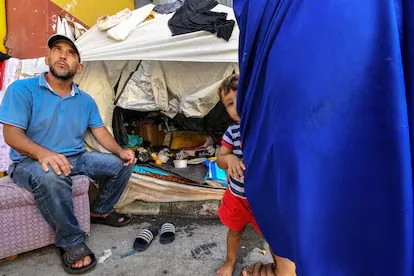
The family of little Siraj has been in a ghost industrial estate in Ceuta for 26 days: “No one has come to ask us anything”
At one of the entrances to the El Tarajal industrial estate in Ceuta, two children, aged three and eight, are seen walking hand in hand. The little one, dressed in a Paw Patrol outfit and Spider-Man sneakers, responds to a spontaneous greeting by waving and with a curious smile. They head towards four abandoned refrigerators and go behind them. Minutes later, they are seen coming out. The older one adjusts his clothes. Their father, a man with a cap and blue polo shirt, watches them in the shade, barely 100 meters away. “We have no bathrooms. Ask for that,” he pleads. A strong smell of urine hits when crossing the colorful gate that gives access to the enclosure.
The warehouses of this industrial estate were, until before the pandemic, an economic engine for the city. A hive of people and vehicles buying goods there to take and resell in Morocco. The end of portage and the closure of the border by the Moroccan Government turned it into a ghost place. Hundreds of migrants now live there ― the NGO Luna Blanca distributed 850 meals on Sunday ― who arrived in the city during the large entry on July 30 and refuse to return to Morocco. They live in shacks built with pallets, tires, cardboard, and plastics. They play football, wander, ride bicycles with wheels that only have rims left.
You can read the full information here.
Migration crisis
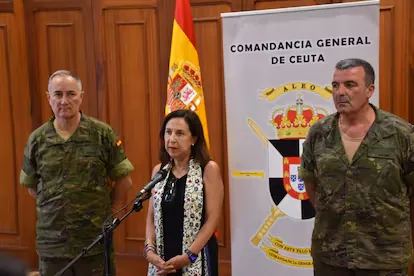
Robles will reaffirm the work of the Armed Forces and the Spanishness of Ceuta in Congress
Defense Minister Margarita Robles will reaffirm this Tuesday in Congress the “good and professional work” of all the Armed Forces and the National Intelligence Center during the crisis suffered in Ceuta since July 30 and will take advantage of the appointment in the Lower House, after 26 days of the migrant avalanche, to reiterate the unquestionable “Spanishness” of that city and Melilla. She did so during her visit to Ceuta on August 12. Robles already warned then that both Ceuta and Melilla are “very Spanish” and sent the message that the crisis unleashed by the sudden arrival of 80,000 migrants in a few hours “cannot happen again.” That idea was reinforced this Monday by the First Vice President, Carlos Cuerpo, on site in Ceuta. The Government wants to use the eight ministerial appearances in the next seven days to emphasize that they have managed this crisis “from the first moment according to the principles of legality, institutional collaboration, and respect for human rights.”
You can read the full information here.
Migration crisis
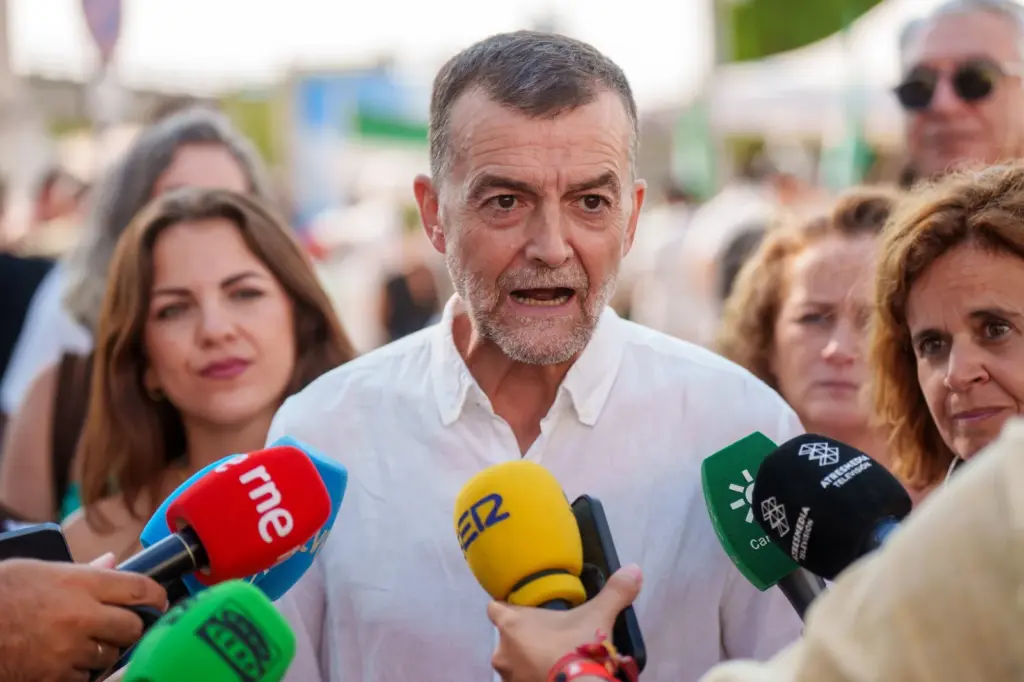
The left alternative to PSOE marks its own ground with a harsh message against Morocco
The forces to the left of PSOE mark their own ground on the Ceuta crisis, especially by identifying a culprit that the socialist part of the Government does not point to as such: Morocco. In that varied political space, where there are organizations integrated into the Executive as junior partners, formations outside the Government more or less critical of its management, state and regional parties — nationalist or not — all voices share with PSOE the emphasis on the need to prioritize humanitarian care and denounce what they consider “xenophobic” or even “racist” messages from PP and Vox. But two distinctive elements are added, which surfaced again on Monday just before the crisis reaches Congress with the appearance from this Tuesday and during the rest of the week of up to seven ministers.
You can read the full information here.

Migration crisis
Sánchez turns the management of the Ceuta crisis almost a month later with a unified command and an economic plan
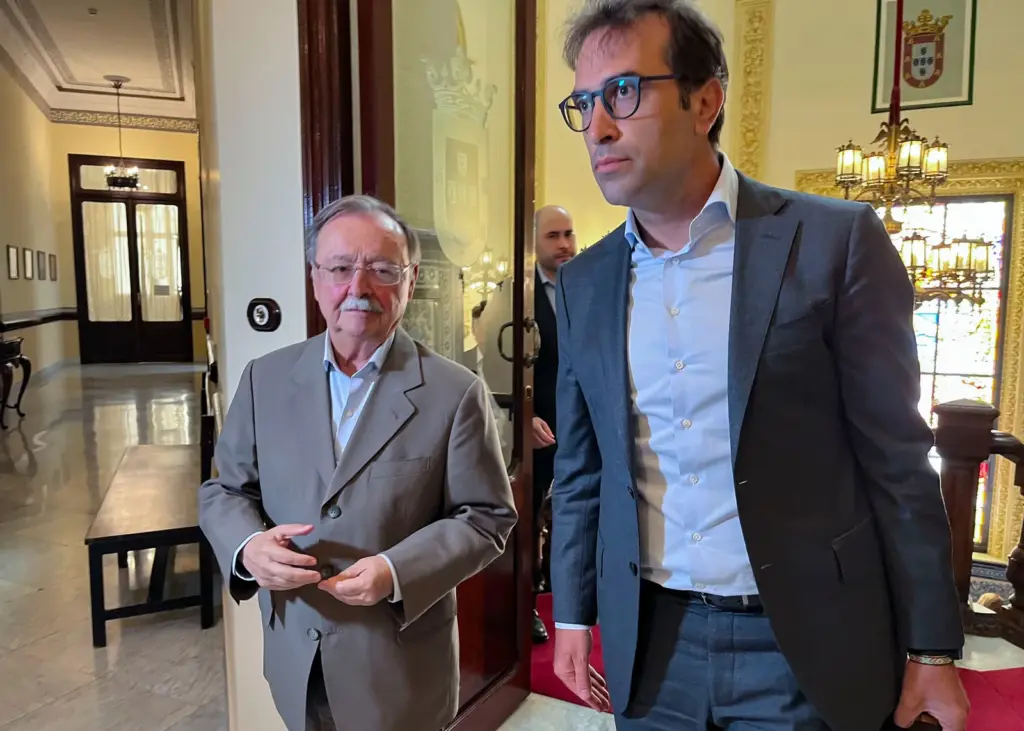
The decision was made over the weekend. For almost a month, the Government has received harsh criticism for its management of the Ceuta crisis, which is far from resolved, with thousands of immigrants still wandering the city streets and sleeping outdoors, overcrowded. Prime Minister Pedro Sánchez spoke many times, as he had throughout the month, with the most affected ministers and his closest circle of trust.
After rejecting it multiple times over weeks because, according to his version, it was not necessary, the possibility of appointing a unified command and taking control of the crisis from the Government, somewhat sidelining the city, was seriously analyzed. The one who most demanded it was precisely its president, Juan Jesús Vivas, overwhelmed and increasingly at odds with the Executive. Throughout the weekend, Ángel Víctor Torres, Minister of Territorial Policy and former president of the Canary Islands, who knows all the regional leaders well and is always the one Sánchez entrusts to speak with them, consulted again with Vivas whether the unified command was important.
Read the full information here.
Good morning. Here begins the live narration of the latest news this Tuesday about the migration crisis in Ceuta. Almost four weeks after the massive arrival of about 80,000 migrants, Pedro Sánchez presides today the first meeting of the National Security Council focused on the autonomous city. The big news of the day is the implementation of a unified command to coordinate the crisis. The day also coincides with the start of a series of appearances in Congress: seven ministers will appear before the Lower House to give explanations, with Margarita Robles opening the session today and Sira Rego closing it on Monday the 31st. Added to all this is the announcement by Vice President Carlos Cuerpo of new funding, which will be added to the 180 million euro plan already underway.
Read more Mars also experienced an eclipse on August 12, but if you saw Earth’s, this one will disappoint you