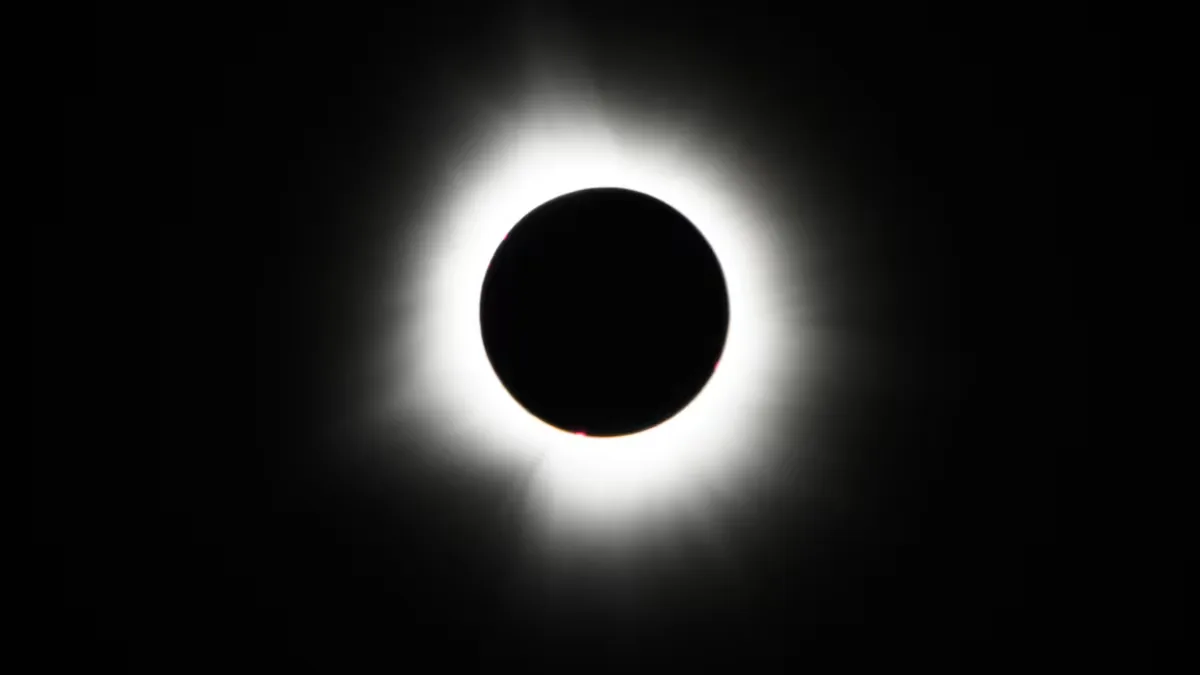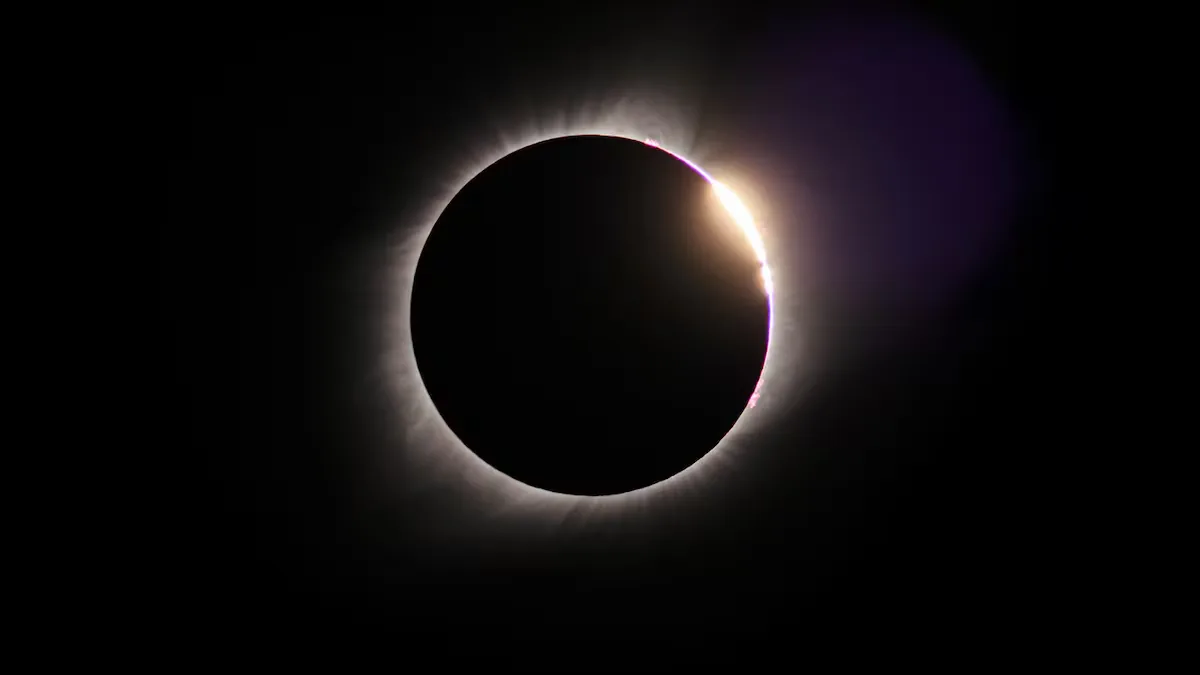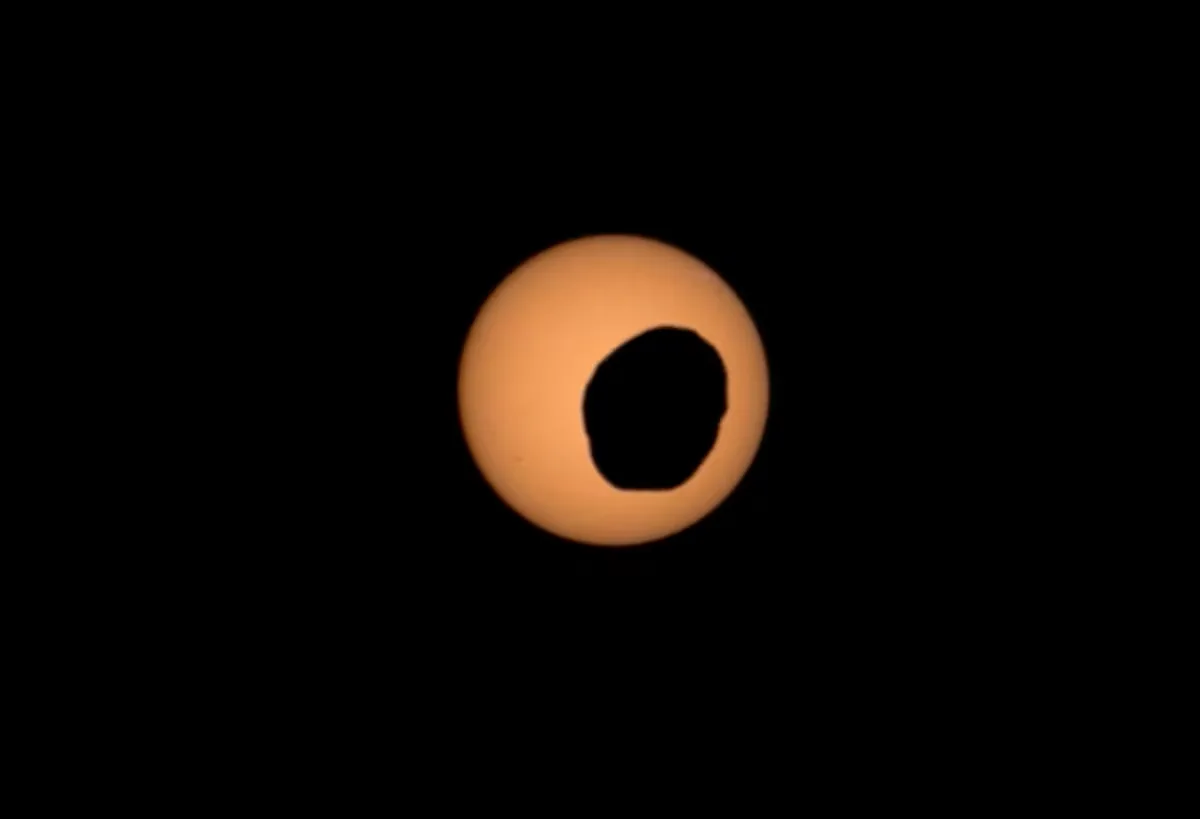
For those who experienced the historic eclipse on August 12 in the path of totality of the Iberian Peninsula, this one will likely seem underwhelming. Because on that same day, NASA’s Perseverance rover used its Mastcam-Z camera to capture the silhouette of Phobos, one of Mars’ two moons, as it crossed in front of the Sun. But the size of the Martian satellites and their potato-like shape prevent the magical effect of total solar occultation from occurring.
Read more Barcelona begins to forget about Julián Alvarez
The animation has been tinted to simulate what a human would see if observing the transit from the Martian surface through protective glasses for the solar eclipse, NASA explains in a statement.
Although similar, this astronomical phenomenon is usually called a transit rather than an eclipse, since the body passing in front of the star does not have the capacity to block its light. The articulated robot Perseverance has captured several transits of Phobos since its landing in the Jezero crater in February 2021. “By comparing the different recordings, scientists can refine their understanding of the potato-shaped moon’s orbit and learn how it is changing,” explains the U.S. space agency.
Read more Pablo Crespo: “In prison, having appeared on television is an achievement”
Unlike the Moon, which gradually moves away from Earth, Phobos approaches its planet a little more each year, and all indications are that it will eventually crash into it, although this will be in eons. Phobos’ orbit indicates it will collide with the Red Planet, but it is likely to break apart before the more solid materials impact Mars. So, as was discovered a few years ago, all signs point to that material breaking off creating a large ring that, initially, will have a mass density similar to Saturn’s rings.