The Spanish countryside heads into the end of August exhausted after a series of meteorological blows. First came the rains, then the frosts, then the hail, and later, the extreme heat. In between, also the fires. For farmers and ranchers, this year has been an exercise in survival, as barely one farm begins to recover from one scare, the next one arrives. “The situation places our farms in extreme vulnerability. This is no longer a passing anomaly, but a structural crisis. The conditions for producing food today are completely different from those of our parents or grandparents,” warns Cristóbal Cano, secretary general of the agricultural association UPA.
Read more Resist in Ceuta until obtaining asylum
The magnitude of the crisis is reflected in the figures from Agroseguro: 1.2 million hectares damaged by the end of July and compensations already reaching 374 million euros. It is one of the highest figures they have on record for this time of year, although still far from 2023, when a record 1.241 billion was paid out for the whole year. The worrying thing is that the agricultural cycle is not over. Important campaigns for the sector such as olive groves, citrus fruits, persimmons, or the late vineyard in the north are still pending.
The insurance entity acknowledges the seriousness of the constant adversities. “In recent years, when it’s not a DANA it’s a drought, and when it’s not, a frost,” explains Sergio de Andrés Osorio, general director of Agroseguro. “The climatic events are much more intense and extreme. We are not talking about an isolated catastrophic year, but a growing and continuous trend that places us in the period of highest accumulated claims in our history,” he insists.
Behind the official figures are lost harvests, broken infrastructures, and depleted savings. “We need mechanisms so that the sector has a way to continue and so that these severe losses do not mean abandoning crops or sending animals to the slaughterhouse because there is no food,” states Isabel Vilalba Seivane, a rancher in Galicia and member of the executive of the organization COAG.
The first three months of the year
The first blow came at the start of 2026. After several years of drought, the rains were necessary. But the Atlantic storms that crossed the Peninsula during January and February arrived with an intensity and continuity that put some of the most productive agricultural areas on the ropes. The soils could not absorb all the water and the drainage systems were overwhelmed.
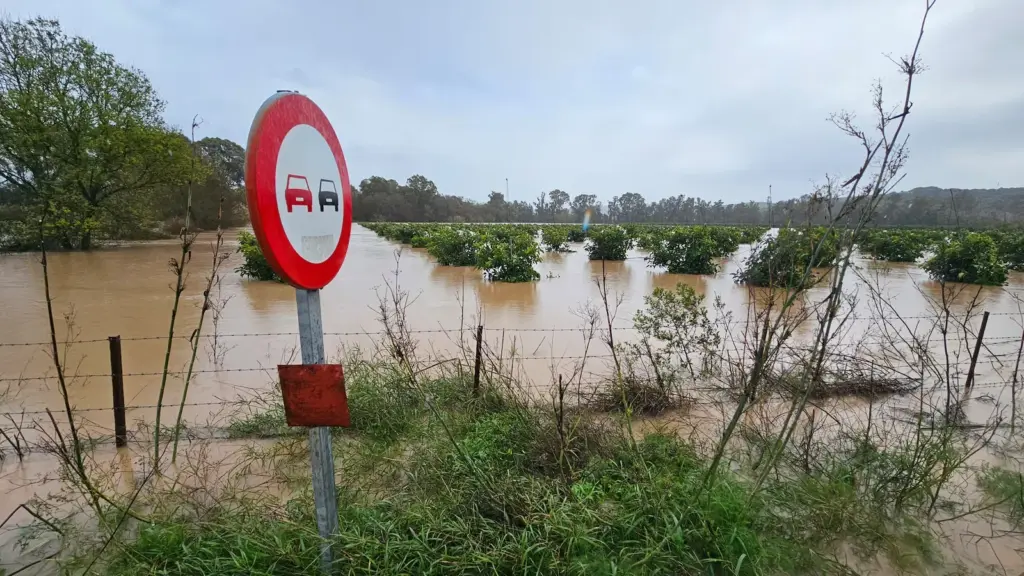
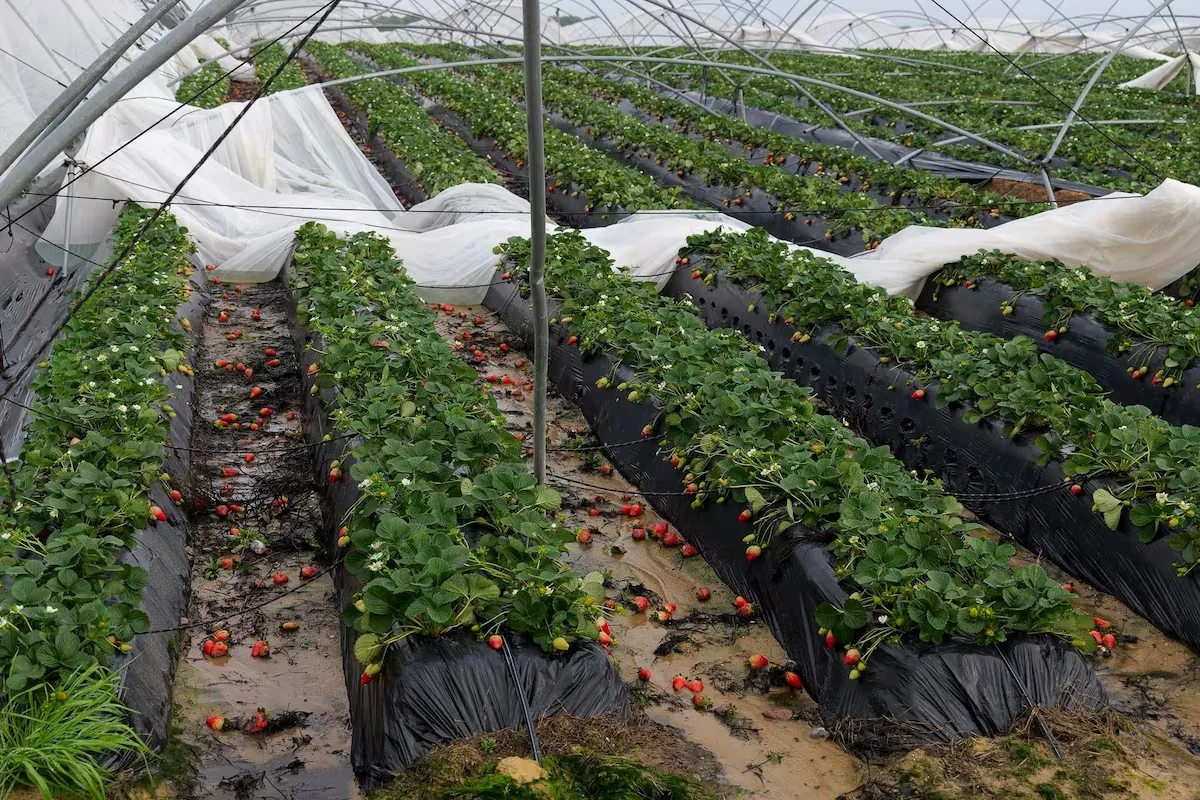
In Huelva, the red fruit sector was one of the first to suffer the consequences. More than 11,650 hectares of strawberries and other products recorded damage. About 3,800 hectares were affected by flooding and excess water and another 2,100 by wind, which destroyed structures of macrotunnels and greenhouses.
Humidity suffocated the roots at the very start of the commercial campaign. For a sector that depends on a short sales window and thousands of temporary workers, starting with part of the production lost meant much more than a bad harvest. “Those first months of the year were meteorologically historic in terms of the violence of the storms,” points out Osorio, who adds that, “although many winter crops are not affected by water, in sectors as sensitive as strawberries the initial losses immediately skyrocketed.”
In March, sudden temperature changes brought frosts to much of the country. More than 56,650 hectares were affected. The blow was especially hard for crops that had already begun to bloom. Stone fruit trees, such as peach and almond trees, were exposed just when they needed stable temperatures to bear fruit. In total, about 19,700 hectares of herbaceous crops such as wheat or barley, and 12,800 of nuts, mainly almonds, suffered damage from the extreme cold.
Hail in April and heat in June
April gave no respite with hail. The first hailstorms hit vineyards and fruit trees. And weeks later, the country went from frosts to extreme heat. Thermometers exceeded 40 degrees in large areas of the country at a delicate moment for the crops. Cereal was the first to show a production collapse. Castilla y León, Spain’s main winter cereal granary, closed the campaign with a drop of more than 45% compared to the previous year, due to the May heat suffocating the grain before it matured.
In Málaga, some winemakers have calculated losses of more than 40% in muscat grapes. In Extremadura, the high temperatures coincided with the flowering of tomatoes, with a significant drop in yield per hectare. And in Jaén, the heat damaged the olive flower in large areas of the province, just when the sector hoped that a good autumn and winter harvest would help leave behind several years marked by drought.
“Before, cereal harvesting was spread out by a month between towns; today, we harvest everything at once due to the speed with which the grain matures with these heat waves,” explains Óscar Salazar, a farmer from La Rioja, who estimates a 50% loss in his sunflower crop due to drought.
Another summer of fires
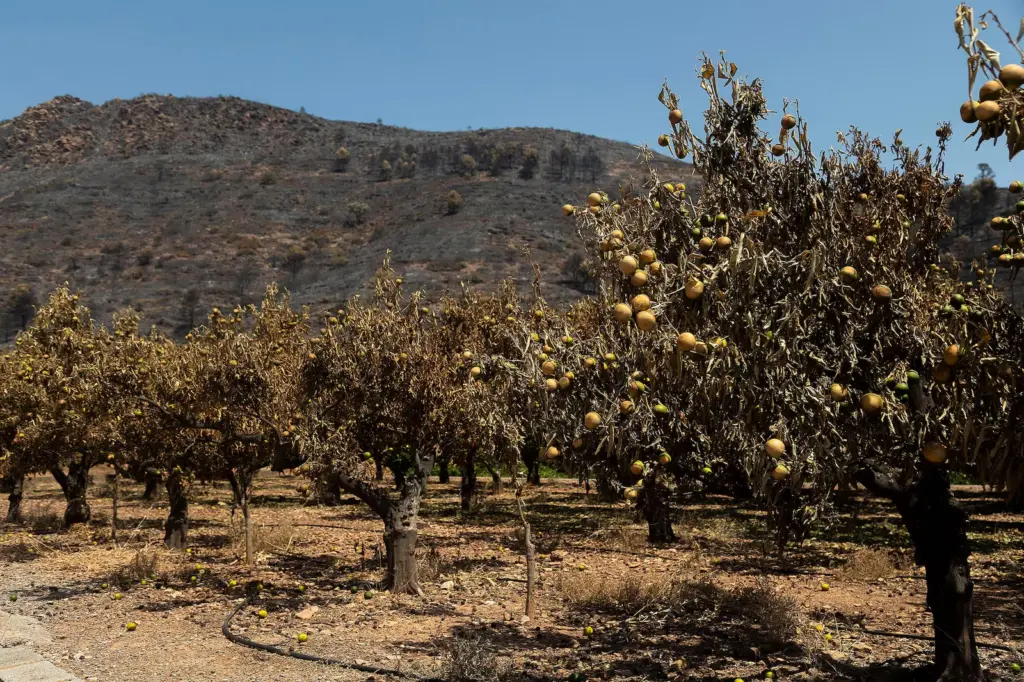
From June onwards, high temperatures and lack of moisture changed the landscape again. Fires multiplied and, with them, material damage. The fire has reached pastures, livestock farms, irrigation systems, machinery, and other infrastructures necessary to maintain the farms. In total, damage to agricultural activities was recorded in more than 40 provinces.
By August 17, Agroseguro had received reports corresponding to more than 15,800 hectares of agricultural land affected by fires. This is provisionally the second highest figure of the last decade, only behind 2025, when 20,740 hectares burned. Most of the affected area — around 90% — corresponds to herbaceous crops, mainly winter cereal that was still pending harvest or stubble. But the flames have also reached vineyards, olive groves, citrus fruits, nuts, and livestock farms. One example is enough to see the seriousness of the problem. In Castellón, the flames have devastated more than 2,000 productive hectares. The association Asaja estimates that the damages amount to around 35 to 40 million euros, both in crops and infrastructure.
The suffocation in the fields due to heat is also affecting the health of animals through thermal stress. “Cows tolerate cold much better. But with this sustained heat over time, their defenses drop because they don’t eat fresh nutritious pasture. I have had diarrhea, outbreaks of bovine conjunctivitis spread by flies, and rare cases of foot rot [bacterial ulcers on hooves] that at first we feared were bluetongue,” details María Osorio, a beef cattle rancher in the Os Ancares region (Lugo).
Summer has opened another front in the north of the country. Galicia, Asturias, Cantabria, the Basque Country, and the Cantabrian side of Navarra are going through a forage crisis. The August heat, with highs between 35 and 40 degrees, combined with lack of rain, has left many cattle farms without grass. Ranchers have had to draw on winter reserves earlier than usual and face the cost of replenishing them, in a market where cereal straw has risen 32% in just two months.
In Lugo and Ourense, crop losses to feed livestock exceed 60%, according to Coag. “We have already been drawing on winter reserves since mid-July because there is no pasture in the meadows,” Osorio recounts. “This is the second consecutive year this has happened to me. Supplementing feed with forage that you have to buy externally, plus transport, represents an unforeseen expense that seriously compromises the viability of farms,” she concludes.
The problem is widespread. In Asturias, forage corn shows declines between 60% and 80%, according to Coag. The lack of water is also directly affecting animal supply. In Cantabria and some areas of Bizkaia, it has been necessary to transport water to guarantee consumption due to reduced river flow and depletion of springs.
While the north dries out, the Mediterranean arc and southern peninsula suffer the scourge of hail. August storms shredded fruit trees and vineyards ready for harvest. Just the storm on August 20 devastated 25,000 hectares of crops in the Murcian plateau and the Vega del Segura, according to UPA, wiping out a whole year’s work in minutes.
The impact of these dark months goes beyond the countryside, fueling inflation that will translate into more expensive food for all consumers and reducing income for producers. The sector insists that Spain cannot continue managing the climate with temporary patches. “There is no work line for meteorological challenges that has substance and continuity from the Government. They continue to treat crises as if they were isolated episodes when it is a structural problem,” laments Vilalba.
Read more From Guadagnino to Cuarón to Tati, five movies to close the summer