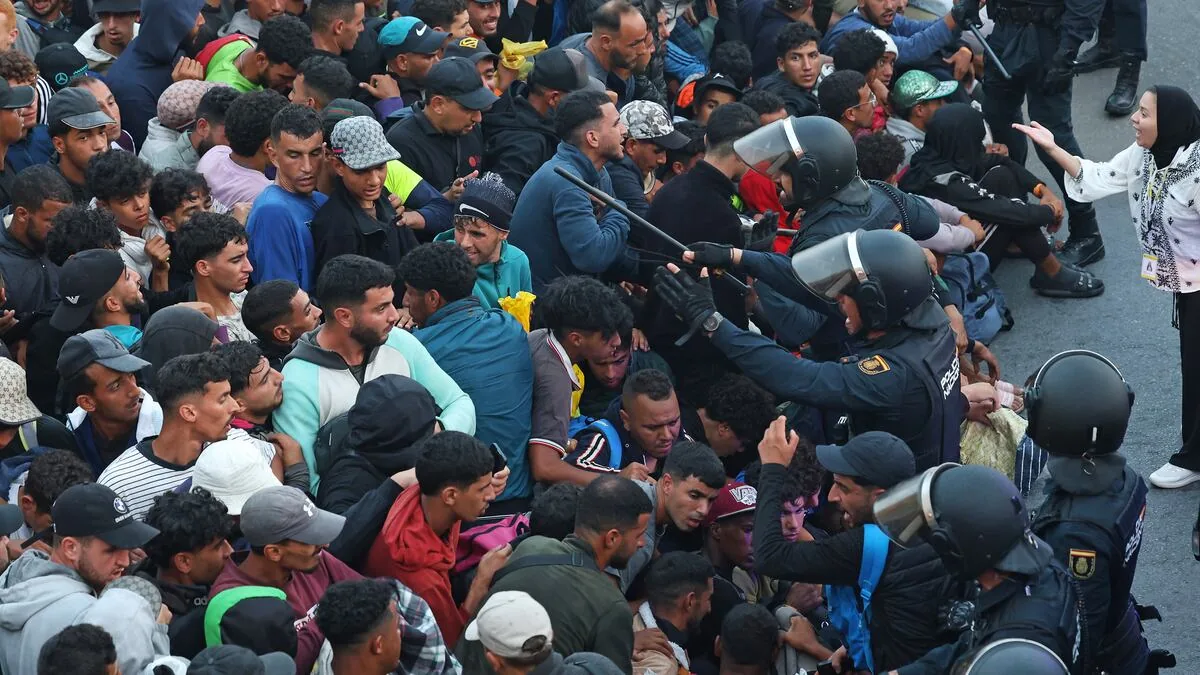
Since July 30 and 31 when about 80,000 people entered Ceuta, the streets leading to the Loma Margarita facilities, in the west of the city, are a perfect review of all the wars, famines, and fundamentalisms that strike the Sahel, the strip of countries that goes from the Sahara to the Red Sea, where all unimaginable misfortunes occur.
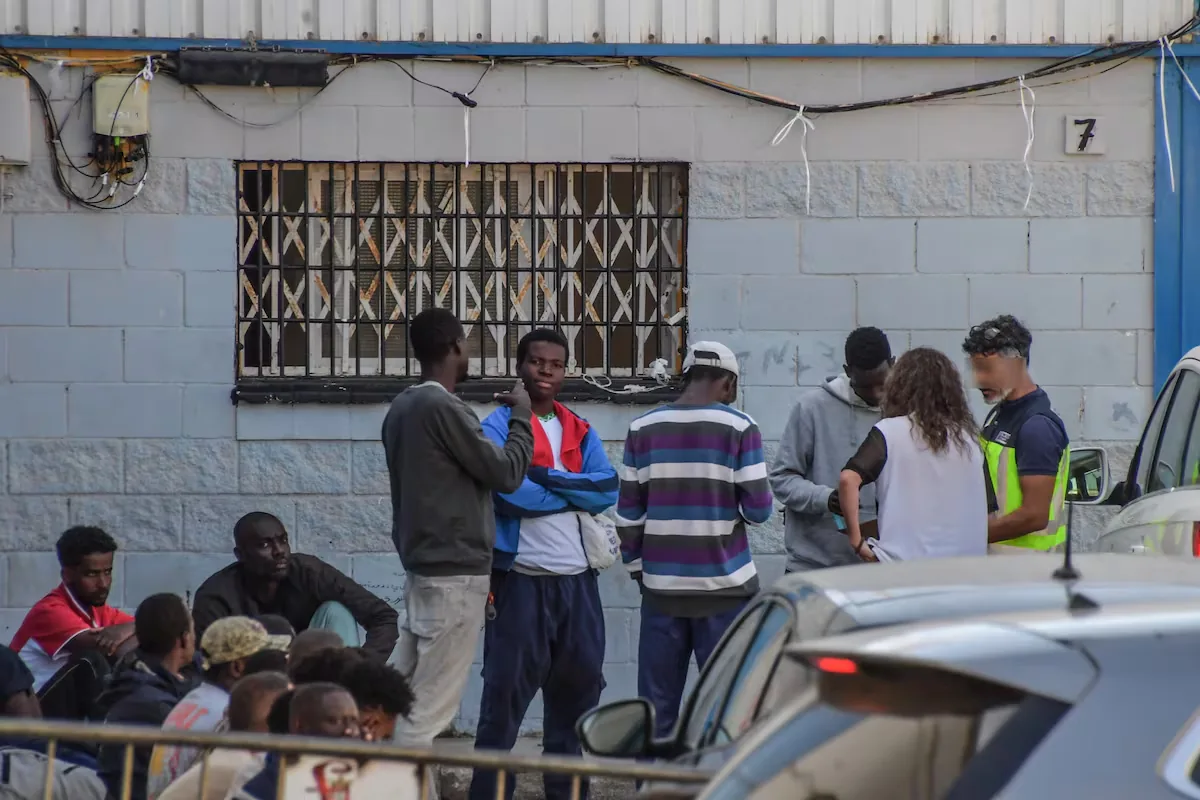
Thrown on the sidewalks, looking at their phones or walking aimlessly, the hours pass for teenagers like wardrobes who escaped wielding a weapon in Mali. Others fled jihadist groups in Niger and others simply ran out of food when armed groups in Burkina Faso filled the village gardens with glyphosate to starve them. If there was any faceless crisis left, it can be found at the doors of the Temporary Stay Center for Immigrants (CETI), where more boys from Chad, Mauritania, or Sudan spend their hours. After many months of hardship, all of them sleep in a bed and eat three times a day.
Loma Margarita is a plain owned by the Army where huge olive green tents have been set up for 1,100 people. After days of madness for migrants and workers, some order finally reigns in these facilities, guarded from inside by a private security company and from outside by a group of legionnaires.
Holding onto the fence, Abdallah, 21, says that returning to Sudan would mean having to “join an armed group.” His friend, the middle one, 17, says he left his country three months ago but is happy because he will be able to “legalize his situation and tell someone what is happening in his country,” he explains in decent English. The youngest, 15, has had an infected wound on his ankle for 25 days. He is not very willing to talk and only shows a photo on his phone of his mother’s cousin who lives in Madrid wearing a Spanish national team shirt. “In Morocco, we lived like dogs, but they told us that here we will have an interview to get the papers. If they take me to Sudan, they would end up killing me,” says Abdallah. Here they not only sleep in a bed but can charge their phones or treat a wound.
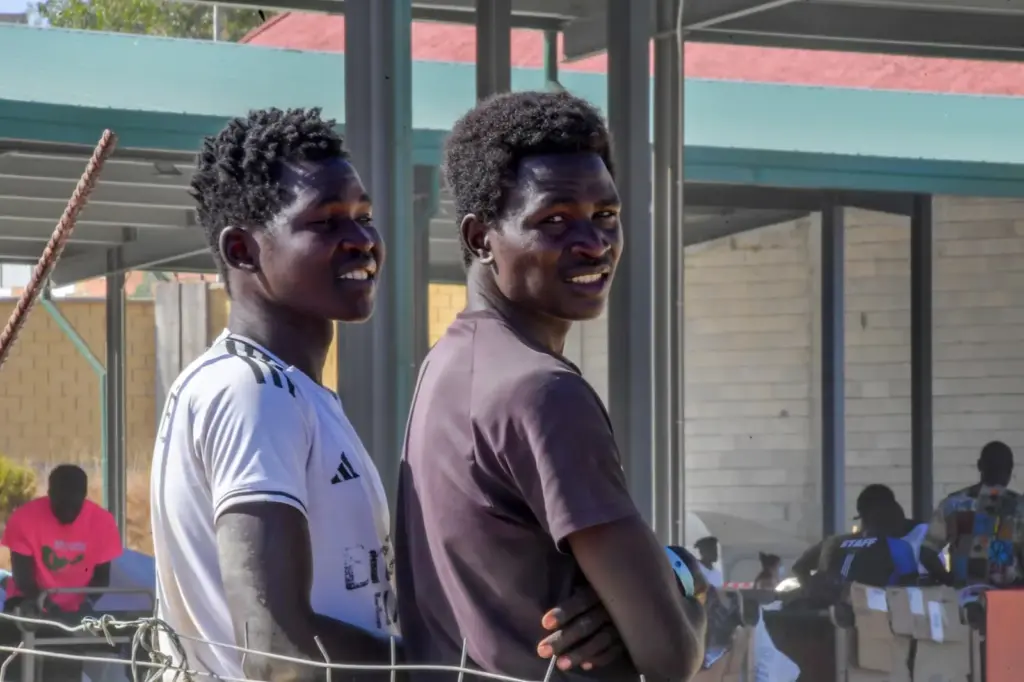
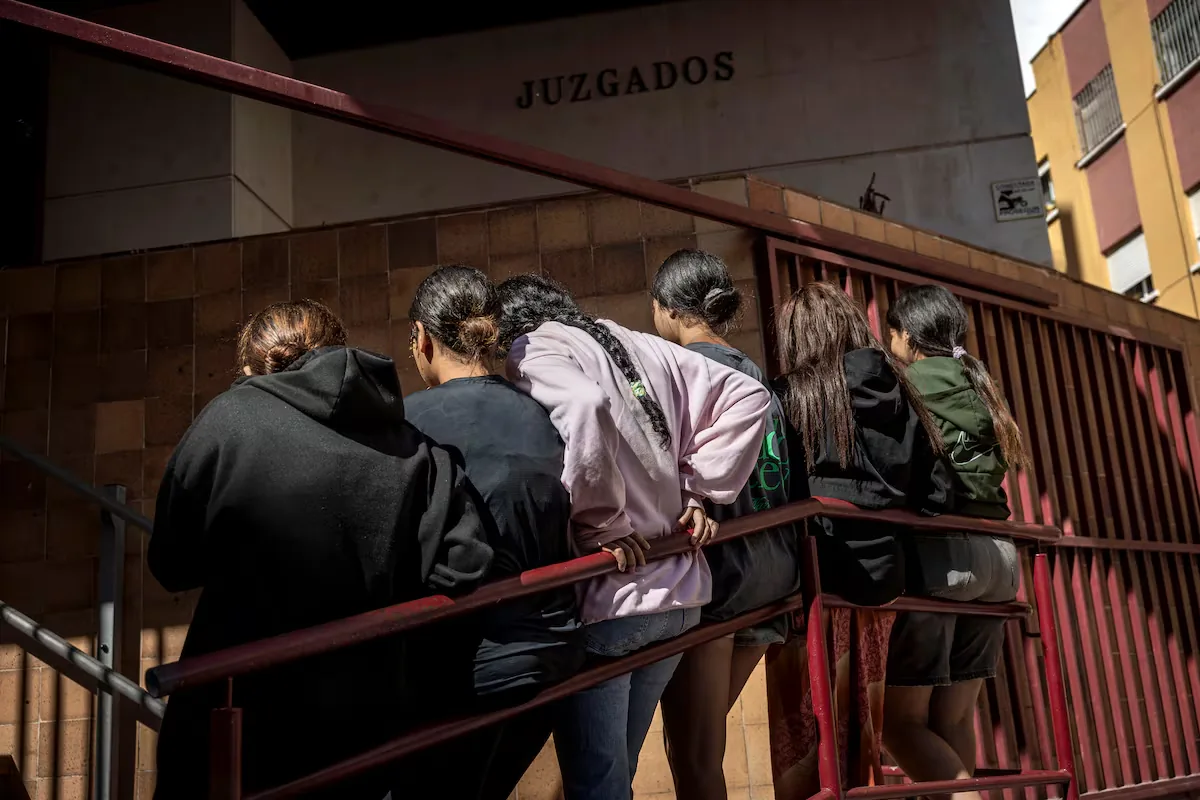
According to approximate figures, of the 5,000 young people still wandering around the city of Ceuta, there are between 1,100 and 1,500 sub-Saharans mainly distributed in two centers. According to Accem, the Police have started interviews and triage to distinguish who is eligible to apply for asylum. The first triage, however, began much earlier when the authorities separated, on one hand, women and girls in a safe place, ensuring that sexual abuses would not be repeated; on the other, sub-Saharans in other facilities; and finally, Moroccans. However, a couple of Algerians prefer to keep sleeping on the beach seeing that they do not fit into any of the three spaces.
Read more From Guadagnino to Cuarón to Tati, five movies to close the summer
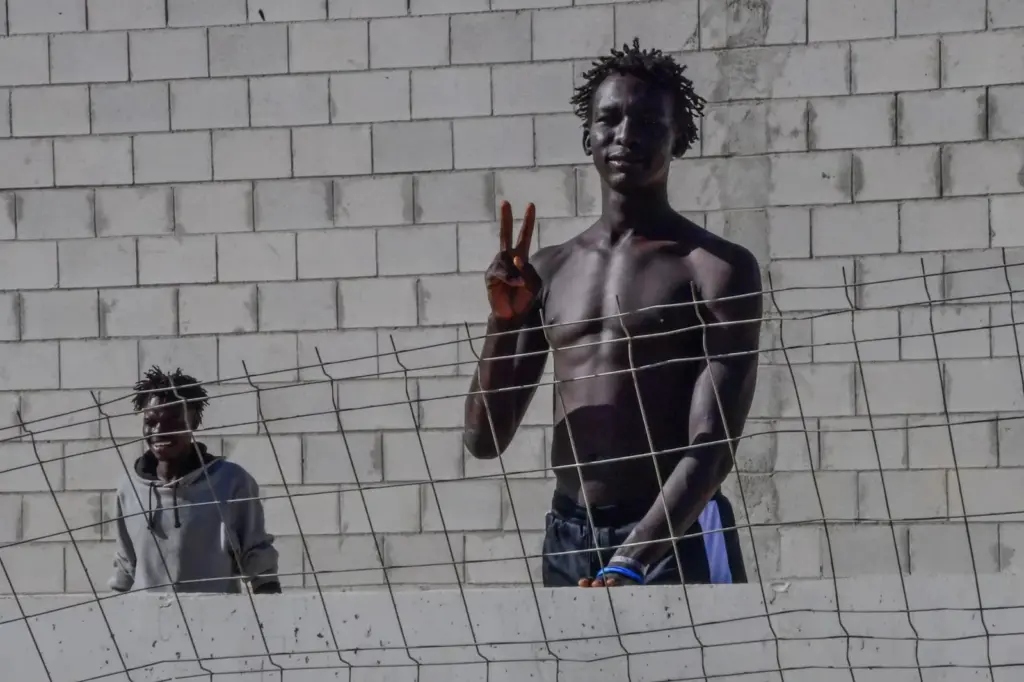
All those who sleep in Loma Margarita “are men between 18 and 35 years old,” describe Accem, the NGO commissioned by the Ministry to take charge of the situation. Most of them were waiting in northern Morocco for an opportunity to cross into Spain when on July 31 they joined the caravan of people heading to the border. “The police indicated that we should pass through the sea,” he recalls about that Thursday. The Loma Margarita shelter can be entered and exited freely, but during meal shifts the doors of the place are closed to organize distribution. On El Trampolin beach, Mohamed Camara from Guinea-Conakry waits for the daily food distribution to begin. Camara is from the Siguizin region, known for its gold mines. At only 20 years old, “most of my friends were captured to do forced labor in the mines,” he explains in French. Since this week, the police already have their names and can begin the procedures to apply for asylum.
The Sahel is a semi-arid strip of about 6,000 kilometers, located between the Sahara desert and the tropical savannas, from the Atlantic to the Red Sea. A region that includes, according to the UN, Senegal, Gambia, Mauritania, Mali, Burkina Faso, Niger, northern Nigeria and Cameroon, Chad, Sudan, South Sudan, and Eritrea, which is to say, 400 million inhabitants of twelve countries. The Government initially assured that all those who entered Spain irregularly would leave, but the obligation to manage asylum applications and the return of minors makes this impossible to fulfill. In Spain, last year a total of 75,275 favorable resolutions for international protection and humanitarian statuses were approved, and applications from the Sahel top the lists of requests, with a recognition rate close to 100%.
On the road that goes up in front of the Equestrian Center and leads to the CETI, a young man from Mali spends the hours sitting with his back against the wall. On his outstretched legs rests Omar’s head. He does not speak or play with his phone. He just looks into the distance and runs his hand over his companion’s head. Omar and Ahmed detail the jihadist kidnappings that make it impossible to have a normal life. After a while, he admits they are a couple and that is another reason not to return.
Read more Ángel Ortiz, the grandson of the inventor of beach paddles, wants to revolutionize this sport