An idea has captured left-wing housing policy: everything must be kept frozen.
Read more ‘Jovellanos’, the life of an enlightened man between hope and tragedy
It is not worth facilitating construction or reviewing regulations, procedures, and requirements that put any priority before new housing: apparently, it is more important to have zero-emission buildings, respect a maximum height, resolve another round of objections, request the same permit twice. Also, it is argued from the left-wing angle that whatever is built on the free market will end up in the wrong hands, not in those who need it. So why make it easy.
The already built stock would remain to solve the huge and acute problem of those who, needing it, have not yet been able to access decent housing. But here, this left goes even further: its priority is to stop any movement. Price caps and chained extensions on rent, hoping that no one has to leave where they are. But then fewer will enter: turnover will drop and there will be fewer owners willing to subject their housing to a perpetual chain of uncertainties. Halting evictions for certain groups, thus stigmatizing those same profiles before anyone considers renting them their apartment. Even purchase bans are considered for those who will not live in the housing they acquire, effectively reserving it for those who can afford a down payment of 40,000, 60,000, 100,000 euros. The city as a still photo: nothing moves. Those already there do not lose, but no one else arrives either.
There are honorable exceptions who pay an unfair, high toll when they dare to talk about “building” or “densifying,” or when they warn that perhaps the existing supply must be cared for if we do not want it to disappear completely: then their partner-rivals, inside or outside their parties, raise their voice and block to condition every decision.
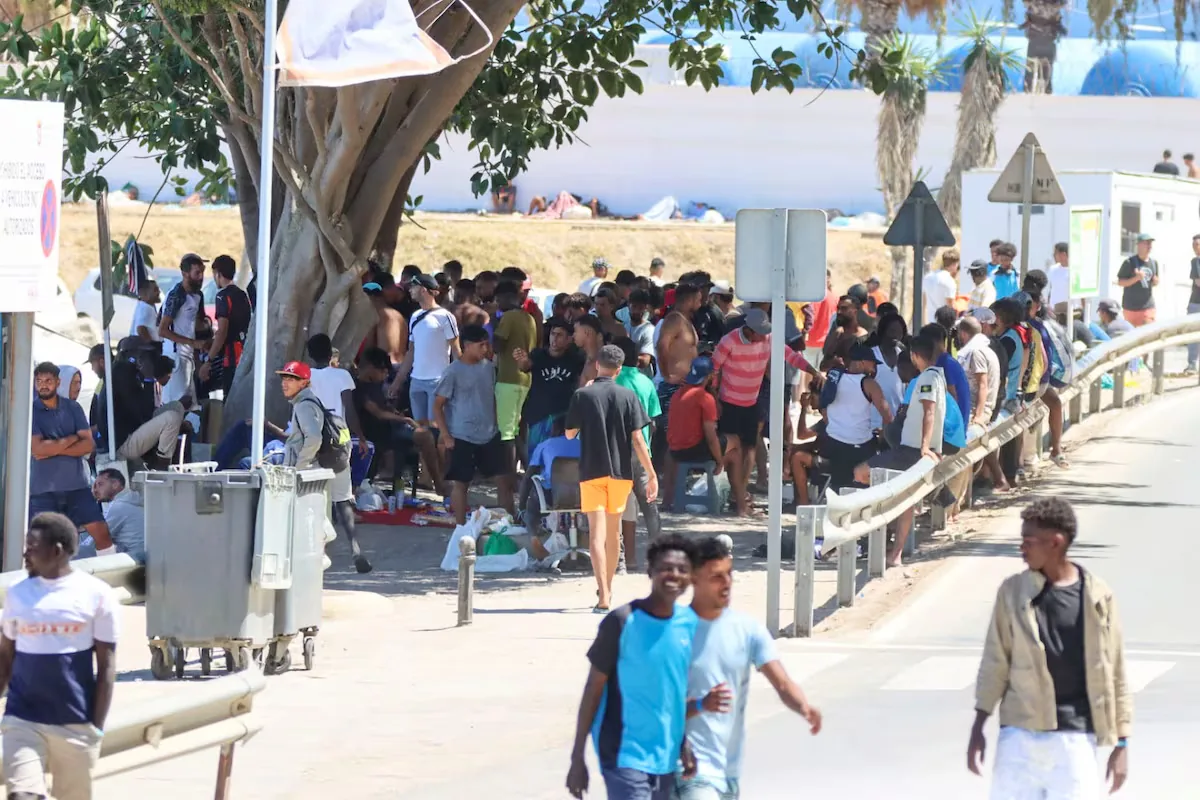
The contradiction is extreme when the same left defends an ambitious immigration policy in its eagerness to welcome. Every year, thousands of people arrive in our cities to work, study, care, sustain much of the growth, employment, and well-being we (rightly) like to boast about. But where will these new families, these new households, arrive in minimum conditions of dignity if everything is frozen?
Who supports these policies? The barest explanations accuse the boomers of protecting their privileges, the value of their homes and neighborhoods, but that does not explain why so many millennials or Generation Z are in favor of freezing. So perhaps the mechanism is more about class and environment: broad middle and affluent sectors of urban centers are not willing to accept even a hint of dynamism, nor the slightest loss of the perceived value of their neighborhood. There the blockade is activated, and the left, which depends on these voters, responds. New housing does not go here. Before that, there is such or such a specific neighborhood need. Or it is more important to respect such or such requirement. Or that my neighbors do not change, I like the neighborhood as it is, and for that, control or rental extensions serve me. Or do not spend your municipal budgets developing new areas: first pedestrianize my street. David Mejía described it precisely: “We want gentrification to stop exactly at our purchasing power.” An urban civil society oriented towards no. Conservationism with a progressive disguise.
Read more Flavita Banana’s August fashion: the thong
If we understand progress as “more; for as many as possible, better; and first for those who need it most,” the goal should be clear: that there is as much housing available as possible, intended for those who will live in it, and first for those who suffer the most from not having it.
The first thing is momentum. The accumulated deficit is such that we need both the market and the State contributing at the same time (we have spent half a decade finishing fewer than 100,000 homes a year for almost 250,000 households created), but the interesting thing is that the type of housing that should come before those regulatory and bureaucratic priorities, the one that would not be exposed to being captured by a few nor by those who will not live in it, is also not being built. Not even where this last argument would have more traction. Between 2021 and 2025, in provinces very exposed to foreign appetite such as Alicante, Málaga, and the Balearic Islands, about 160,000 households have been created. At the same time, non-residents have acquired almost 170,000 homes. For that period, these provinces reported just over 2,000 definitive protected housing qualifications to the Ministry of Housing and Urban Agenda. Although the figure is underreported, it still falls far short of accumulated demand, especially in a context competing with a huge volume of purchases by non-residents. Of free market, by the way, barely 66,000 were completed. Any manager, public or private, for-profit or not, who has tried to mobilize da capo projects has hit the same wall: turning land into a neighborhood can take more than a decade even if the land is publicly owned, because every step and every report can stop a project, and any other priority seems to weigh more than new housing. Reviewing that framework is not a concession to the market: it is the condition to move from frustrated promises to keys delivered also in protected housing.
Existing housing can also be pushed towards that long-term residential use, especially in rental, something that will help in the feared meantime (which, by the way, should only be an incentive, never an excuse, to start building as soon as possible). We can start with a public rental insurance like the French model, much more ambitious and determined than the timid attempts underway: one that mutualizes the risk of non-payment instead of loading it onto a specific landlord, and that protects without pointing fingers. And continue by removing obstacles to long-term rental (controls, extensions, eviction bans) so that it is more profitable for the owner than seasonal or tourist rental.
But if momentum helps us with more and for as many as possible, better, channeling the market will help ensure it is for those who need it most. That is: for long-term residential use. Taxes work here. Unlike prohibitions, they allow adjusting the penalty to the estimated size of the harmful effect, turning it into revenue and doing so without completely paralyzing our cities. First, let’s more decisively discourage the sporadic use of homes in high residential demand areas, as Vancouver or Paris do and as New York has just introduced with its luxury second homes. To do this, let’s experiment with ways to detect sporadic use, such as low or intermittent electricity consumption. Also, let’s tax uses that compete with long-term residential: tourist rentals in neighborhoods where a certain threshold has been exceeded, for example. And also, in certain provinces, let’s consider taxes on purchases by non-residents. Measures that limit a market, but without demolishing it.
The framework of some of these measures (public insurance, tax on tourist homes, removing veto points in new projects) is already in actions or intentions of progressive governments. But they are systematically overshadowed, diminished, or directly blocked by a way of understanding housing policy tailored to middle and affluent classes. That looks towards the Eixample and inside the M-30. Mortgaged to a voter base that does not really represent the groups that lose the most with this policy. That defends a right for everything to stay as it is.
Read more Lymphatic drainage: all about the star massage of the summer
But the right to stay cannot curtail the opportunity to arrive.