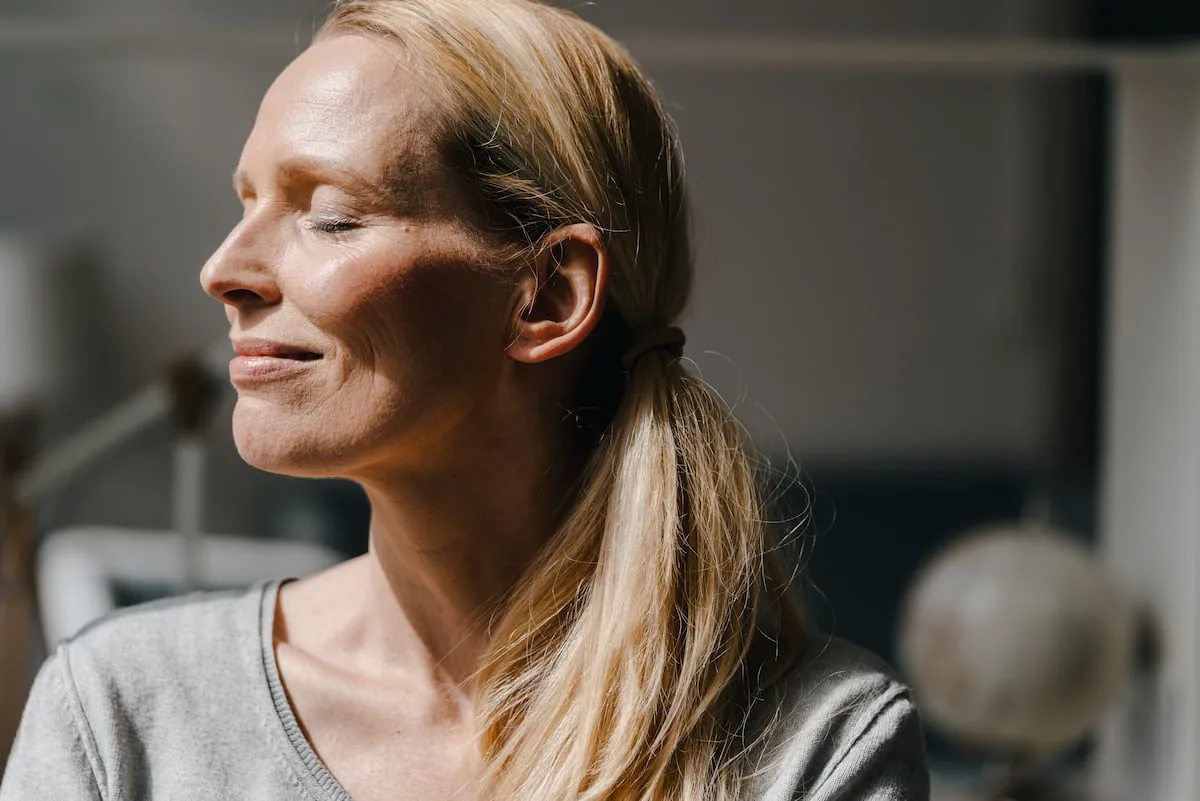
A few weeks ago, Hailey Bieber was interviewed by Time magazine and during the conversation she revealed all her beauty habits, from taking a shot of olive oil with lemon (don’t try this at home, the oil is just as beneficial when dressing a salad) every morning, to doing strength training. However, it was her declared “obsession” with lymphatic drainage massages that caught the most attention and sparked interest in this type of routine, a technique with decades of history that has now regained great popularity.
Read more Successes and risks of tourism
“It’s incredible how much water we retain in the body. Also, the lymphatic system is essential for overall detoxification and general health,” said the founder of the cosmetic brand Rhode. And that simple comment from Bieber was enough for videos and news analyzing the benefits of this technique to multiply. The truth is that the American is not the only one in love with this practice: on social media, posts analyzing the benefits of lymphatic drainage, with exercises and detailed manual massage tutorials to practice at home, have grown in recent years.
Lymph and lymphatic system: what it is and what its function is
Before diving into the topic, let’s start at the beginning, what exactly is the lymphatic system? According to the definition by the Royal National Academy of Medicine of Spain, it is the “set of vessels, ducts, and nodes through which lymph circulates, along with the tonsils, adenoids, spleen, and thymus.” Additionally, it performs several key functions, such as intervening “in defense against infections” and “facilitating the absorption of substances, especially fats.” That lymph circulating through this system is a “clear fluid coming from the excess liquid that leaves the blood capillaries into the interstitial or intercellular space, which drains through the lymphatic vascular system to the venous system.”
The body tends to naturally accumulate fluids, but during summer this is usually even more frequent. Lymphatic drainage “uses a series of specific movements with gentle, rhythmic, and precise maneuvers aimed at mobilizing accumulated fluids toward the body’s natural waste system,” explains María Panadero, a doctor in aesthetic medicine at Beldon Medical. “Unlike a conventional massage, it does not seek to work the muscles, but to promote the flow of lymph physiologically,” details Sandra Álvarez Gómez, beauty director of SHA Spain.
The origin of manual lymphatic drainage dates back to the 1930s and is attributed to the Danish Emil Vodder, who described the first lymphatic drainage method. Later, other variants appeared, such as Földi’s or the Leduc method. In some centers, the manual technique is complemented with others performed with equipment. Also, more and more brands are launching gadgets aimed at performing this massage at home, from massage rollers to draining exfoliating brushes, but many of these options contain more marketing than proven effectiveness.
Self-massage and the risks of the TikTok ‘school’
The specific movements behind lymphatic drainage must be performed in a very precise way to achieve the desired effects, so caution is needed with videos circulating on TikTok that introduce techniques that are not always accurate nor easy to practice. “It is positive that there is greater interest in caring for the lymphatic system, but it is important to differentiate self-massage from manual lymphatic drainage performed by a professional. Therapeutic treatment requires precise knowledge of the anatomy of the lymphatic system, the direction of lymph flow, and the appropriate pressure, which is much gentler and requires more technique and precision than most people imagine, and that is what really makes it effective and beneficial. If not applied specifically, it could cause the opposite effect,” warns Sandra Álvarez Gómez.
@avajolie_ I can do a more in depth video for lymphatic massages but basically this is part of what I do when I’m feeling sick from #hashimotos #lymphaticdrainage
♬ original sound – 🌊
In Panadero’s opinion, “self-massage can provide certain benefits to activate microcirculation and improve mild morning facial retention or a temporary sensation of tired legs, but it cannot be considered a drainage technique as such nor does it replace that performed by professionals.” She adds that “most of these viral videos simplify the technique and often we see a vigorous massage that has nothing to do with the gentle maneuvers that follow a specific direction, not to mention the difficulty of manipulating certain areas by oneself without losing the flow of movements.”
Additionally, there is another factor to consider: each person has a specific and precise situation with specific needs. Those viral videos aimed at a mass audience with thousands of views do not take individual circumstances into account. In this regard, Panadero emphasizes the importance of “assessing what each patient needs, since a temporary retention like tired legs due to heat or sedentary lifestyle, very common in this summer season, is not the same as edematous cellulite or edema following a medical-aesthetic treatment.”
Read more The “resurrection plant” of the desert paves the way to make vaccines without a fridge
Self-massage can provide certain benefits to activate microcirculation and improve mild morning facial retention or a temporary sensation of tired legs, but it cannot be considered a drainage techniqueMaría Panadero, doctor in aesthetic medicine
When is lymphatic drainage recommended and when is it not?
If performed in professional centers with staff with specific training, lymphatic drainage is generally a safe technique. And in summer months, it is highly demanded for its benefits in combating fluid retention (being active and following an appropriate diet, preferably with fresh foods and low in sodium, also helps). During the heatwave, high temperatures favor fluid retention, causing heaviness in legs and ankles. Hands and fingers also tend to swell with extreme heat. According to Panadero, “it is a very common sensation in summer, even in people without previous pathologies. This collapse occurs when blood has difficulty returning to the heart due to gravity, poor circulation, or sedentary life, which increases pressure inside blood vessels, forcing fluid to filter from veins into the space surrounding tissue cells. With the lymphatic system saturated and difficulty draining it due to the high concentration of fluids, stagnation occurs that generates visible inflammation.”
@clubmareaoficial ✨Did you know that if you don’t properly activate your lymph nodes, your drainage doesn’t flow as it should? 🌸 Today I leave you the basic guide to correctly activate your lymph nodes and achieve better results in your drainage 💛
♬ original sound – Club Marea
The experts consulted also agree in recommending this type of technique to speed up recovery from some post-operative procedures; during pregnancy after the third trimester and as long as there is no obstetric contraindication; and to improve circulation in people who spend many hours sitting, many hours standing, or tend to be sedentary. Even if fluid retention is not present, “it is a treatment highly appreciated by people seeking to improve their general well-being or relieve the impact of stress, as its slow and delicate rhythm promotes nervous system relaxation,” they comment from SHA.
When to avoid lymphatic drainage? Like any technique performed on the body, lymphatic drainage also has a series of contraindications and “is not compatible with a process involving infection and fever, nor when there is deep vein thrombosis, or heart failure, some advanced kidney or liver pathologies, and during oncological treatment without specific medical evaluation. Therefore, before performing lymphatic drainage, especially if there is an underlying pathology, a professional and individual assessment must exist,” express from Beldon Medical. “At SHA we consider personalization fundamental: not all patients need the same approach, and lymphatic drainage offers its best results when it is part of a therapeutic plan adapted to the needs of each person,” Álvarez Gómez points out.
The most immediate benefits
Although lymphatic drainage is by no means a new technique, it has sparked growing interest recently. Besides Hailey Bieber, many celebrities regularly succumb to this massage. Brazilian lymphatic drainage expert Rebecca Faria, based in Los Angeles, has stated in several interviews that she has a waiting list of more than 2,000 people eager to try her technique. Among her regular clients, besides Bieber, are names like Sabrina Carpenter, Addison Rae, or Paris Hilton, all treated by Faria in preparation for the red carpet at the past Grammy Awards held in February.
The interest in lymphatic drainage has also given rise to some misconceptions linking this technique with the reduction of cellulite and sagging skin, which is incorrect or not entirely accurate. What it can generate is a reduction in body volume since, as Panadero states, it drains “the excess water that causes orange peel skin, and strengthens the body’s defenses by facilitating the elimination of toxins from the body.” Álvarez Gómez highlights as the “main benefits” of lymphatic drainage the reduction of “fluid retention and edema, improving the sensation of heaviness, promoting tissue recovery, and providing a deep state of relaxation.”
Another of its most immediate benefits, as long as it is performed regularly, has to do with increased radiance when done on the face. In Panadero’s opinion, “it is especially interesting for people with very marked bags and tired-looking features. A facial drainage can restore freshness and definition from a functional point of view.”
Read more Peridis: for the crown prince