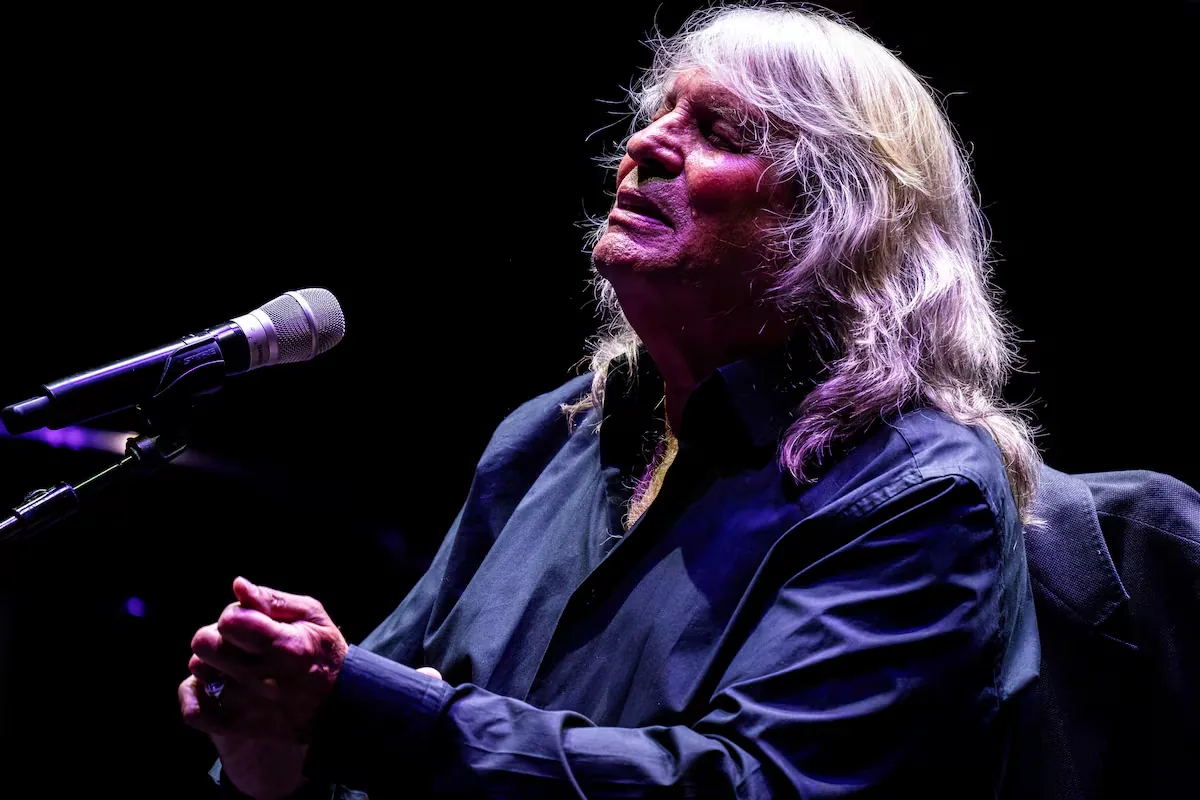
After its weekend stops in Viana and Estella-Lizarra —with concerts by Mayte Martín with José Gálvez and Sandra Carrasco and David de Arahal— the 12+1 edition of the Flamenco On Fire Festival kicked off this Wednesday in Pamplona, with the now customary act of connection to the territory, which this year was dedicated to the tradition of the encierros, the “festival with the presence of cows” —common throughout the Navarrese geography and universally known for the one in Pamplona—. Also, on this occasion, the event sought to link with those people who, just as the romantic travelers did with the first flamenco forms, visited the land, learned about that tradition, and spread it. The best known of them was, without a doubt, the American writer Ernest Hemingway, who features on the poster of the year in which his emblematic novel Fiesta celebrates a century since its publication.
Read more Aimar Bretos will debut on Monday on ‘Hoy por hoy’ with an interview with Pedro Sánchez
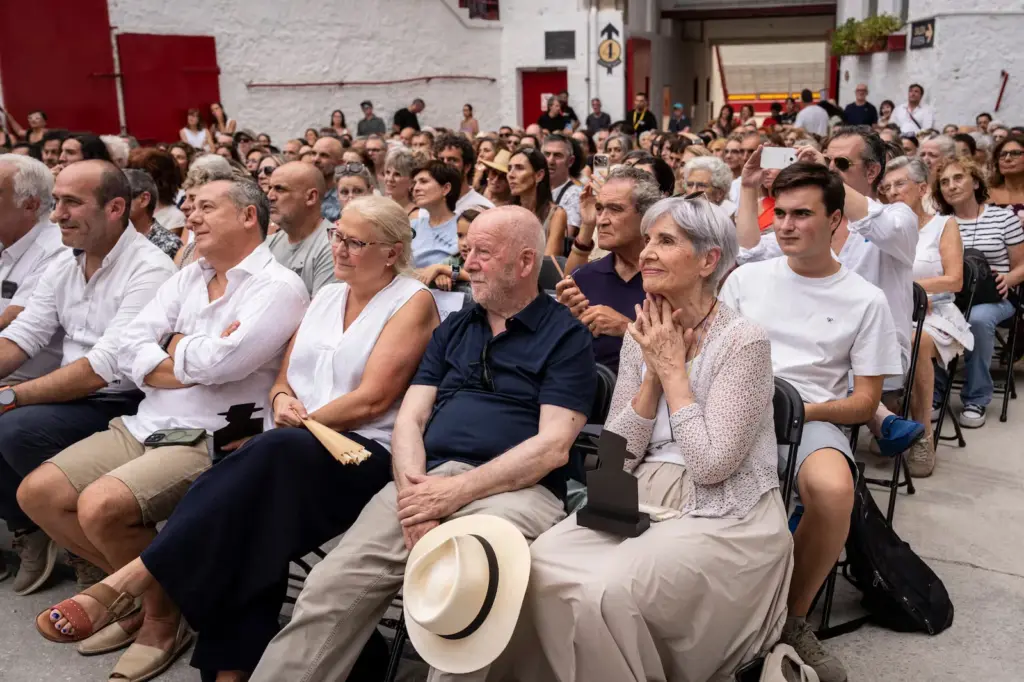
With this symbolic act, the Pamplona festival wanted to recognize the different entities that make the festival possible and, in turn, compensate and thank the host city for the hospitality with which it receives the manifestations of flamenco art coming from different parts of the national geography. Thus, at half past six in the afternoon, in the Patio de Caballos of the Pamplona Bullring —where the encierros end— a tribute took place to the groups of people who participate in its organization, grouped into Memory, Craft, and Care.
In a succession as fast as themselves, the thanks of the representatives of the charitable Casa de Misericordia, the first and main institution, because without it nothing would be possible; the guild of carpenters responsible for the fences; the shepherds; the dobladores; the Red Cross; the press; and the hospitality sector were linked, with words that, in some cases, thanked the festival itself for having brought flamenco art to the very streets of the encierros.
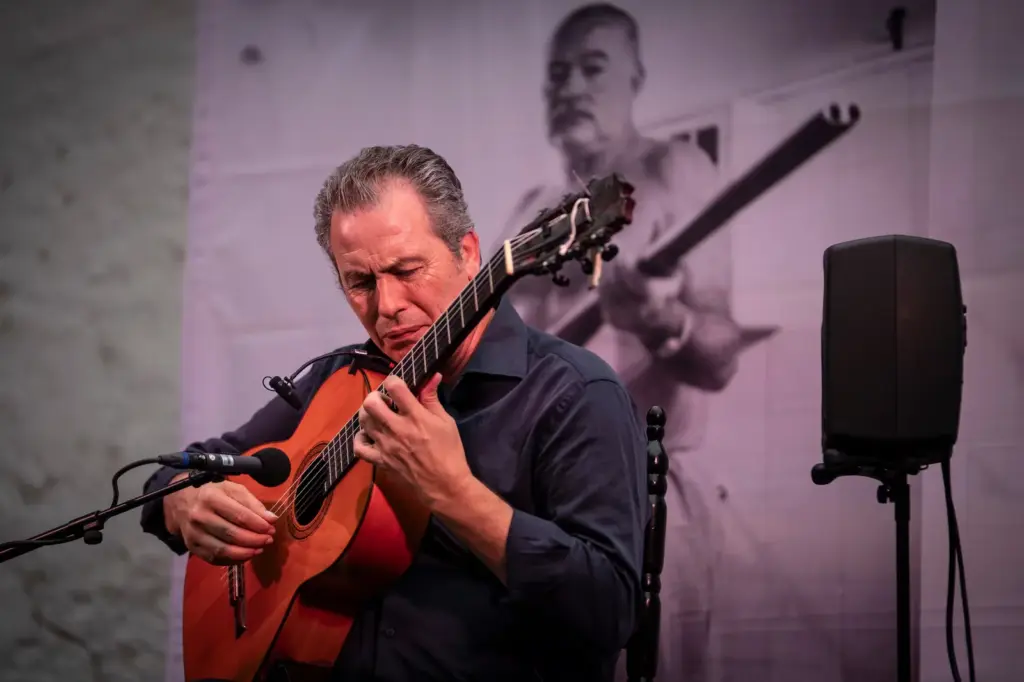
After the event, the festival moved the first concert of its Espacio Sabicas cycle to the same patio, dedicated to the legacy of the legendary artist born on Mañueta street in this capital. In this way, the flamenco concert guitar, the fundamental axis of the event, traveled to meet the encierros through the hands of the Jerez guitarist Juan Diego Mateos. Perhaps few like him to build bridges, due to his colloquial attitude that explained the nature of his compositions, but above all, because of his music and his way of understanding the toque, which is slow and leaves space between musical phrases that are better savored that way. It began with the soleá that gives its name to his upcoming album, Oriundo, which sounded as lyrical as it was profound. It traveled with fantasy, making nods to the colombiana and the farruca, before paying tribute to the bailaoras with an original treatment of the alegrías. In the final stretch, he left an explicit mark of his love for minimalism, that less is more that has always accompanied him, reflected in the slowed-down minera and the homage to Erik Satie in the form of a personal rondeña.
Another hallmark of this event is its commitment to original productions, which began in its eighth edition (2021) with the show Libertad, which brought together three generations of singing: Pansequito, Antonio Reyes, and Israel Fernández. The tenth was very ambitious by hosting the premiere of the work Cantes de Rojo fuego by composer Mauricio Sotelo, which featured the participation of the Navarra Symphony Orchestra with the voices of Vicente Soto, Antonio Reyes, Rosario La Tremedita, and the saxophone of Juan J. Jiménez, within the show Una historia del cantaor, directed by David Lagos to commemorate the 50th anniversary of Caracol’s death. That same year, the Alzapúa project was born, a broad sample of the renewal of the flamenco concert guitar through three generations, from the youngest to the most mature, in three concerts directed by Rycardo Moreno, Josemi Carmona, and José Manuel Gamboa, respectively.
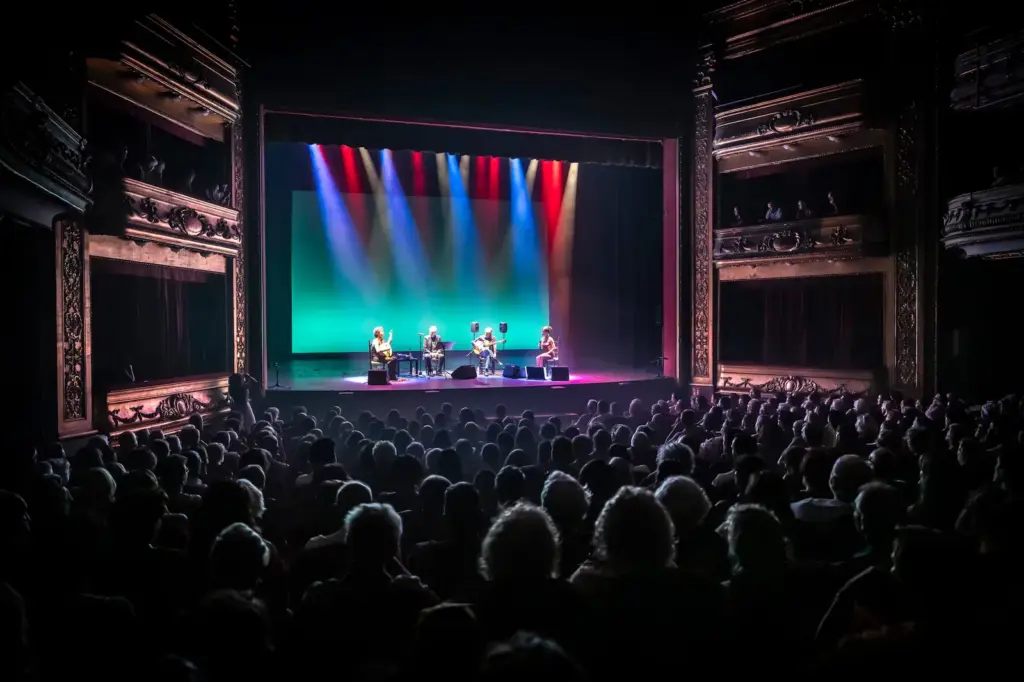
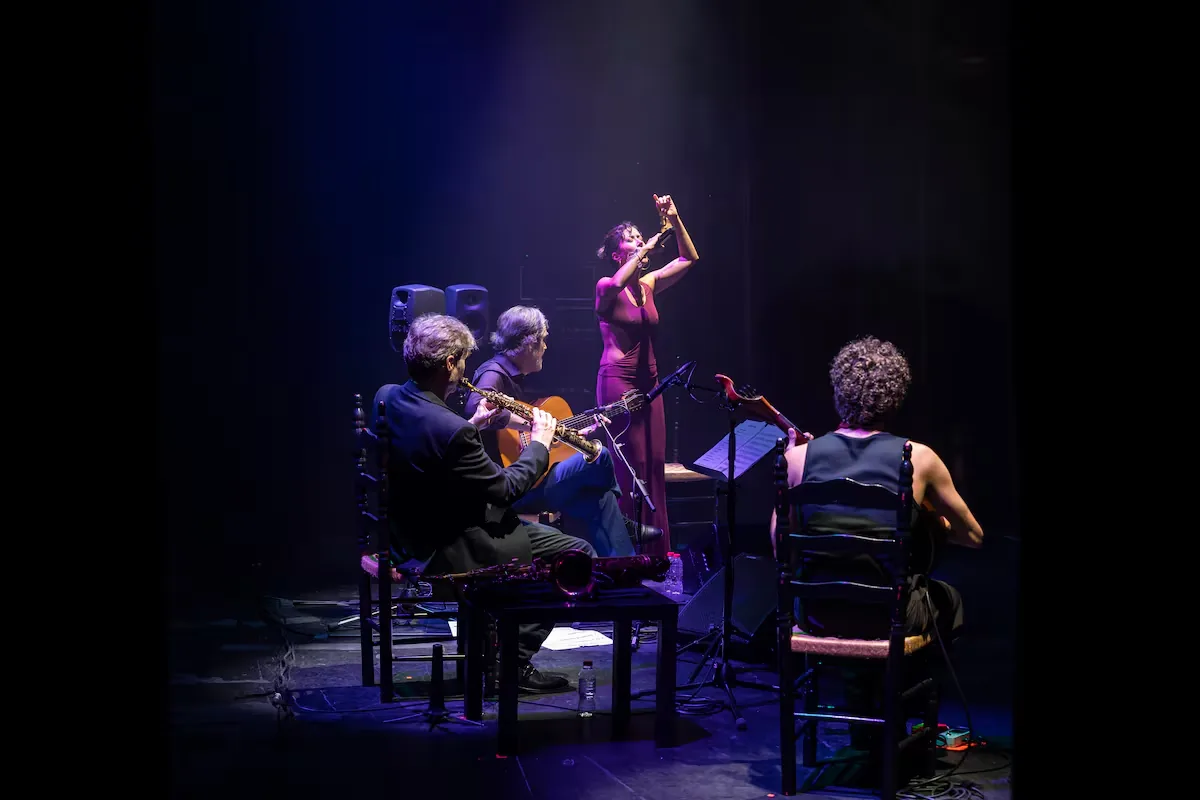
This year’s production caught attention from its very title, Tres orillas: Lisboa, Sevilla, Detroit, a lineup featuring the Sevillian flamenco guitarist Rafael Riqueni and the American jazz saxophonist Tim Ries, with Portuguese fado singer Ana Moura as a guest artist. What at first might seem an impossible equation, however, hid varied stories of mutual attractions and collaborations, in which the American appears as a common factor and, therefore, the architect of this unique meeting between the musics and cultures each of them represents.
Ries, a regular musician on The Rolling Stones tours since the early millennium, once heard Moura and invited her to participate in one of his recordings, Stones World (The Rolling Stones Project II), where she performed a couple of the group’s songs. Years later, attracted by flamenco, he joined the company of the bailaora Sara Baras, where he soaked up the codes of a genre to which he has returned to share experiences with Riqueni, who, in turn, had always shown interest in fado. Only with those backgrounds can the unique and conspiratorial gala starring the three be understood, along with an unexpected and surprising guest, the young Gaspar Valera, a brilliant interpreter of the Portuguese guitar.
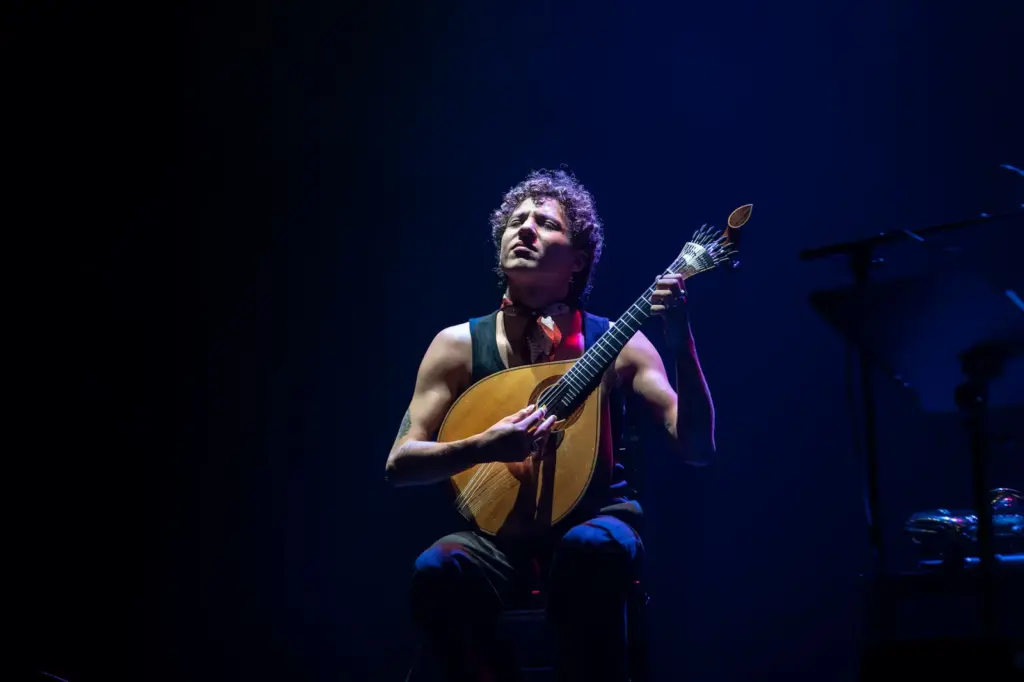
Everything is possible when talent, desire, and willingness to understand come together, and that is what happened in a concert that exceeded expectations, reaching moments of great intensity. Ries and Riqueni began by establishing a rich dialogue based on compositions by the latter, mainly taken from his work Parque de María Luisa: descriptive music of childhood memories, with trills and the murmur of waters, which gains new voices and colors with the saxophone and, especially, with the transverse flute. We were in that sweet exchange when fado appeared with all its gravity and overwhelming depth, which Ana Moura imparts, bringing emotion with the performance of No Expectations, one of the Rolling Stones songs she had recorded with Ries.
It was possibly the climax of the concert and, above all, the moment of greatest interaction among all the members on stage. Then, the concert had some additions, such as Ries’s striking improvisations on the song Higher Ground, by Stevie Wonder, performed from the stalls. Also, a finale with tangos, the granaínos of Pepico, sung by Moura, and a closing with the whole band playing pasodoble. But what really mattered had already happened.