









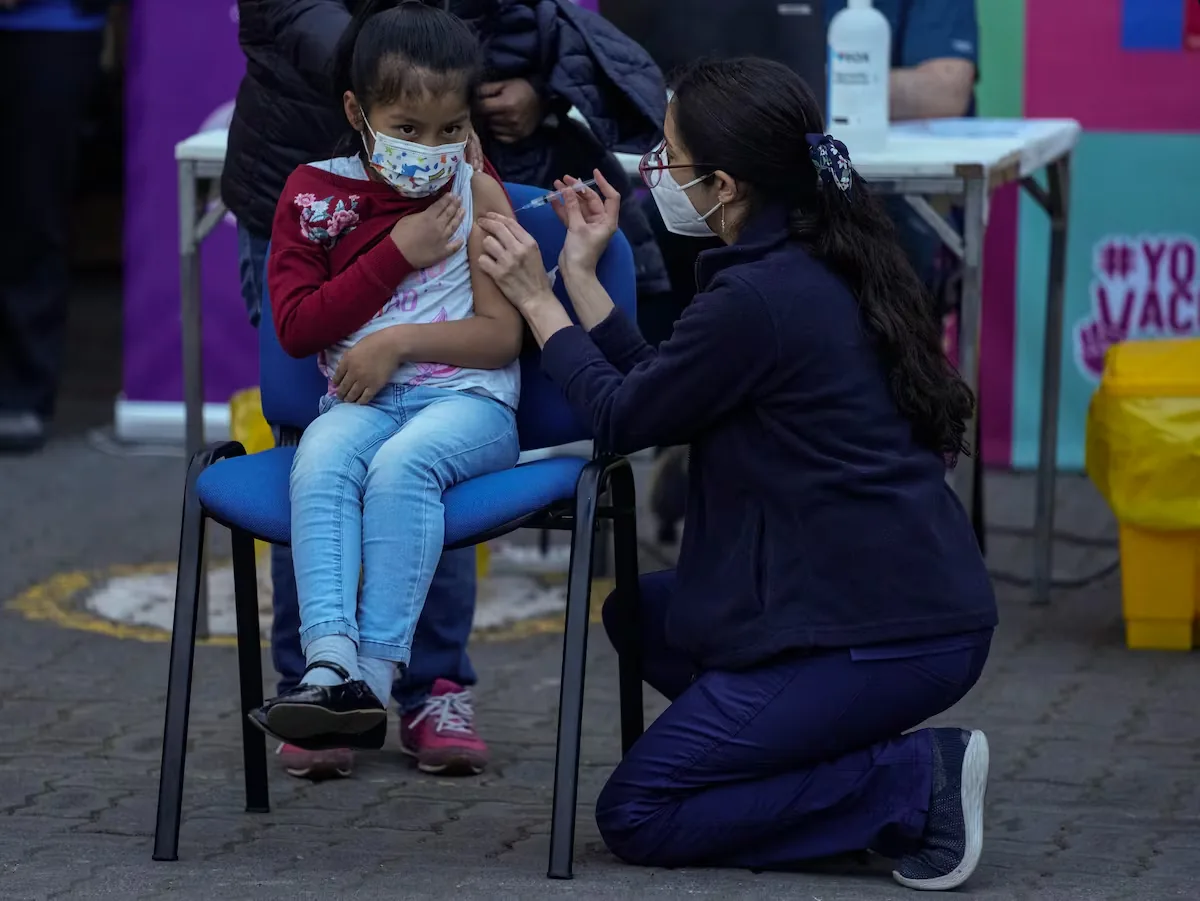
The Ministry of Health of Chile (Minsal) has reported that starting September 1, it will provide a new vaccine against pneumococcus (Streptococcus pneumoniae), a bacterium that lives in the nose and throat of people and is transmitted by coughing or sneezing. The microorganism can cause mild infections such as otitis and sinusitis, or serious diseases such as pneumonia, meningitis, and sepsis. The authorities of the South American country have updated the formula following the detection of an increase in cases associated with these infections in children.
Read more Unemployment in Chile rises to 9.5%, its highest figure in five years
The vaccine being introduced is the 20-valent pneumococcal conjugate vaccine (PCV20), which replaces the PCV13 formula. This new vaccine protects against 20 serotypes of Streptococcus pneumoniae, thereby extending protection for vaccinated individuals. The government has clarified that this is not an additional dose, but an update within the established vaccination schedule for minors, which will not change. Immunization against pneumococcus is intended for babies between two and four months old, with a booster dose at one year of age. Premature children receive the booster dose at six months.
The Undersecretary of Public Health, Alejandra Pizarro, has highlighted the incorporation of this new vaccine. “It is an advance in protecting our infants against serious diseases such as pneumonia, meningitis, and bacteremia. The more serotypes we cover, the more we also contribute to herd immunity, indirectly protecting those at higher risk of severe illness,” Pizarro told La Tercera. The authority detailed that acquiring this product implies a saving of 180 million pesos (195,000 dollars) compared to the cost of the previous vaccine.
Pneumococcus is closely monitored by the World Health Organization (WHO), as it is a bacterium resistant to antibiotics. It is the second leading cause of community-acquired pneumonia (CAP) requiring hospitalization, after the Respiratory Syncytial Virus (RSV). More than 95% of all clinical pneumonia episodes and more than 99% of pneumonia deaths in children under five worldwide occur in low- and middle-income countries.
Read more Ceuta and the racist consent of the PP
Chile faces a delicate situation due to the high circulation of viruses and bacteria. Pneumococcus is of special concern, as from 2022 to 2025 there is a rising trend both in the number of cases and incidence rates, increasing from 400 cases in 2022, equivalent to two cases per 100,000 inhabitants, to 773 cases in 2025, that is, 3.8 cases per 100,000 inhabitants. Meningitis, a disease linked to the microbe, has also seen an increase in reported cases. Minsal issued an alert to strengthen epidemiological surveillance, early diagnosis, and control measures during the winter and spring period.
María Luz Endeiza, pediatric infectious disease specialist and head of the Vaccination Clinic at Universidad de los Andes, has explained that the figures are concerning even if they seem low. “The cases may seem few, but the problem is that pneumococcus has a high lethality. There are 17 deaths per 100 cases. And the rest of the cases are severe. Many require ICU admission and have severe conditions. Some are left with severe neurological sequelae for the rest of their lives: neurological deterioration, hydrocephalus, hearing loss, that is, some degree of deafness, or blindness. So, it is a disease that, in its various forms, can leave serious sequelae,” she told La Tercera.
The vaccination schedule for children before their school stage (six years old) includes immunizations BCG, against tuberculous meningitis; against hepatitis B; meningococcal Serogroup B; the hexavalent vaccine against diphtheria, tetanus, whooping cough or pertussis, invasive diseases caused by Haemophilus influenzae (type B), infection by hepatitis B virus and polio virus; the 13-valent pneumococcal conjugate vaccine (which will be replaced by the 20-valent pneumococcal conjugate vaccine (PCV20)); the trivalent vaccine against measles, rubella, and mumps; the tetravalent conjugate meningococcal vaccine against diseases caused by Neisseria meningitidis groups A, C, Y, and W135; against hepatitis A; against chickenpox; and against yellow fever.
Read more The Viking strategy also triumphs in the Vuelta a España