After six months of the Iran war, the United States seems more interested in the economic strangulation of the regime than in direct attacks. A new skirmish has once again reminded that the war remains very real. Yesterday, Washington troops attacked two Iranian launchers on Larak Island, first reported by Axios and later confirmed by the regime’s own Revolutionary Guard, which has threatened retaliation. At 5:00 p.m. Washington time, six hours later in mainland Spain, the United States Central Command (CENTCOM) had not confirmed the operation. These are the first direct attacks by the United States against Iran since late July.
Read more Terzic’s Athletic presents itself to the world at Balaídos with its first victory
“I can confirm that today, U.S. forces attacked two Iranian launchers on Larak Island. We observed members of the Islamic Revolutionary Guard Corps preparing to launch rockets with naval mines toward the Strait of Hormuz,” said a senior U.S. official, according to Reuters. The rockets, according to a source cited by the Qatari channel Al Jazeera, were being prepared to launch naval mines. “Our forces have completed the clearing of international merchant routes in the Strait of Hormuz,” the source said, reports that outlet.
The Revolutionary Guard, the parallel army that underpins the Islamic regime and controls between 20% and 30% of the country’s economy, stated that the attack on Larak Island left several fighters and civilians dead and injured, according to the state channel IRIB. Although that body did not provide an exact number of casualties, the news agency Tasnim, linked to that organization, reported two dead and two injured.
“Desperation over their domestic problems and the fall of their credibility among regional countries leads them to try to revive their sinister role and justify themselves before public opinion with an aggressive act, attacking Larak Island,” the Revolutionary Guard denounced. The attack “will receive a response from the sons of Islamic Iran and there will be punishment for the aggressor,” the statement continues, speaking of “martyrs and wounded” among its fighters as a result of an attack by the “U.S.-Zionist enemy.”
The Strait of Hormuz remains the key point showing how much the United States has failed in its strategic objectives in the war that began last February 28 with Israel, its ally.
Read more Lula trusts in a package of laws to distance himself from Bolsonaro Jr. in the polls
Beyond the undeniable success that the decapitation of the regime represented in those days, with the death of its supreme leader, Ali Khamenei, the Islamic Republic has shown remarkable resilience. Today, with Mojtaba Khamenei, Ali’s son, at the helm, it seems in a stronger position than before the war. The regime change that President Donald Trump once proposed as a goal now seems even more distant than before the war.
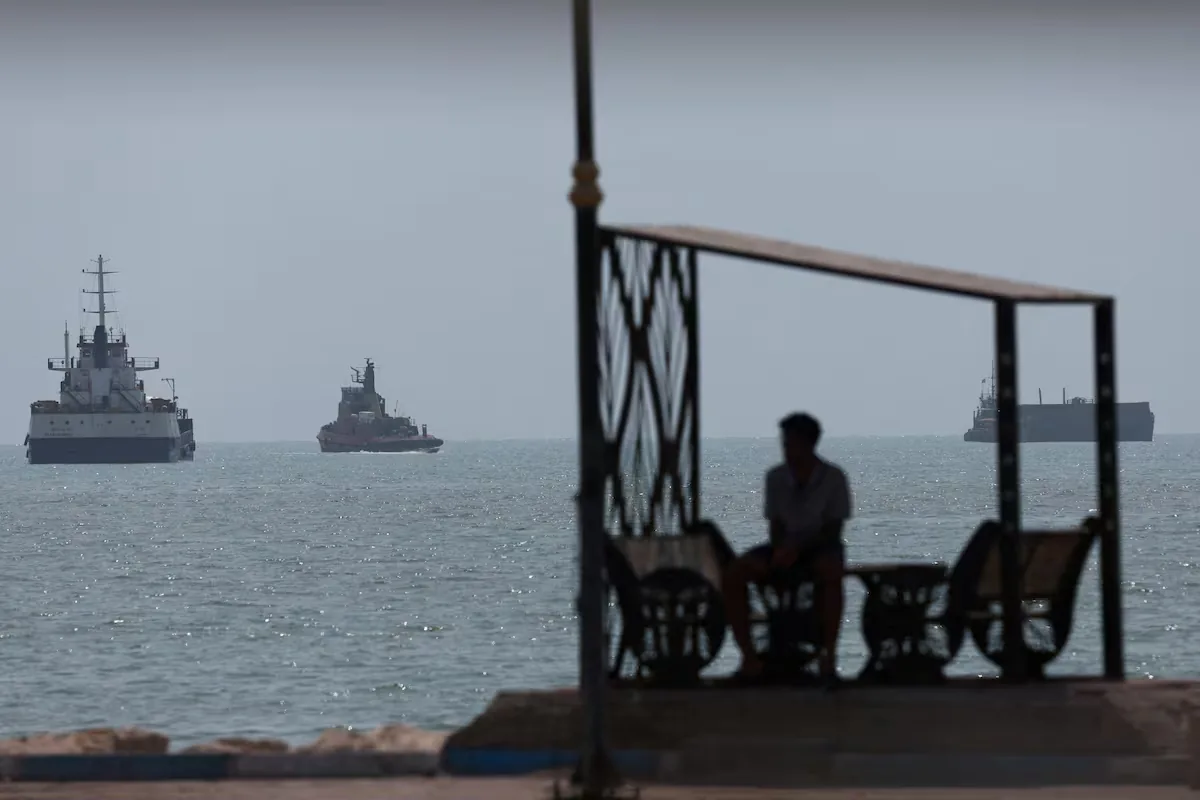
The Strait of Hormuz — through which before the operation pushed by Trump and Israeli Prime Minister Benjamin Netanyahu approximately 20% of the world’s oil flowed — remains closed today, causing a very damaging effect both to the U.S. and globally. This happens with two months left until the vital parliamentary elections, where Trump is playing the second half of his term in the White House.
The operation on Larak Island is known the same day that The Washington Post publishes revealing information about growing unrest in the U.S. military over a war that was supposed to last only a few days and has now extended for more than half a year with no sign of ending soon. According to that newspaper, senior military leaders have warned Defense Secretary Pete Hegseth of the risks of prolonging large-scale operations in Iran. They say this possibility is unsustainable and carries the risk of weakening the ability to face threats in other regions, including U.S. territory itself.
The warnings to Secretary Hegseth were made, the paper reports, by the chiefs of the Army, Navy, and Air Force, as well as by four-star commanders overseeing U.S. operations in Europe, Asia, and Latin America.
Read more ‘Ars communicandi’