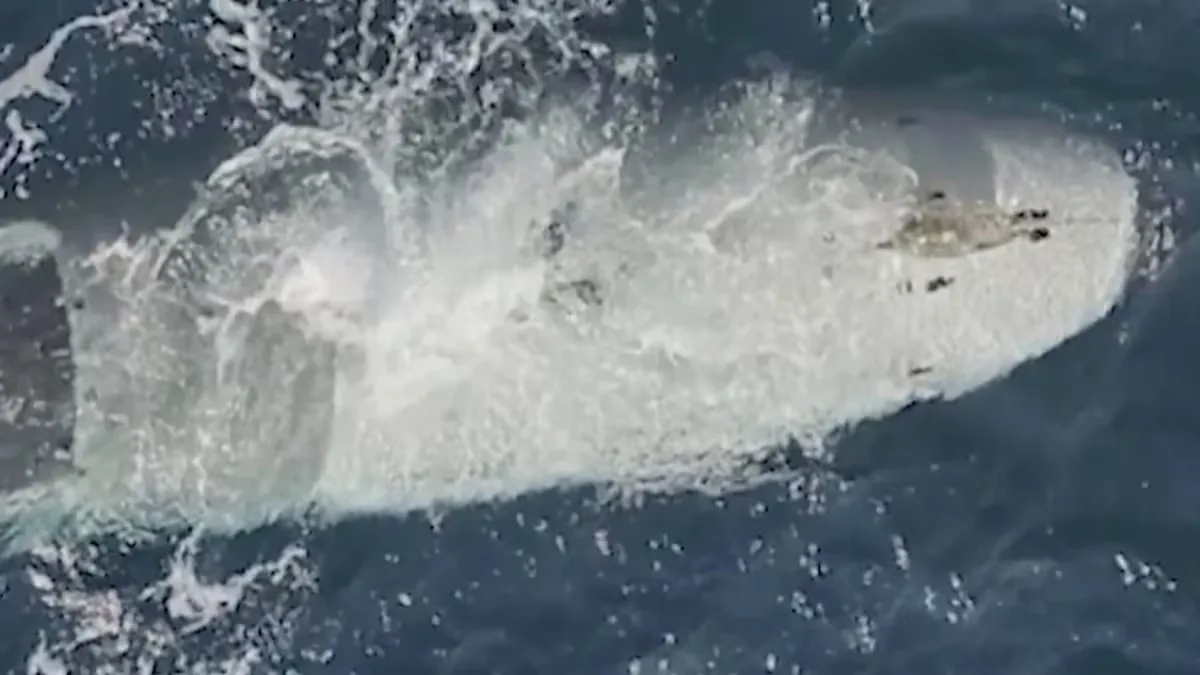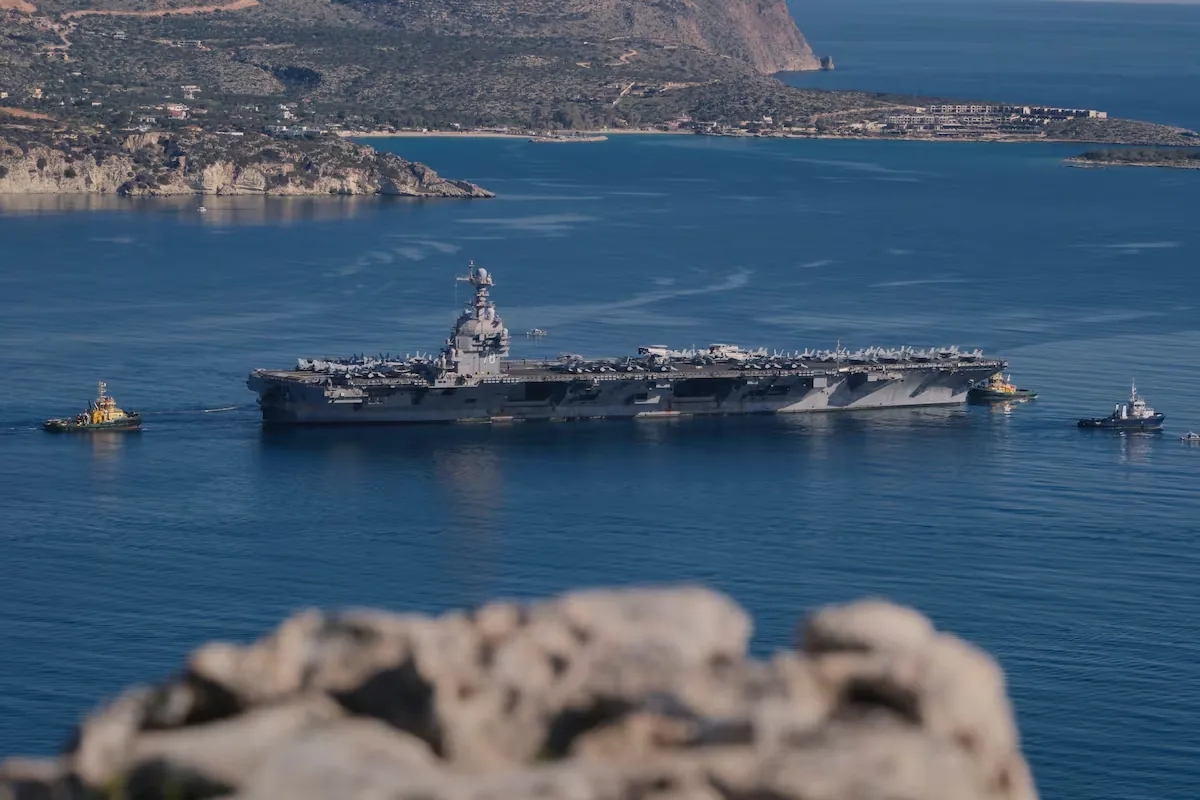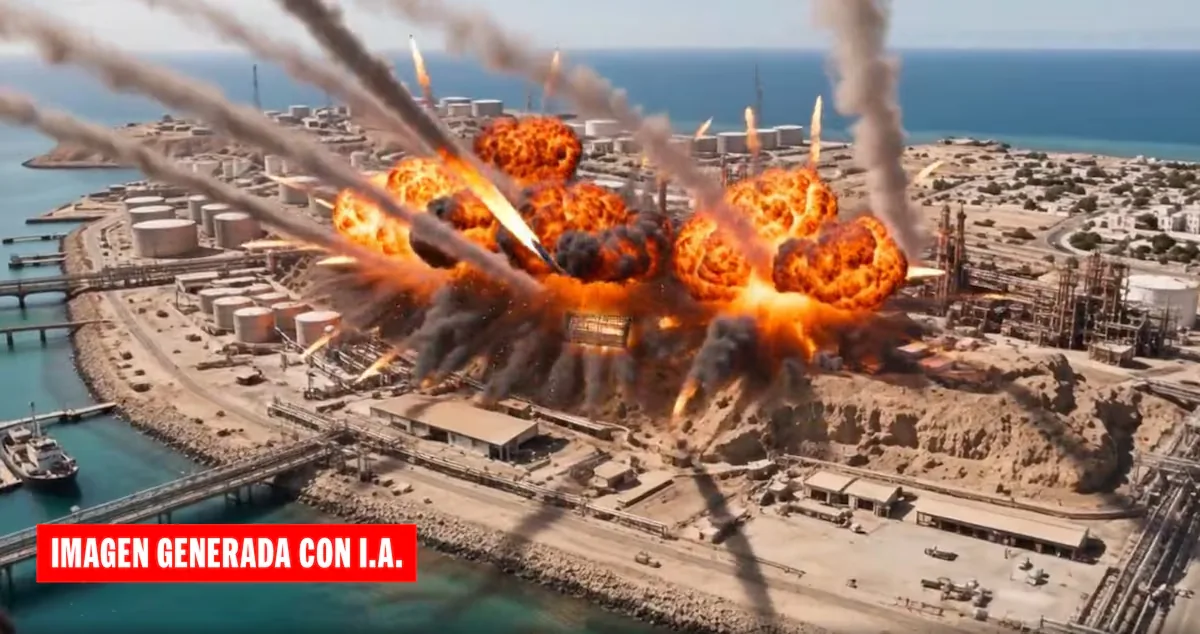
Jarg Island has been reduced to rubble!!! Donald Trump has celebrated on social media the destruction of Iran’s main oil export center, showing a video of explosions that, according to Reuters, has been manipulated with artificial intelligence.
Read more The Moon Sect faces its toughest hour after the prison sentence of its top leader in South Korea
Jarg, an Iranian island in the Persian Gulf, managed 90% of Iran’s oil exports before the war started by the United States and Israel last February 28. An offensive on its facilities would severely affect its economy, already harmed by the blockade and Washington’s sanctions. The U.S. government has not commented on the alleged bombing, but the price of oil did react to Trump’s message and rose more than 3% at market opening.
Iran claims the images are fake
Hours later, Hamid Bovard, director of the state company National Iranian Oil Co., stated that Trump’s images were fake. “Trump’s messages are ridiculous and the situation in Jarg is calm and normal,” the official told the news portal Nournews, explaining that operations continued as usual.
Trump’s message, who has threatened to bomb Jarg several times in recent months, comes hours after the first mutual attacks since July between Washington and Tehran. On Sunday, the United States hit two Iranian launchers on the island of Larak, in the Strait of Hormuz, in an attack that caused deaths and injuries among civilians and fighters, according to the Revolutionary Guard, the parallel army that supports the regime, without giving further details about the victims.
Tehran responded by launching missiles against two U.S. bases in Jordan used for the attack on Larak, but the projectiles were intercepted, the Ministry of Foreign Affairs said in a statement. Additionally, Iranian forces also claimed to have attacked with drones early Monday the Al Minhad airbase in the United Arab Emirates, where U.S. forces and helicopters were apparently stationed. However, Reuters noted that the Emirati Ministry of Defense denied the reports about this attack.
“We will not remain silent in the face of aggressions,” warned Iranian President Masud Pezeshkián. “We are not seeking war (…) but we will respond firmly to aggressions,” the leader said from Kyrgyzstan, where he is on an official visit, in statements released by official media.
The conflict between the two countries began six months ago, and the United States, which hoped to win a short and easy war, has so far achieved none of its strategic objectives. The Islamic Republic has shown remarkable resilience, and its supreme leader, Mojtaba Jameneí, son of Ali Jameneí, eliminated by Washington in the early moments of the conflict, remains in power and dismisses any prospect of regime change.
On Sunday, in a message posted on his Telegram account, Iran’s supreme leader urged Muslim countries, particularly those in the Gulf, to unite against what he called their “true enemy.” Mojtaba Jameneí has not appeared in public since the U.S. and Israeli attacks that killed his father on February 28, and his physical condition is unknown.
Washington’s strategy now is to attack Iran economically. To this end, last week it announced new sanctions, especially targeting countries that support the regime. Meanwhile, the Strait of Hormuz, through which approximately 20% of the world’s oil passed before the start of the U.S. and Israeli bombings, is practically closed, affecting the global economy. If before the war, an average of 130 ships crossed these waters daily, now they do not exceed 20. The United States has reimposed the blockade in the Gulf of Oman and tries to stop all ships while Iran launches projectiles or aquatic drones against some of the vessels that venture into these waters without permission from the Revolutionary Guard.
On Monday, a supertanker caught fire and was completely immobilized after hitting two naval mines in Hormuz, reported Iranian state television, according to Reuters. The Revolutionary Guard stated that the tanker had tried to illegally cross the waterway and warned that other ships violating its rules to try to cross the strait would meet the same fate.
In recent hours, Tehran’s leaders have also addressed Israel, which participated in the February 28 attacks alongside the United States. On Monday, in a message on the X network, Iranian Foreign Minister Abbas Araghchi called Israeli Prime Minister Benjamin Netanyahu a “snake” for his double discourse towards the United States.
“In Hebrew, Netanyahu openly boasts about having deceived the U.S. Administration into going to war with Iran on Israel’s behalf,” Araghchi wrote. “In English, he praises the leadership of the U.S. president. Snake,” he added.
Araghchi attached an interview given to an Israeli channel in which Netanyahu “openly mocks how he influenced” the position the United States has towards Iran and said that for this, the Israeli prime minister had to spend “more than 1,000 hours” on that country’s televisions.