









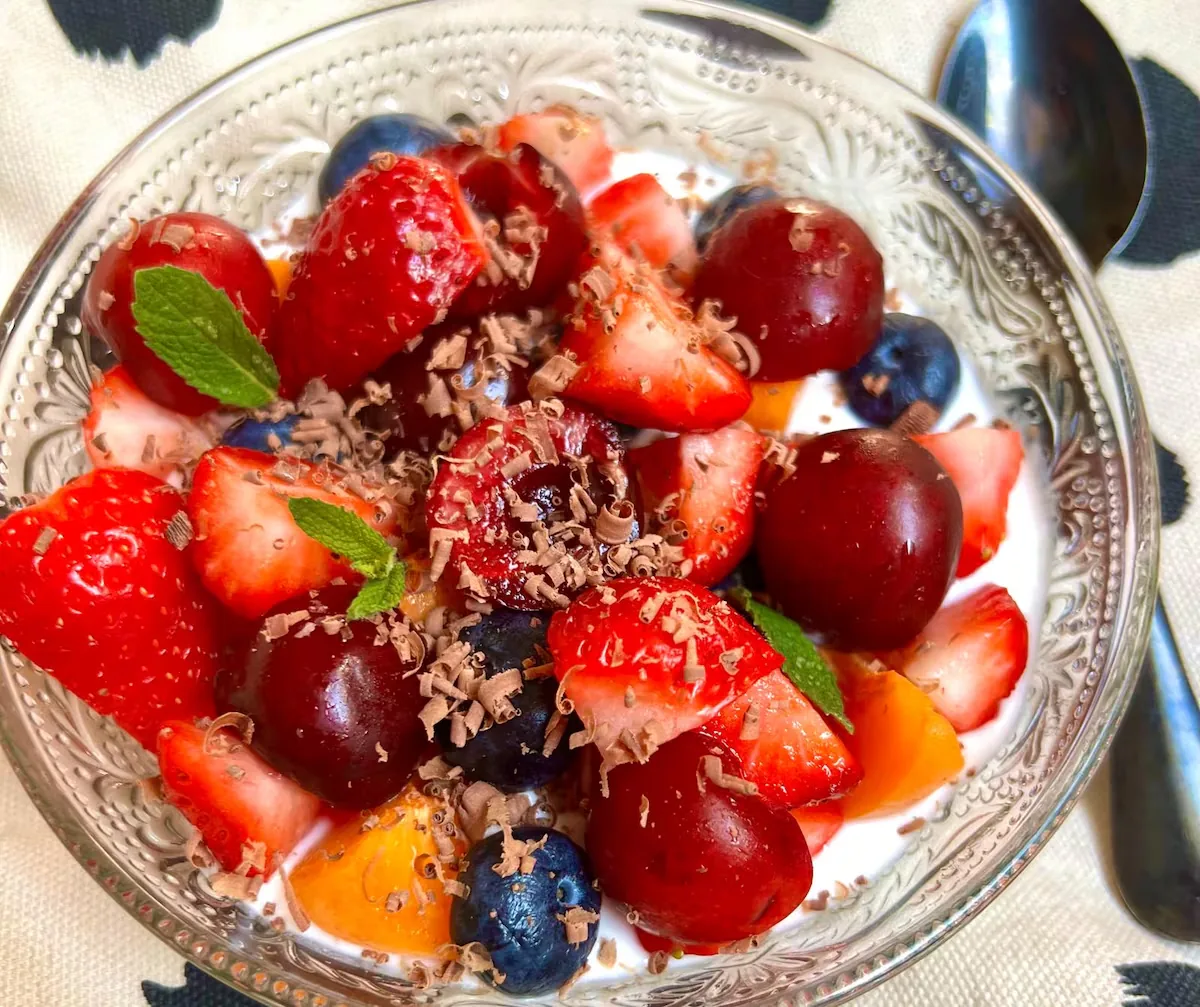
In the European fruit country – we are the leading producer in the EU – fruit is scarce on many Spanish dessert menus. We remain subject to the triumvirate of apple, banana, and orange, regardless of the time of year, while fruit shops are a dream overflowing with cherimoyas, cherries, strawberries, peaches, or watermelons. That yellow apple that could star in a retinol ad. A cut green pineapple, with the pieces separated forming a ladder to escape by. That, with a lot of luck, peach that seems to have come from a quarry rather than a fruit shop.
Read more ‘American Horror Story’ on Disney+, ‘Babies’ on Filmin and other recommended series for September
Spain cultivates 25% of the EU’s fruit, making us, according to the Ministry of Agriculture, Fisheries and Food, the leading European producer and seventh worldwide. The same source confirms that we are also the leading European fruit exporter and the second globally in value after the United States. Oranges, lemons, mandarins, and grapefruits are mainly grown in the Valencian Community, Murcia region, and Andalusia. Stone fruits like peach, nectarine, apricot, plum, and cherry are mostly from Aragón, Catalonia, Murcia region, and Extremadura. Apples, pears, and other pome varieties come from the large orchards of La Rioja, Castilla y León, Catalonia, and Aragón. Additionally, tropical fruits such as mango, banana, avocado, papaya, or cherimoya are now cultivated not only in the Canary Islands but also on the Tropical Coast of Granada and the Axarquía region of Málaga.
From abundant production to emptiness on the menu
Despite this abundance, tension is palpable when, in a restaurant, that free-spirited and low-calorie person asks: “Do you have fruit?” Not only has that tiramisu you hesitated to order been spoiled, but the waiter seems not to remember the last time they saw fruit in the kitchen. Squinting while mentally scanning the pantry, they respond as helpfully as circumstances allow and regardless of the time of year and place: “Pineapple, apple, orange, and, mmm, let me see if I have any grapes left.”
But beware, this may not be the worst scenario. Sometimes, when the range of options is reduced to peach or pear in syrup, we wonder if we have been teleported to the Siberian steppe. Marc Taribó, who is not Russian but Catalan, sheds some light on this issue. “Regarding waste, it is much easier to work with prepared desserts that only need heating than to have fruit in a restaurant,” he begins.
Taribó belongs to the third generation of Camarasa Fruits, the Barcelona fruit shop founded by his grandmother María Camarasa, which today is an institution. “Currently, most restaurants buy ready-made pastries, so they only have to finish the dessert, decorate, and heat it if necessary. This is much easier both for controlling preparation and inventory. Preparing fruit is more expensive, requires more time, and there is much more waste, which is something a restaurant tries to avoid,” he adds.
Chef Ana Barrera also mentions the difficulty of having prepared fruit for desserts but also talks about produce “that smells like nothing.” She describes how before “you would enter a fruit shop and be enveloped by the smell of fruit, especially at this time of year. Now, however, it neither smells nor tastes like anything.” In search of that smell and flavor lost in trucks or that the fruit never had, Nacho Gómara’s father, chef at Verduarte restaurant, often goes out into the mountains of Navarra.
Since opening this place in Pamplona seven years ago, Gómara has made a single dessert. “It’s the same, and the only one, since we opened: an almond tile with five types of fruit that we prepare with a bit of Modena vinegar and salt, without added sugar,” says the chef chosen as the best Navarrese cook in 2024. “We ‘force’ people to eat fruit, and when they do, they feel good.” Right now, the dessert is being made with cherries from Navarra, mango from Motril, and high mountain garnacha also from there. “We like to work with fruits that haven’t been through a lab, that have seeds, with red fruits my father picks, and with wild plants,” he adds.
The daily menu that is no longer so daily
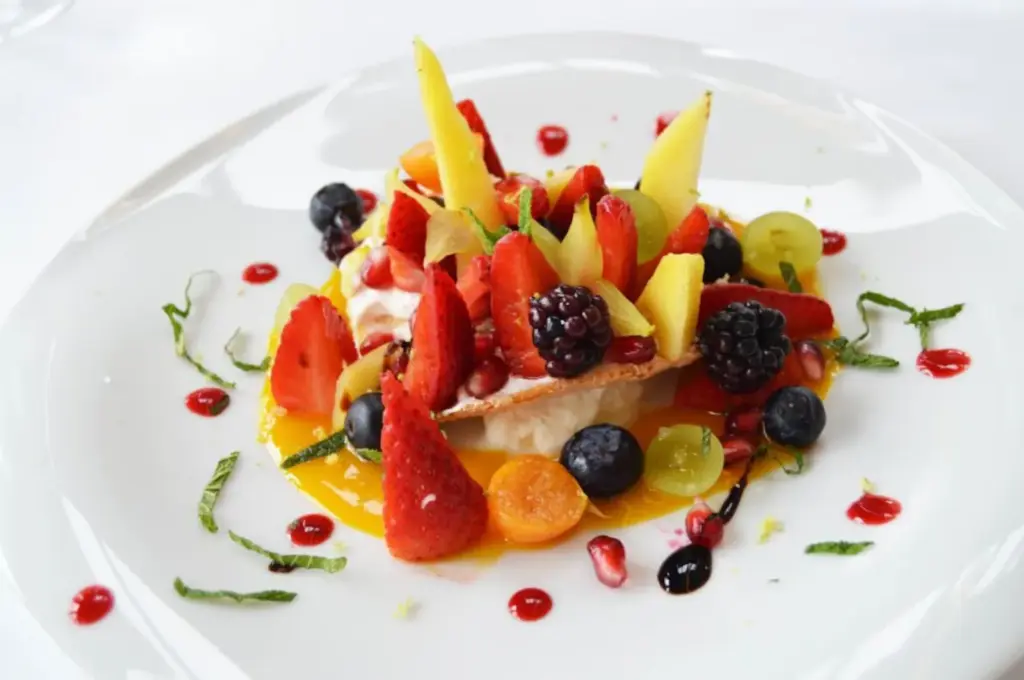
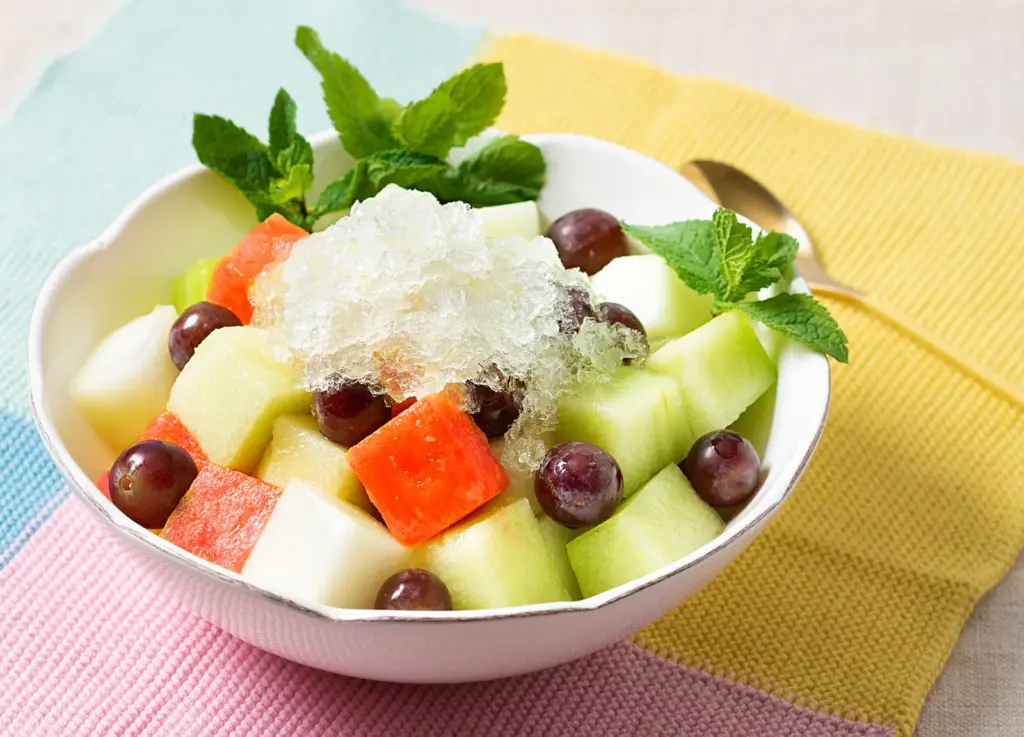
Edu González, in charge of the Instagram account Bravas Barcelona – and the YouTube channel of the same name – is currently doing a masterclass on traditional midday menu bars, in the form of a series of reels to showcase them, and confirms that cost has a lot to do with it. “Although all food prices have risen, fruit is proportionally one of the most expensive; and that’s even though we are producers,” he reflects. Despite this, in the places he has visited for reporting, there is almost always a fruit salad, “which is like disguised fruit, with a festive touch of orange juice; and now in summer, slices of watermelon or melon are never missing.” He confirms that syrup is very low-priced, although there are still some nostalgic for the appetizer and the ‘pijama’ (a type of dessert).
Carles Armengol, a committed restaurateur, author of Matar un bar and the man behind the bar-café of the +Bernat bookstore, believes that the way people go out to eat also affects these habits. “In my parents’ bar days, the Collado, when people often ate outside the menu and the bar was like a ‘home,’ people did order fruit because it wasn’t the plan to eat cakes all the time.” For González, that is the crux of the matter: “the daily menu is no longer daily because eating out is no longer something you do every day, so you can comfortably eat pudding or flan, two options that remain immovable in the dessert offer.”
Read more A coffee for 25 euros? ‘Ragebait’, or why ‘influencers’ and brands want us to get angry
“Perhaps the problem once again comes from having gotten used to having everything all year round, or that variety is better than quality,” reflects Mònica Escudero, Comidister editor and fruit enthusiast. “With a single good and seasonal option, served as is or minimally intervened – any fruit with lemon, salt, and chili becomes a fun dessert even for the most reluctant – the risk of waste is minimized and those of us who want a fresh option have it.” Everyone wins.
Fine dining also plays
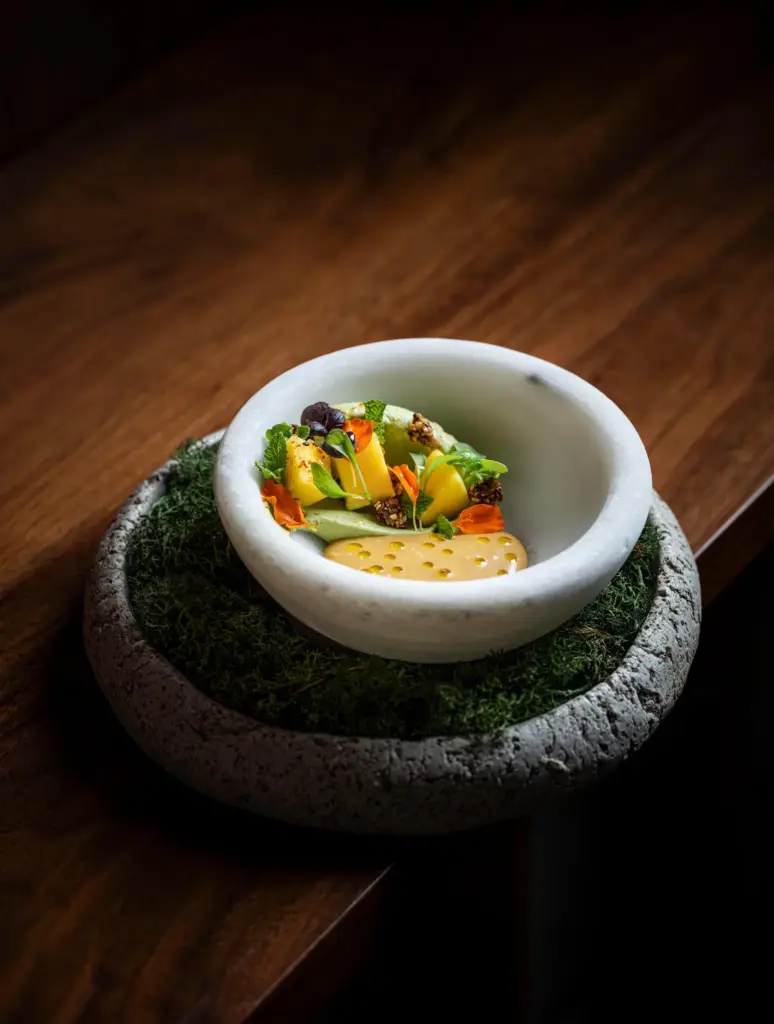
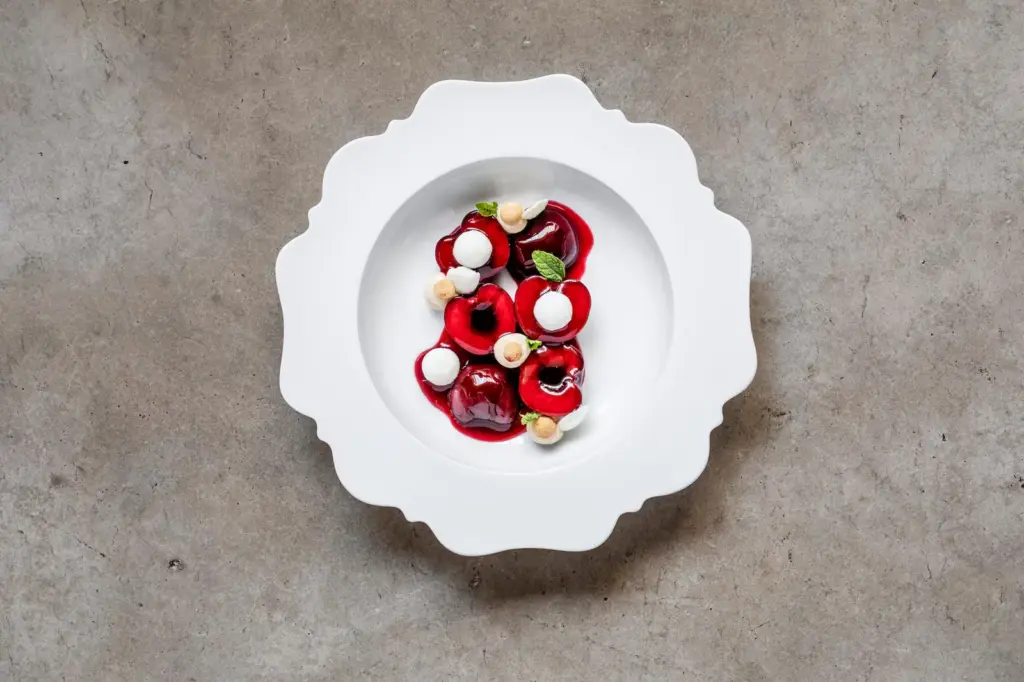
Thus, it is not uncommon for fruit to end up reduced to an ingredient, transformed into purees, coulis, or simple decoration, something the Valencian chef Ricard Camarena tries to avoid, although he understands the difficulty of working with fresh fruit in restaurants. “One of our iconic desserts is based on a piece of fruit. We created it in 2012 and it really paved the way and was quite copied,” he explains. “It is a cold curry that contains seeds and herbs and has mango as the main base,” a sweet reinterpretation of a Thai curry. “Then we started working with figs, also whole except for a small bite, as if they had been bitten. Right now we have a cherry dessert, another with strawberries, and another with peach as the main ingredient,” he details.
Cases like Camarena’s or Gómara’s are still not common in fine dining, much less in mid-range restaurants. Could this ghosting of fruit have something to do, perhaps, with the culinary training offered in Spain? “It is true that some cooking schools focus more on the technical component than on the product. However, we are trying to change this trend and offer plant-based diplomas that focus on the preparation and creative development of dishes designed mainly from plant products that include fruit,” Carlos Fernandes, chef and professor at the Le Cordon Bleu School of haute cuisine in Madrid, explains to El Comidista.
Treating fruit as a product and not as an ingredient
Camarena, who runs several gastronomic projects besides his eponymous two-Michelin-star restaurant, acknowledges that this way of working with fruit is not the most common in Spanish restaurants, but he does not attribute it to a lack of interest from the public. “What customers want in desserts is something appealing and, in fact, if you offer it, they love it. And if they look for something fresher or warmer, that can also be achieved with fruit,” he opines. “But a paradigm shift is necessary to understand fruit as a product and not as an ingredient. This involves a very good and careful selection of pieces. With mediocre fruit, you add sugar, make a mousse, and transform it, but you can’t do that with fresh fruit. Also, considering it as the main element means entering the cycle of a delicate perishable product,” he adds, supporting Taribó’s thesis.
With this approach to fruits and vegetables, the aim is to keep products “in a purer state, maintaining their texture and flavor. However, it is true that this can be difficult for restaurants,” admits Fernandes, “because getting a good product, consistent both over time and in quality, is complicated. Safe options that you can use all year round are needed, and you end up making a fruit puree, trying to keep it fresh and transforming it according to its characteristics.” Still, Fernandes believes things are changing and throws down a challenge in this regard: one of his star dishes right now is a strawberry, tomato, and red pepper salad.
It’s easy if you know how
Raquel Riol, partner at the Barcelona restaurant Més de Vi, believes it is important to have fruit in the dessert offer – besides regularly including it in salads, creams, or pickles – starting because it is inclusive for customers with dairy, gluten intolerance, or allergies to the usual suspects at the end of the meal. “Infused fruit is a dessert that works really well because not everyone likes chocolate or wants something very sweet or heavy at the end of the meal: especially in summer, many people look for something fresh and light.”
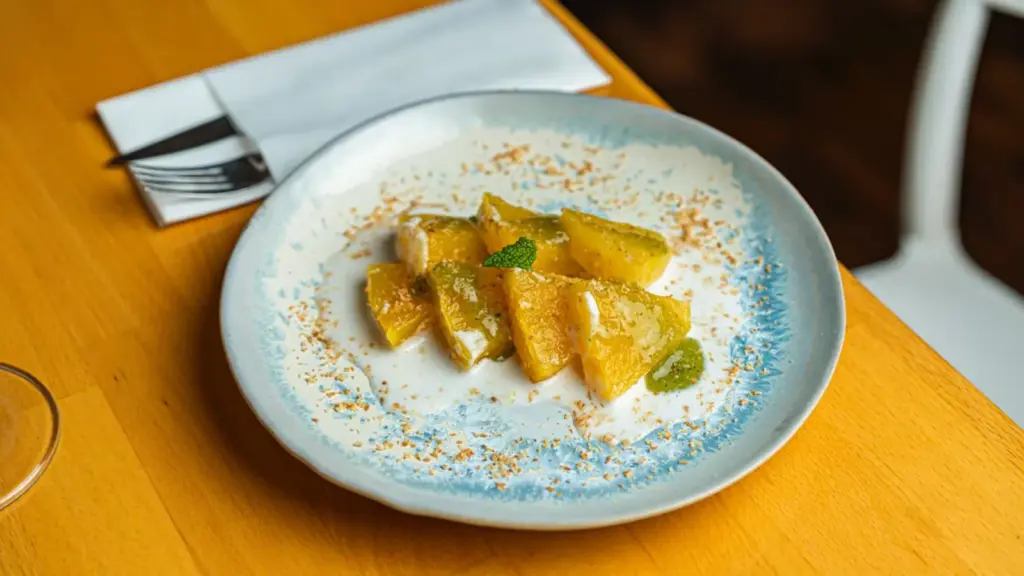
They work with infused fruit that changes according to the season: now they have melon with rum, mint, and coconut flakes. “Pineapple also works very well, we have also worked with apple or peach.” They think of this dessert as if it were a cocktail – with a small amount of alcohol – integrating all the flavors of the ingredients. “We consider what liquor might go well with the fruit, what herbs can add nuances or expression.” Sometimes they finish it with a cream or a crunchy element.
Armengol suggests turning to traditional recipes to offer fruit, beyond just putting an apple and a dull knife on the table. “Besides serving it as is, you can prepare pears in wine, baked apple, make seasonal fruit salads, orange prepared with muscat or cinnamon, strawberries with cream, again with muscat – sweet wines offer a lot of possibilities – or macerated with a bit of vinegar. That said, when there is no fruit dessert on the menu and it is requested, “an orange always ends up falling, because it’s what everyone usually has on hand to make juices or for vermouth.”
Follow El Comidista on Youtube.