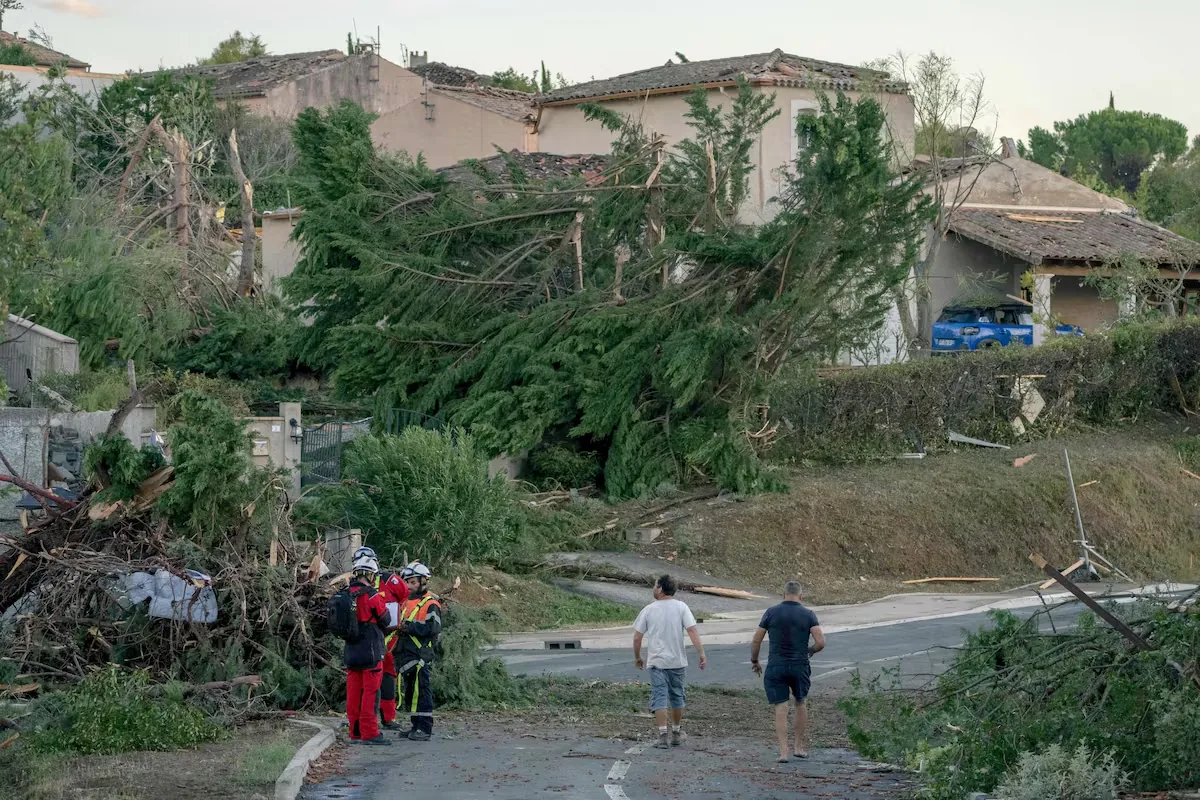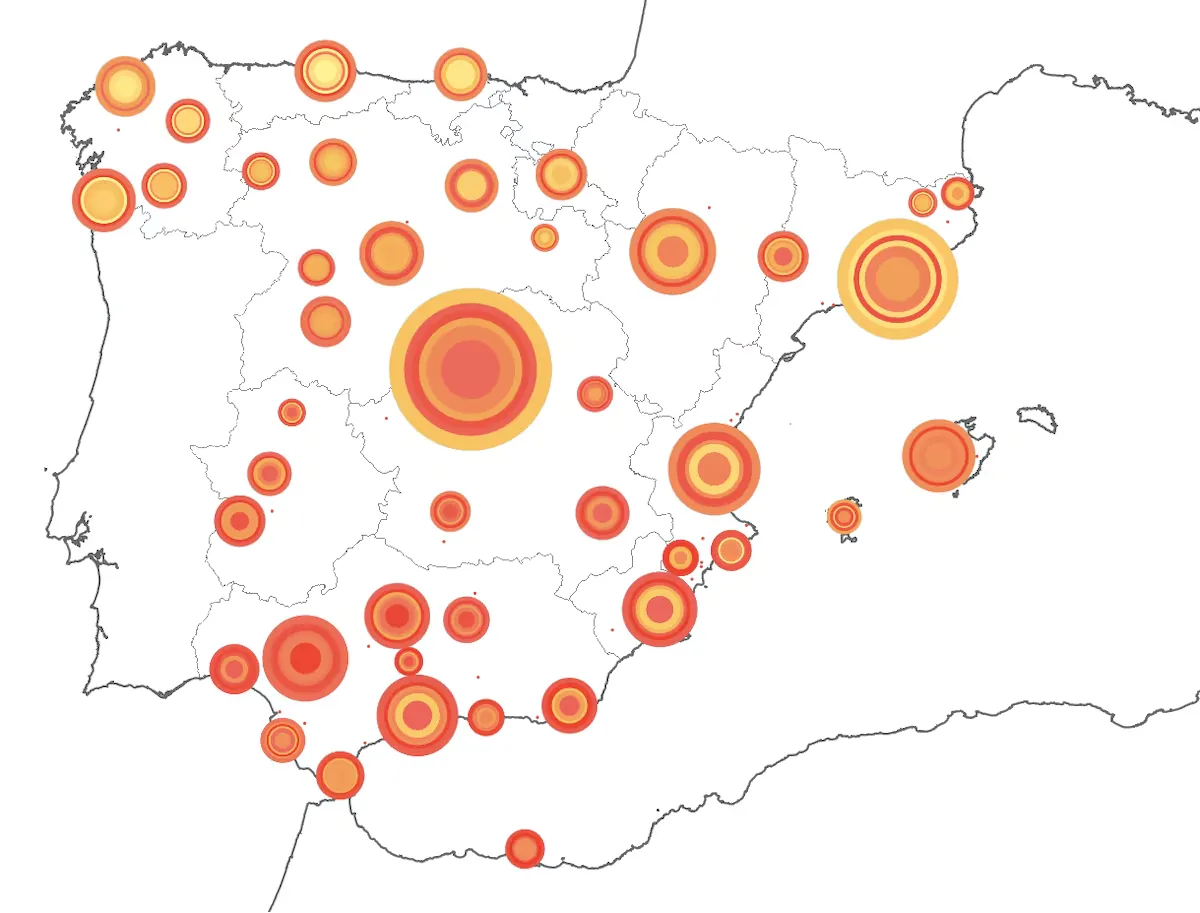
That we are in a climate emergency and heading towards a hotter scenario, we have known for some time. But it will not be the same everywhere, nor will it be suffered equally: it will depend on the climate of each area, the prospects for an increase in heatwave days, how prepared the homes are, the household income, or the proximity to green areas. The architecture firm specialized in data analysis Trescientosmil and the Barcelona Supercomputing Center have published the Atlas of Heat Vulnerability, which analyzes the resilience of Spanish cities with more than 40,000 inhabitants against the coming heatwave. “This is the coolest summer of your life,” warn the authors with dark humor while positively pointing out the margin for improvement that Spanish buildings and cities have to mitigate the effects of heat.
Read more Óscar López, minister and PSOE candidate for Madrid: “Ayuso is at her lowest point”
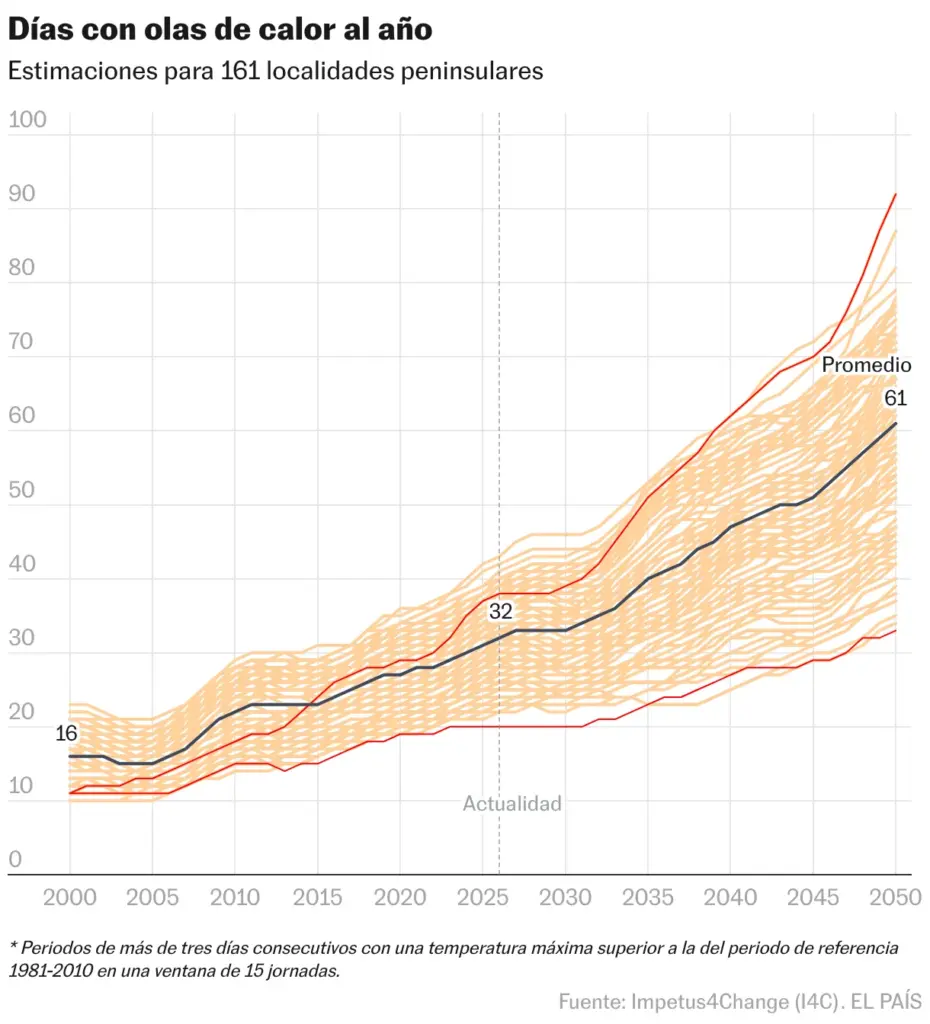
The Atlas starts from the finding of the European project Impetus 4Change that the number of heatwave days will have tripled, on average, between 2000 and 2050; and predicts that it will worsen urban inequalities. The reason is that households with fewer resources will face more pressure because they will have more difficulties cooling down, lowering the temperature in homes that are not prepared. The forecast pointed out by the authors for the increase in cooling needs is 65%. Note that cooling does not necessarily mean using air conditioning. The indicator is a technical measure that calculates the degrees of temperature that need to be reduced to 23 degrees, explains Pablo Martínez, from Trescientosmil: “It means bringing cold, which can be done with better insulation, cross ventilation, or good shade design, with blinds… or also with air.”
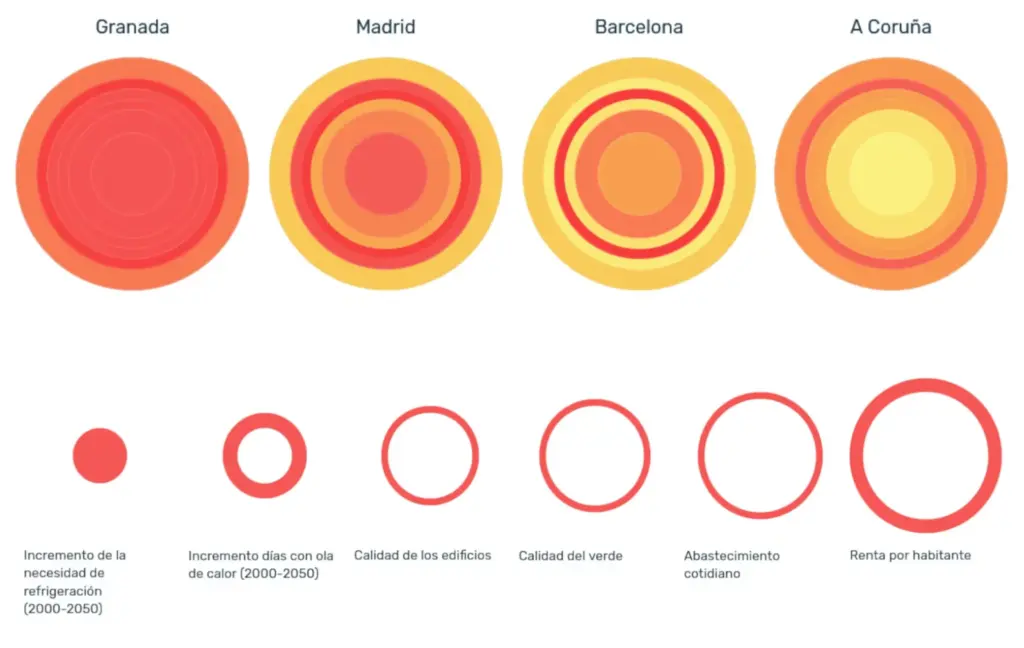
The Atlas depicts a Spain where “the south concentrates the greatest increases in cooling needs, while the Catalan and Balearic coast leads the rise in heatwaves and the Atlantic north records the most moderate changes in both threats.” City by city, their situation and scenario are represented in circles that analyze (from yellow, more favorable; to red, less favorable) what the cooling need will be, the expected increase in annual heatwave days, the quality of buildings, income per inhabitant, and access to supply needs (food stores or pharmacies within 300 meters). The sources of the work are administrative and climate models, and the Atlas covers 161 Spanish municipalities with more than 40,000 inhabitants, excluding those of Navarra and the Basque Country (due to lack of cadastral data equivalent to the rest of the territory) and the Canary Islands (due to lack of climate data).
It is not possible to rank cities with the worst or best prospects because there are six indicators, and municipalities have strengths and weaknesses. But it is possible to cite specific examples. The work places Granada as one of those with the worst conditions: it starts from an “already severe” climatic situation, shows a strong increase in heatwave days and cooling needs, the quality of housing and urban greenery are low, although it has a relatively favorable adaptive capacity, always citing the work. In contrast, A Coruña shows moderate increases in heatwave days and cooling needs, its conditions due to its geographical context are better, it has good access to local supply, but the quality of its residential stock is its weak point.
In the case of Madrid, the forecast for the increase in heatwave days is moderate, but it shows a high increase in cooling needs. “Scarce vegetation is its main challenge” and on the other hand, its adaptive capacity and access to stores are high. And in Barcelona, if adaptive capacity, stores, and residential stock are its strengths, its weaknesses are the heatwaves it will gain and the low intensity of vegetation.
The zoom also allows seeing where heatwave days will increase the most, although, spoiler alert: in the place with the least, they will almost triple. The list is headed by Castelldefels (Barcelona), a coastal town where in 2000 they had 11 heat days per year and it is estimated to be 91 in 2050: 80 more days, a figure that means multiplying by seven. The city where they will increase the least, only 129%, is Torrelavega, going from 15 to 34.
Andalusia and the Mediterranean coast, versus the Atlantic cornice
What the work does insist on is that “Andalusia concentrates the greatest climate threat”: because they start from some of the most demanding climatic conditions, they are among those that will record the greatest increases in temperature and cooling needs. In contrast, the Atlantic cornice is the best-prepared area against these two threats, due to a more favorable starting climate. The worst scenario is the sum of increased threats and lack of resources to adapt. And here the risk is not exclusive to the south of the peninsula, pointing to municipalities on the Mediterranean coast with medium cooling needs and better heatwave evolutions, but poor housing quality, services, and modest incomes “limit their margin to face the coming decades.”
Big challenges, but much room for improvement
Martínez draws several conclusions from the Atlas. Overall: “The need to rehabilitate and regenerate all cities globally. Because they will have better or worse prospects, but there is not a single one that does not have increases, all will need to operate with a climate for which they are not prepared.” More graphically: “In the south or in Barcelona it will be terrible, but in Galicia and Asturias it will not be good either.” And positively, although the scenario looks bad, “there is much room for improvement, both building by building and beyond in city design.” The architect details that the study does not reflect the urban heat island effect: the five or ten degrees that street materials capture and release at night and “in which cities can intervene to cool down, improving pavements, their design, or increasing shade and greenery.”
Looking towards the profession, Martínez also points to the challenge architecture has: “Knowing if this adaptation to high temperatures in 25 years we will be able to do it without increasing energy consumption, so that air is the last resort.”
Read more More military teachings, propaganda, and enlistment offers at the start of the school year in Russia