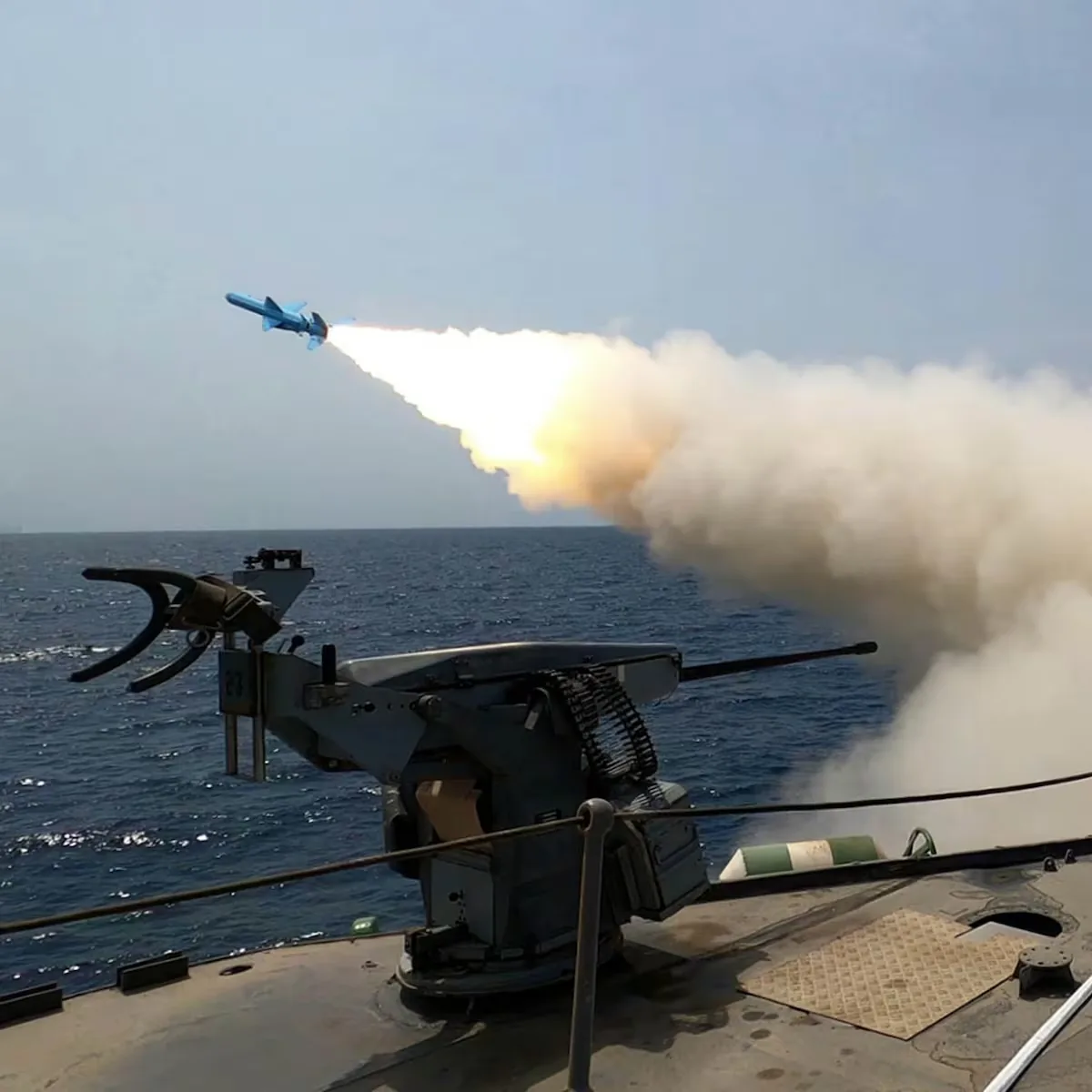
Russia has been secretly helping Iran develop advanced supersonic cruise missiles, according to an investigation published by the Financial Times, which confirms that strategic military technology transfers between Moscow and Tehran go far beyond what had been made public.
Read more California advances a law to ban the use of stun gloves that ICE will use
After analyzing leaked correspondence, travel records, and military patent analyses, the British newspaper uncovered the existence of a military cooperation program on this type of weaponry between the Islamic Republic and Russia called C430 L. This collaboration began in 2023 but has continued after the United States and Israel unleashed war against Iran last February 28, including this summer.
The program is aimed, according to the British newspaper, at helping Tehran develop a ramjet propulsion system, an engine that allows a cruise missile to maintain flight at several times the speed of sound. According to several missile experts cited by the Financial Times, the development of this technology is almost certainly intended for anti-ship and land-attack cruise missiles.
Supersonic cruise missiles combine high speed with the ability to fly at low altitude, two characteristics that reduce the time needed for enemy air defense systems to detect and try to neutralize them. For Iran, this is a crucial aspect, given the sophistication of the defense systems of the United States and its Arab Gulf allies.
“For the Iranians, this would provide them with a qualitatively new strategic weapons system that could threaten U.S. Navy ships,” Jim Lamson, a former CIA military analyst specializing in Iran and now at the James Martin Center for Nonproliferation Studies, told the British newspaper.
“This is the transfer of Russian military technology of great strategic value that the Iranians have wanted to acquire for decades,” Fabian Hinz, an expert on Iranian missiles and senior analyst at Conflict Armament Research, a British organization dedicated to tracking weapons, told the British newspaper. This expert believes that “a program like this would require political approval from the highest levels of the Russian government.”
Military support
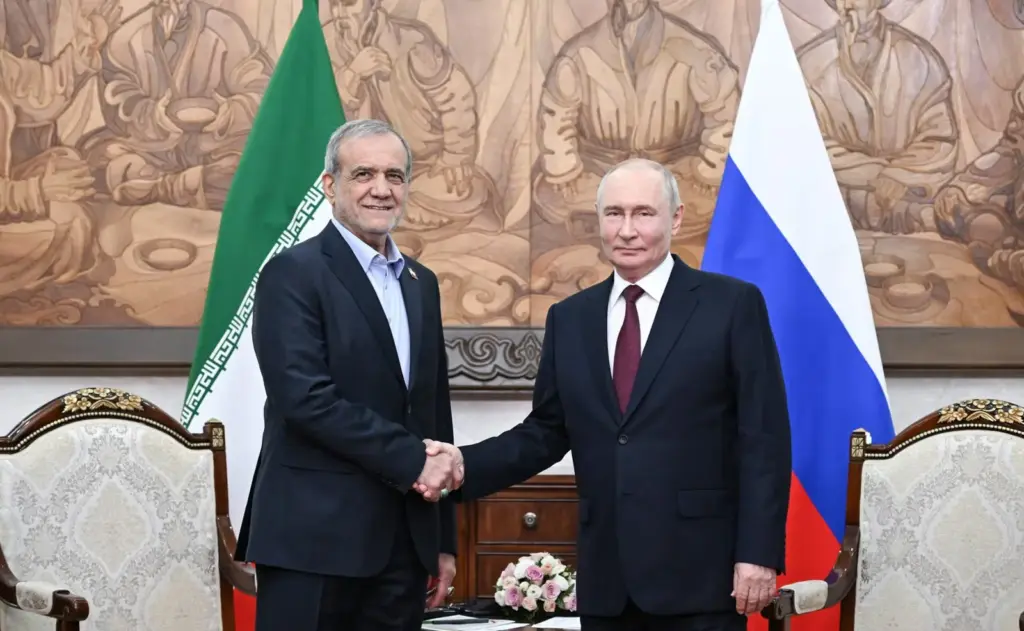
That same Tuesday, Russian President Vladimir Putin emphasized his military support for Tehran in his meeting with Iranian President Masoud Pezeshkian during the Shanghai Cooperation Organization summit held in Bishkek, the capital of Kyrgyzstan. “We are trying to provide the necessary assistance at this difficult time. We have already discussed it, we are supplying the goods they need,” the Russian leader said, reports Javier G. Cuesta.
That same day, Dmitry Shugayev, director of the Russian agency for technological-military cooperation abroad, said that their main supply to Iran is air defense systems, especially S-300 batteries, although he acknowledged that “the export of other types of weapons is also being discussed.” The senior official pointed to light weapons and aircraft, without mentioning supersonic cruise missiles or any other type of missile at any time.
Russia signed a strategic partnership treaty with Iran in January 2025 that includes cooperation in military research. A month earlier, it signed a similar one with North Korea. Tehran has been supplying Moscow with Shahed attack drones for years, which have become a key weapon in the Russian war in Ukraine. The Islamic Republic has also helped Russian authorities establish the production of these unmanned aerial vehicles, modified according to the needs of the aggression against Ukraine, in Russia.
Ukraine and officials from Western countries have also accused Russia of providing Iran with battlefield assistance during its war with the United States and Israel, including satellite imagery, drone support, and components to manufacture weapons.
Pezeshkian returned the nod to Putin during their conversation. Besides weapons, both countries collaborate to evade sanctions: “The relations between our countries are strategic. We trust that this is the right path to counter U.S. unilateralism and that we can neutralize all the sanctions imposed on us.”
According to information revealed by the Financial Times, the assistance program to Iran for the indigenous development of supersonic missiles C430 L was organized by Rosoboronexport, the Russian state agency authorized to export weapons, military equipment, and defense and dual-use technologies, created by President Putin in 2000.
The Russian state arms exporter coordinated the project with the Russian missile design company NPO Mashinostroyenia, sanctioned by the United States in 2014 for its role in manufacturing cruise missiles launched from ships, submarines, and land platforms, as well as for its support of Russia’s strategic nuclear forces, including intercontinental ballistic missiles.
Travel and emails
Travel records consulted by the British newspaper show that Russian officials responsible for arms exports and several senior engineers from NPO Mashinostroyenia made repeated trips to Iran before the C430L program contract was signed in Iran in November 2023.
On his third trip, in July of that year, Vladislav Kuzmichev, head of the defense and space technologies department at Rosoboronexport, joined those engineers. Subsequently, Kuzmichev negotiated the contract on behalf of the state company with the Iranian Ministry of Defense, according to documents accessed by the Financial Times.
In reality, the Russian engineers traveled to Tehran to improve the design of missile systems that Iran had already built and tested on its own. For example, in April 2025, Rosoboronexport proposed sending a delegation of two dozen specialists to Iran to provide technical assistance within the C430L program. The same email requested data from Tehran that the Russian engineers had demanded about the Iranian propulsion system for their missiles.
In 2024, Putin threatened Western countries with retaliation for their transfers of advanced long-range missiles to Ukraine. The leader warned that his country would supply weapons of the same class to regions of the world from where “attacks against vulnerable sites of those countries doing the same to Russia” could be carried out. By then, assistance to Iran to develop supersonic cruise missiles was already underway, the British newspaper recalls.
The British newspaper revealed earlier this year that Moscow had agreed to supply Tehran with Verba portable air defense systems, while the Islamic Revolutionary Guard secretly acquired a high-resolution Chinese satellite that it later used to monitor U.S. military bases in the Middle East.
Programs like the one revealed now confirm how Tehran has turned to the technology of its non-Western allies, especially China and Russia, to mitigate the shortcomings of its armed forces, burdened by decades of sanctions. Especially regarding its defense systems and the development of its missile program, one of its few assets to maintain deterrence against its two main enemies: Israel and the United States.
Read more Apple approves $55 million stock compensation for John Ternus