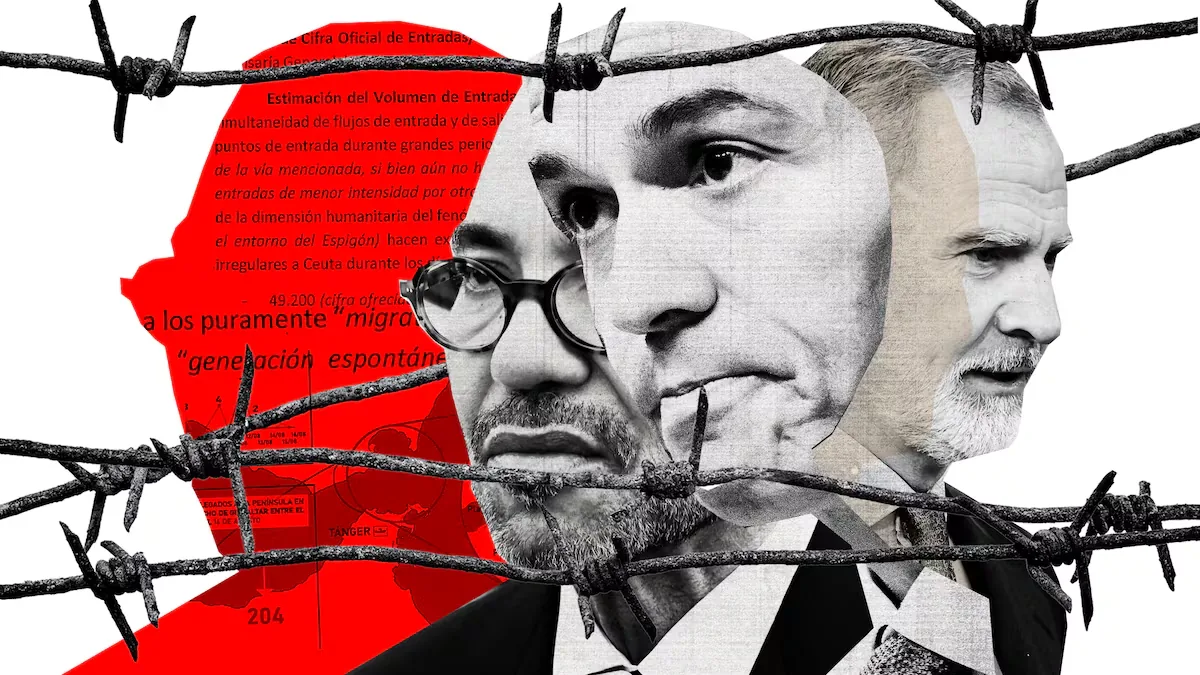
The exceptional situation in which the people of Ceuta have been living for more than a month is an unacceptable anomaly and demands a full commitment from the State to restore trust in a lasting way. The arrival of nearly 80,000 immigrants in Ceuta at the end of July not only caused a geopolitical, humanitarian, and political crisis that remains unresolved. It also left the population with an unacceptable feeling of helplessness, thousands of immigrants in precarious conditions, and a neighbor, Morocco, that does not hide its intention to take control of this European Union territory. Neither the delayed reaction of the authorities nor the partisan discord have helped at all. The response from the Government, the parties, and the institutions – the State with all its strength and mobilization capacity – can no longer be delayed.
The crisis in Ceuta has exposed dysfunctions in the State structures: from the divergences between two major ministries such as Defense and Interior to the clash of versions between the police and their superiors in the Government, or the untimely intervention of a judge to prevent police officers from informing their superiors. Pedro Sánchez had to answer for all this before the Congress of Deputies this Thursday. The president argued that no intelligence service warned of the scale of what was coming and announced that he will publish the reports prepared during those days. Although he reiterated the intention to maintain prudence towards Morocco due to the lack of evidence of its involvement, he pointed out that on July 30 the Moroccan gendarmerie allowed the border crossing and revealed that the Spanish Government called the ambassador on August 21 after the claim over Ceuta and Melilla made by two Moroccan ministers. Sánchez promised a stronger response if Moroccan involvement in the July 30 crisis is proven.
The explanations point to a line that the Government is obliged to deepen, which is the redefinition of relations with Morocco. Cooperation between neighbors to ensure stability on shared borders is essential among friendly countries, as is supposedly the case. But that trust and that strengthened relationship after multiple concessions to Rabat — the latest being support for its plan for the Sahara — have proven completely insufficient. Spain and the EU must jointly address, without the divisions of these weeks, a permanent strengthening of the border that was shaken this summer. European sovereignty is also at stake on the beaches of Ceuta.
But the crisis is not only geopolitical, but also humanitarian, and urgent action is needed on both fronts. On the first, through diplomatic and strategic work to restore European unity in the face of the challenge, as well as the necessary management with Morocco to prevent similar events. On the second, with the immediate deployment of sufficient personnel and resources to attend to and manage, with scrupulous respect for human rights, each of the cases of migrants wandering the streets and beaches of Ceuta or in the centers already set up. This objective is hindered by the lack of solidarity from the autonomous communities that refuse to receive vulnerable minors as the law provides, contradicting the proclamations of solidarity with Ceuta. The criticisms from the main party in Congress, the Popular Party, are understandable, but not the grotesque threats of jail from the right and far-right nor the accusations of blackmail that the opposition attributes without evidence to Sánchez for the information Morocco may have obtained by penetrating his phone.
If what happened was a hybrid attack against the border aimed at weakening Spain and sowing civil and institutional discord, it is essential that none of the protagonists in the political map become accomplices of this execrable mission. That is why the State must immediately overcome this and demonstrate the strength of its institutions. It is a mission that concerns everyone, Government and opposition. And it is the least that Ceuta and its people deserve. A visit from King Felipe VI, once the situation is stabilized, will decisively contribute to this objective and, above all, to support citizens who should never have felt abandoned in full Spanish territory.
Read more Eugenio Garza Sada Award, 33 years of leadership, entrepreneurship, and innovation from Nuevo León