









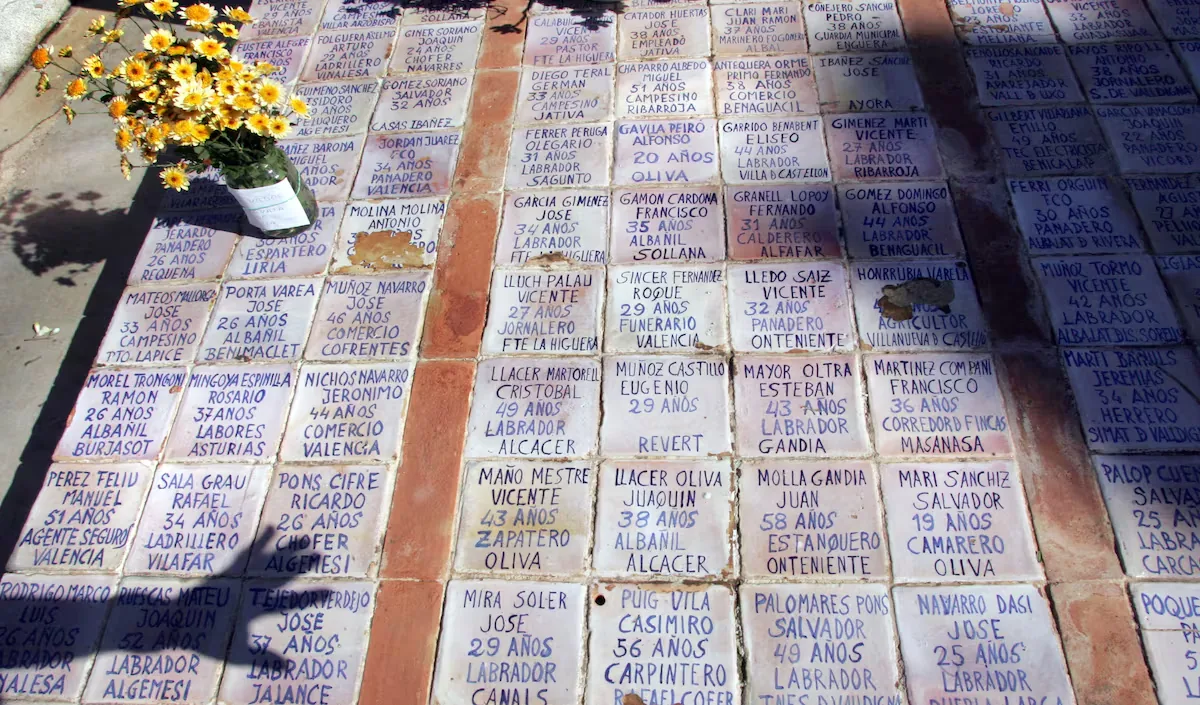
“They come to your house. They take your husband away. They return to your house. This time they come for you. They take you to prison. Your daughter, who has no one to stay with, accompanies you. They execute your husband. The nuns inform you. You wonder what will become of you, pregnant, with a little girl. You go hungry. Your daughter goes hungry. You are about to give birth. The sentence arrives: 20 years for supporting the rebellion. Your son is born. Your son dies. They take him away. You don’t know where. You won’t be able to bring him flowers. Nor your husband. Your daughter goes hungry. She falls ill with whooping cough, typhus. There are no medicines. Your daughter dies. They take her away. You don’t know where. You won’t be able to bring her flowers. Málaga, 1937.”
This is an excerpt from Country in Ruins, Buried Stories of Francoist Spain (1939-1975), from the Crítica publishing house. Its author, archaeologist Alfredo González Ruibal, winner of the 2024 National Essay Prize, compiles nearly two decades of excavations in mass graves, trenches, concentration camps, and shantytowns, that is, conversations with hundreds of objects that, 70 or 80 years later, still spoke of their owners: who they were, how they lived, and how they died. During the preparation of the nearly 400-page volume, he discovered a dark family past that has much to do with the unusual dedication of the book: “To my mother-in-law, María Mayorgas.”
“It is impossible to understand Francoism,” explains González Ruibal, “without taking into account two cuts on the ground: the trenches and the mass graves. The first is the epic of the war that would act as a source of legitimacy for the regime for 40 years. The second, the mark of extermination that neutralized opposition to Franco and allowed him to reign over the peace of the cemeteries.”
The archaeologist delves into the large clandestine burials, such as the one in Málaga, where there were up to six levels of corpses —“the depth of the graves reveals that the Francoist authorities were very clear that they intended to kill many people and for a long time”— and where many years later the remains of 322 children under 10 years old, children of prisoners, were recovered. “In one of the graves, 16 newborns appeared, creatures who died at birth or shortly after. Nothing surprising considering the broken health of their mothers and the unsanitary conditions of the prison. The bodies of the children were placed on the edges of the mass graves, which were filled with the bodies of those executed by firing squad. The small deceased were very useful to fill gaps,” recalls the author, citing the research of historian Francisco Espinosa. In Paterna (Valencia), more than 2,200 people were buried, and there are graves so deep that they pierced the water table, and the permanent moisture at the bottom caused the corpses to saponify, that is, the body fat transformed into a substance similar to soap and the clothing worn by the victims was preserved: blood-stained shirts, bandages from beatings, esparto bindings on the wrists. In some of those exhumations, bottles were found alongside human remains that included inside a small paper with the name of the repressed: “I am Manuel Lluesma Masià (Moncada). Executed on 29-12-1942 at 7:30 in the morning. I leave children.” The gravedigger, Leoncio Badía, placed them next to the bodies thinking that families could recover them in the future, although surely that future came much later than he imagined. In 2019, Badía received, posthumously, the High Distinction of the Generalitat Valenciana. Today he has a statue in his honor in the Paterna cemetery.
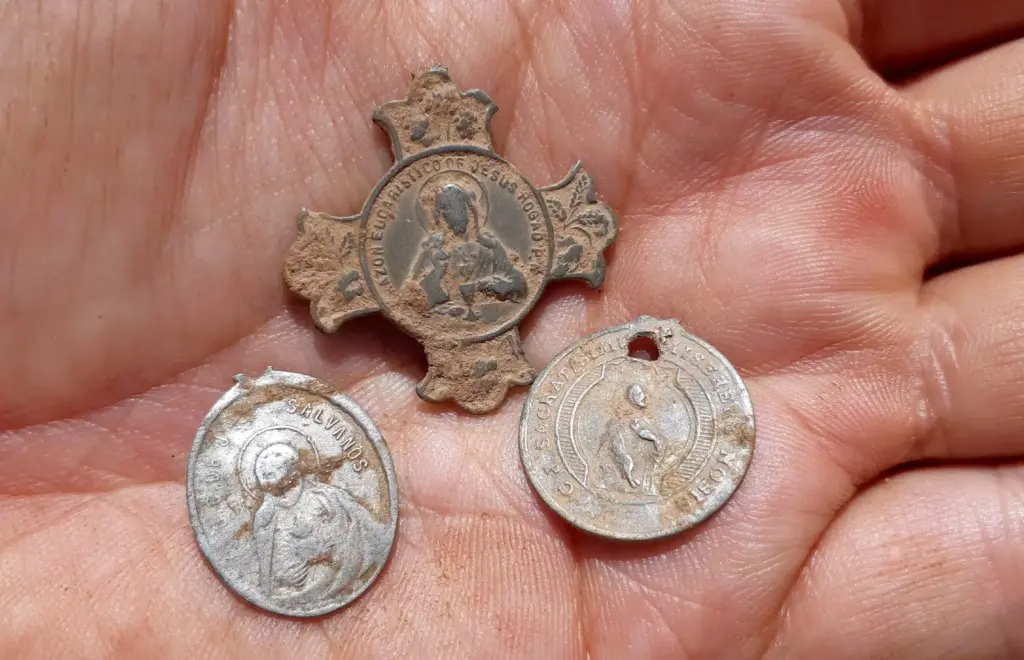
The book also visits individual burials, such as the one in Villaverde del Ducado (Guadalajara), “exceptional in many ways,” explains González Ruibal, archaeologist at the Institute of Heritage Sciences of the CSIC. The daughter of a local resident contacted the archaeologist in 2019 to explain that the town wished to bury with dignity an unknown victim who had been buried outside the cemetery, next to the wall, during the war. No one knew who he was. The neighbors said he had been buried in a very shallow trench and shortly after, “a foot or a boot of the dead man ended up sticking out or was dug up by dogs,” and a shepherd who usually passed by sent his son to “place some stones to prevent animals from extracting the remains.” Since 1937, women from the town had placed flowers on the anonymous grave, caring for the nameless deceased. The exhumation confirmed that the victim was very young, around 21 years old. Religious medals that someone had slipped into the burial appeared alongside the remains. “We not only document a war crime,” explains González Ruibal, “but an act of humanity: that of the town that cared for that unknown dead man for 80 years as if he were family.”
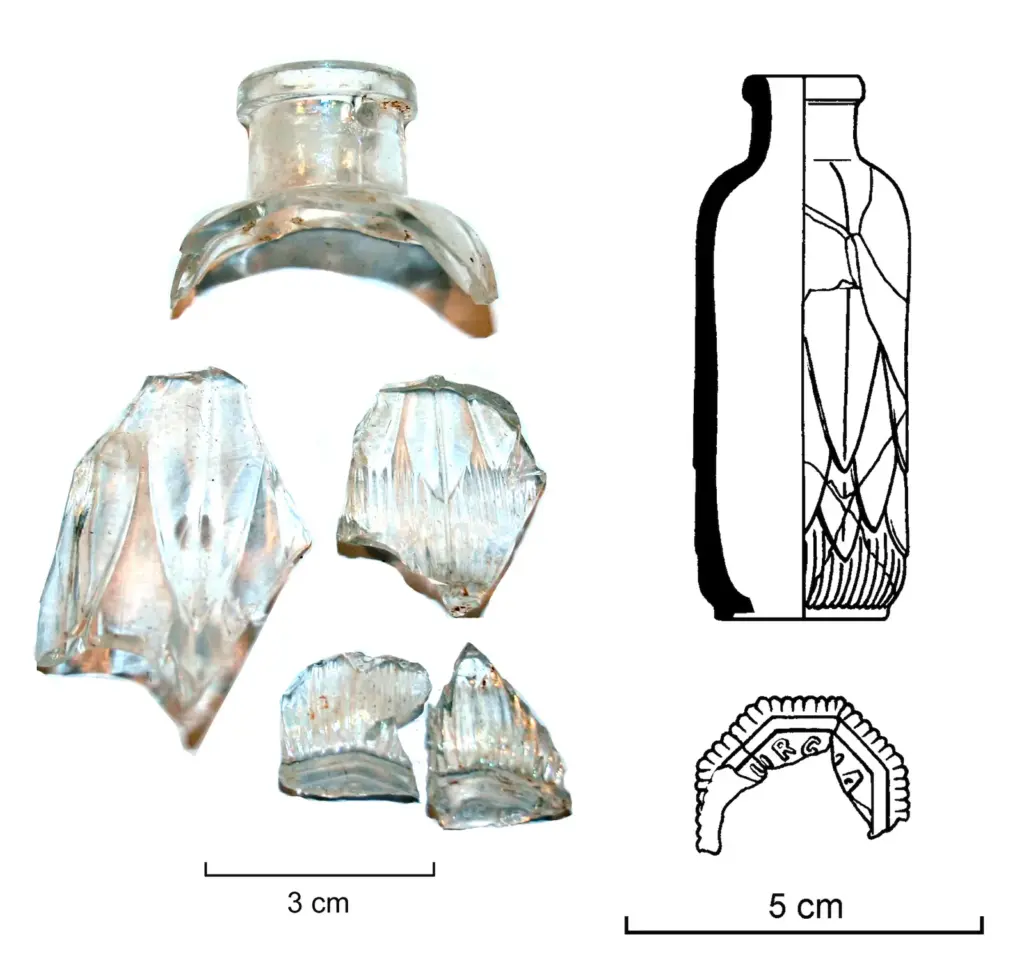
A perfume bottle in a trench
González Ruibal also excavated the last trench of the Civil War, in the university city of Madrid. “Through the trash left by the soldiers, we learn how they lived, how they died, and how they killed.” Eighty years later, the archaeological work allowed an idea of the combatants’ menu and confirmed, for example, that the rebel side was much better fed —“2,627 animal bones show a varied and protein-rich diet”— than the Republican side —“animal remains are practically nonexistent. Starvation was decisive in sinking the troop’s morale”-. “Grenades, bullets, and inkwells are omnipresent elements.” Weapons to defend or attack and nibs to inform their own that they were still alive. An ink factory of the time advertised itself precisely like this: “Samas always wins.” In the excavation of a trench in Guadalajara, an unusual object appeared: a female perfume bottle. “It has an old design, art deco, and when opened, it still smelled,” recalls González Ruibal. “Surely, the wife or girlfriend of some soldier gave it to him as a keepsake to take to the battlefront.”
Read more Two federal police officers die in an armed attack while investigating a kidnapping in Veracruz
Human burrows
The archaeological work has also documented living conditions after the war, portrayed the Francoist cruelty toward the losing side, and debunked some myths. González Ruibal recalls in the book that in the 1940s, the San Martín cemetery in Madrid, which had been abandoned for decades, was occupied by people who had nowhere to live and settled in the niches.
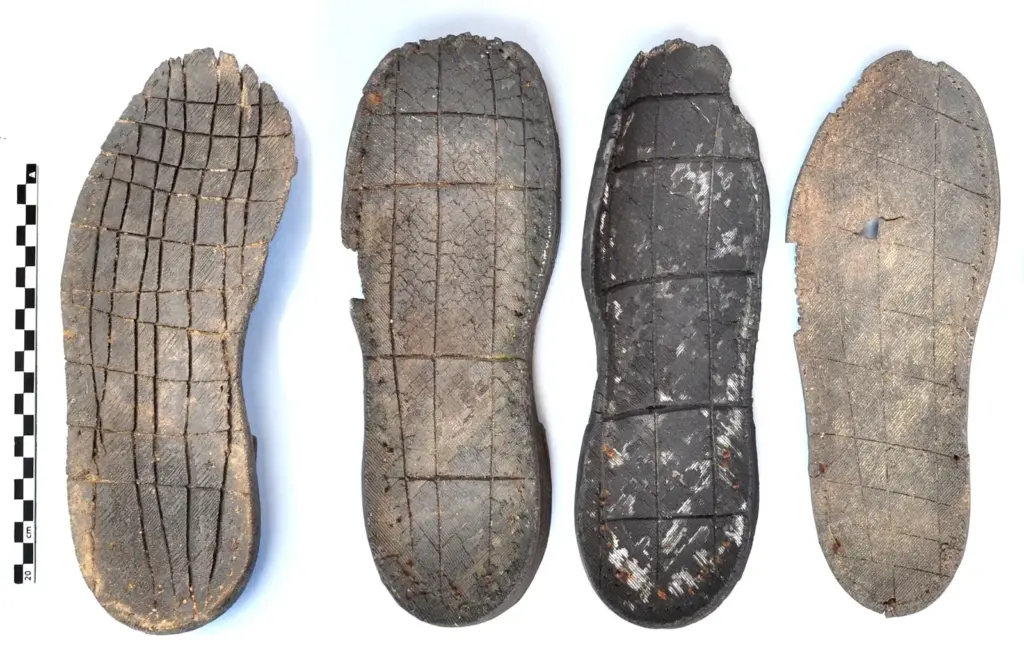
The archaeologist describes some of the former concentration camps he has excavated as “human burrows” where inmates slept crowded in spaces where they could not even stand and wrapped their feet with sacks because they lacked shoes. Many of the bodies recovered in those camps show signs of tuberculosis and cachexia, extreme malnutrition. “My wife’s paternal grandfather angrily remembered that he had to exchange the watch his father had given him for a loaf of bread.” In the excavation of the penal detachments of the Valley of the Fallen, now called Cuelgamuros, traps for catching birds or rabbits were found, a sign of the hunger suffered by the prisoners who worked on its construction, as well as footwear made from tire rubber. “In a context of maximum hardship,” he explains, “stripped of everything by the Regime, their freedom, economic means… prisoners and their families were forced to create a world from waste: they invented everything from footwear to kitchen utensils.”
The excess deaths from starvation or epidemics are placed between 1939 and 1942, the researcher recalls, at a minimum of 200,000. There was also hunger outside prisons, and this was recorded in the ruins of Francoism, among the rubble of shantytowns of 10 by 12 meters built in a single night to house grandparents, parents, and children under the same asbestos roof. During the sixties, 400,000 families, the author recalls, lived in self-built substandard housing on the outskirts of large cities, like the one seen in the film El 47. In the excavation of those old urbanizations of misery, alongside rat bones, marbles and yo-yos appeared. “Political violence is better known, but not so much the social suffering, that abject poverty in which so many people lived. All those elderly ladies who measure 1.50 meters and seem endearing to us, measure 1.50 because they suffered malnutrition as girls.”
The trail of a photograph
María Mayorgas, González Ruibal’s mother-in-law, daughter of the defeated side, could not brush her teeth until she arrived in Madrid. The archaeologist wanted her to be the first to read his book. When he began writing it, he knew that his paternal grandfather had become wealthy after the war building ports and airports. His maternal grandfather had died in 1951, at 39 years old, leaving four orphans. “What I never thought was that my own grandfather could have contributed to leaving other orphans in the world. I had to wait 40 years to discover it.”
It was a photo that made him pull the thread, search for the rest of the fragments of that story buried in silence. The fiancé, his grandfather, poses with the godparents of his wedding: the military governor of Segovia and that of León, Carlos Arias Navarro, who would be the last obstacle in the transition from dictatorship to democracy. “My grandfather died before my mother was born, so there had been no transmission of family memory,” he explains. Searching the archives, he discovered that his maternal grandfather had worked voluntarily — he asked the general of the VIII Military Region — as a prosecutor “in the wildest period of the coup violence, when the prosecution requested, the judge granted, and the squads executed death sentences.” “I thought I would never be able to pronounce my surname without thinking of his crimes,” he recounts, but that past gave him “a sense of responsibility” when revealing and documenting the barbarity. “Archaeology about Francoism,” he emphasizes in the book, is nothing but “an act of rebellion against the silence imposed by the dictatorship.”
Read more The migration crisis stirs up elections that the people were turning their backs on in Morocco