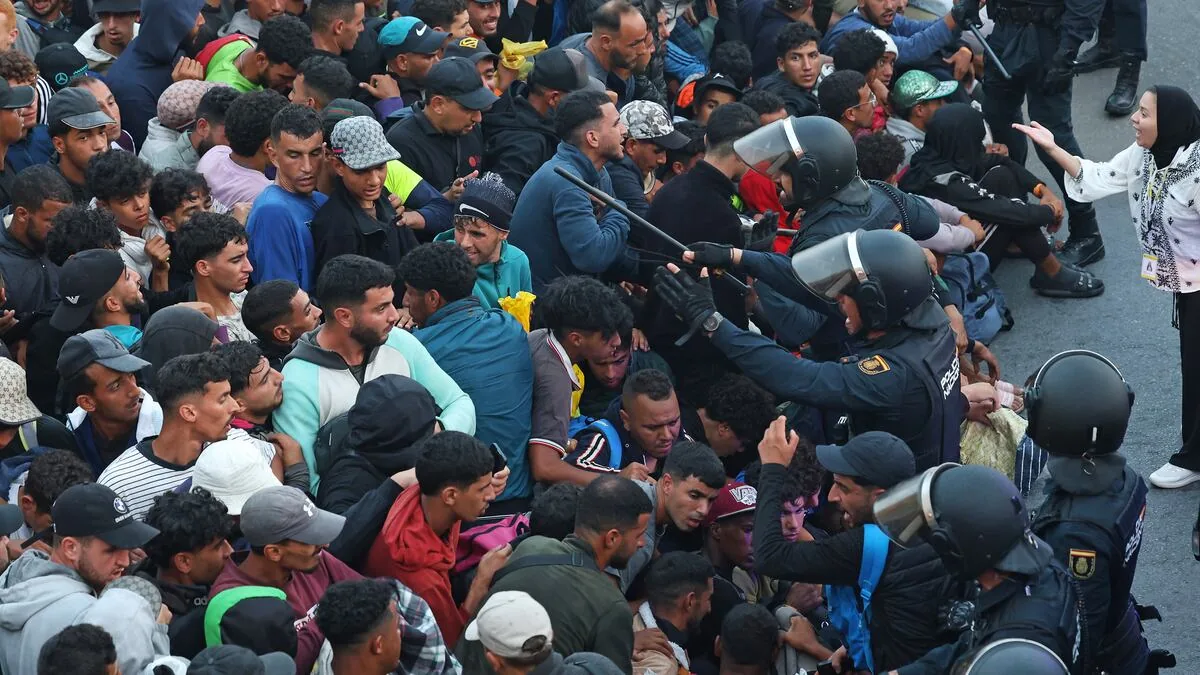
One month after the massive entry of more than 70,000 people into Ceuta in just 48 hours, on July 30, the migration crisis continues to have a direct impact on the city’s economy. Commercial activity has fallen, tourism has plummeted, and hundreds of companies have had to reduce working hours to contain their costs. Although more than 90% of the people who entered the autonomous city irregularly have already left, economic normality has not returned. Initial calculations already allow measuring the scale of the slowdown. The Ceuta Chamber of Commerce estimates the direct economic losses accumulated by the private sector at 33.04 million euros up to August 30. And the bill continues to grow, not only for companies but also for public coffers. The Government of Ceuta estimates that the current extraordinary expenditure is already around 80 million euros, but the autonomous city’s Treasury services project that the total accumulated cost will soar to 153 million euros by the end of the year as a result of spending on services for unaccompanied minors who have arrived and all the extraordinary services deployed ― such as surveillance, cleaning, and social services ―.
Read more “I am Manuel Lluesma, executed on 29/12/1942. I leave children”
“Sustained uncertainty paralyzes the economy. And the longer it takes to offer a clear horizon, the harder it will be to regain business confidence,” warns Arantxa Campos, president of the Ceuta Confederation of Employers (CECE). Karim Bulaix, president of the Ceuta Chamber, expresses a similar view, pointing out that “security is also economic policy because without it there is no confidence. And without confidence, there is no investment, tourism, or consumption.” He insists on the idea that “Ceuta’s stability is not only a border or public order issue; it is an essential condition for its economic development.”
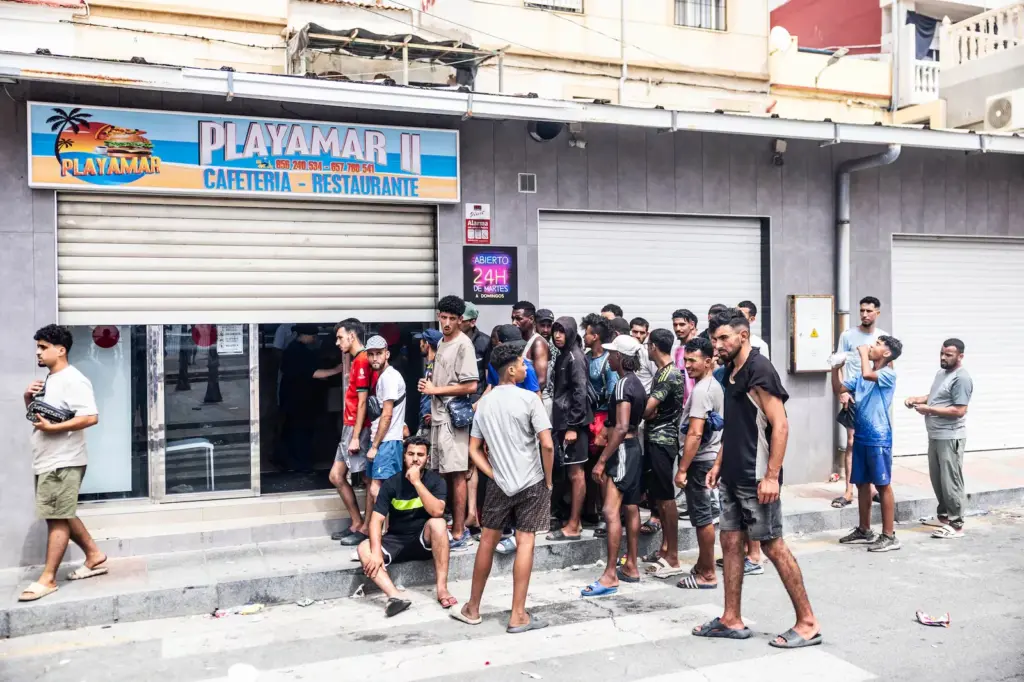
In any case, the problem is not only how much money Ceuta has stopped earning during these weeks. It is also the city’s capacity to withstand a blow of this magnitude. The crisis has struck a small economy, with growth lower than the rest of Spain, very high unemployment, and a business fabric largely made up of local shops that struggle to endure several months with little or no income.
The great summer loss
These characteristics of the productive fabric become a problem when a crisis like the one Ceuta has experienced lasts more than a month and coincides, moreover, with summer, a decisive period for local activity. These are weeks when shops, bars, and restaurants expect to make a good part of the revenue that will support the second half of the year. For some businesses, an August without income can even condition their definitive closure.
The cancellation of the patron saint festivities for security reasons left the service sector without one of its main drivers. Its cancellation nullified 15.72 million euros of expected turnover, according to Chamber of Commerce data. This month, small businesses and hospitality have halved their turnover, according to Chamber of Commerce figures. “I must have lost about 30,000 euros,” estimates Diego León Fernández. He owns the Ceuta hamburger joint Impacto, one of the busiest in the city. The restaurateur was, as every year, going to set up a stall at the fair to sell baked potatoes. “I ordered 1,000 kilos, and there they are; I won’t be able to sell even half, the rest is to be thrown away,” he says. To that, he adds the cost of 14 workers and the preparation of the installation.
He has been able to cushion the drop in sales at the hamburger joint thanks to home delivery, which has now increased so much that at peak times the usually busy place is almost empty. Jalid Ali Amar, owner of the hamburger joint Nebil, also points to home delivery as a lifeline for his business. “In the end, I haven’t closed any day, but it certainly hasn’t been a usual August in terms of income,” he notes.
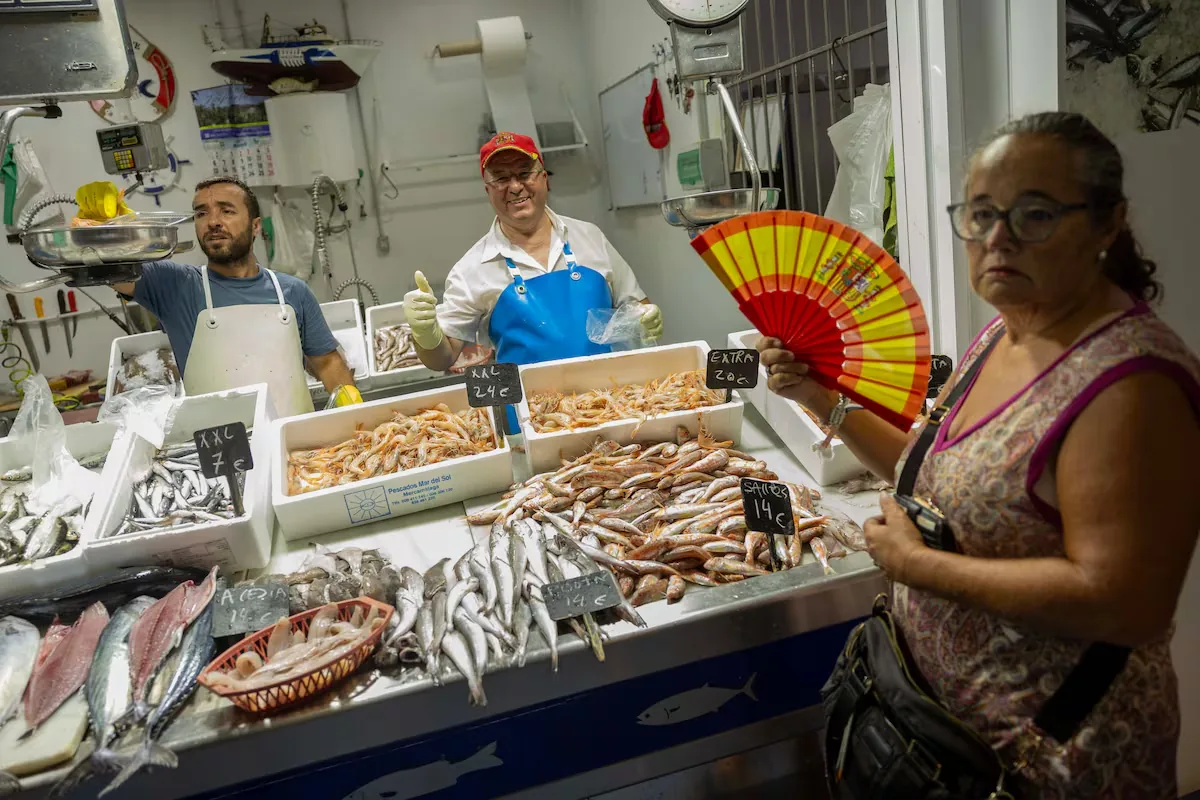
The retail trade association’s assessment is even more severe, estimating sales drops of up to 70% in the worst cases. Companies have reacted by cutting costs where they can. Seven out of ten companies included in the Chamber’s sample have had to reorganize or reduce their staff’s working hours. In retail, the proportion reaches 85%, and among bars and restaurants, it exceeds 90%. These measures contain spending while activity recovers but transfer the crisis to the labor market. Campos warns that this liquidity squeeze has a domino effect on the entire productive system. She insists that “when a company sells less, it immediately reduces orders to suppliers, postpones investments, limits hiring, and tries to contain all possible expenses,” which affects the entire economy. Therefore, her focus is on preventing “an initially temporary drop in activity from turning into business closures and job destruction.”
Mainland tourism has also been abruptly affected. Visitor demand and bookings have dropped by nearly 90%, affecting maritime connections. The shipping group Baleària recorded a 30% drop in passenger traffic in August compared to the same month last year, according to company sources. Added to this will be the impact on freight as shown by the State Ports statistics. This body insists that figures will be published from September 20, when they receive data from all ports.
Hotels closed August with a turnover drop close to half, a figure that might seem less severe than expected. But behind that number is the exceptional demand conditioned by the migration crisis itself. The places left empty by tourists have been occupied by state personnel and journalists covering the humanitarian emergency. But as official devices withdraw from the city, that cushion will disappear, and the sector will have to face the drop in visitors head-on.
Others who also fear that drop are the taxi drivers’ guild. Because the autonomous city’s fleet — 121 vehicles — has not noticed a slowdown in activity but a substitution. “We have gone from carrying tourists to journalists, police, politicians…,” recounts Sufien. He shares the taxi license with Anuar, and both confirm that the last month has been hectic. “We have made more trips than other Augusts, we are still very busy, but we fear what will happen when all the journalists leave,” he wonders.
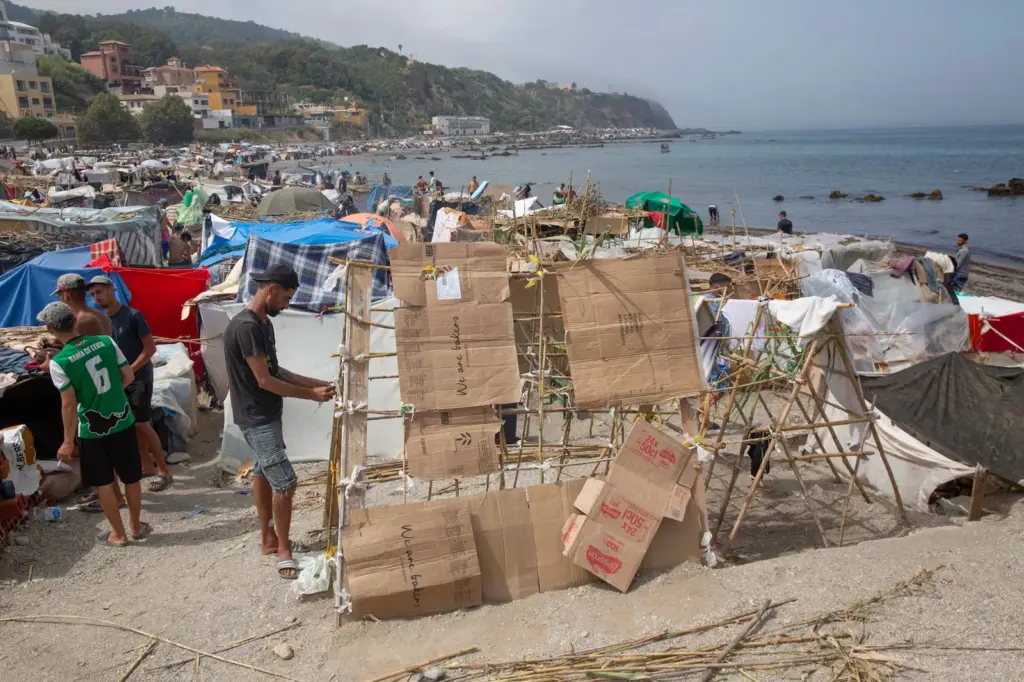
The food sector has also felt the blow. The sudden increase in the population on the streets has required an extraordinary logistical effort from supermarkets to guarantee supply and avoid stockouts of basic products ― such as sliced bread, rice, or sugar ― that occurred in the first days. The general director of Asedas, Ignacio García Magarzo, points out that “chains have increased their staff by around 10% through the urgent transfer of workers from the Peninsula.” They have also added extra security to manage access to establishments and strengthened coordination with NGOs to prevent extraordinary purchases from affecting residents’ supply.
The extra staff effort mentioned by Magarzo has influenced August employment figures, according to CECE. Specifically, Campos considers that this month’s data is “a statistical mirage because, of the 303 additional contracts registered compared to July, 290 were temporary, and all that increase corresponds to extraordinary hires in private security, cleaning, and other services directly related to the crisis.”
A 170 million euro blow in the medium term
There is another problem that will be accounted for in the medium term: the reputational crisis. The Chamber of Commerce has estimated the damage to Ceuta’s external image, business confidence, and its ability to attract new investments at 170.1 million euros. The figure represents a major blow for a city that has been trying for five years to change its economic profile and depend less on traditional activities linked to Morocco.
The truth is that its economy has a small scale that matches its territorial size (barely 18 square kilometers) and its population (83,000 inhabitants). The latest available data from Spain’s Regional Accounts placed its Gross Domestic Product at 1.923 billion euros in 2024. That year it recorded real growth of 1.1%, the lowest rate in Spain along with Melilla. GDP per capita that year was just over 23,200 euros, almost 50% less than Madrid’s, which topped the national ranking.
The labor market reflects another of the city’s weaknesses. In the second quarter of this year, the activity rate stood at 69%, but unemployment exceeded 22%, according to the Active Population Survey. The difference with the rest of the country is very pronounced. The national unemployment rate in that period was 9.8%, so in Ceuta unemployment was almost 13 percentage points higher. The city thus has a population with a high willingness to work but an economy unable to generate enough opportunities to absorb it.
The structure of its companies also offers little margin. The latest data from the INE’s Central Business Directory show that Ceuta has nearly 3,900 active companies, half of which have no employees and just under a third operate with one or two employees. Regarding its financial link with Morocco, Campos details that, after the commercial closure caused by the 2020 pandemic, “Ceuta’s economy now has very little to do with border activity and the Moroccan economy,” and now focuses on the local market, Spanish tourism, and the digital economy (with a strong presence of online gaming businesses, favored by the tax conditions of the Economic and Fiscal Regime).
Read more Two federal police officers die in an armed attack while investigating a kidnapping in Veracruz