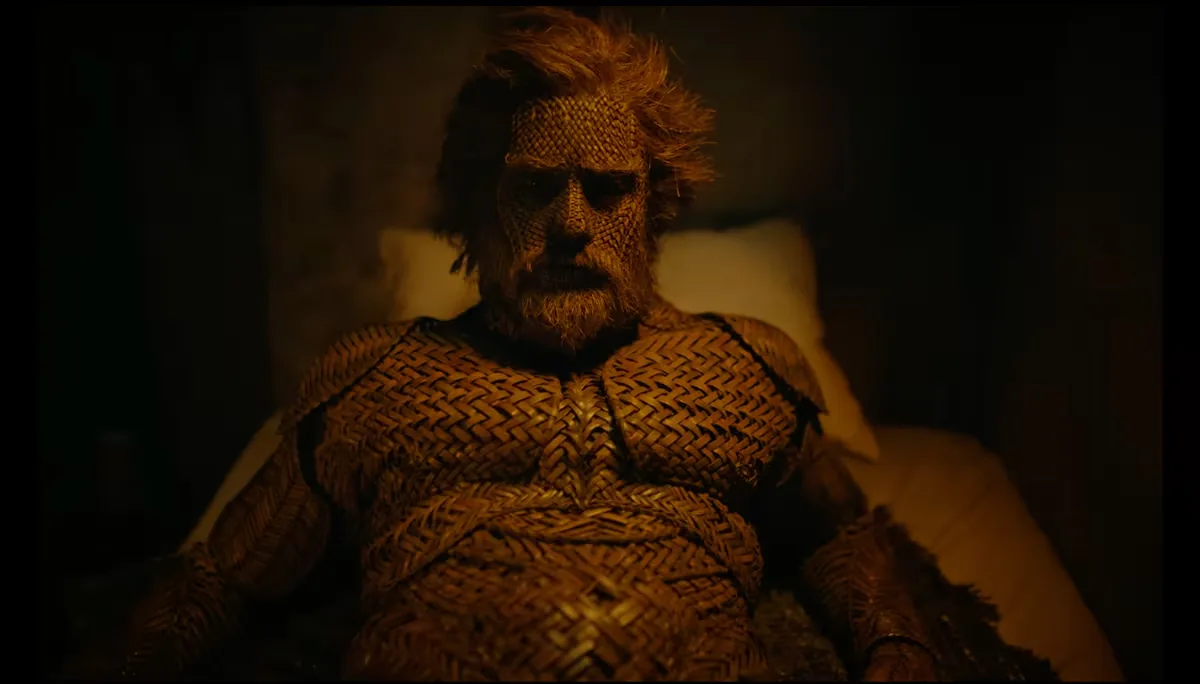
Of all the canonically handsome men who have taken over social media this summer (from Ferrán Torres to Jacob Elordi, from Jude Bellingham to the Korean singer Mingyu), the most unexpected was perhaps a wicker name. Alexander Skarsgård stars in Wicker, the film adaptation of the short story The Wicker Husband by Ursula Wills-Jones. In the movie, Olivia Colman plays a middle-aged single woman who is the town’s laughingstock because of her appearance and fishy smell. A basket maker then creates a wicker husband for her. One who is 1.94 meters tall and whose fixation is nothing other than satisfying his wife. And judging by the moans and steamy scenes in the trailer, he more than succeeds in his mission.
Read more Leonormania, myth or reality?: “Leonor interests when she gets close to mortals”
“Are you wet for Wicker?” headlines The Cut an article discussing the impact the trailer has had among internet users. “It’s an unconventional premise that invites questions like: what if Pinocchio had perfected his sexual skills instead of focusing on lying? What kind of weaving is ideal for a late-night… after-dinner encounter? As expected, this has unleashed a wave of frantic reactions: some logistical doubts, yes, but above all a burning desire for the wicker husband. It helps that the husband is played by Skarsgård, an attractive and daring guy who knows how to handle prosthetics perfectly. Now, TikTok is flooded with videos of new fans sighing over bamboo chairs and demanding to see the ‘wicker member,’ writes Cat Zhang. The hashtag #monsterromance, which responds to the booming romantasy (a fusion of romance and fantasy) phenomenon, has hundreds of millions of views on the platform.
The desire for otherness
“The fact that an idealized being evoking masculinity without needing to be human can be understood as a response to the eternal objectification of the female body,” explains Javier Parra, film critic. “Heterosexual men have inflatable dolls that are the ultimate cliché of what they consider femininity (a mouth, two breasts, and a vagina), with which they can establish unhealthy emotional relationships, as seen in films like Size Matters (Berlanga, 1974) or Love Object (Robert Parigi, 2003). When the story is told from another perspective, the man is not objectified to the point of losing his reasoning capacity, but rather his human traits are removed so he can be something like a man, but without the negative connotations,” he points out.
“He excites us because he was created specifically for her, something that has happened countless times in literature and film for men, who create the perfect woman. And they got angry because we made a wicker man,” podcaster Tinx says in It’s Tinx Podcast. “The sound of wicker is similar to that of the bed when you have sex. And the idea that a man was created for you is irresistible,” confirms Alyx Gorman in The Guardian.
The boom of this type of fiction has been brewing for about ten years: “The explosion came with Ice Planet Barbarians by Ruby Dixon,” explains Jodi McAlister, academic and romance author. Then, writers like Katee Robert and Finley Fenn fueled the genre until it became a phenomenon. “I think the appeal of these monsters comes from the dissatisfaction we feel toward real men,” she says. “It’s as if we have to go to another planet to find men who treat us with tenderness and respect,” adds Gorman. “Physically, they tend to be very large beings noticeably lacking human features. They use their physical strength to protect the woman, never to hurt her. And if we think about the opposition between the monstrous lover and the real man, it’s impossible not to have the current epidemic of gender violence in mind, so men who are not truly like that become irresistible,” McAlister assures.
Read more Traveling outside of peak season: prices, overcrowding, and weather change tourism
On TikTok, there are already many videos commenting on the anger the wicker man has caused among certain sectors of the male population. “When a woman openly expresses desire for a character who deviates from the normative male ideal, it can challenge a widely held idea about what should be attractive to us. For a long time, it has been assumed that male attractiveness had to conform to certain standards: a certain physique, nothing that breaks the illusion of a neutral and polished ideal,” explains Bárbara Montes, clinical sexology and couples therapy specialist at Diversual. “When women say something is sexy, even if it’s a fantastic character, they are claiming that their desire can be stranger, more complex, and less predictable than some imagine. Also, female sexuality still generates some discomfort when expressed directly. There is an interesting cultural difference between representing women as objects of desire and hearing women talk about what they desire. In this case, moreover, the object of desire is a man who is not exactly a man, which can make it even more evident that female desire does not have to follow the rules we expect. If a fictional, fantastic, or even non-human character generates more enthusiasm than certain real men, some people may mistakenly interpret it as a threat or a judgment on their own attractiveness. But finding a fictional character sexy is not a competition with real people.”
They are never the monster
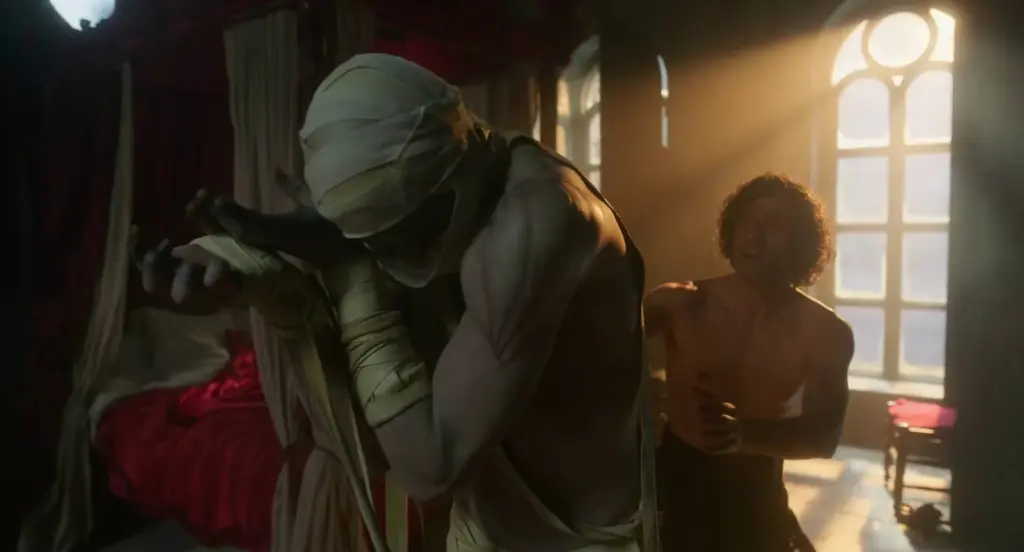
In The Shape of Water, Guillermo del Toro filmed the love story between an amphibious monster and a mute woman. The director has proven to be an expert in this type of love years later with Frankenstein. Although some criticized the aestheticization of the creature, played by Jacob Elordi (creating a strong precedent for another monster many viewers found sexy), it is undeniable that del Toro perfectly captures how women can see the monstrosity of men and the humanity of monsters. And even find them desirable.
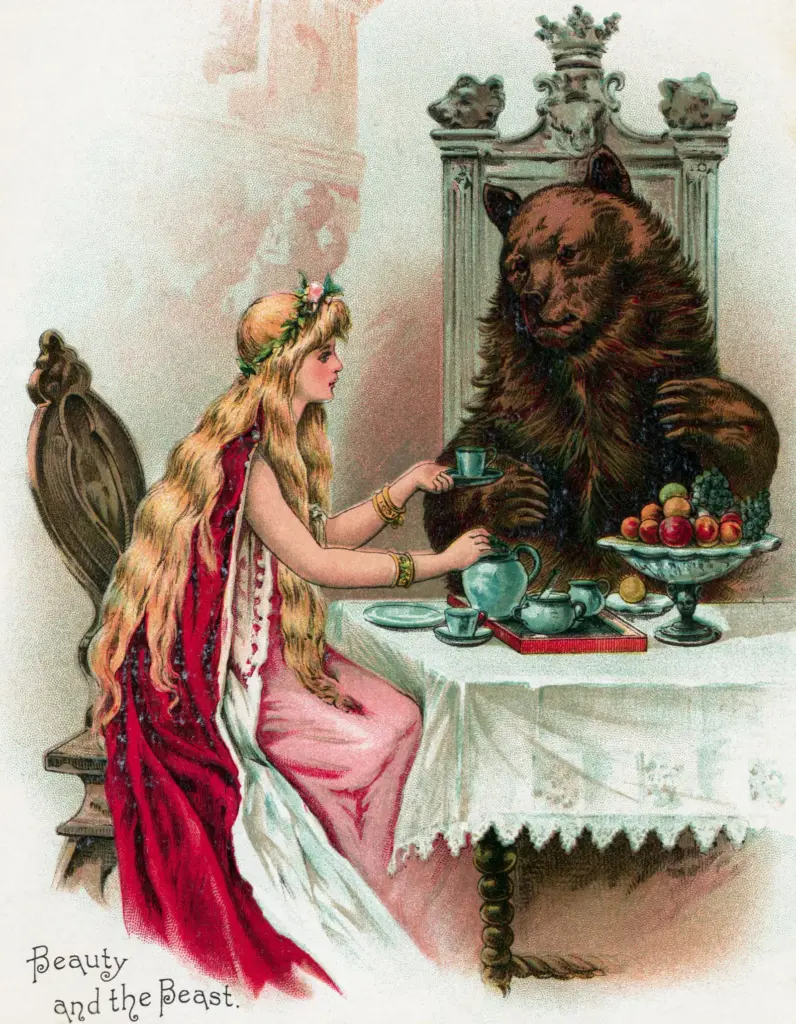
There are many stories that depict romances between women and beasts. In The Silver Metal Lover, Tanith Lee tells the love story between a teenager and a metal man. “Love is made of more than blood and flesh,” Lee asserts. And what to say about Beauty and the Beast, Disney’s version of these impossible romances (in which, however, the original tale already imposed a happy ending where the beast becomes a prince). Faced with the number of romantasy stories, a TikToker wonders why women are rarely the monsters who fall in love with men. “Is it because women are expected to love men despite their flaws, while men are still required to love mainly beauty?” she asks. “When the man is the beast, he gets a chance to redeem himself and has the possibility of being more than his appearance. But when a woman doesn’t fit beauty standards, she becomes the villain, the witch, the object of ridicule, or simply invisible. This says a lot about what we value in women versus what we allow men to be. Men can be monstrous, complex, and broken, and still be worthy of love. Women, on the other hand, have to be beautiful first and foremost,” she says.
Finding beauty where no one sees it means standing against dictates about what is beautiful. Although it must be admitted that when the monsters are Jacob Elordi or Alexander Skarsgård, it’s not especially difficult to find beauty in otherness.
Read more Wittenoom: Spaniards in the Australian ‘Chernobyl’