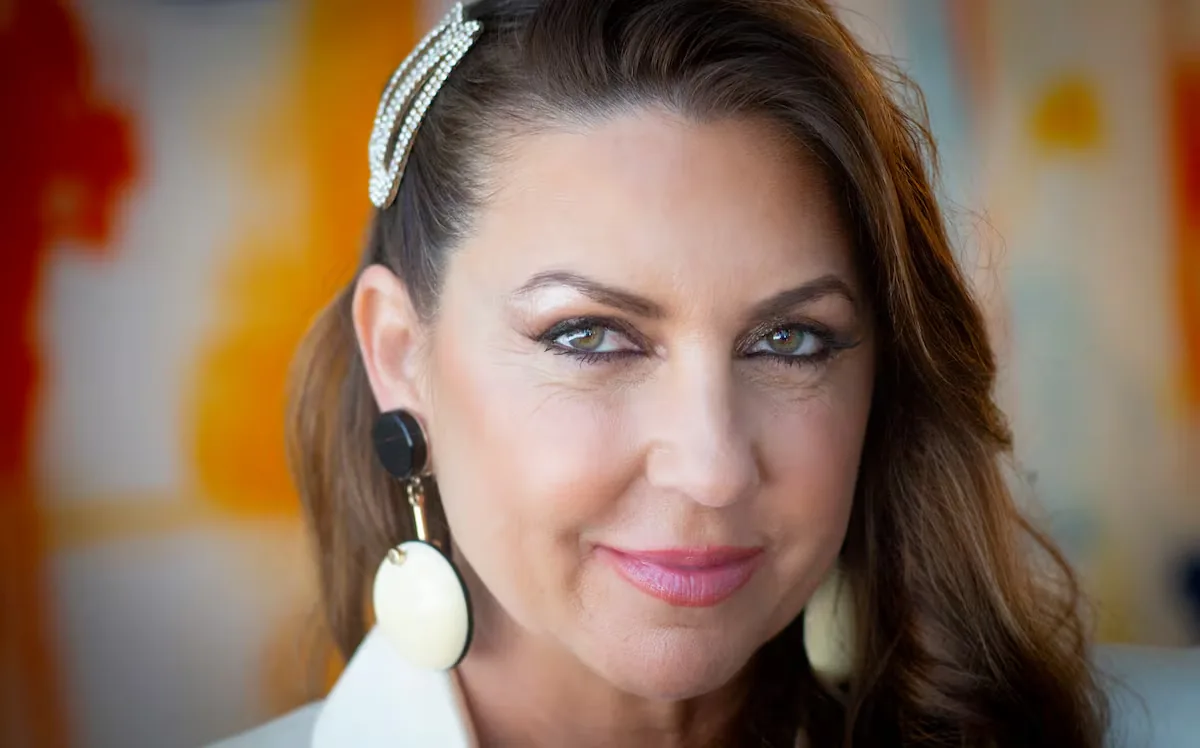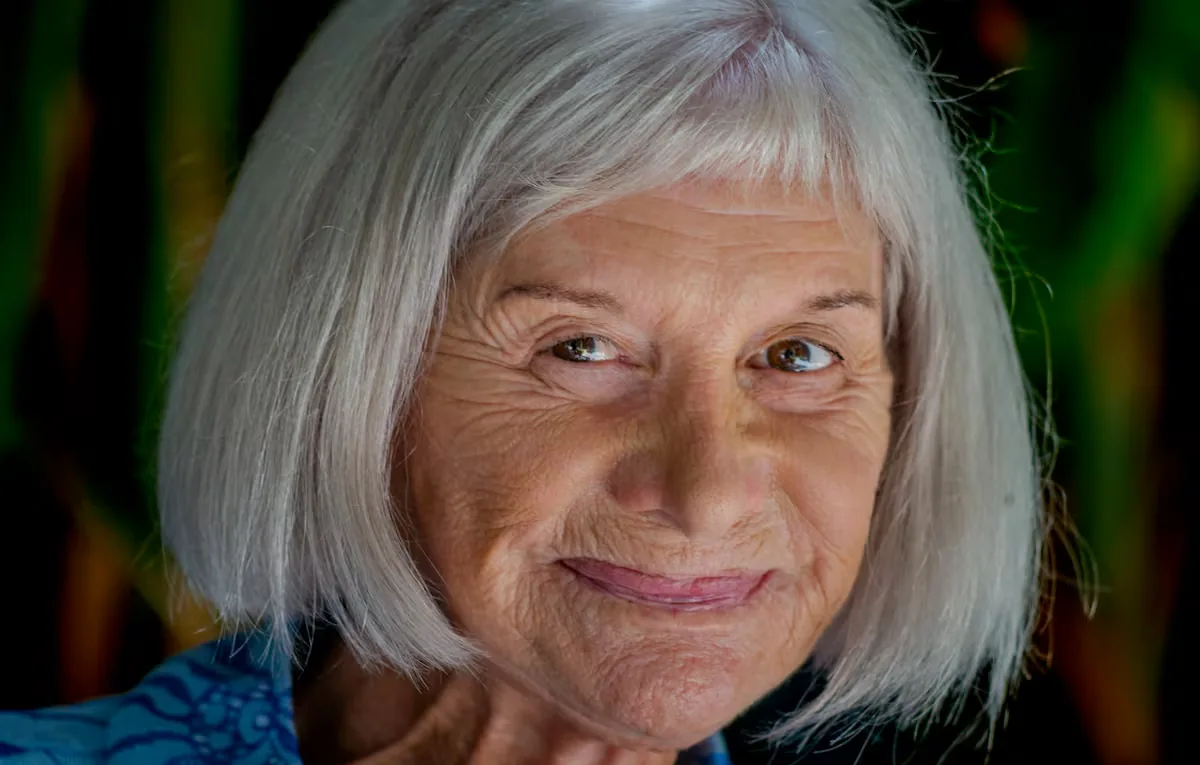
We arranged to have lunch on a scorching day weeks ago, at the restaurant of an expensive hotel in Barcelona that her publisher suggests to optimize the trip. An atmosphere at the antipodes of the landscape and the local life of the La Mina neighborhood, where Under the Infernal Sky, the novel she has just published, takes place, in which Inspector Petra Delicado, the character she created 30 years ago, puts her skin and brain to the test to investigate the murder of a Jesuit priest dedicated to rehabilitating wayward youth. Such anticipation has a reason. The author lives in the countryside, in Vinaroz (Castellón), and especially since she became a widow, she finds it hard to leave the house. Even so, once ready, she fully engages in the conversation and posing for the photographer. Fun, sharp-tongued, and outspoken, she cannot, no matter how hard she tries, diminish an iota of depth in her discourse.
Read more Why women find the monster sexy: the case of ‘Wicker’ and the handsome wicker man
How much has Inspector Petra Delicado aged in these three decades?
Petra comes and goes in my books. Sometimes, I put her aside because if I always write about her, I might get bored and, consequently, so might the reader. But she always has the same age. She is supposed to be in middle age, say between her forties and fifties. We started as contemporaries, but now she is quite a bit younger than me. She is a woman of her time in every era. And, in this book, a recent widow, like me.
How are you coping with grief? I mean you.
I’m managing. My second husband, the great love of my life, died three years ago. We had been together for 40 years, he disappeared in six months, and I’m still in my own grieving process. That is: I move forward without any kind of faith, hope, or affection. I live, but the excitement has disappeared and, at this point, I don’t feel like finding any meaning in life.
Are you angry with the world, like Petra?
Yes, but she is braver than I am and shows it. I haven’t been aggressive with people like she is, but mentally, even those who said “I’m very sorry” I would have killed. It’s an irrational anger: the one who dies, dies; it’s not about thinking it’s a punishment, or an injustice or anything like that, but a visceral feeling that can’t be analyzed unless you’re a Freudian psychiatrist who gets paid for it. That’s not my case.
Petra hates both being pitied and being expected to bounce back in five minutes.
We flee from everything unpleasant or that reminds us of death. Now, suddenly, since old women are the ones with the money, they flatter us, and advertising is full of charming older ladies who exercise, use creams, and consume like crazy. Now we’re not so invisible, not because people have understood that aging and dying are natural, but because we have good jobs and good houses. But they don’t fool me. King Lear is more relevant than ever: cling to the present and stop the nonsense.
Some might consider you a ‘terrible old woman’.
Well, I think I’m the same as always. You don’t change that much with age. I’ve always been like a woman with X-ray eyes. Sometimes, I’m afraid of seeing reality so bare. It seems to me the only way to live. In a world ruled by self-deception, by not wanting to know, it seems a painful privilege, but I can’t get out of it, and I’m fine with that. I aspire to keep the values and anti-values I’ve had all my life, regardless of age. Irony and impertinence have always been my weapons against anger, and also my literary tools. I’m passionate, and I still am, but I’ve always been rationalist at the same time. And rebellious.
And, lacking the love of your life, where do you notice your passion fading?
Well, sometimes in political reactions. And, look, I’m increasingly moved by the kindness of people. It seems revolutionary to me.
But you write about murderers, thieves, and bad guys.
Out of professional obligation, let’s say, but I’m interested, moved, and yes, sometimes I fall in love with good people. Besides, I detect them with some skill. That worker who smiles at you. That person who treats you gently, whoever you are, out of pure kindness. Kindness is as valuable as intelligence. The bad guys have never amused me at all.
Speaking of old people and money, do you think young people have it harder today than when you were young?
It depends. In my time, which is not yours, it wasn’t easy at all to have a rental, a house, or the slightest freedom, and on top of that, you couldn’t have sex, so young people today have an escape we didn’t have. Fortunately, they haven’t experienced those things.
Are you embarrassed to write about sex being a mother and grandmother?
What the hell. When you’re a writer, you’re a writer, neither man nor woman. I have two grown children and two granddaughters. If they don’t want to read it, they shouldn’t, because obviously women, mothers, grandmothers love, desire, live, and have sex. Not all women put family first. That’s not my case.
Do you still think saying that is penalized?
I don’t know, but when a woman, whether a great scientist, writer, or whatever, is asked what the happiest day of her life is, they say the day their children were born. That has been happening since the world began. And no, those were not my happiest days.
Then, which were?
When I ran away with my second husband. We were both married. I was 35 and he was 38. I left my children, but we made a rational plan and a month and a half later we were all together.
Read more Leonormania, myth or reality?: “Leonor interests when she gets close to mortals”
Passion and reason
Exactly. In the end, we made a family, our family, wonderful. The kids got along very well with each other and everyone with everyone. The talk of “running away,” “abandoning the children,” all that language speaks to you of the patriarchal system, of that machismo that permeates society and that I detest, but man to man, I love men, and I’ve been very lucky. My father, all my husbands (note I say all, although there have only been two, to add mystery), my son, and my many male friends are all wonderful men.
Have you noticed condescending looks from fellow writers for writing crime novels?
All my life. I myself, when I see something is too hard for me, think I’m writing a philosophical novel, although saying this annoys me quite a bit. A novel is a novel.
Maybe that condescension is because you sell a lot.
Maybe, and because I don’t shut up and because I’m impertinent. Look, for example, now they’re giving me lifetime achievement awards everywhere, sometimes from important festivals. But, back to what I said before, now old women get noticed. They might as well give me posthumous awards directly.
Your novel deals with very current issues: pedophilia, abuse, poverty, lack of future. What sources do you draw from?
From newspapers, of course. And from friends who tell me things. I haven’t been in a grief group, but I have friends who have told me about it. And in Vinaroz, for example, I listen a lot to people. And they love me a lot because I chat with everyone, and now people don’t chat.
Does the loneliness of the elderly affect you?
It impacts me a lot because that loneliness comes, among other things, from not having intellectual or economic resources, and we have all caused that. Many elderly people don’t have the habit of picking up a book; no one has instilled it in them. Notice that I, who am rather socialist, now realize that in the time when we were rich and famous, culture was not promoted or was not wanted to be promoted as a factor to avoid all that.
Are you still rich and famous and rather socialist?
Well yes, what the hell. And I pay a lot of taxes, put that down.
Then, the corruption cases in those parties must hurt you.
Well look, in that, I do exactly what I criticize in other people: I don’t want to see reality. In the end, you think we’re all people and we’re all crap. I don’t excuse it, of course, nor do I understand it, but I don’t want to be told about it because I’m already old. I’ve seen many things and, look, I’m going to be elitist: what annoys me about the right is the tackiness, especially the folkloric tackiness, because I value elegance a lot, and I wonder what Zapatero had in his head with the whole jewelry affair.
When did you become aware of having a personal style?
I’m not aware of it.
Don’t tell me you have impostor syndrome.
I have pioneer syndrome, which they have often labeled me with, for creating a female inspector, as if I were Laura Ingalls in Little House on the Prairie. But it hasn’t served me much either, because now there are a lot of girls who sell a lot of books, and I’m happy about that, and if anything, I have the prestige of age.
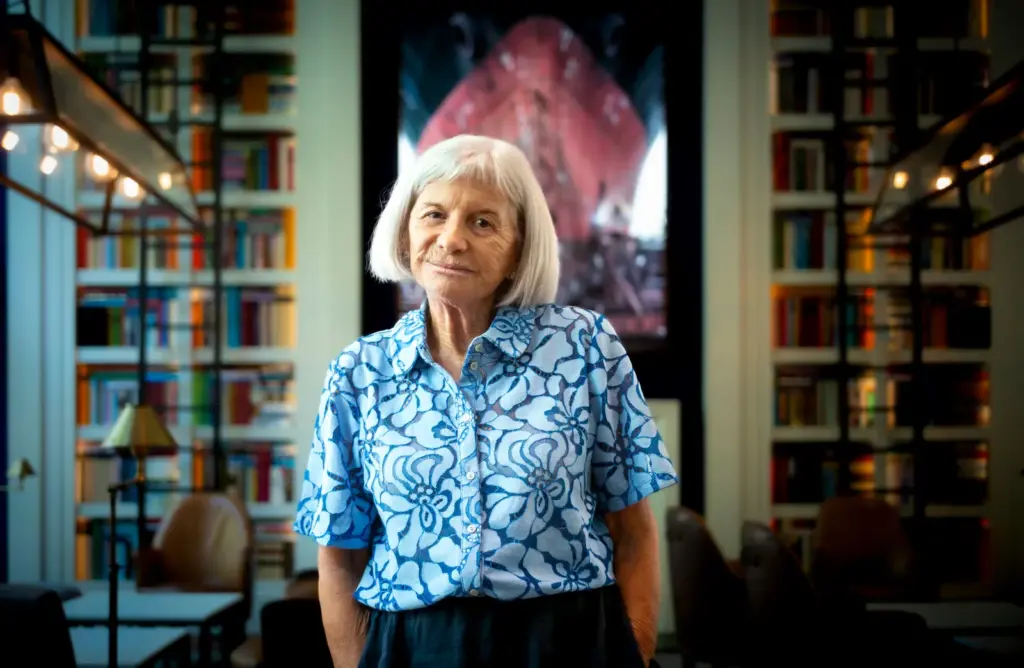
What’s behind that mane and the poise with which you pose for the photographer?
Well, that I’m so narcissistic that I can’t stand a bad image of myself. I live alone and I’m incapable of going out for breakfast without getting ready and being seen by dogs and cats uncombed. And that also means putting on decent pajamas to sleep. Call it decorum, call it dignity.
Where does the Bartlett in your Giménez Bartlett come from?
Well, my first husband was English. When my first novel came out, I was still married and Carmen Balcells, my late agent, said to me: what are you going to call yourself? And I said: I don’t know. Alicia Giménez, or Alicia Giménez González, which is my mother’s surname, which wasn’t hers either because she was adopted, my story is very strange. Then Carmen said that with that name I wasn’t going to sell a book abroad and she saw that I was going to have more success outside than inside Spain. So it stayed that way. A friend of mine joked saying I should have also added the surname of my second husband, the late one.
You still have time to add a third
Shut up, shut up, what a drag.
AUTHOR AND CHARACTER
Alicia Giménez Bartlett (Almansa, Albacete, 75 years old) has long since aged beyond her most famous creation, Petra Delicado, the skeptical and resourceful National Police inspector she created 30 years ago. Back then, both author and character were middle-aged women. But while Giménez aged, Delicado has remained in that life stage where retirement age hasn’t yet arrived, but she’s seen a lot in work and life. In the latest installment of the saga, Under the Infernal Sky, Giménez Bartlett, winner of the Planeta and Nadal prizes, puts her creation in the same life situation: the recent widowhood of the love of her life. Thus, emotionally battered but as solid and delicate as ever, she will face a murder within the Church.
Read more Traveling outside of peak season: prices, overcrowding, and weather change tourism