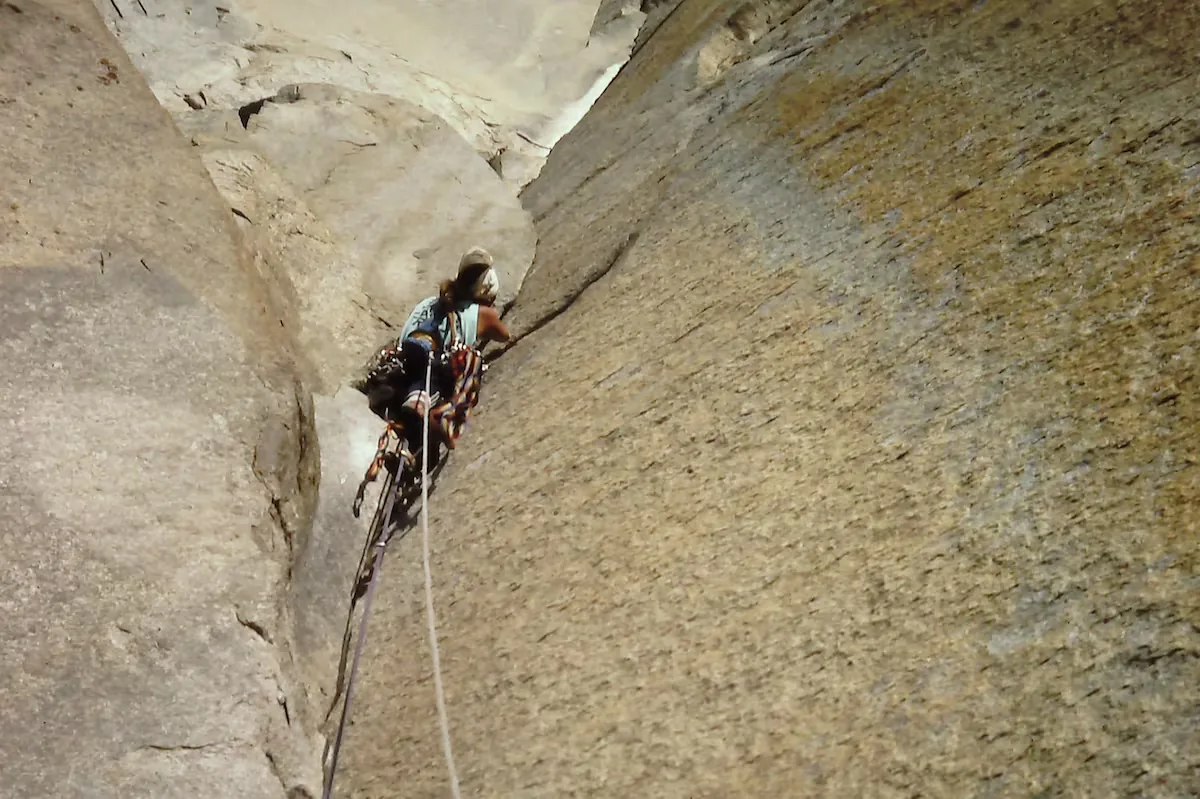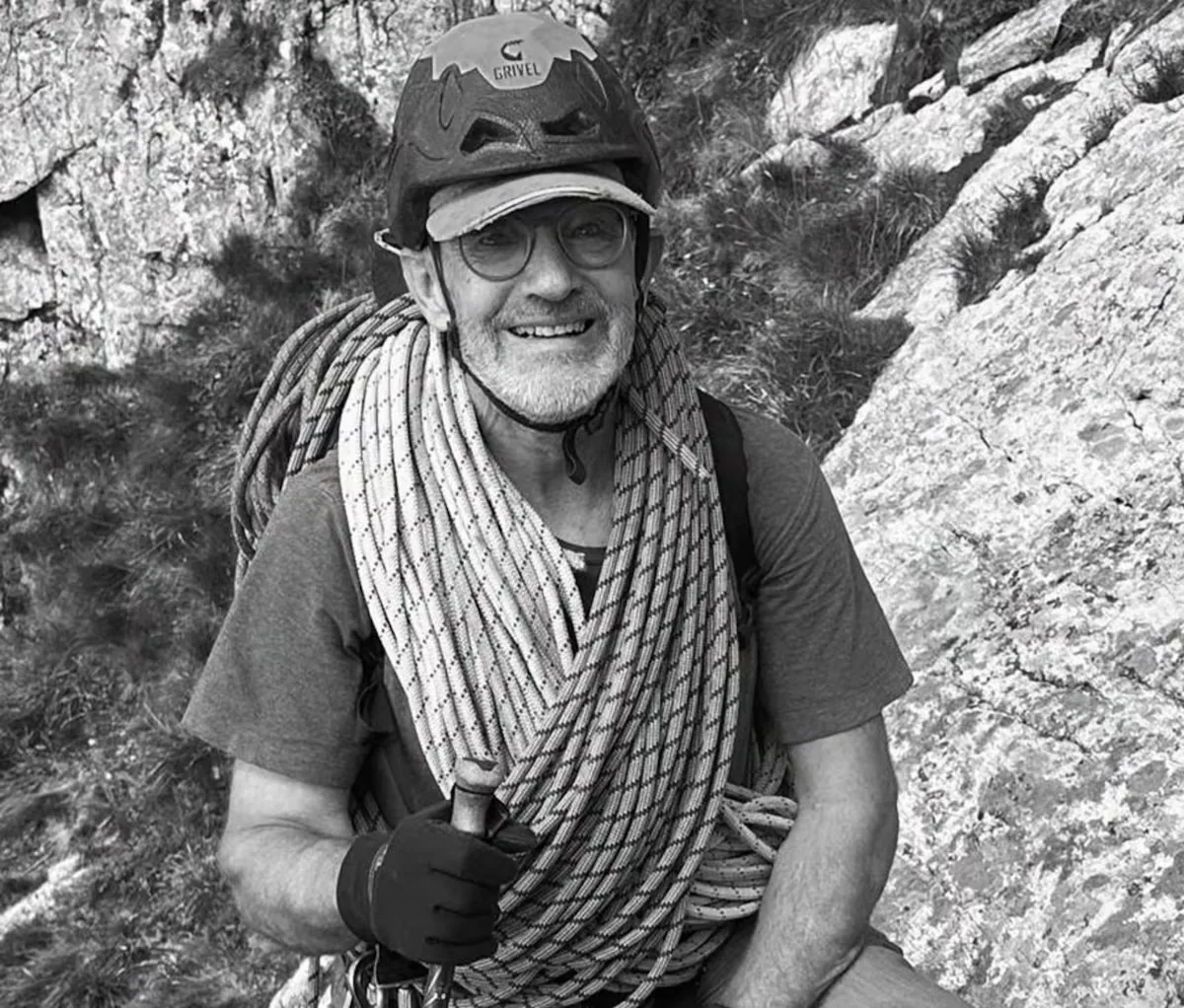
On September 6, climbers found a lifeless body at the foot of one of the numerous routes on the Brévent wall, a dream viewpoint over Chamonix (France). The body, determined by the gendarmerie, had been there since the day before: it was Thierry Renault, 68 years old, one of the great French mountaineers of the 80s and 90s of the last century, a respected and beloved guide. His death inevitably recalls that of the Belgian Claude Barbier, the ‘madman of the Dolomites’, who died on the Paradou wall (Namur province) on May 27, 1977, under circumstances that have yet to be clarified: accident? suicide? murder? Regarding Thierry Renault, pending the mountain police publishing the definitive result of their investigation, the most plausible cause has already leaked: the French guide was working on creating a new route in the south face sector, hanging from a rope that was cut when it rubbed against a rock edge. Curiously, Claude Barbier was also working on cleaning and opening a new route when his partner discovered his body at the foot of the wall, partially wrapped around the ladder from which he was hanging to carry out his work. However, the anchor to which he had to fix the ladder to carry out the task from the top of the rock wall was never found.
Read more Barcelona — Feyenoord live | Raphinha puts Barça ahead in the opening minutes
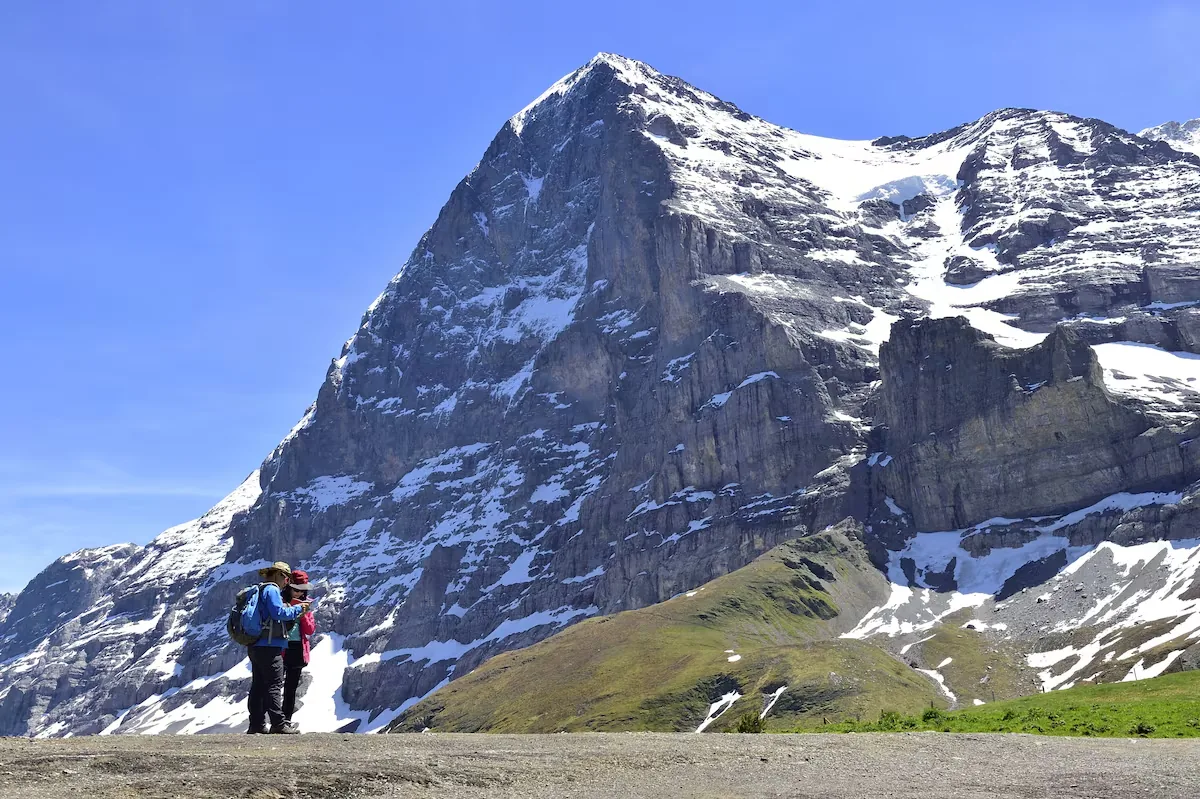
If Renault and Barbier share the apparent circumstances of their death, they also shared an obsessive personality regarding the act of climbing. They not only felt an immeasurable passion for climbing and mountaineering, but living in the everyday world, in the valley, was much more complicated for them than surviving in high mountains. Barbier surprised the world on August 24, 1961, by solo climbing the five great north faces of the Three Peaks of Lavaredo in about 15 hours of total activity. He conquered the Cassin route to the west summit, the Comici to the big summit, the Preuss to the Piccollissima, the Dülfer to Punta Frida, and the Innerkofler to the Cima Piccola. He was 23 years old. That day he accumulated 1,750 meters of vertical rock climbing, at times, more than suspicious.
Thierry Renault began to stand out shortly after Barbier’s death. In 1985, the first international climbing competition was held in the Italian town of Bardonecchia, a decisive boost for the nascent sport climbing. Renault was third and soon decided to transfer those skills to the world of mountaineering, to the big walls, to the adventure terrain that so seduced him. A year before Bardonecchia, the also French Patrick Gabarrou and François Marsigny had opened a 900-meter route in the heart of the Mont Blanc massif, on the Grand Pilier d’Angle, named Divina providencia. It was a route exposed to rockfall, partially opened in aid climbing, a severe route for classy mountaineers. Climbing it free became an obsession for Renault and his great friend Alain Ghersen. Both wanted to demonstrate that mountaineering had to evolve, break out of its technical and physical corset, give way to men and women prepared as elite athletes or gymnasts, seek new schedules, difficulties, itineraries, dare, grow. When Renault and Ghersen returned to the valley after free climbing the Divina providencia, elite mountaineering had changed forever.
That same year, they both opened an eighth-grade route at 3,800 meters, on the Aiguille du Midi, the most difficult route at such altitude: a symbol of their proposal. Renault was also the first to free climb the American Directissima on the Dru, and few were surprised when they saw him approach ice climbing: he was among the first to reach the seventh grade of difficulty on vertical, fragile structures subject to winter conditions. The first ascent of the route La lyre, in the Fer-a-cheval cirque (French Haute-Savoie), in 1992, will remain forever, assuming a physical and mental commitment unknown until then.
A year later, in 1993, Thierry Renault disappeared as abruptly as unexpectedly. He simply stopped climbing, stepped away from difficulty, survived with his guide work, but maintaining such a low profile that he soon fell into oblivion. Except for his friend Alain Ghersen. Renault did not return to the scene until 2003, a decade away from the spotlight. The fanatic of high performance, of vertical adventures, gave way to a person simply possessed by the beauty of the summits, a passion he applied in trying to transmit to his clients. Today, in the era of fleetingness and the banal reward of Instagram, his evangelizing work would have been much more arduous.
In an interview given to the French version of Outside magazine, Alain Ghersen is reluctant to expose the true reasons that distanced Renault from everything in 1993. Yes, he was a man of elevated spirituality, at times believing, at times confronted with the concept of religion, at times in a trance to overcome fear in his climbs pushed to the limit. Ghersen alludes to a love disappointment and other disagreements with religion to explain the abrupt end of his career. However, the first great route they faced together upon his return was not a walk in the park, precisely: in 2003 they repeated the legendary Beyond good and Evil, on the Pèlerins Needle, a masterpiece of mixed and precarious ice.
For Renault, Ghersen explains, life was always much simpler near the summits than in the valley, clearer and purer in the simplicity of climbing than in the intimidating complexity of day-to-day life, of a civil existence that did not quite compensate him. This has been the ailment of many great mountaineers: maladjusted in the social scene, exuberant in the solitude of the great alpine stages, unable to unite both worlds serenely and balanced.