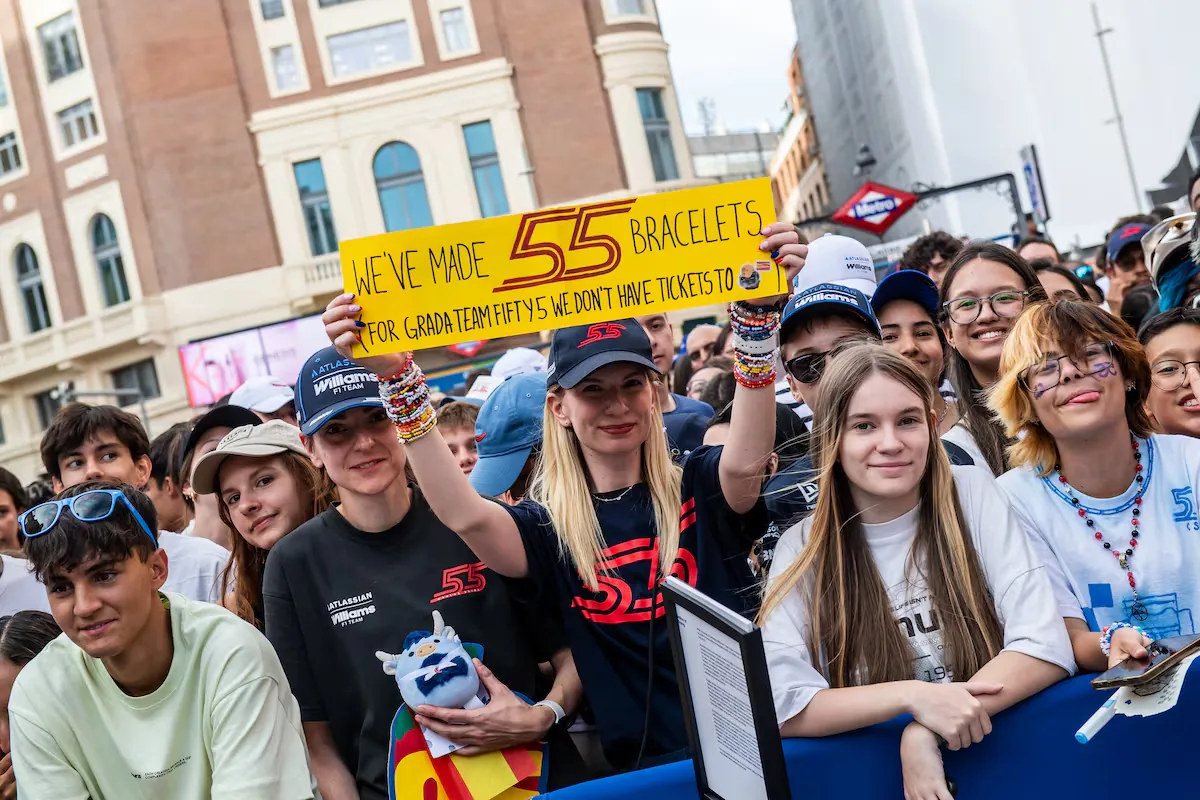
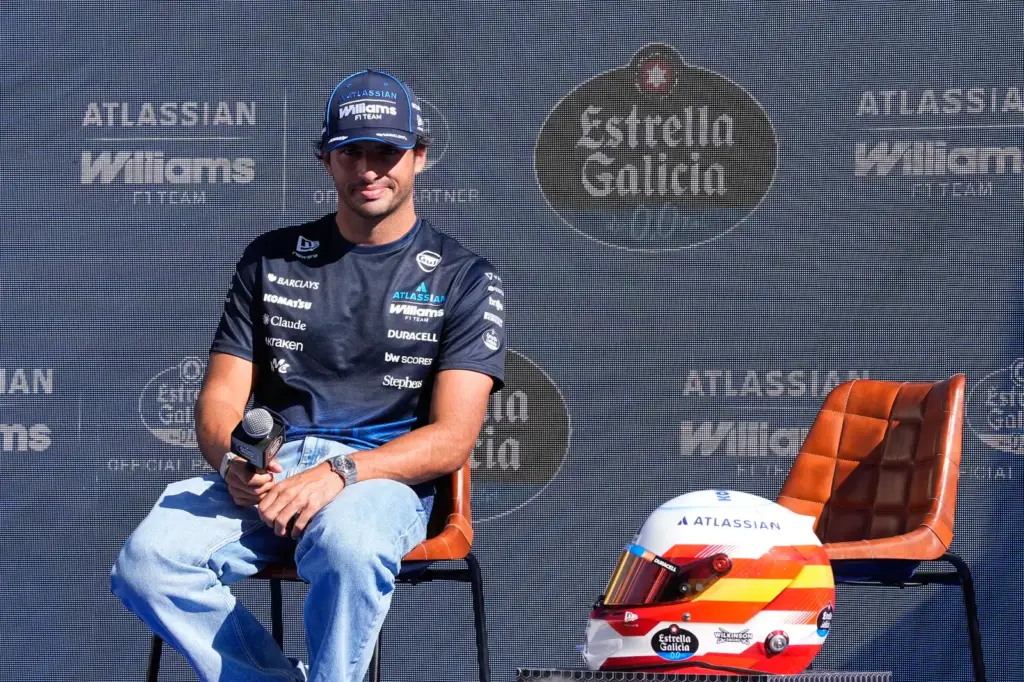
From Friday, Madrid will move for three days to the rhythm of Formula 1. The return of the Great Circus to the capital of the country 45 years after its last race in the city has generated a fever that has led to tickets selling out despite their high price — the expected capacity is 350,000 people —, hotels registering notable increases due to high demand, and a significant part of the restaurant and leisure sector throwing itself into an event expected to attract tens of thousands of foreign tourists. Madrid native Carlos Sainz Jr., Williams driver and son of Carlos Sainz, told EL PAÍS yesterday that he was surprised by the reception his car presentation had in Callao square: “And it was Tuesday, imagine how this will be on the weekend. I am delighted to see the city fully engaged.”
Read more The judge orders to track Jonathan Andic’s expenses and calls during his trip to Ecuador
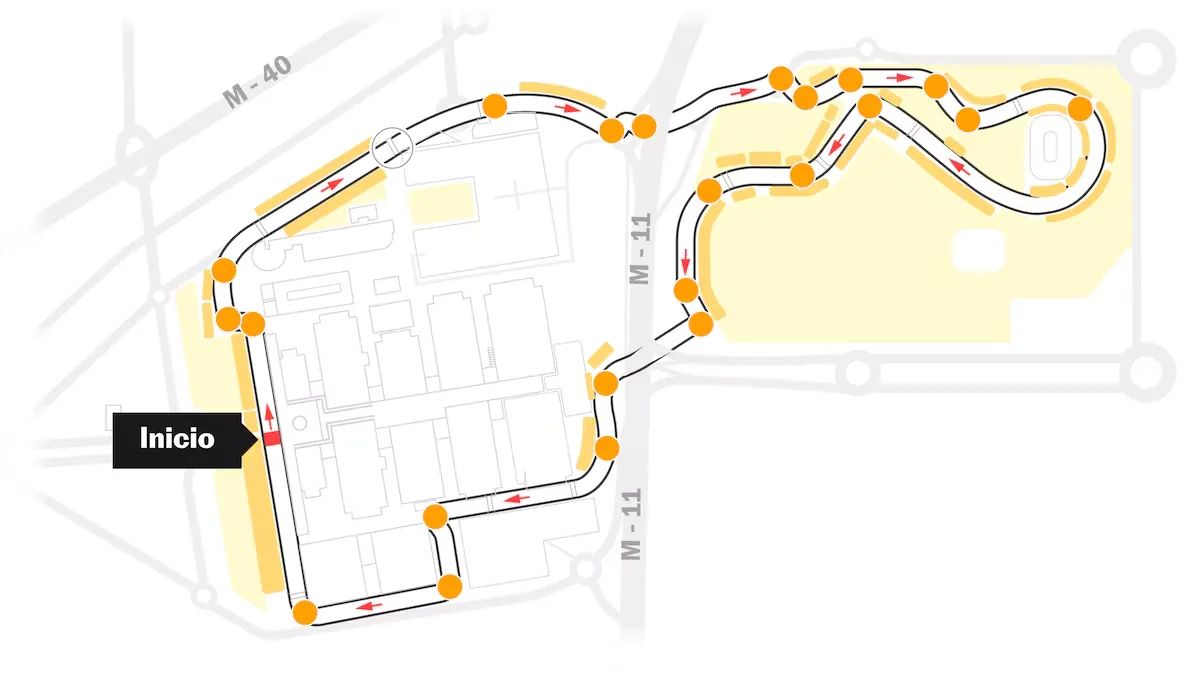
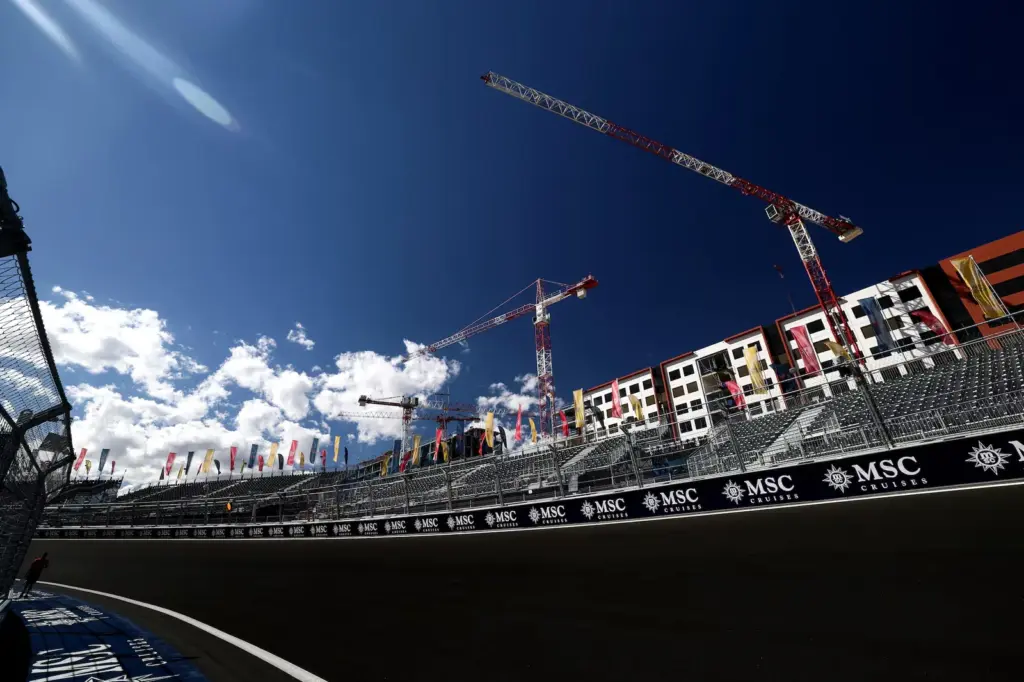
The Spanish Grand Prix is held from September 11 to 13 at the new Madring, a semi-urban circuit built by Ifema next to its pavilions in the Hortaleza district, which has also caused complaints among neighbors due to the noise generated by the cars — much higher than the 35 decibels set as the legal limit by the City Council — and due to the traffic jams and restrictions expected for leaving and moving around the area. The impact of the race in economic, sporting, and visibility terms, on the other hand, is expected to be formidable following the agreement announced on January 23, 2024, to bring the event to the capital. The last time Formula 1 cars raced in Madrid was at the Jarama circuit in 1981, when the Canadian Gilles Villeneuve’s Ferrari won. “Almost half a century. My father told me about when Formula 1 came to Madrid. My father and my uncle Juanjo told me they went to that last race in Madrid, and it seems unbelievable that half a century had to pass for Madrid to have a race again. We have managed to bring it back, and it is a very special city, very suitable for hosting events of this nature,” Sainz said yesterday.
The circuit, which measures 5,417 meters and has 22 turns — the most notable being the Monumental, with more than 500 meters of chord and a 24% banking — arrives with Kimi Antonelli as the favorite, the undisputed World Championship leader who just a few days ago triumphed in Monza after a memorable comeback from 19th position thanks to the power of his Mercedes.
The sporting competition is joined by the economic one. In the city, there will be simulators in hotels and restaurants, giant screens to broadcast the races, promotions inspired by the 57 laps of the circuit, and special menus to extend the day after the checkered flag. A report prepared by PwC places “the estimated economic impact” associated with the Grand Prix at “467 million euros and 8,850 jobs.” The study also estimates revenue close to 83 million in taxes and social security contributions. According to the buyer data included in the report, “more than 120,000 grandstand and hospitality tickets” have been sold; it is estimated that more than 80,000 attendees will come from outside the Community of Madrid and around 45,000 will come from other countries.
The pressure is already felt in hotels. According to the hotel commerce platform SiteMinder, rooms reach an average daily rate of 485 euros, 69.6% higher than the 286 euros recorded during the same period last year. Amadeus data also reflects an increase in air reservations coinciding with the Grand Prix. Those from the United Kingdom have grown by 46%; from South Korea, 45%; from France, 32%; and from Uruguay, 31% compared to 2025.
The figures paint a favorable scenario, although experts urge caution. Albert Guivernau, researcher at OBS Business School and director of the Civismo Foundation, warns that all the money mobilized around an event of this magnitude cannot automatically be considered new wealth for the city. “Formula 1 has a very relevant economic impact for Madrid, both because of the direct spending it generates and its ability to strengthen the city’s international position. Estimates talk about around 450 million euros of impact and 8,000 direct jobs, although we must be rigorous: economic impact does not necessarily mean net wealth created. Part of that activity will be displaced from other sectors,” Guivernau explains.
For the economist, the clearest additional contribution comes from the spending of people arriving from other places. “Hotels reach average rates of 485 euros, almost 70% higher than the same weekend last year. And a significant part of the visitors come from outside Madrid, which is precisely the spending we can most clearly consider additional,” he adds. The main return, he argues, may occur in the medium and long term.
Read more What makes AfD a threat to democracy in Germany?
Madrid will remain on the Formula 1 calendar for at least 10 years, which will provide the city with continuous international exposure. “If it manages to convert that visibility into tourism, investment, and economic activity, the effect will go far beyond the three days of competition,” he says.
Opposite the forecasts about the money the race will bring is the project’s bill. According to data provided by Más Madrid, 200 million euros have been allocated to the circuit and another 277 million correspond to the rights over 10 years. Added to these amounts is the promotional package called Destination Signage Package, approved by Madrid Destino. The City Council contributes 1.9 million; the Community of Madrid, another 1.9 million; and Ifema, 700,000 euros.
The total amounts to 481.5 million euros, although it groups concepts of different nature and corresponding to different periods: the investment in the circuit, the rights over a decade, and a specific promotional item. It also cannot be directly compared with the 467 million estimated by PwC. The latter figure measures the economic activity estimated to be generated by the event, not the net profits nor the money that the administrations will directly receive.
Beyond the debate about the cost and the competition and its return, nightlife entrepreneurs are preparing for one of the most notable weekends of the year. The Association of Leisure and Entertainment Entrepreneurs of the Community of Madrid, Noche Madrid, estimates that the Grand Prix will leave about 30 million euros in the city’s nightlife. The sector rates Formula 1’s ability to promote Madrid internationally at 7.7 out of 10. Two out of three companies consider its impact will be quite or very important for economic activity. Overall, venues expect to increase their turnover by 5% compared to a normal September weekend. In establishments with greater tourist projection, the increase could exceed 30%.
Hostelería Madrid extends the calculation to the entire commerce, restaurant, and nightlife sector. Its president, José Antonio Aparicio, points out that these sectors could concentrate around 25% of the overall impact, equivalent to direct business exceeding 112 million euros. “There is also a very significant high purchasing power and hospitality segment in Formula 1, but it would be a mistake to think that the benefit will be limited to haute cuisine or luxury establishments,” Aparicio says. The employers’ association expects the effect to reach hotels, gastronomic restaurants, mid- and high-priced establishments, bars, cafes, informal dining businesses, and nightclubs.
Hotels and restaurants have already designed their own strategies to take advantage of the arrival of visitors. Some offer a special menu, others have driving simulators and arcade machines. Solutions, after all, to jump on the bandwagon of the event of the year in Madrid. “The arrival of Formula 1 is one of the great events the city will experience and we believe that hospitality has a fundamental role in expanding that experience beyond the circuit itself,” explains Sara Cruz, sales and marketing director of Grupo RosaNegra in Spain.
Read more The Sahrawis receive the nationality law as a historical reparation with recognition of rights