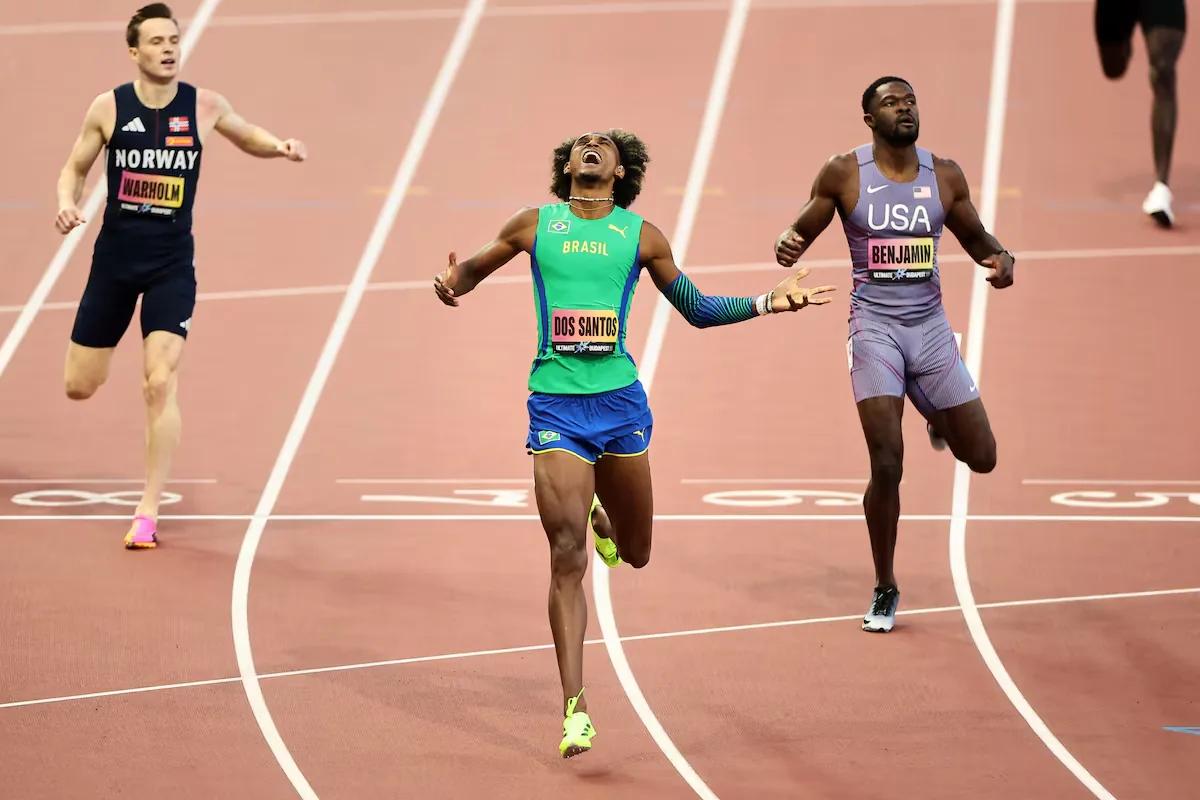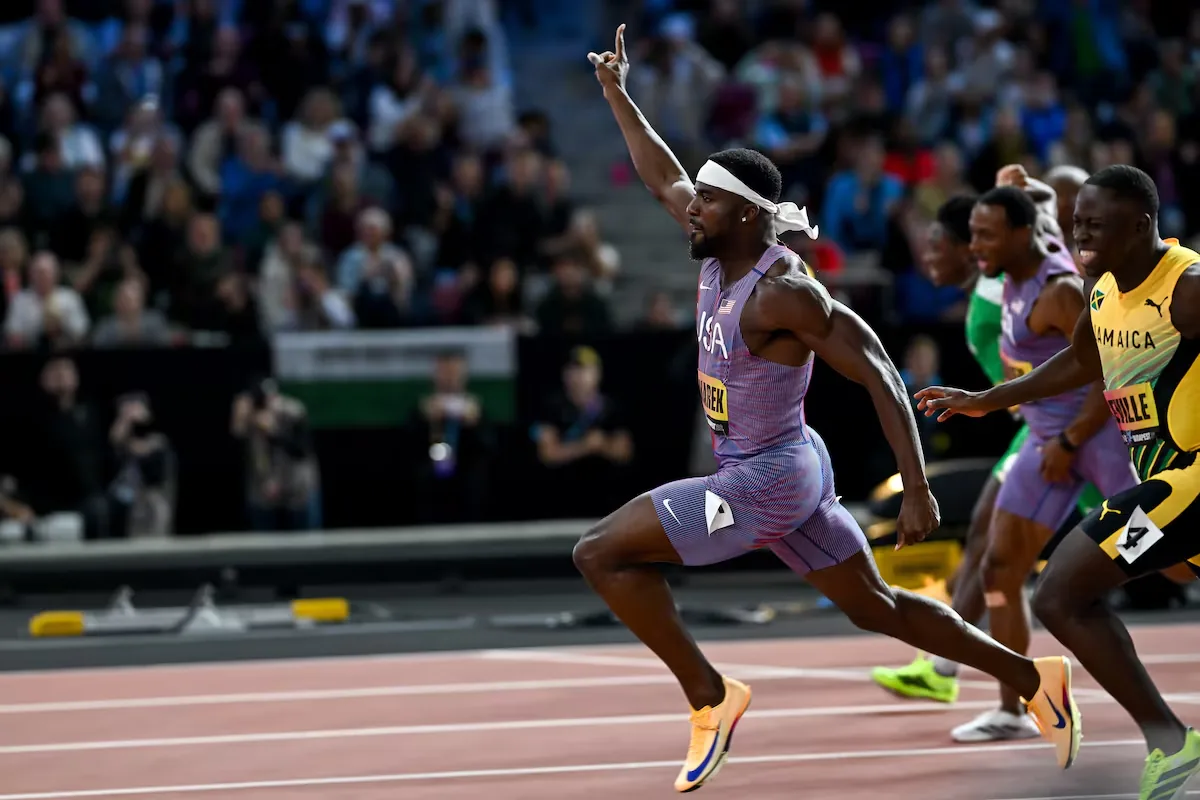
Merlin Hummel rises from the video game championship chair and his hammer pierces the grass dyed black like the dark and cold night of Budapest by the Danube; pink the sand of the long jump pit where Larissa Iapichino leaves her victorious mark at 6.90m, and bright red the tartan straight where the world record holder, Masai Russell, flies over the last hurdles to win (12.22s) shortly before the world record holder, the young university student Ja’Kobe Tharp, stretched his neck to win by a hundredth (12.94s) the 110m hurdles against the favorite Cordell Tinch.
Read more Bonoloto: check numbers for the draw on Friday, September 11
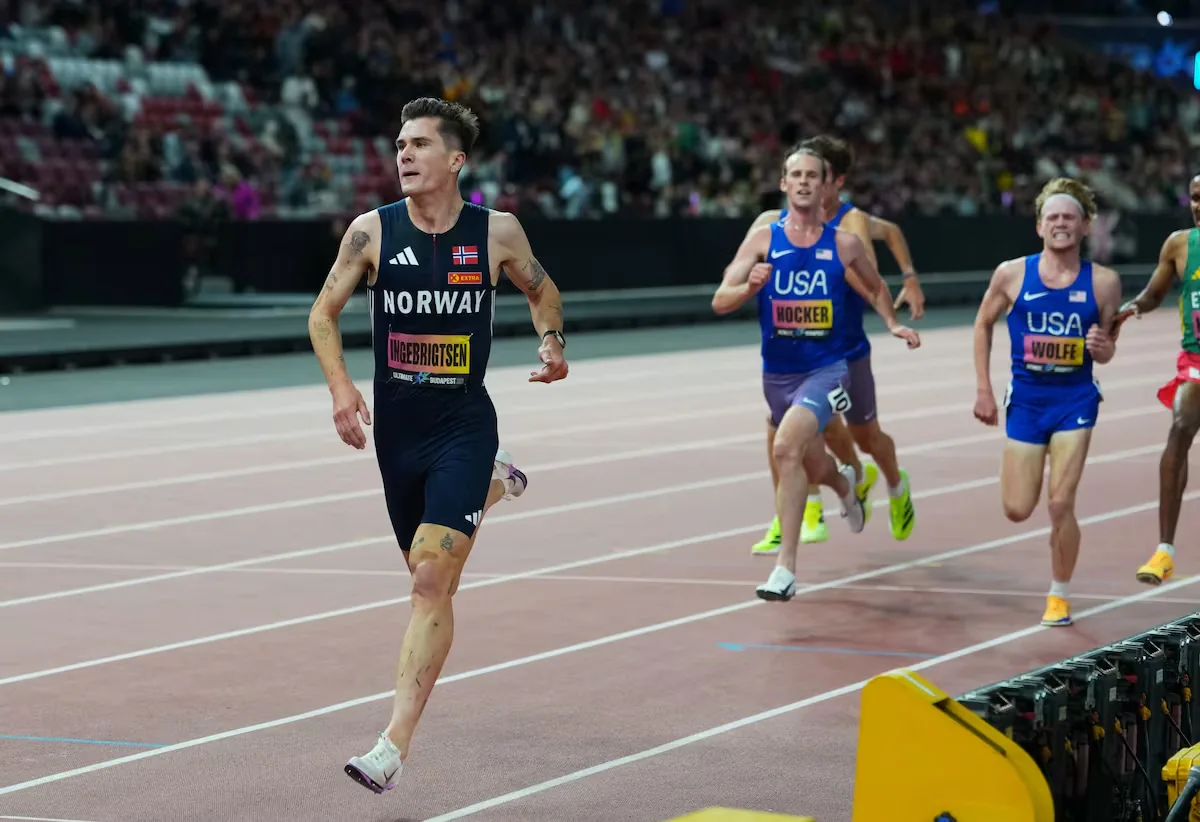
And very red the tartan oval that lights up brightly so Jakob Ingebrigtsen can feel supreme again in the 5,000m, the event in which he is Olympic and world champion, and with which he ignited the recent Europeans in Birmingham that marked his return to competition after 11 months and through an Achilles tendon operation. As in Birmingham he forgot his old tactics of distant attacks, he let himself be trapped in the snare and only came out to breathe in the last straight. In the English city, his only rival was himself in his comeback, in Budapest, in the fight for the 130,000 euros that the winner of each Ultimate event takes, the challenge was much greater, none other than Cole Hocker, the athlete with an atomic finish who outpaced him in the Olympic 1,500m final in Paris. Hocker positions himself behind him and waits. Ingebrigtsen turns his head two, three times, locates him, controls him and launches himself. In two steps, five meters difference, so much dynamite exploded in his legs that it rendered Hocker’s desperate effort useless. About 100m final in 12.60s gave the victory to the Norwegian from Sandnes in 12m 59.24s and also reasons why on Sunday (20.12) he could surpass the fabulous Josh Kerr in the 1,500m event.
The slate gray corridor and the posts that hold the pole vault bar do not need special lighting when friends Manolo Karalis and Mondo Duplantis run around there. It is enough for the sirtaki to sound for the spark to jump from the Greek (a fall outside the mats at 6.05m that makes his lower back crack; a tremendous jump over 6.15m) that ignites the Swede’s desire, a yellow and blue flame that drives his grandfather crazy in the stands, next to his mother’s sister, very plugged in, and worries Greg, his father and coach, and his always inquisitive gaze. Duplantis clears 6.20m on the first try and, seeing Karalis’s failures at 6.25m, he goes for the world record, 6.32m. Gold sounds, his autotuned voice in the song he composed as the competition’s anthem. It would be historic, breaking a world record moved to the rhythm of his own song and voice. He brushes the bar on the second and third attempts, and it falls.
At the athletics festival for the impatient also known as Ultimate, Noah Lyles dresses in Yves Saint Laurent, brocade of pearls and diamonds. The Olympic 100m champion and avid Pokémon card collector, who is injured, will not run this weekend in rainy Budapest, but he is busy in his other role, that of ambassador of the competition with which Sebastian Coe, president of World Athletics, intends for athletics to shed the tracksuit and sweat and compete in the sports yard with glamour, things of the nouveau riche who flaunt themselves among speedsters with public money.
The best athletes of the moment, giants of their events –Dos Santos, Duplantis, Wanyonyi, Werro, Melissa Jefferson, Kerr..– roam the red carpet reception at the stadium by the Danube and among them, moving with some shyness and unease, is Mohamed Attaoui, a Spaniard from Torrelavega who until recently was one of the great animators of the 800m, the trendy middle-distance event worldwide, and now seeks, without high hopes, his redemption, starting with the semifinal on Saturday at 18:26 (Movistar+, Vamos 3). “I know I’m not in my best shape, but I know how to fight in championships,” he promises. “I would love to make it to the final.”
A bad summer. Doubts. A bronze medal at the Europeans in August in Birmingham that left him hungry. Two weeks later he couldn’t even finish the 800m at the Diamond League in Zurich and ran a 1,500 in Berlin in 3:39. Days of rest with his mother in his village, clearing cobwebs in his head and good training. And to Budapest, to the stadium where just three years ago he competed in his first World Championship, at 21
Read more A group of young ultras brutally attack two left-wing activists in Oviedo
“Until the last moment I was in a don’t know what to do, but I decided it had to be tried and we’re going to Budapest,” says the Cantabrian middle-distance runner shortly before catching the plane. “I don’t know why in Zurich and Berlin I didn’t feel well, but well, this week I have trained well again. I lowered the load a bit to try to be a little fresher. I felt like I was a bit over the top, and it was good to lower the volume. I did four 400s and I expected it to be much worse… Even at the start of the test I thought I wouldn’t be able to finish it.”
The cobwebs that Attaoui clears in his head are doubts. His home is the balance in which he grew up and that he left two and a half years ago to live a monk’s life, a professional life, between Saint Moritz, South Africa and Sierra Nevada. Altitude camps and training. Life in shared apartments with other athletes from the On team and the coach of all, Thomas Dreissigacker. “It was a tough year,” he explains. “Mentally you say, damn, I’m training well but I’m not competing well, what’s going on?”
On his path, a good winter, with an almost world record in the 1,000m indoors and a bronze at the Torun World Championships, and a virus that attacked him the first week of June upon his return from Turku (Finland), where he had run the 1,500m in 3m 31.82. “It has been a bit of a tough summer, but you also learn from this,” he says. “I was talking with Thomas, my coach, a few days ago. We were comparing last year’s and this year’s training. We were the same until June, with camps, and it was very good, but then, when I caught the infection and so on, I didn’t manage to chain three or four weeks of training. And we saw what I needed, because with the infection it was as if I had lost all the base of the winter work. And we have already learned that: that for the next years, if something goes wrong or whatever, again back to training and not just one week, but you have to be there three or four weeks training again, loading everything to the max again and then try again.”
The doubts, Attaoui specifies, have been, in any case, more metaphysical than personal, questions about his head, his body. “I have never doubted my coaches, who in the end are the ones who have made me run the most, they have made me get to where I am,” he emphasizes. When things don’t go well, you get desperate and think it’s because of tactics and other things. And on top of that you hear people from outside say, no, it’s the tactics, it’s the tactics,… and I get lost. But my coaches know me, they have directed all my races in which I have run 1:42 in the big championships and I always run from behind. And that’s what I will keep doing, it’s what suits me best and I will keep doing it.”