









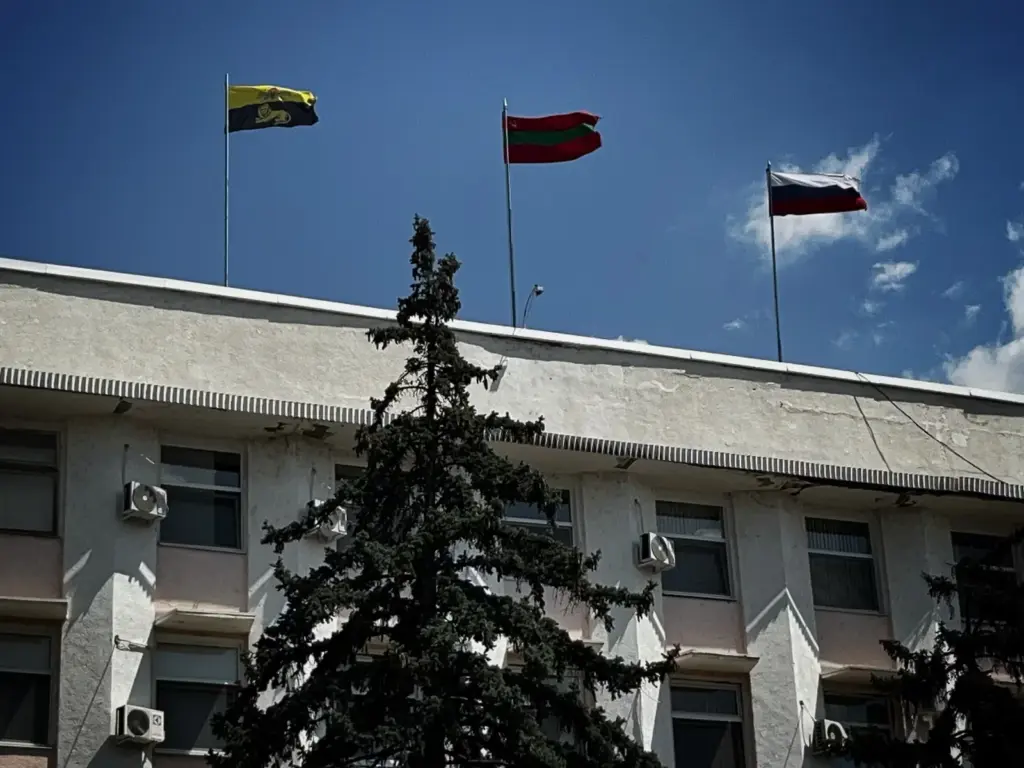
At the road checkpoint installed at the entrance of a bridge, Russian troops – the flag of that country even appears on the sleeve of the uniform – monitor the passage of vehicles between the cities of Bender and Tiraspol. The car in which the reporters travel moves forward without being stopped through the separatist region of Transnistria, a self-proclaimed republic in Moldovan territory, on the left bank of the Dniester River and bordering Ukraine. The Russian emblem also appears on the structure of the aforementioned viaduct, on official buildings, in shops, and on the vehicles of some citizens. The Kremlin’s tutelage is beyond doubt.
Read more Putin sends his troops the relics of Prince Donskoy, a myth of his millennial war against the West
Beyond the stale scent of frozen time and Soviet decor, stained by the circulation of modern utility vehicles amid antediluvian trolleybuses, the reality is that those tricolor symbols of Moscow represent a real power struggle over a territory that, in theory, is in the process of becoming part of the European Union.
Moldova and Ukraine were accepted as candidates in 2022, the year Russia launched the major offensive against its neighbor. The state entelechy of Transnistria, along with the autonomous region of Gagauzia, represent two burdens in Moldova’s integration process.
The visitor enters the territory having to show their passport, as if changing countries. Documents are checked from inside small windows by agents who do not depend on Chisinau, the Moldovan capital. They give the foreigner a paper that acts as a visa permitting a 24-hour stay. A map from a tour operator welcomes visitors: “Pridnestrovie – the name given by locals to the territory – is the best country in the world. We make cognac, not war!”, it reads in English. But tourists, barely a handful, are noticeably absent.
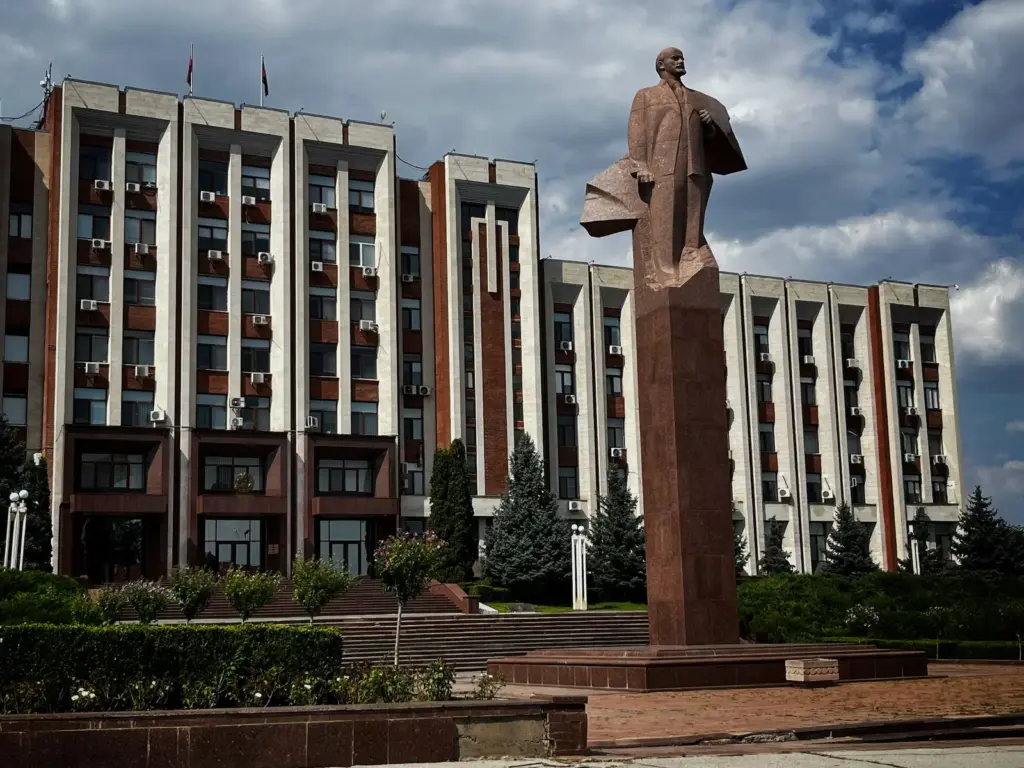
In his office in Chisinau, Igor Dodon, leader of the opposition Socialist Party and defender of ties with the Kremlin, is clear that no decisions will be made in Tiraspol without being monitored by Moscow.
Meanwhile, the war in Ukraine has had direct consequences on Transnistria, aside from annihilating border trade. First, for the Russian soldiers – between 1,000 and 3,000 according to different estimates – stationed in the region who cannot be relieved. Second, for the inflated economy of the territory, free gas from the Russian public giant Gazprom ended after the contract expired at the end of 2024, which allowed its transport through Ukrainian territory.
Relations between Kiev and Moscow are not conducive to extending that agreement, and the inhabitants paid the price, often left without heating or hot water in the middle of winter. That energy gap is the battering ram that hits hardest in the worst humanitarian crisis the territory has suffered this century, according to analysts from the IDIS Viitorul study center.
The economic differences are not only devastating but increasingly large between Transnistria and the rest of Moldova, according to a report from that center from last January with data from 2025. The average inflation of 7% in the country jumps to 14.7% in the region; GDP decreases by 2.7% compared to an 18% drop in the unredeemed territory; average monthly salaries are around 15,700 Moldovan lei (790 euros) in Moldova, double that in Transnistria. Pension dynamics follow a similar pattern, increasing to around 4,200 lei (210 euros) in Moldova itself while decreasing to approximately 1,900 lei (95 euros) in Transnistria. The industry, highly dependent on Russian gas, has suffered a 30% drop in one year, according to the same analysis.
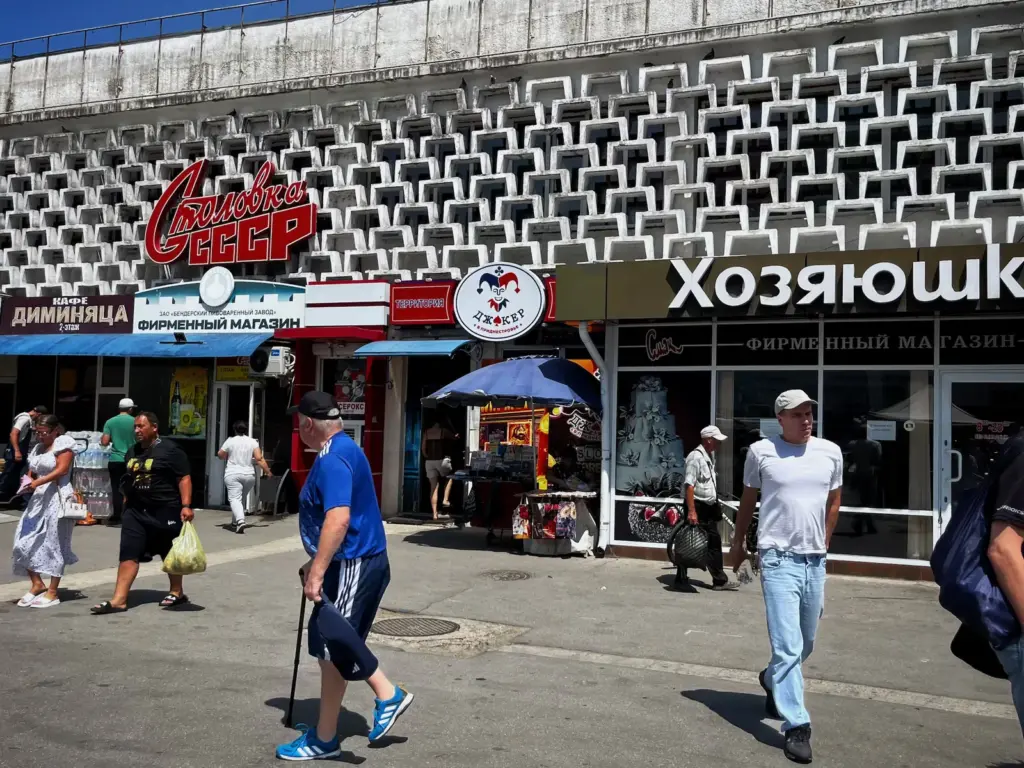
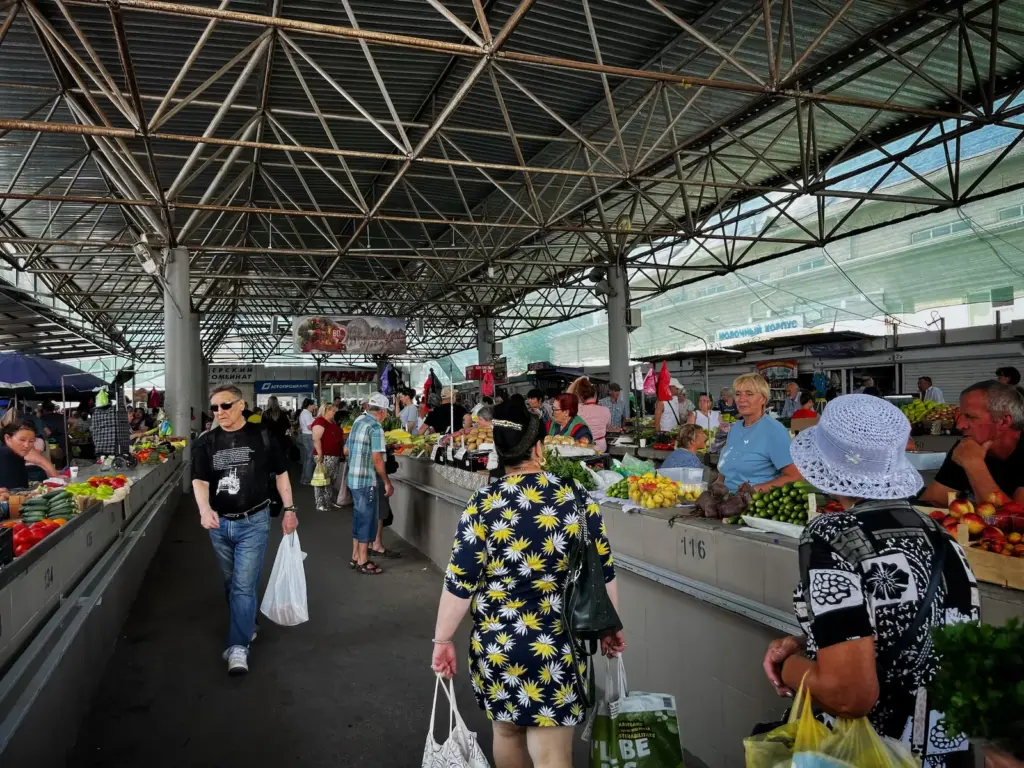
In the central market of Bender, Tamara (not her real name), a 58-year-old seller with four granddaughters, laments having to keep working despite being retired and a pensioner, receiving the equivalent of 50 euros a month. “Those at the top decide, not us. We are suffering, but they don’t care about us. We should go to the doctor, we need to buy medicine, we need to eat, help children and grandchildren, but we can’t,” she comments without further specifying her accusations.
Outside the market, the Orthodox church bells ring four times to announce that four babies were born that day in the city. Both in the Bender market and in Tiraspol’s, fruit and vegetables abound in stalls full of goods, although the workers complain about the lack of customers and the narrow life they lead. They do not talk about Moscow, Brussels, or, in general, about matters that do not affect them closely every day.
As a consequence of the crisis hurting Transnistria’s economy, reintegration with the rest of the country is progressing, even if by the force of facts. But Nicoleta Hriplivii, from the Promolex analysis center in Chisinau, focused on the rebellious region, believes that the government “unfortunately” does not have a plan to advance that reintegration. Meanwhile, she adds, Promolex will continue to function as “a bridge” between the populations on both sides of the Dniester.
The European Parliament, in its last report on Moldova from a year ago, welcomes that the “significant increase in trade from the Transnistria region with the rest of Moldova and its dependence on exports to the EU could create conditions for convergence” of that territory with Chisinau. That reintegration, it adds, “could serve as a pragmatic basis for a peaceful political solution and the eventual reunification of the country” and pave its way to the EU.
After the end of the USSR in 1991, Moldova was declared an independent state, but war broke out in Transnistria driven by separatist desires the following year. The bullet and other projectile impacts from those days still show on the Bender City Hall building.
“The situation in Transnistria is the worst since 1992, as it is affected by a severe chronic economic and energy crisis. Therefore, many people are forced to go to the right bank (of the Dniester) to access national public services — such as health, education, and social protection — and also to seek employment in this area,” describes Mihaela Serpi, a human rights specialist at Promolex. “Obviously, all this will also contribute to the reintegration process,” she predicts looking to the future.
The horizon is also set on the future of the Sheriff empire, of local magnate Viktor Gushan, who controls supermarkets, gas stations, construction companies, and banks. The star in its logo, reminiscent of the authority in Western movies, is easily recognizable in Transnistria.
Gushan is even the owner of the acclaimed Tiraspol football team – which has no choice but to play in the Moldovan league – also called Sheriff. This club wrote the best chapter of its history when it defeated Real Madrid at the Santiago Bernabéu in 2021 in a Champions League match. Videos of the two goals remain on local phones as a memory of that feat.
Under the current situation, the constrained economy of the separatist region has been forced to go through Chisinau and now has Europe as its main market. In turn, the local population, which holds a Pridnestrovie passport with which they can barely go beyond the aforementioned false border windows, increasingly demand the Moldovan passport, which offers free passage to the EU.
Vlad (he prefers his real name not to be published), a 30-year-old merchant, receives his merchandise from Asia after passing through Chisinau customs. “I would stay like this,” he answers when asked if he leans more towards Moscow or Brussels. “Something like Azerbaijan,” he adds, referring to that country’s strategic balance.
Russian barracks
Before the visitor’s eyes, barracks follow one after another. In one of them, with corrugated roof barracks, yellow signs on the whitewashed wall warn, of course, in Russian: “Facility of the Ministry of Defense of the Russian Federation. No entry.” The European Parliament also demands in its report the withdrawal of Russian troops and weapons – they have tons in an arsenal – from Moldovan territory as well as respect for the territorial integrity of the candidate country to join the 27 and its borders.
Meanwhile, the paradox surrounds the recognition of Transnistria as a country, since no country in the world grants it, not even Russia itself. That option was chosen by its citizens by a large majority – 97% announced the authorities – in a consultation also without legal standing in 2006.
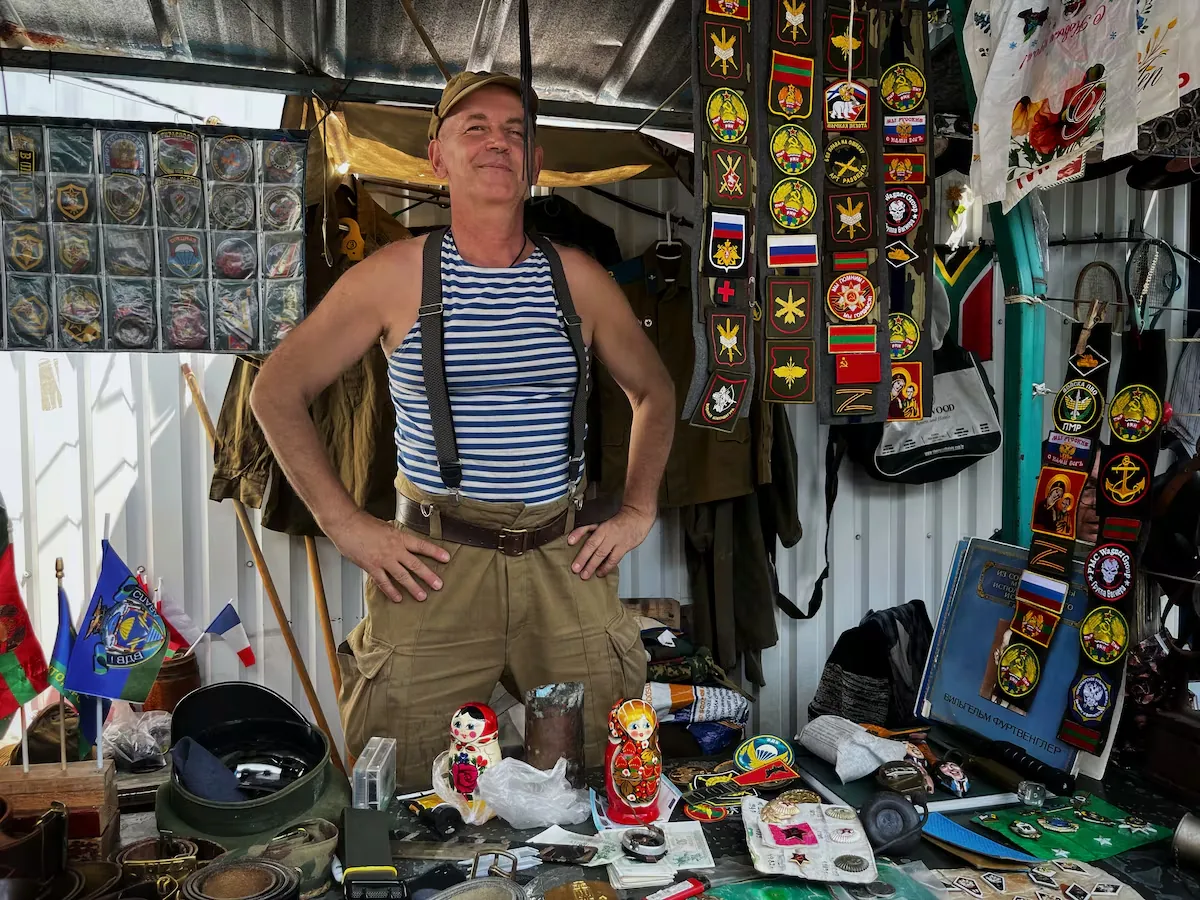
The souvenir-shaped mugs alternate, among other motifs, the face of the Soviet dictator Joseph Stalin with that of Vladimir Putin, the Russian president. At a market stall, among many other Russian and Soviet items, a patch with the letter “Z,” symbol of the Kremlin troops in their invasion of Ukraine, is for sale.
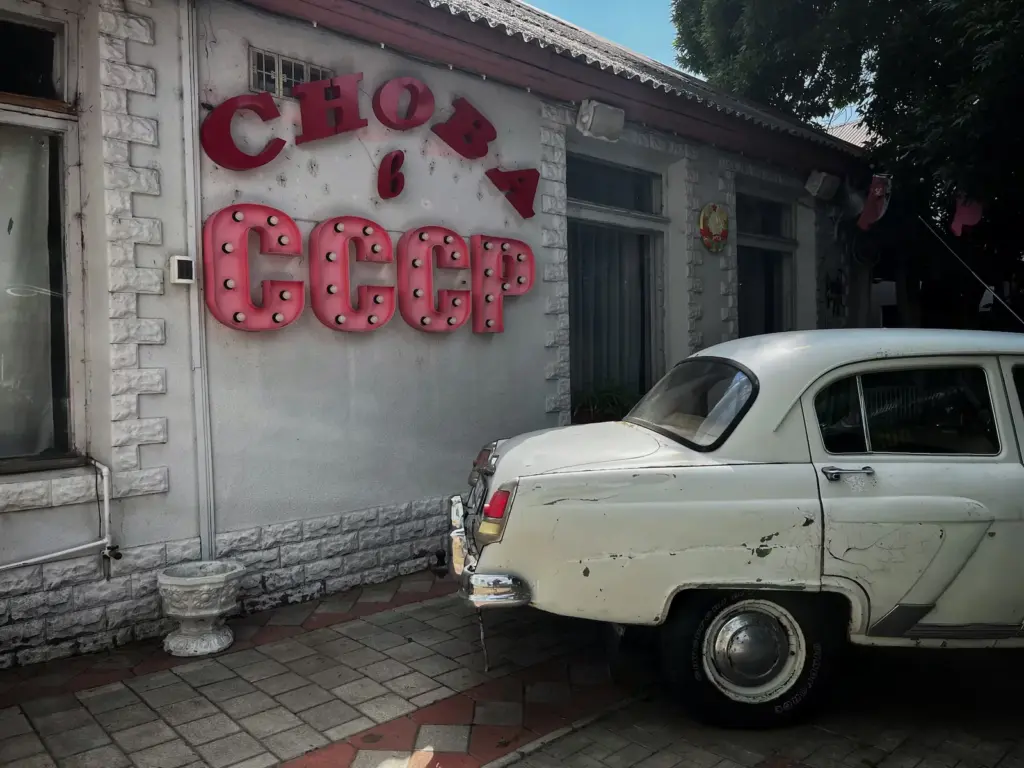
Russian is also the prevailing language in the geographical and institutional anomaly that Transnistria represents with its own Parliament, Justice, and Security Forces. The region’s authorities and those of Chisinau investigated by different means in 2023 the assassination of the main opposition leader to the pro-Russian authorities holding power in Tiraspol, Oleg Horzhan. The conclusions were also very different. Some spoke of a stabbing weapon. Others, of a firearm.
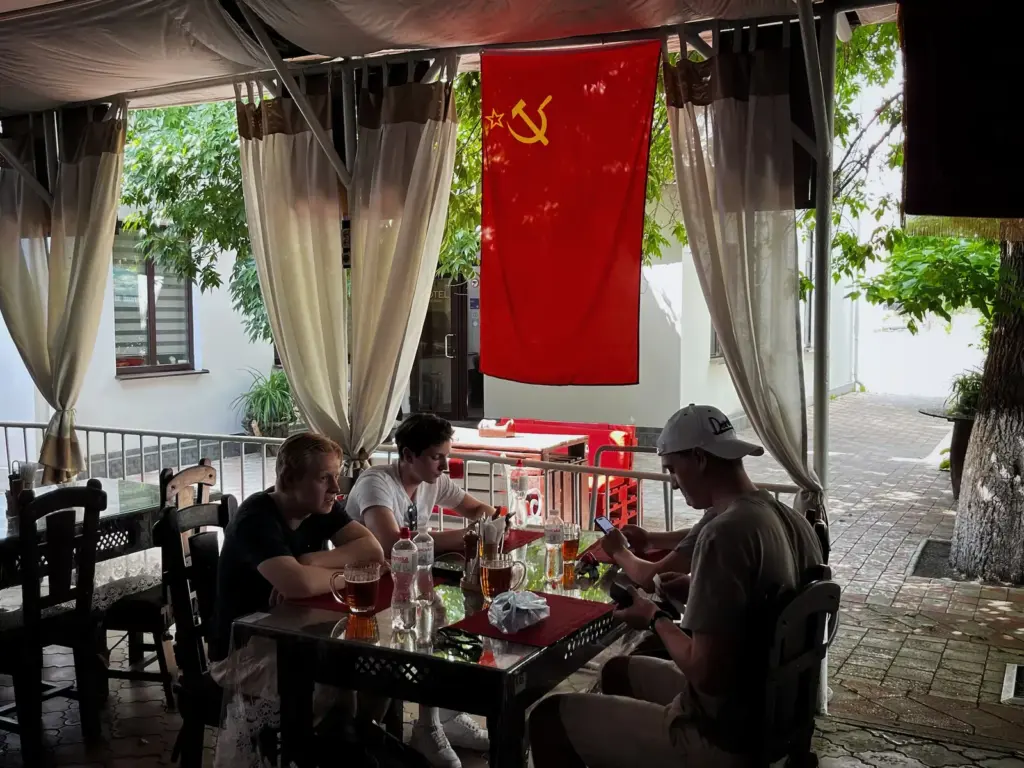
But amid the void that not being recognized as a state entails, a kind of official joke has been installed admitting the weight of that reality and even reflected in the magnets sold in souvenir shops: “I have been to a country that does not exist,” with the local flag in the background, which maintains the sickle and hammer in yellow on red.
Read more Stop the clutter with the drawer organizer set that has over 10,000 reviews on Amazon