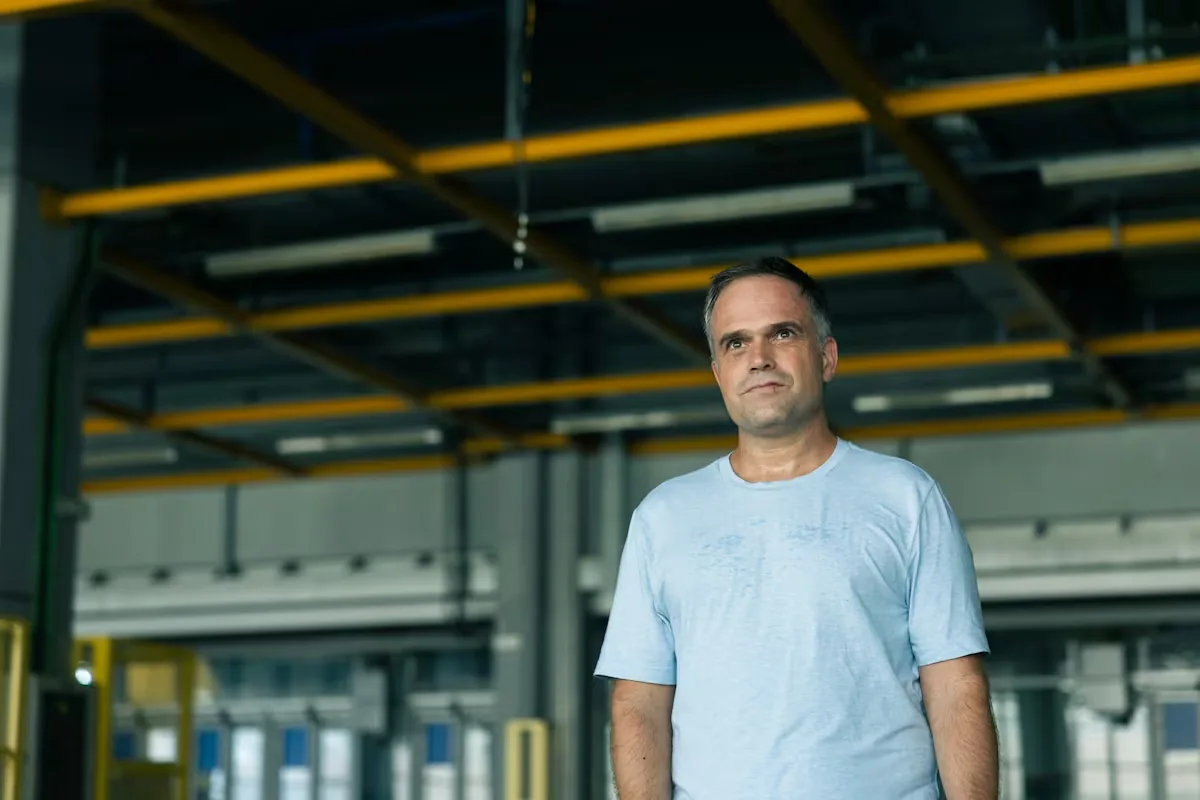
In the chapter of the book I wish healing were easier that Raúl Incertis (Valencia, 44 years old) dedicates to his first mission in Gaza, where he arrived three days before Hamas’s attack on Israel on October 7, 2023, the Spanish anesthetist confesses that the books of paleoanthropologist Juan Luis Arsuaga were the oasis where he took refuge while waiting, along with other expatriate humanitarians, to be taken out of the Strip, heavily bombed by the Israeli army in retaliation. “I hope one day I can meet him in person; it was the best possible reading to try to keep hope afloat,” he writes.
Read more Between Kremlin troops and Soviet aroma in Transnistria, the pro-Russian entelechy of Moldova
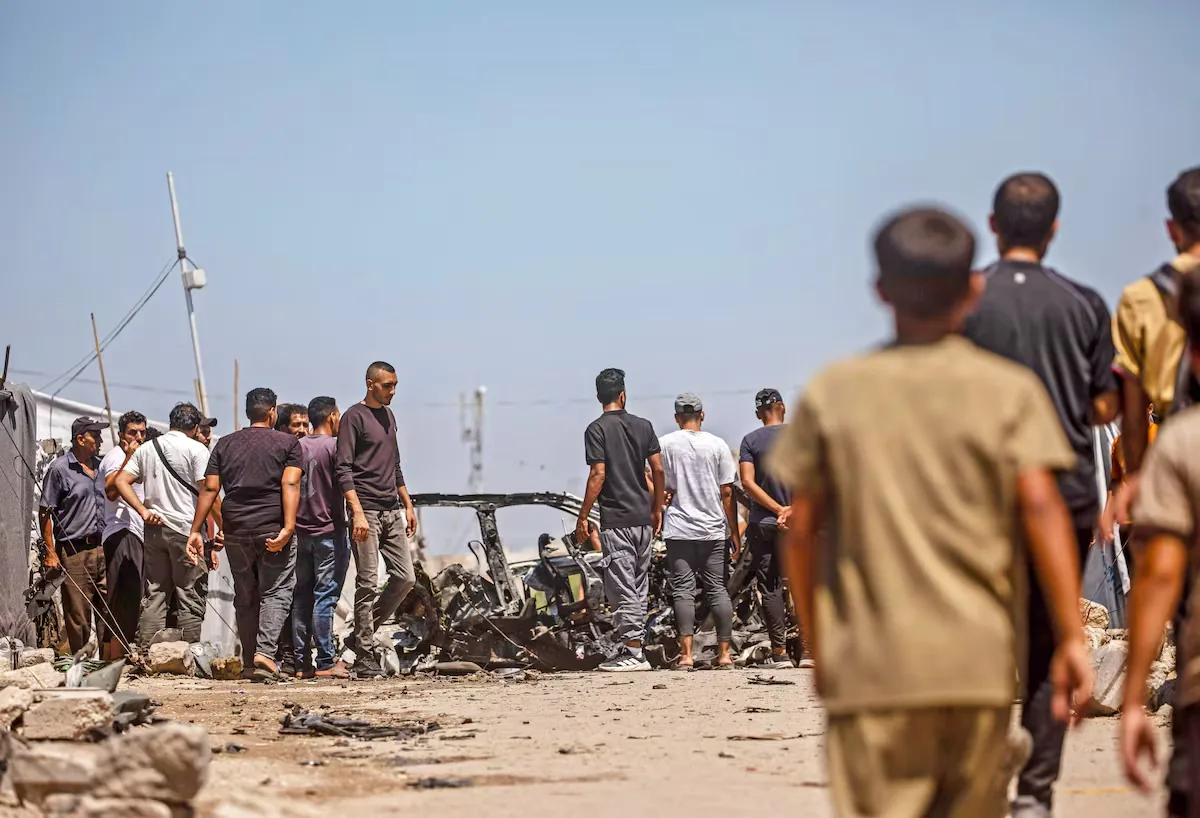
On his electronic device, he carried works by Teresa Aranguren or Mikel Ayestarán about Palestine, whom he read afterward to understand why Israel perpetrates a massacre in Gaza, of which he was a direct witness as a doctor in several hospitals during his second mission in the Strip, a year and a half after his first return, violence he documented with forensic detail, with photographs, with names, with life and death stories, and told anyone who wanted to listen.
More than a year has passed since Incertis returned from that second stay in Gaza, between April and July 2025, and he still has not met Arsuaga although they have exchanged some messages on social media. “I would like him to know that his books helped me a lot,” he wishes during a conversation in an industrial park bar in Madrid, where he travels to hold this interview a few weeks before his book is released on September 10. Perhaps now it is the doctor himself who from his pages helps others. At least, not to forget.
Question. You are a doctor, but even when you were in Gaza, you were always willing to attend to the press to tell what was happening there. Now you are releasing a book. Why is it important to tell it?
Answer. Israel does not allow journalists into Gaza. And when I arrived the second time, Almudena [Ariza, from RTVE] started asking me many questions. It is not a doctor’s job, but in the absence of journalists, I could do that witness work. This is the most blatantly unjust conflict of the 21st century. I know there have been others where many more people died than in Gaza, but the degree of sadism, impunity, or shamelessness I saw there has not been seen elsewhere.
Q. You documented with photographs, names, surnames, and clinical details the damage caused by Israeli attacks in Gaza. Those stories served for a UN report in which for the first time what was happening there was called genocide. Do you think it serves any purpose?
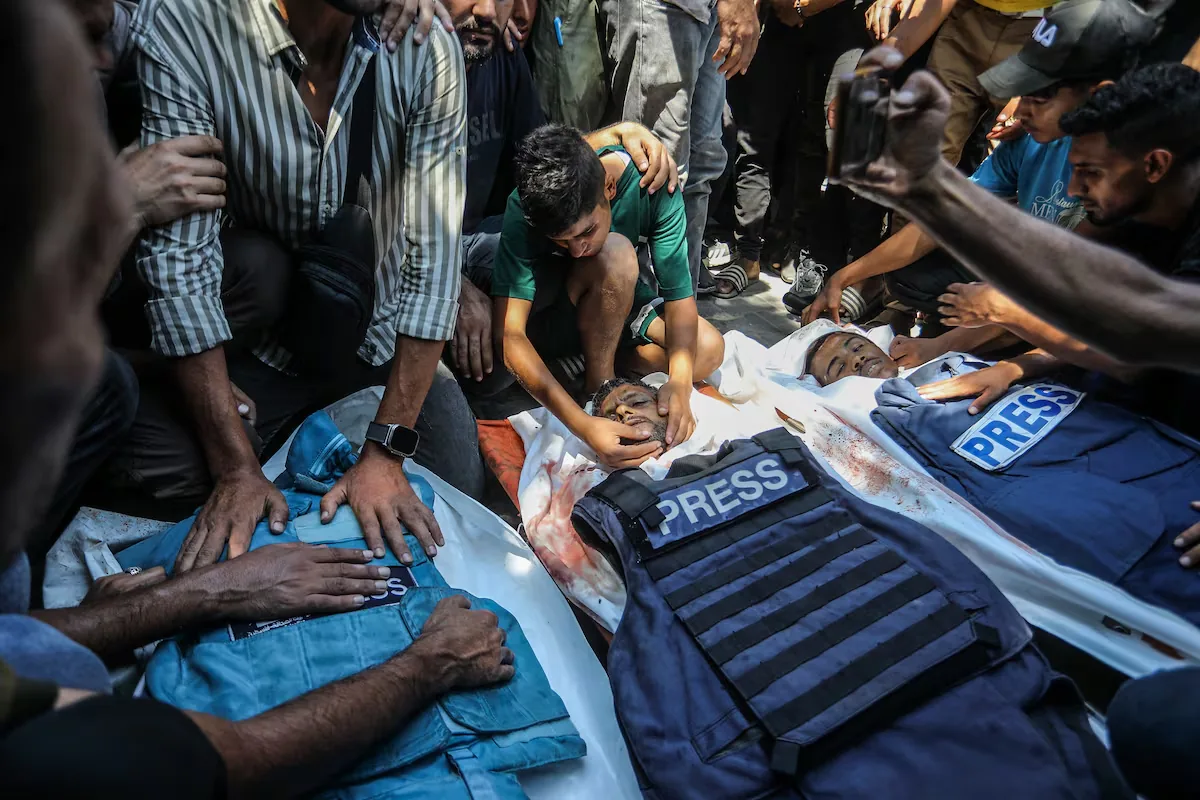
A. Yes. The world has realized that what Israel was doing is barbaric thanks to the journalists in Gaza and all the Gazans who took their mobile phones and filmed the terrorist attacks by Israel. Many have died for posting those images. I wish everything were faster, but sooner or later, the situation will change, and it will be thanks to these individual efforts. Sometimes I think that without journalists, all this could have happened and the world would know nothing.
Q. But this time, no one will be able to say they didn’t know.
A. Those who didn’t want to see will say that. It hurts me that in Spain, politicians who have responsibility, like the president of the PP or VOX, whom thousands of people listen to, do not want to see. I am not talking about the average citizen who, after all, has many difficulties to think about.
Q. What do you think about the far-right minister Ben Gvir saying that 30 or 40 people should be killed every night in Gaza?
A. It is good for the public to see what Israeli society, unfortunately, is allowing. It is horrible. All the Israelis I have spoken to have told me they did not know how the State of Israel was formed. They are not taught that in school.
Read more Putin sends his troops the relics of Prince Donskoy, a myth of his millennial war against the West
Q. What is it like?
A. As I say in the book, for me, Israelis were always the good guys in the movie. And Palestinians never appeared. I started to understand what was happening when I went to Gaza for the first time. Before, I had a very vague idea. Little by little, with the books of Teresa Aranguren or Miguel Ayestarán, people learn how the State of Israel was formed, why it does not withdraw from the occupied territories, and is violating UN resolutions. I want to think that there will be a critical mass in the future similar to what perhaps happened in South Africa at the time, which will make things change in a few years.
.
Q. In the book, you describe systematic attacks on ambulances, hospitals, and journalists. Why were they targets?
A. Regarding journalists, it is to prevent knowledge of what is happening. I always wondered how there is internet in Gaza. The answer is that Israel needs there to be a connection in the Strip to continue bombing citizens because it needs to have intelligence data from the population’s smartphones. It is the same answer to why they do not allow free international press into the Gaza Strip. And the ceasefire has been nothing more than a media strategy to make people talk less about what Israel was doing in Gaza. There was a lot of news, and they managed to stop the talk.
Q. And the healthcare workers?
A. The UN says this is genocide. The answer to the question would be that: because it is genocide. They have destroyed the hospitals. When I was there, only two of the 16 public ones were functioning. They have ended healthcare, also universities and schools. Because it is genocide.
Q. Will you return?
A. I really want to go even if only for a couple of weeks because I have friends I am in contact with every day. Although I doubt they will let me in. Now I am afraid to go to other places. I would like to focus on Gaza. Help will be needed in the coming decades and generations. Although what international doctors do is very little, I know my friends would be happy to see me, and I would be very happy to be with them. I want to put down roots in Valencia and dedicate the time I can to going to Palestine. And that’s it. I don’t want to go to other places. It’s not necessary.
Q. How do you think Gaza will come out of this war?
A. I fear that the land the Israelis have taken from Gaza since 2023 will not be returned. I wonder when reconstruction materials will start to enter. Maybe pressure should be focused there right now. All my friends, my colleagues, have been living in shacks for three years. And they should stop bombing, but they want to keep killing those they say are from Hamas.
Q. In the book, you describe many scenes of death that you say frequently come back to your memory, which one repeats the most?
A. Sanad’s, without a doubt. Through his story, people can understand that of thousands of Gazans. He is a wounded child who brushes death, but thanks to a neighbor who scoops him up and takes him to the hospital, thanks to the doctors and nurses, he manages to survive. And he goes through all the phases of post-traumatic stress, nightmares, depression. And in the end, there is a small light of hope. I also remember Asil a lot, a two-year-old girl who had a hole in her forehead through which brain material was coming out. She was the only survivor of her family, although I thought she was dead, but a month later she was operated on. She died a week later. An acronym has even been created to talk about these injured children without surviving family (WCNSF, in its English initials). I lost count of these children I treated. They arrived bombed, covered in cement dust, and bodies kept arriving, all family members. I have the face of all of them engraved in my memory.
Q. Do you think there will be justice?
A. Surely in a few decades, there will be. And I hope that in Gaza they will be governed by an entity that does not instill the idea of revenge in their heads.