



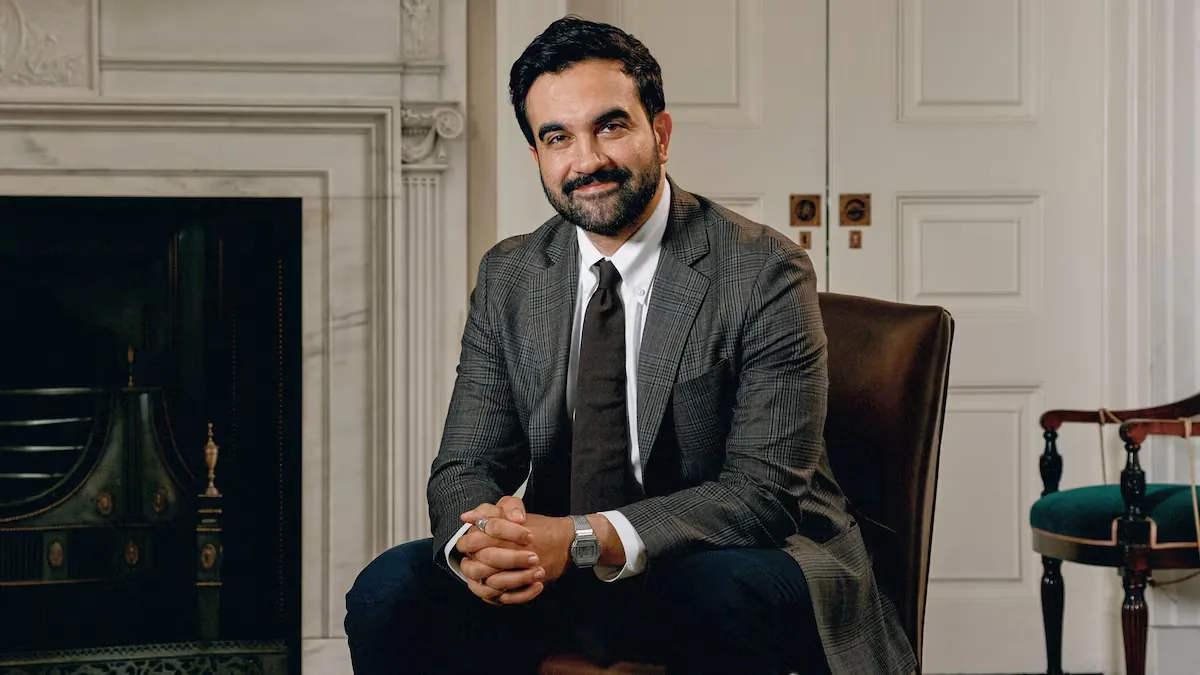
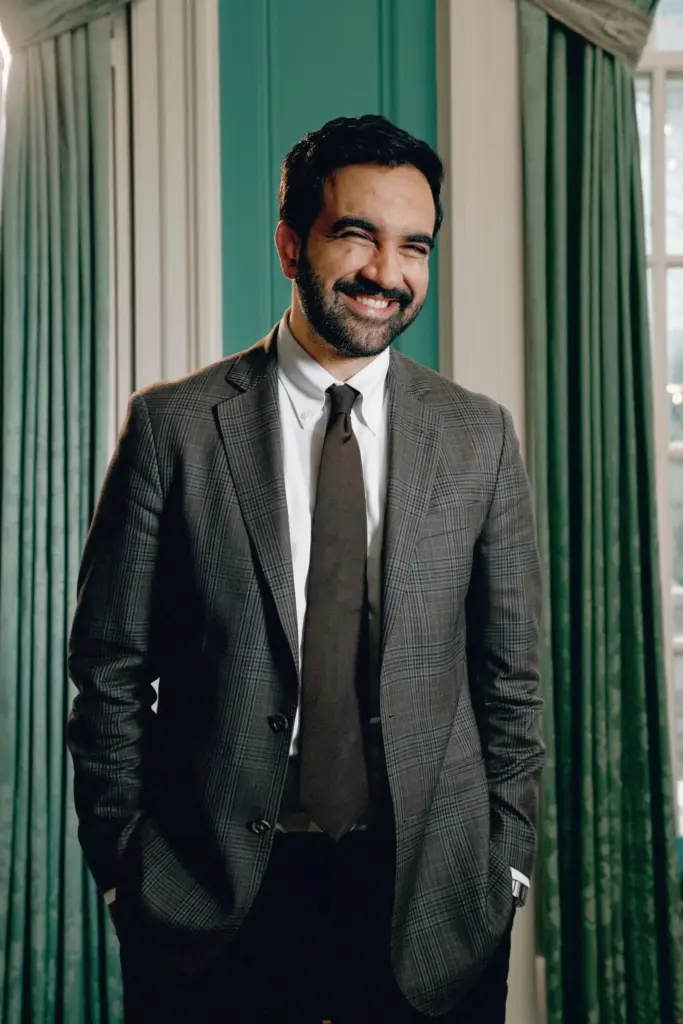
“The only thing standing between my vacation and me is you,” jokes Zohran Kwame Mamdani as he welcomes El País Semanal on a Friday afternoon. He is about to take a week off, his first break since arriving at the New York City Hall earlier this year. It will be a necessary pause. Not only because since January he has maintained a hectic pace with a public agenda packed and timed to the last second, but because the life of this 34-year-old millennial has been completely transformed in a very short time. A year ago, he lived with his wife in a one-bedroom rent-controlled apartment in Queens County that he had rented since 2018. Now he resides in a mansion built in 1799 across the East River, in Manhattan, and is one of the most influential politicians in the United States.
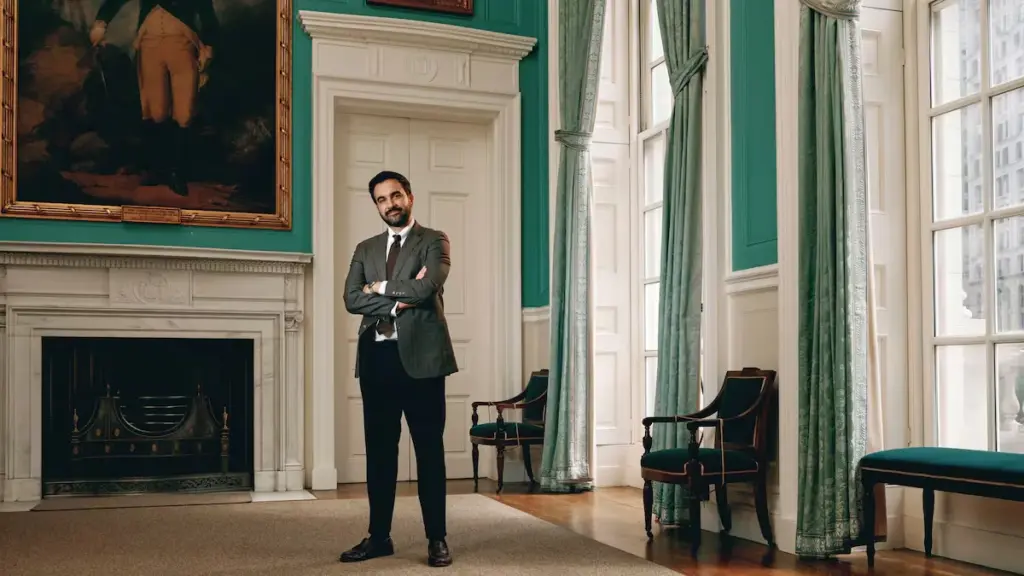
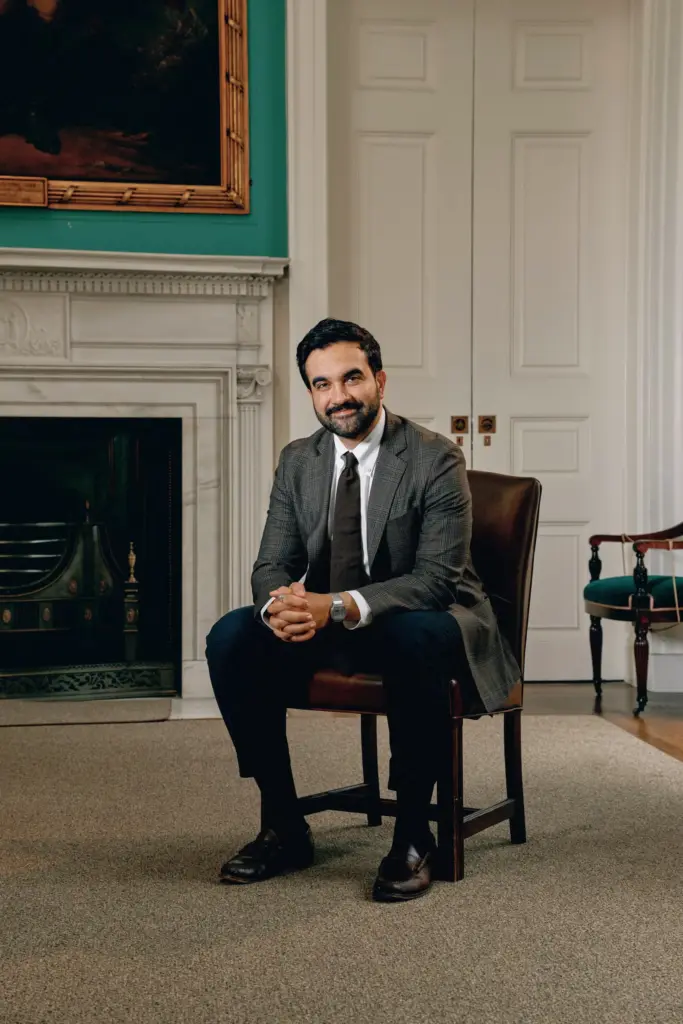
Mamdani maintains a familiar aura despite governing a city of 8.5 million people. Talking to him today, after eight months in office, is very similar to talking to the unknown person who started his campaign in 2024. He is charismatic and always smiles, something that has earned him criticism for being considered forced. He responds that his optimism is something his parents instilled in him. In the Governor’s Room of City Hall, surrounded by 18th and 19th-century portraits and with President George Washington’s desk in the background, he answers questions fluently. In his first extensive interview with a Spanish-language newspaper, the mayor avoids stepping into areas he does not want to tread, giving well-constructed answers but staying within the environment where he feels most comfortable: the need to speak to New York’s working class.
Only when asked about a personal matter does he seem to hesitate for a few seconds and enter a more vulnerable territory. Since coming to power, the media have incessantly talked about his wife, the artist and illustrator Rama Duwaji. He acknowledges that the hardest part of his new life is the hate messages he and his closest circle receive. “She is more important to me than anything else. When you work in politics, things that used to seem like clichés take on a very real meaning. When you are young, you hear politicians say that their families did not ask for this kind of life, and you don’t quite understand it. But when you live it firsthand, you realize that you chose to do this job. They didn’t. The only thing they chose was to love you. And that doesn’t mean their lives should be transformed by your decision.”
When asked if that leads him to consider politics as a temporary occupation, to retire without much delay to a more private life, there is a long silence. “I hadn’t thought about it that way,” he admits. After the pause, he adds: “I feel incredibly lucky that she is part of my life. And I will continue doing everything possible so that she can live hers as simply as possible.”
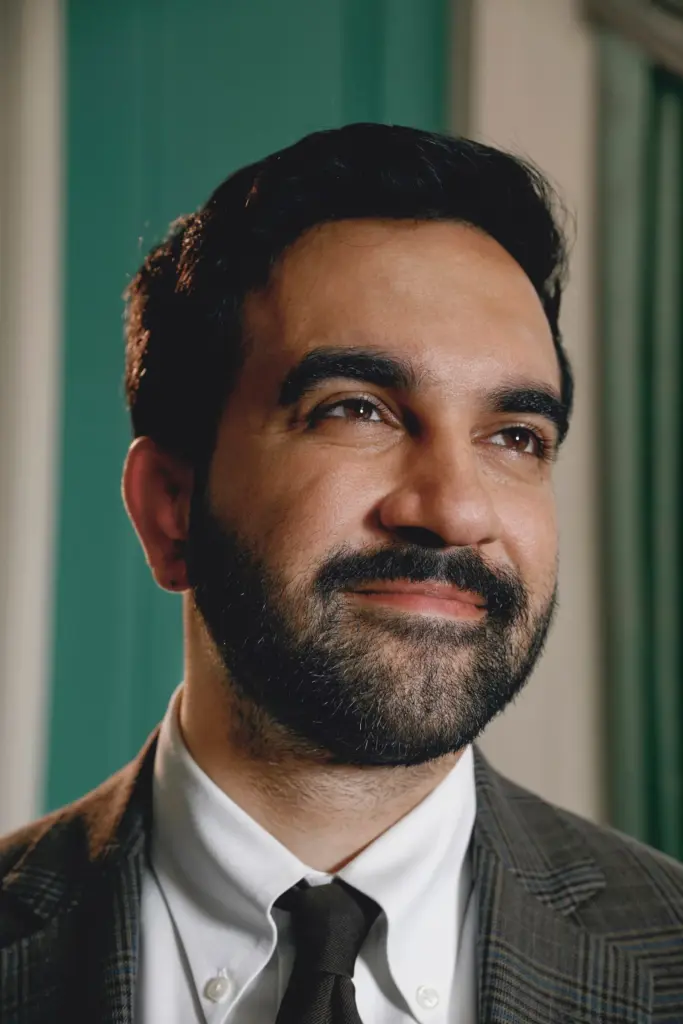
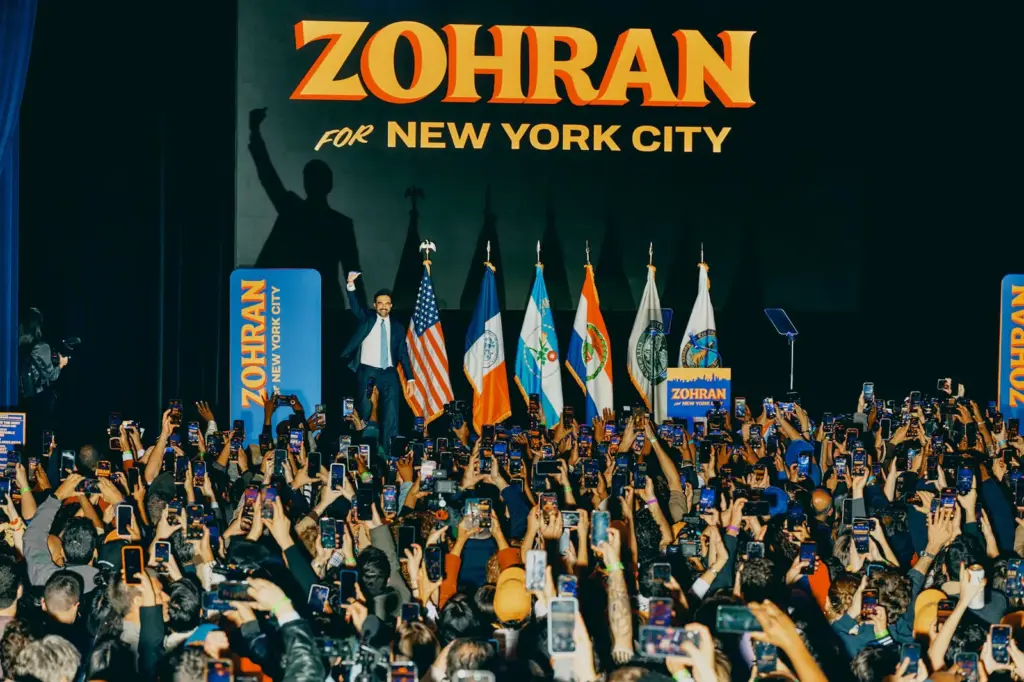
Mamdani’s rise has been meteoric: he went from being a member of the New York State Assembly, with minimal support in his mayoral run, to surprising the country by becoming the first socialist mayor of the capitalist epicenter of the planet. In Donald Trump’s birthplace, those last November elections were seen as a referendum against the Republican’s election a year earlier. And the victory of this Muslim immigrant born in Uganda who promised to be the president’s “worst nightmare” brought some light back to progressives in a country facing the abyss of a second Trump term.
Despite everything, he prefers not to define himself as “anti-Trump.” “I’ll let others label me. I don’t lack labels,” he says, aware that the president himself has called him a “communist lunatic.” He also does not seem eager to share that label with the Spanish Prime Minister, Pedro Sánchez, who on issues like defense spending or support for Palestine has led European opposition to the Republican leader. “It’s the same question rapper Tupac posed: why does there always seem to be money for war, but not for the poor? And regarding Palestine, there should be no exception when talking about universal human rights. So, on those two issues, I would align with Sánchez.”
—Don’t you feel comfortable with the anti-Trump label?
—I have been very clear that I have had a wide range of disagreements with the president. On immigration, for example. I have told him directly that ICE is an agency that operates with cruelty and inhumanity. It should be abolished. There has been much talk about how young I am, but I am older than ICE, and yet we still see people unable to imagine a future without that agency.
It is no surprise, considering his own biography, that he is especially affected by the immigration raids of the Republican administration and the unleashed U.S. Immigration Service, whose acronym —ICE— is internationally recognized, and whose agents —hooded men who chase and kill people, some of them U.S. citizens— are feared.
Born in Kampala in 1991, Mamdani’s family history is also the story of several generations of emigrants. “I am an Indian-Ugandan New Yorker. It’s the dream of mixed immigration,” he said some time ago. His father, academic Mahmood Mamdani, comes from a lineage of Indian Muslims who emigrated to Africa in the late 19th century. During Idi Amin’s dictatorship in Uganda in the 1970s, Mahmood and his family were forced into exile in refugee centers in London. His mother is the well-known Indian director Mira Nair.
Little Zohran moved to the United States in 1999 after his father obtained a teaching position at Columbia University. The current mayor of New York obtained U.S. citizenship at 26, after graduating from university. Being born abroad prevents him from aspiring to be president or vice president, but not from feeling deeply American and claiming his ideology as an important part of this country’s history. The first Muslim mayor of New York is also the one who just participated in the 25th anniversary of the jihadist attacks the city suffered on September 11, 2001. A campaign launched by some victims’ families, which reached about 100,000 signatures, had asked him not to attend, reproaching him for “hostile rhetoric” towards the shared values of the commemoration.
Trump’s immigration policy was a significant part of his campaign. In the last months of the mayoral race, the president threatened to deploy National Guard troops in New York, as he had done in other Democrat-governed cities to reinforce his anti-immigrant offensive. Mamdani rejected that threat and all others launched by the White House against New York’s immigrant communities, which represent 38% of the city’s population.
On the night of his victory, the mayor-elect addressed the president directly —“Donald Trump, I know you’re watching this, I have three words for you: turn up the volume”— and reminded him: “New York will continue to be a city of immigrants: a city built by immigrants, driven by immigrants, and, from tonight, led by an immigrant.” “Too much of this horror has become part of everyday life,” Mamdani now says about Trump’s mass deportation campaign. “The images of extrajudicial executions carried out by ICE have come to be seen as part of what that agency does. And, frankly, that reflects that it is not an anomaly in its operation, but a feature of its existence.”
“In New York,” he emphasizes, “this affects not only individuals or their families, but entire neighborhoods.” “There are neighborhoods where fewer people are seen on the street because they are afraid to leave their homes. And that terror does not only affect people without legal papers, but extends to people in any immigration situation, because they know ICE often chooses people based on race.”
Mamdani never mentions Trump by name throughout the 40-minute interview. The combative politician he was during his campaign has given way to a more pragmatic one. One of the first things he did after being elected was visit the Republican at the White House. “I am the mayor of New York. That means I have the responsibility to collaborate with anyone who has the power to improve the lives of those who consider this city their home, and that includes the president. That’s why every time I have met or spoken with him, the conversation always ends up returning to the city,” he says. That first meeting, which took place before the socialist took office, was followed by a surreal press conference, in which a journalist asked Mamdani if he still considered Trump a “fascist,” as he had previously called him. Before he could answer, the president responded for him: “You can just say yes. I don’t care,” he said, patting him on the arm.
—You haven’t been the only one to call the president “fascist.” Political scientists don’t agree on how to label his ideology. But aside from names, do you think he poses a threat to U.S. democracy?
—When I think about threats to democracy, I return to the words of Mayor Fiorello La Guardia and President Franklin Delano Roosevelt about the disappearance of democracy in Europe. The idea was that democracy didn’t die because people got tired of it as an ideal. It died because people were exhausted from not being able to feed their families. We often talk about democracy as a value. But what good is that value if people can’t meet their basic needs? Many people work in New York, but they can’t afford to live here. For me, that represents a threat to democracy as great as any other, because democracy must have real meaning for working people.
The working class. The mayor will return to it again and again during the interview. He has defined it as those who strive for a dignified life and do not achieve it. That message was the cornerstone of his campaign and remains so now that he is in City Hall. Despite some stumbles, Mamdani has managed to advance several campaign promises, focused on the cost of living in one of the most expensive cities in the world. His main victory has been freezing the rent of nearly a million rent-controlled homes, where more than two million people live.
His trajectory has inspired other candidates to run across the country in the legislative elections next November 3, when control of Congress is at stake. Several of them have come from Mamdani’s own formation, the Democratic Socialists of America, and, like him, have succeeded in the Democratic Party primaries, driven by young voters who have shown that their parents’ and grandparents’ fear of words like “socialism” does not belong to their generation.
Many of these young people cite Bernie Sanders as a source of inspiration. The New York-born senator ran in 2016 to face Trump in the first elections that brought the magnate to power but lost to Hillary Clinton. That battle left a wound that still stings in the Democratic Party between progressives and the establishment. It was a pivotal moment for Mamdani. At just 24, he realized he also belonged to American politics. “Sanders showed me that my political vision had a place in the city I consider my home. That I didn’t have to give up any part of myself to participate in politics. In 2016, I believed in the promise that the future could be different. The wonderful thing about these kinds of campaigns is that they lay the groundwork for many more people to believe they can also participate. That candidacy changed my life. I hope the work we do today from City Hall can have a similar impact on others,” he says, although he probably knows it already has.
Claire Valdez met the now mayor in 2023, when she was considering running for the New York Assembly. At that time, Mamdani was part of the state legislature and they moved in the same activist circles. “We talked a lot about the possibility of using our positions to mobilize outside the Assembly. It’s not just about passing laws, but about using these positions to organize the working class. And that was, for me, a source of inspiration,” she recalls in a phone conversation. Two years later, in 2025, Valdez arrived in Albany, the seat of power in New York State. There, for the second time, Mamdani inspired her to take another step in politics, this time to the House of Representatives in Washington. Driven by what her colleague and friend had achieved with his campaign of 100,000 volunteers and knowing they shared “a vision” and “a real interest in democratic socialism,” Valdez decided to run in the Democratic primaries of her district. She won, as did the other two congressional candidates backed by Mamdani. In the midterm elections next November 3, the three will run with every chance of success against their Republican rivals. They will do so after carrying out grassroots campaigns. They have rejected private donations that dominate U.S. politics. And they prioritize knocking on hundreds of thousands of doors. These victories have consolidated what has come to be called the Mamdani effect. In this election cycle, the mayor has been described as a kingmaker, “maker of kings.”
—Another label: kingmaker. What do you think of it? Trump calls himself king.
—There is only one king in New York, and that is Jalen Brunson [the Knicks captain] —he says laughing.
However, the gaze goes far beyond the November elections. All roads lead to 2028, when, if the Constitution is respected, Trump will have to leave the White House. The most important question Democrats still have to answer is who will face the Republican Party. And that answer must be clarified as soon as possible. The problem is that, to get there, the party must first overcome an ideological battle that has been brewing for a decade.
If Mamdani’s victory and those of close candidates in places like Colorado, Minnesota, or Michigan are any indication, it seems progressives are gaining ground. For the mayor, that should influence the choice of a leftist candidate in the next presidential elections. “2028 should reflect where we are today,” he states. When asked if that means support for Alexandria Ocasio-Cortez to run for president, he simply replies: “Congresswoman Ocasio-Cortez would be good in any office she runs for. I will be excited to see any decision she may make.” He does specify the message he believes Democratic voters are sending: “They are hungry for different politics, politics that put workers at the center. In 2028, we will have to answer a question: where will the party go after this government?”
—And what is the answer to that question?
—We must not only oppose this administration but also defend something. And that something is the working class. What should define the party are clear ways to materially improve their lives. That was the Democratic Party in Franklin Delano Roosevelt’s time, with ideas like the four freedoms: from want, from fear, of worship, and of expression. Today some would say they are unrealistic ideals, but they were the backbone of a party that mobilized the whole country at a time of enormous inequality, very similar to today. I speak as mayor of the richest city in the richest country in history, where one in four people lives in poverty.
—You often cite Roosevelt’s legacy. Measures you defend, like universal healthcare, do they propose a more European United States, more like the social-democratic model that triumphed in Europe after World War II?
—Actually, it would be a very American United States. I invite people to look at our own history. Public programs like Social Security were accused at the time of trying to Sovietize the economy. Many of the things we now consider normal were demonized when first proposed, very similar to what we see today. I refuse to accept the idea that this kind of policy would make our country stop being what it is.
—But, going back to the 2028 elections, how do you convince a country that voted twice for Trump to now support the Democrats, a formation with different and sometimes contradictory positions, like the one you represent against the party establishment?
—By fulfilling our promises. In New York, we have spent eight months showing what politics that puts workers at the center looks like. This means public daycare, faster buses, creating a network that allows distributing cheaper food. For too long, politics has seemed like a pastime only some can afford, when in reality it should be a tool to help those struggling in this country have a better life.
—Aren’t you afraid that words like “socialism” or “communism” will alienate part of the electorate? Republicans are already using them to argue that you are the country’s greatest danger.
—Republicans have called Democrats socialists and communists long before I can remember. I’m honest: yes, I am a socialist. And what I have discovered is that most New Yorkers don’t ask me how I define my politics, but whether there is space for them within it. It has always been debated what socialism would look like. We have shown in these months what it is like: it looks like a city that works for those who build it every day.
—Since returning to power, Trump is enriching himself at a dizzying speed, using the White House for it. How has it come to that level of corruption?
—When people see things like that, it’s no surprise they lose faith in politics. They conclude that politics is about promoting oneself, rather than solidarity. The only way to regain their trust is to offer a completely different way of doing politics. That’s why, here in New York, that has been our goal: to show that Washington doesn’t have to represent everything the United States can be.
In New York, there is a feeling that this is a moment of collective joy. Enjoyment seems to have returned to a city deeply marked by the coronavirus pandemic and the housing crisis. This summer was euphoric: the Knicks won their first NBA championship in 53 years and celebrated with a historic parade attended by more than two million people. Eight World Cup matches were played in the city, including the final between Spain and Argentina.
While Trump’s popularity falls, polls show the mayor’s is rising. In August, 69% of New Yorkers approved of his management, 20 points more than at the beginning of the year. It seems as if in these eight months the mayor is living a kind of extended honeymoon that could end at any moment. Although he prefers not to enter that debate: “I will let New Yorkers judge how we are doing. This is not an exercise in self-satisfaction; it has to be an effort to improve the working class’s life.”
Mamdani has many supporters. But also many detractors. From the right, they criticize that measures like the tax on billionaire mansions or public supermarkets with affordable prices will end up impoverishing the city. Also, for his defense of the Palestinian people, he has called for the arrest of Israeli Prime Minister Benjamin Netanyahu, whom he has called a war criminal and architect of a “horrible genocide” in Gaza.
There are voices accusing him of fueling a certain anti-Semitism and endangering coexistence in the city with the largest Jewish population in the world outside Israel. He defends himself: “My responsibility is to keep Jewish New Yorkers safe and ensure that the goal is not only their security but also to celebrate and value Jewish life.” But he maintains his stance: “It is perfectly possible to do that while making honest criticisms about Netanyahu’s conduct, making clear that the responsibility for his actions lies solely with him, and not with the Jewish New Yorkers who live here.” And he adds: “The rejection of the prime minister’s actions extends among many different types of New Yorkers, including numerous Jews.”
On the other hand, certain sectors of the left reproach him for keeping intact bodies like the militarized New York police. One of the criticisms journalist Theodore Hamm makes, author of the biography Meet Mayor Mamdani, is that after joining those who called for defunding the police, once in power, he kept Jessica Tisch, the person responsible for the department in the previous administration.
When asked for a trait that defines Mamdani, Hamm, who followed him throughout the campaign, recalls a scene he saw in those months, when at an event a man approached to shout “anti-Semite” and other insults. “I was impressed that, amid that chaos, Mamdani sat calmly while smiling and talking with volunteers,” he recalls. Hamm was surprised by the then mayoral candidate’s composure amid the tension. And he sees it as an example that the young politician was already ready for battle, and how he would face crises from then on: “Resisting attacks, maintaining composure and good spirits, and sticking to his message.”
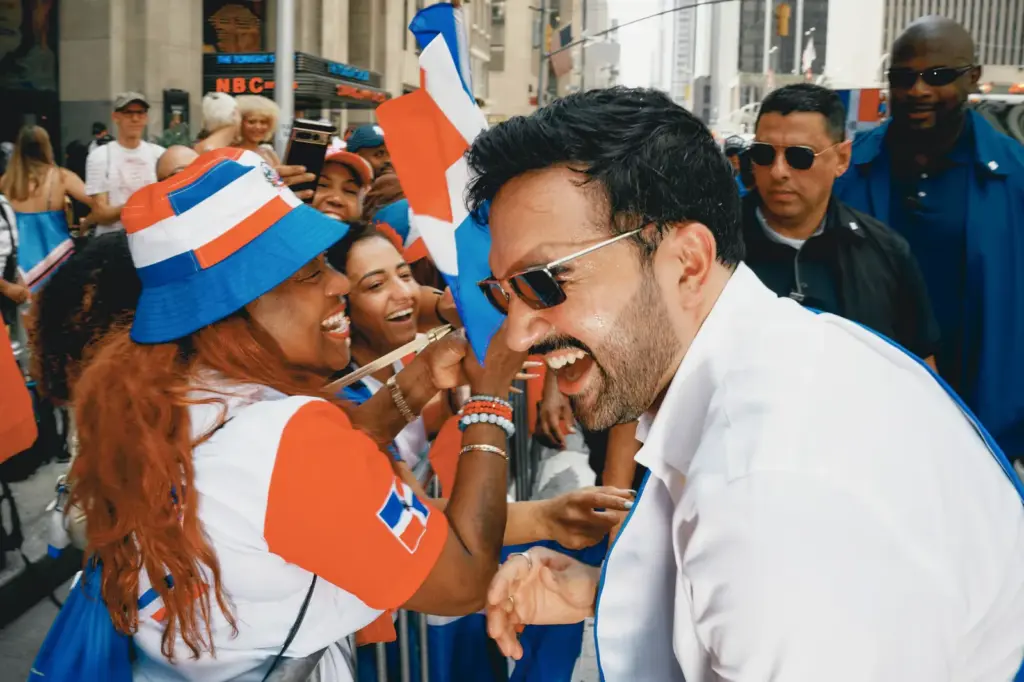
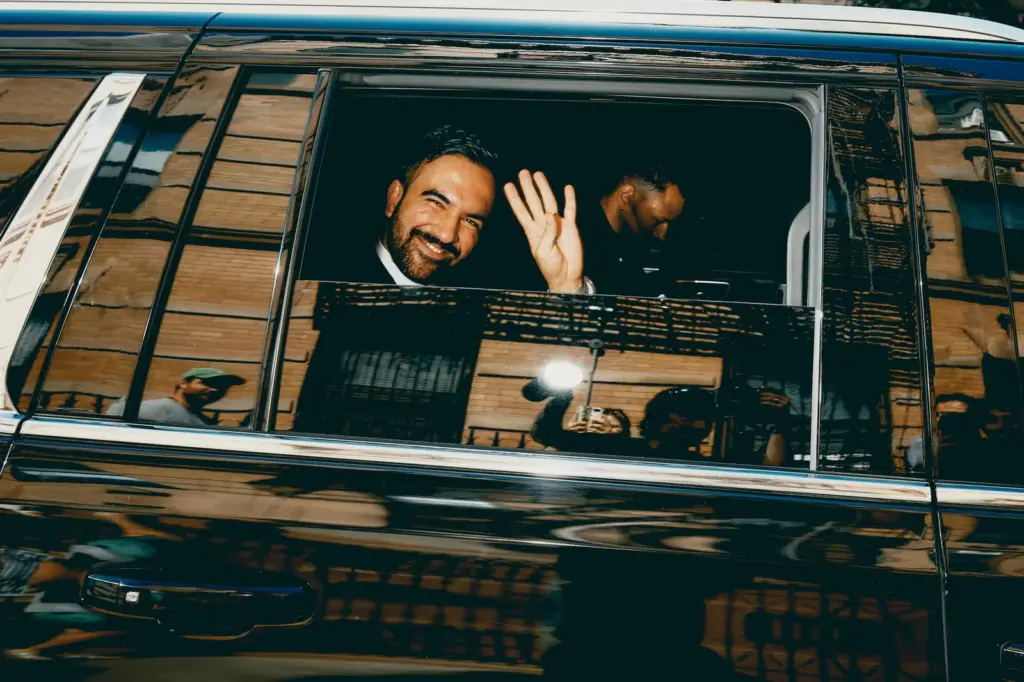
Interacting with his voters is perhaps the area where Mamdani seems most comfortable and relaxed. While he appears shy or even reserved before the press (during the photo session for El País Semanal he remained silent), on the city streets is where he seems most alive. Whether at the Puerto Rican and Dominican community parades he attended this summer, or simply while riding his bike home. Until recently, he did so without a helmet. But after criticism for lack of safety, he recorded a video on social media announcing he was heeding the messages. “You’re right. I have to do better,” he said with the Bee Gees’ Stayin’ Alive playing in the background while pulling a helmet out of a cardboard box with a sign that said: “For the mayor.”
His social media continue to be his main way of interacting. With his New York voters but also with people from anywhere in the United States or abroad. He has more than 30 million followers and shares videos with a modern and well-crafted language, in which one day he can speak Mandarin and on others film himself at the entrance of the $238 million penthouse of businessman Ken Griffin to announce a real estate tax on the super-rich.
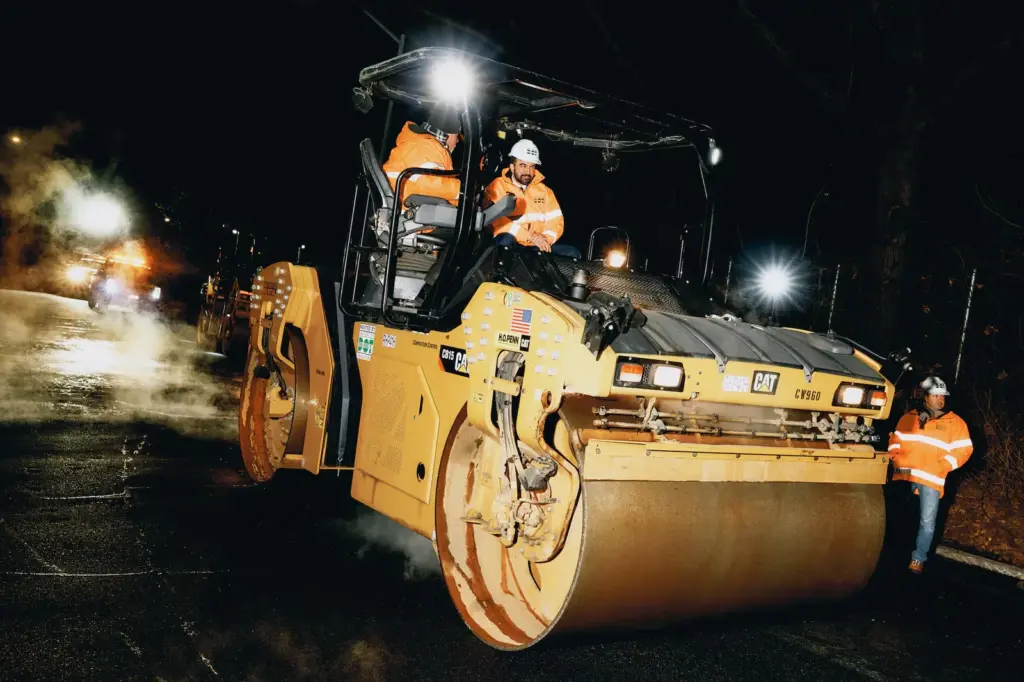
A recent trend reflects his social media team’s mastery. A few weeks ago, New Yorkers began posting videos about everyday problems, tagging the mayor and asking for help: from deteriorated streets to missing drinking fountains. Some of these complaints began to receive attention and were addressed by City Hall. In a video that went viral, a young man pointed out two potholes before going to work and asked Mamdani to take care of them. When he returned home that same afternoon, the holes had already been repaired.
Mamdani also has a WhatsApp channel to connect with Spanish-speaking New Yorkers, launched this summer under the name El chisme oficial de NYC. In it, he sends all kinds of information so the Latino community stays informed about what is happening in his administration. All in their own language. He even sends some voice messages in Spanish. Although before El País Semanal, the mayor does not dare to speak in Spanish. He apologizes and acknowledges (in English): “I still have a way to go to achieve fluency.”
Read more Real Madrid does not forgive a slip-up against Rayo Vallecano