








The Ministry of Health sent a letter to the Community of Madrid this Tuesday asking it to clarify whether the manipulation of waiting lists involving changing the priority of patients, which EL PAÍS uncovered at the Ramón y Cajal Hospital, is a widespread practice in the region’s public healthcare system.
Read more Mexico authorizes the entry of 139 United States military personnel for training operations
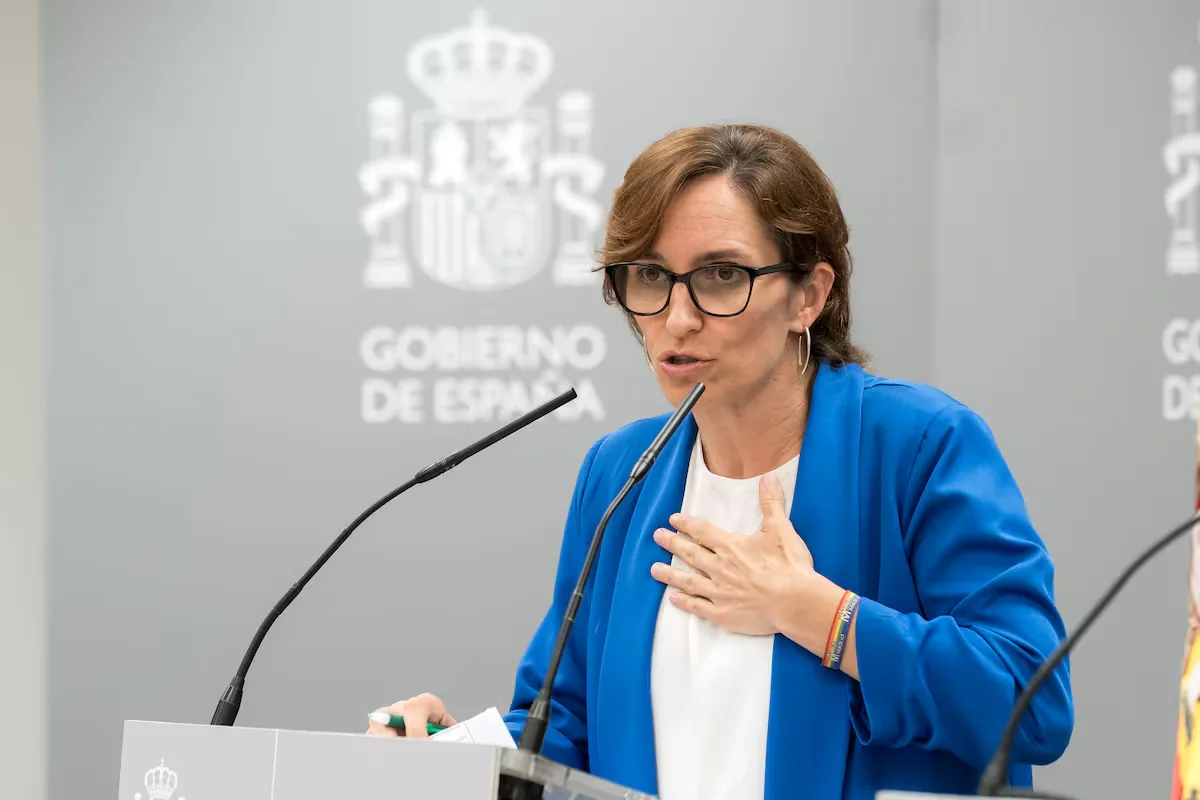
In a letter sent to Fátima Matute, Madrid’s Health Minister, the minister, Mónica García, requests “information about what happened, its extent, possible replication in other centers, as well as the measures taken to resolve it,” according to the document accessed by this newspaper.
Additionally, it “requests guarantees regarding the performance by the Community of Madrid’s Health Department of control and supervision tasks of the waiting lists, as well as regarding the accuracy of the data sent by said department to the Ministry of Health within the standardized procedures of the National Health System Waiting List Information System (SISLE-SNS).”
What EL PAÍS revealed is that between February 28 and March 14 of last year, the priority of 57 patients on the surgical waiting list of the Orthopedic Surgery and Traumatology service at Ramón y Cajal changed from preferential (supposedly to be operated on within 90 days) to normal (for which a 180-day period is established).
This classification is a hospital label to operate earlier on those who need it most and was changed without assessing the patients and without considering their severity. They were urgently displaced so that the hospital could show the health department and the affected patients themselves that they were operated on within the appropriate timeframe, allowing it to meet productivity goals.
The alteration was ordered by two hospital officials: the head of that Traumatology service, Basilio José de la Torre Escuredo, and the hospital’s medical director, Rafael Martínez Fernández, according to documents accessed by EL PAÍS.
This practice is very different from the usual complaints of manipulating waiting lists, which involve altering how the days a person has to wait to be operated on are counted. In those cases, the falsification occurs afterward: the patient does not suffer a change in priority, they have to wait the same, only the official statistics reflect that reality in a distorted way.
In the case of Ramón y Cajal, the priority change did alter the timing of when patients received the operation. By moving from preferential to normal, their surgery was delayed, with the consequent harm to the patient. However, this change had no effect on the accounting of waiting lists that compare the performance of autonomous communities, which counts how many patients are waiting and the average time until they are operated on, not the severity or urgency of the surgery. According to several hospital doctors, the changes were made behind the backs of the surgeons responsible for the operations.
As far as is known, the Ramón y Cajal case is isolated and affects very specific patients. But the Ministry of Health wants to investigate whether these practices have gone further and may have affected more users.
The minister, Mónica García, acknowledged today on the social network X that manipulations of waiting lists “are neither new nor penalized.” Her department has been preparing a Royal Decree for months to change the measurement system to provide transparency and traceability, a regulation that was overturned in July by the autonomous communities.
It was a modification that did not exactly affect cases like Ramón y Cajal’s (a classification change prior to surgery), but rather concerned subsequent accounting. It aimed for the national statistics to reflect the time from when a patient has a condition and requests an appointment with their primary care doctor until they are discharged.
What happens today is that waiting lists are counted separately: there is no traceability. First, the user requests an appointment in Primary Care, whose delays are not even uniformly accounted for across the country. Then they are referred to a specialist, which statistics do measure. Usually, some tests are requested, whose accounting is not standardized. They return to the specialist who, if necessary, refers them to surgery, which is also measured separately.
Health intends to bring the Royal Decree back to the Interterritorial Council of the National Health System to try to approve it before the legislature ends and change a system that has been in place for decades but is unable to reliably measure the system’s performance.
Read more Lamine Yamal and the numbers on the way to the Ballon d’Or