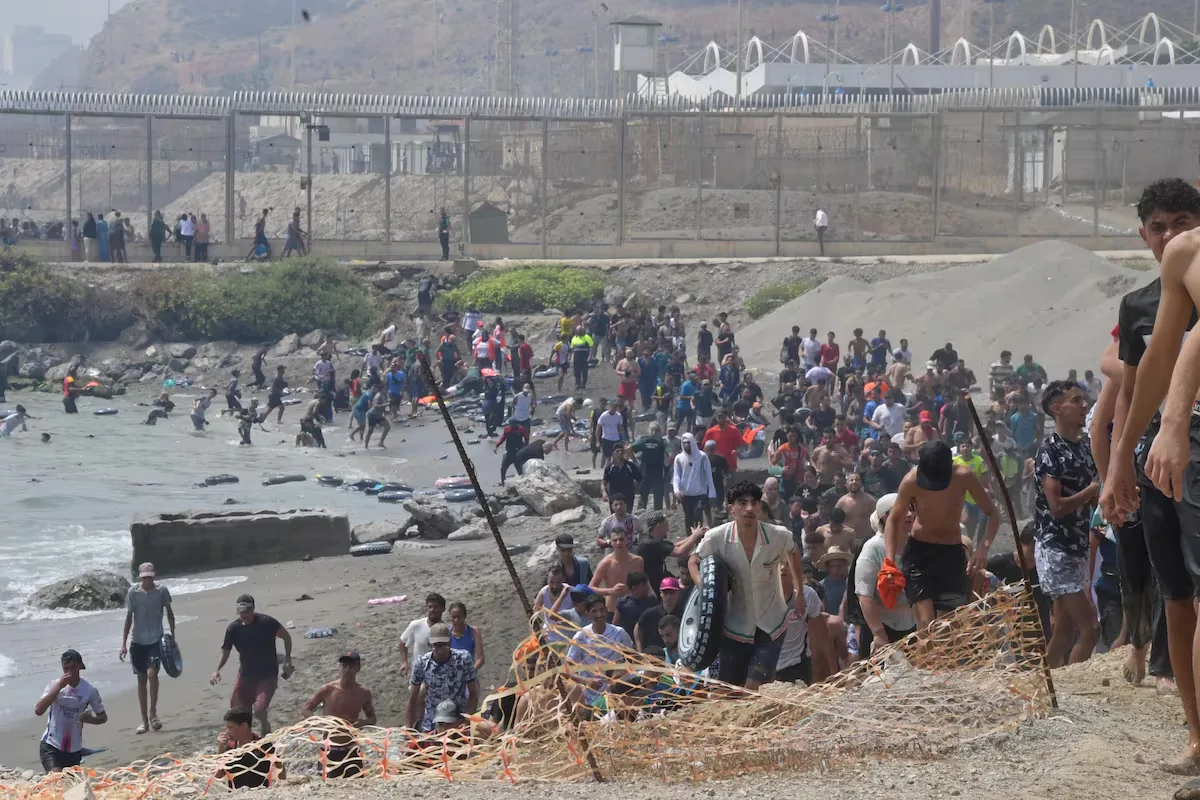









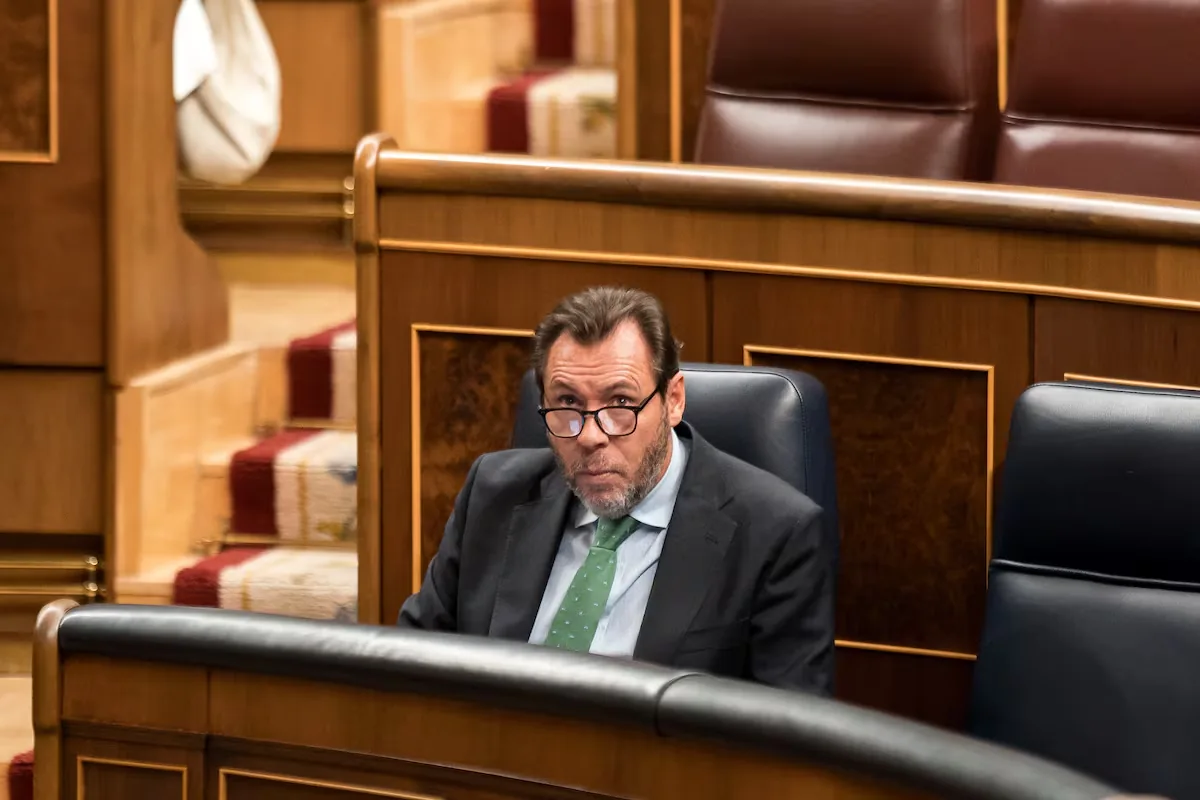
“Ceuta doesn’t matter to them at all.” “They should be ashamed of themselves for putting obstacles in the way.” With these harsh words, the Minister of Transport, Óscar Puente, denounced what he considers a campaign orchestrated against the Government to, in his view, prolong the crisis in Ceuta following the massive entry of migrants. “The national Government is fighting against a bunch of agents whose goal is for this not to be resolved, that is, what they want is for this to fester,” he criticized after the National Court halted the camp at the Ceuta port that was planned to house migrants still on the streets of the autonomous city, also referring to the PP’s refusal to transfer minors to the Peninsula. In his opinion, it is “the modus operandi usual of the Popular Party whenever there is a crisis.”
In an interview on La 1, the minister first reproached that the camps installed at the Port of Ceuta “are already finished” and that the transfer of “about 1,800 migrants” was to take place this very Thursday. With this, Puente expressed his surprise at the National Court’s decision to temporarily halt the installation following an appeal filed by the Unified Police Union (SUP) requesting the immediate suspension of this operational solution “until the conditions of port compatibility, protection, emergencies, and occupational risk prevention are verified.”
Despite the criticism, the head of Transport and Sustainable Mobility stated his intention to be “cautious” and asked the magistrates of the National Court to rule “as soon as possible.” “I don’t think I am suspected of not speaking clearly, especially on matters related to justice, but in this case, justice has not yet decided.” At the same time, he assured that it is no coincidence that the judicial decision was made just hours before the migrants’ transfer. “We don’t know the content of the SUP’s document, but it probably informs the National Court that the transfer will take place within 24 hours, hence the decision to halt everything until they decide on the urgent precautionary measures,” he detailed.
During the interview, Puente wanted to emphasize that the use of the Port of Ceuta was agreed upon with the autonomous city’s Executive. “The Ceuta Government does not make a rushed decision, but one with full knowledge of the characteristics of the two plots,” he assured. Initially, the port area was ruled out during negotiations, but after the proposal to use sports centers to accommodate migrants—“which were discarded because the Ceuta Government claimed they disrupted the lives of Ceutans,” Puente recalls—the option to set up a camp at the port was resumed, and this decision was validated by President Juan Jesús Vivas. Despite everything and facing new resistance from Vivas, the Government ended up taking control of the port—controlled by the autonomous city—and authorized the Ministry of Migrations to install the tents.
Criticism of the PP and the judiciary
“Where is the attitude of the Ceuta Government in facilitating that we find some place to do what we have to do? Where are the presidents of the autonomous communities who say, listen, I will take in 50 minors, one less problem for Ceuta?” The Minister of Transport also attacked the PP’s rejection of transferring minors to the Peninsula and criticized that their support for Ceuta is “lip service,” “for show,” “with chest-beating typical of the most repugnant hypocrisy, because, I insist, in this case, the drama is very great.”
Regarding his criticism of the judges, whom he also targeted during the interview, Puente defended the possibility of evaluating judicial decisions. “The Judiciary, through its highest representative and some associations, intends to place itself in a kind of separate world, completely immune to any criticism. Apparently, judicial rulings cannot be criticized or what our eyes and ears convey expressed. It seems they want to be a separate power, a kind of caste, and I do not agree with that.”
The minister reaffirmed that there are judicial decisions, without specifying which, that “can be brought before the courts” and went a step further by stating that it will be the Spanish people who will have to decide in elections if they want judges to govern Spain. “This is resolved when voting takes place. It will be resolved at the polls. And there, one of the decisions citizens will have to make is who governs this country.”