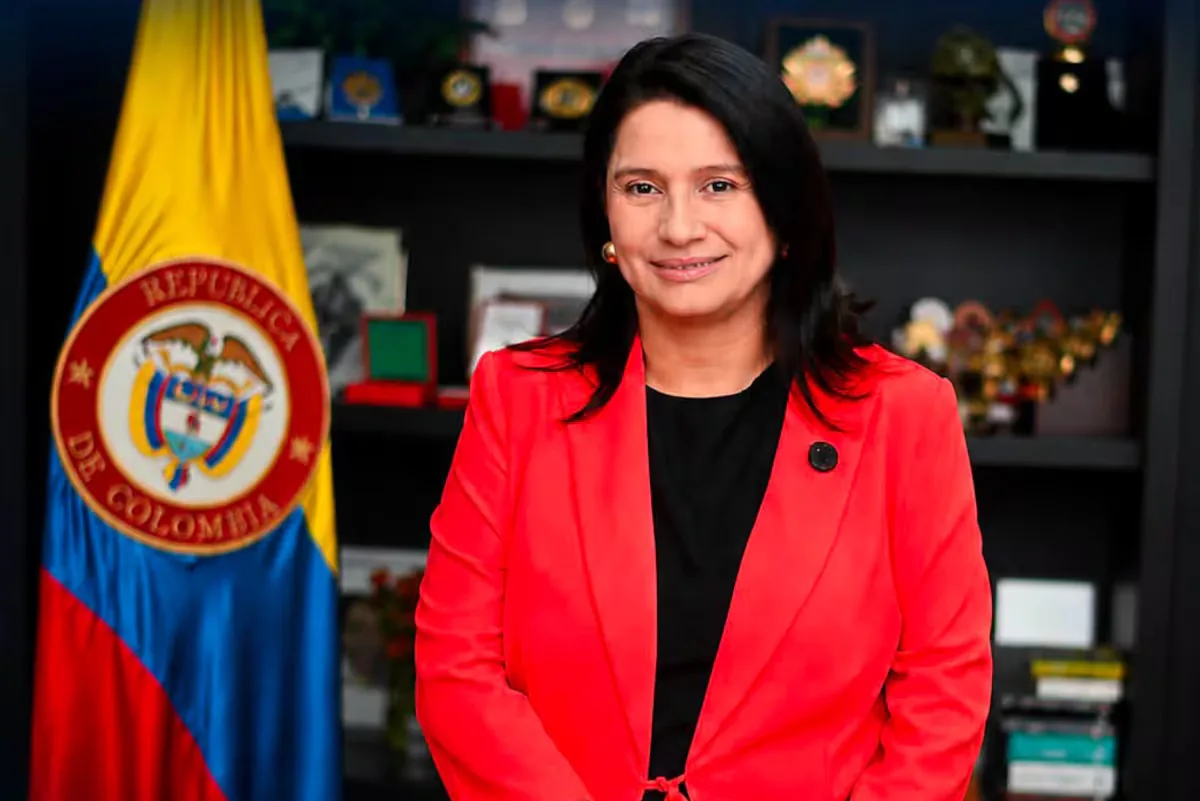









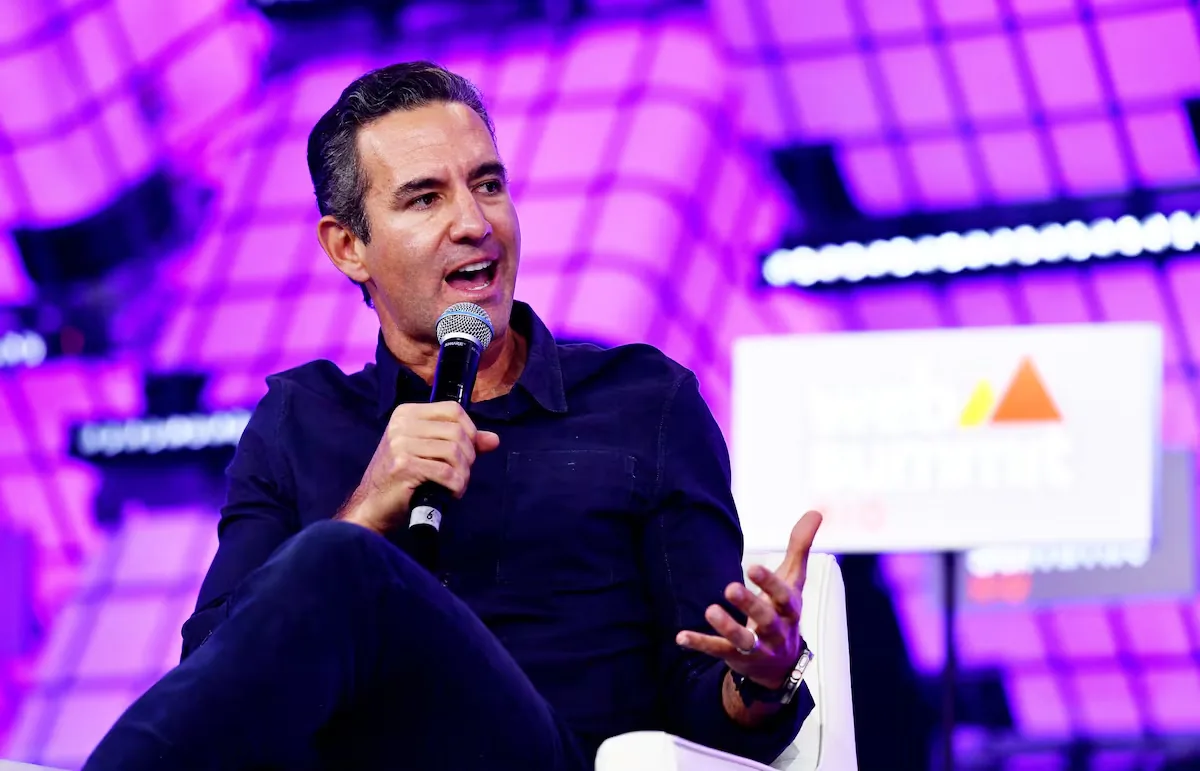
The Government of Abelardo de la Espriella has hired banker David Vélez (Medellín, 44 years old) to lead the “revolution” of AI in Colombia. The paisa is known for being the CEO of the Brazilian bank Nubank, and also a member of the board of directors of OpenAI, the developer of ChatGPT. Vélez will be the “principal advisor” to the Executive, a position without salary, as announced this Friday by De la Espriella on X after a meeting of more than three hours at the presidential headquarters in Barranquilla. In the announcement, the president asked the banker for help to build a “smaller, efficient, and modern” State, transform education, and use technology so that social policies reach “exactly those who need them.” The goal, he says, is for Colombia to be the first Latin American country “native in artificial intelligence.”
Read more ONCE Big Coupon: check the draw for Friday, September 18
The president said that Vélez and his team will present a project to make it state policy, without detailing deadlines or costs. The announcement closes a week of contacts in Barranquilla, where the Latam Fintech Market is held, the annual meeting of the fintech industry, that is, companies that offer financial services with technology, such as digital wallets, online credits, or payments. It is organized by the Colombia Fintech guild, which groups more than 360 companies, and whose president is Gabriel Santos, son of former vice president Francisco Santos Calderón.
For more than three hours I held a meeting, at the presidential headquarters in Barranquilla, with a Colombian who fills us with pride: David Vélez, founder of Nubank, who will be our principal advisor ad honorem to lead the revolution of artificial intelligence in… pic.twitter.com/lVveQC3Hr0
— Abelardo De La Espriella (@ABDELAESPRIELLA) September 18, 2026
At that forum, Vice President José Manuel Restrepo met with Vélez to talk about training young people in AI and modernizing the State with that technology. There, Vélez called to accelerate Open Finance, the system that allows financial entities to share their clients’ data with others, with user authorization. A decree made it mandatory for supervised entities and the Financial Superintendency of Colombia, the local regulator, must publish the standards schedule no later than October 8.
The CEO of Nubank also said they plan to invest about 5 trillion pesos (more than 1.5 billion dollars at the exchange rate) in Colombia during the 2026-2030 four-year period. The money would go to four fronts: technology, data and AI; product launches; team expansion and operation; and financial solidity. With 5 million clients and more than 11 trillion pesos in deposits (3.49 billion dollars), Nu is among the five largest companies in the country in that category. Its goal is to become “one of the main financial institutions in the country,” he said.
Read more The Canary Island of La Palma, ruled out to host the Thirty Meter Telescope
Since July, Vélez has also been on the board of directors of OpenAI, the American company that owns the famous AI model ChatGPT, and his bank uses technology developed with that company, of which Sam Altman is CEO. Nu Colombia is supervised by the Financial Superintendency.
The announcement comes amid weeks of alarm within the sector. At the beginning of September, Jacob Coxon, a researcher who worked at OpenAI and Anthropic (the direct competitor), resigned and wrote that those building AI believe it could “kill us all” before the decade ends. Evan Hubinger, head of alignment science at Anthropic, supported the call and estimated the probability of extinction in a decade at more than 10%. This Wednesday, Geoffrey Hinton, Nobel Prize in Physics, said after a closed session with US legislators that Congress has “perhaps a year” to put safeguards in place. OpenAI acknowledged in July that agents of its models, in an internal test, compromised the infrastructure of Hugging Face. President Donald Trump, however, has called all alarm statements a “hoax.”
Colombia does not have a comprehensive artificial intelligence law. It has a policy, CONPES 4144 of February 2025, which sets six axes, including governance, risk mitigation, and adoption in public entities. It assigns tasks and budget to government entities. It also has a specific regulation: Law 2502 of 2025, which punishes identity theft done with AI. The government of Gustavo Petro tried twice to approve a complete law. The second, filed on July 28, 2025, classified systems according to their risk and was shelved in the first debate.
On July 21, 2026, a group of congressmen, mostly from the Historic Pact, who, according to a lawyer consulted by Semana, largely copies the previous one. The project places at the top of its risk scale, the critical level, AI that subliminally manipulates, socially scores citizens from the State, or identifies them by biometrics in public spaces, and, “except in justified exceptional conditions, such as scientific research or technical pilots with high public value, provided they have independent ethical supervision.” One step below, it requires impact assessment for those managing critical infrastructure, defining access to education, or deciding who receives subsidies. The government, in the TIC Plan 2026-2030, includes a public AI mission to transform the State, and Decree 1373 created the Talento ColombIA strategy to build AI capabilities.