





I have been remembering these days, after watching the childish and at the same time worrying video presenting the new Minister of Culture, about the small earthquake caused by Gabriel García Márquez when he opposed the creation of that ministry. The year was 1995 (García Márquez was writing News of a Kidnapping), and under Ernesto Samper’s government, the idea of a new department to handle what we call culture had begun to take shape. García Márquez thought the idea was commendable on paper, but that it would be an inexhaustible source of problems, as any place where politics and money intersect is a source of problems. He thought a Ministry of Culture could become a hub of bureaucracy and clientelism, and that politicians could have disproportionate influence over which projects the government would support with public funds. In other words: he had doubts. When Semana magazine asked him what those doubts were, García Márquez replied:
Read more Abelardo De la Espriella puts the Ministry of Foreign Affairs at the service of commerce
“The first is whether a ministry will politicize or officialize culture.”
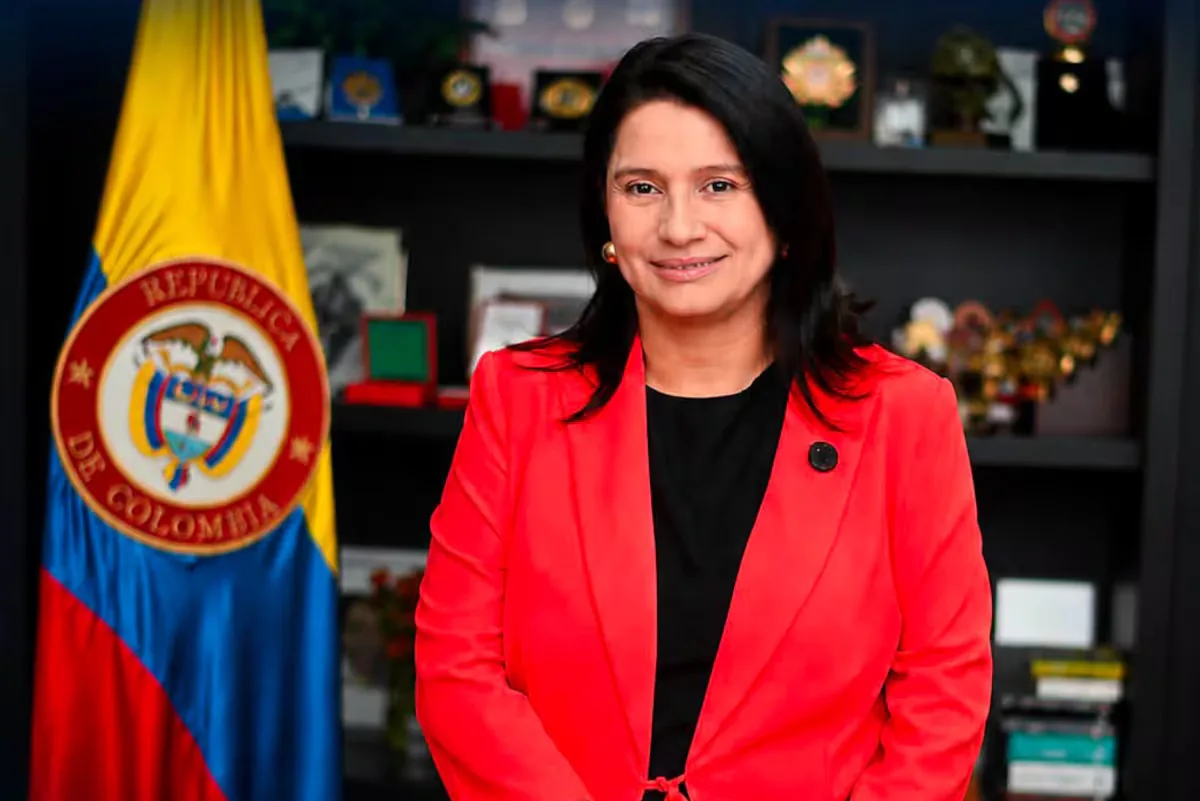
Despite García Márquez’s doubts, the ministry was created. And since its creation, it has been led by many extraordinary people and also by some who are not so much, but it had never been in the hands of someone so unrelated, so spectacularly unrelated, to the world of culture. I am not the first to notice (Piedad Bonnett already did, and very well) that Paola Holguín’s resume is made up of specializations in Security and Defense, studies on terrorism and counterinsurgency in Washington, courses on Security in the National Police, and reserve courses in the Bello Battalion: all of which make her a very qualified woman for many positions, of course, but none of them is the Ministry of Culture. In short: appointing Paola Holguín as Minister of Culture is like appointing Patricia Ariza as Minister of Defense. And I believe we have the right to ask what reasons there could be for this absurdity, but immediately another question will arise: is it really an absurdity, or a calculated strategy?
In the outgoing government, the appointments of incompetents (ambassadors who had no experience in diplomacy, diploma forgers whose inventory is too long for this page) partly responded to the distrust Gustavo Petro always felt towards merit, knowledge, and excellence. But what is the idea of culture that this incoming government has? If the answer is the video presenting the minister, we should be very worried. Yes, I am concerned about the general infantilization that has occurred during Abelardo De la Espriella’s campaign, which now forces us to endure, in every silly announcement, the presence of an artificial intelligence tiger walking through a city that could be Bogotá. The tone of the video announcing the minister’s appointment also seems made with artificial intelligence, and that is predictable: in the new president’s proposal, nothing is genuine; everything is a marketing product as artificial and spellbinding as his digital puppets. But the tone is the least of it, and so is the ridiculous tiger. The serious matter is the words that present Paola Holguín. “The warrior who is ready to give the cultural battle for the nation,” says the voice in the video. “To return to the values that culture brings. To return to the path of right over wrong.”
There is not a single one of these words that does not clash with what culture is. Of course, no one really knows what culture is; perhaps what happened with culture is like what happened with time for Saint Augustine, who said in the Confessions: “If no one asks me, I know; if I try to explain it to someone who asks, I do not know.” But, even if we do not know exactly what culture is, we can intuit what a Minister of Culture should know; even if we do not know what culture is, we can intuit that culture is one thing and cultural industry is something very different; and above all: even if we do not know what culture is, those of us who live in it know well what threatens it. And what threatens it, unfortunately, is the entire idea that comes out of that video: culture as an instrument to defend values that were from before and have been lost; culture as a way to return to the right path; culture as a tool to defend what is right and attack what is wrong. Culture, finally, as a battle that a warrior has to win.
I do not know who wrote these lines, but I do know one thing: that person has understood nothing.
Read more Video analysis | Corruption: the pending debt
Well, a good part of what we call culture – the one related to artistic creation and produced in the visual arts, on stages, in music, and in literature – has dedicated itself over the last five centuries to doing exactly the opposite: questioning established values, opening spaces of rebellion and insubordination, broadening our ways of understanding life instead of reducing them, blowing up notions of right and wrong, saying what cannot be said and thinking what should not be thought. I am not the first to ask (Yolanda Ruiz already did, and very well) what would be the aesthetics that “recovers” values, who would define what is right and what is wrong, what is the “right path” for the incoming government. Whoever says there is a right path and a wrong path is about to say that the right path is theirs and the wrong path is everyone else’s; and whoever thinks or says this will do everything possible – and more if they have the power of the State – to make the wrong ones return to the path of good.
That, and nothing else, is what the words “cultural battle” combined with the idea of the minister as “warrior” foreshadow. For the far right that comes from Trump and has lapdogs like Milei in Latin America, power serves to recover lost control over the customs and mentality of their countries. Yolanda Ruiz also wonders if there will be forbidden words in the next government, and I answer: there already are in the Trump administration, the model De la Espriella wants to imitate. The PEN of the United States has compiled a list of hundreds of words whose use is banned in the MAGA government: “women,” “abortion,” “Native American,” “antiracism,” “non-binary,” “inclusivity,” “global warming,” and even “Gulf of Mexico.” That is the cultural battle the new government wants to fight: the battle against ways of understanding the world with which they do not agree. That is the mission of the new Ministry of Culture, whether the minister knows it or not. And we would be naive to believe that this ministry will look favorably on cultural projects that do not collaborate with its “cultural battle,” or that dare to criticize it.
More than 30 years ago, García Márquez asked if a ministry could politicize culture. The answer, in the next government, seems clear to me. I hope I am wrong.