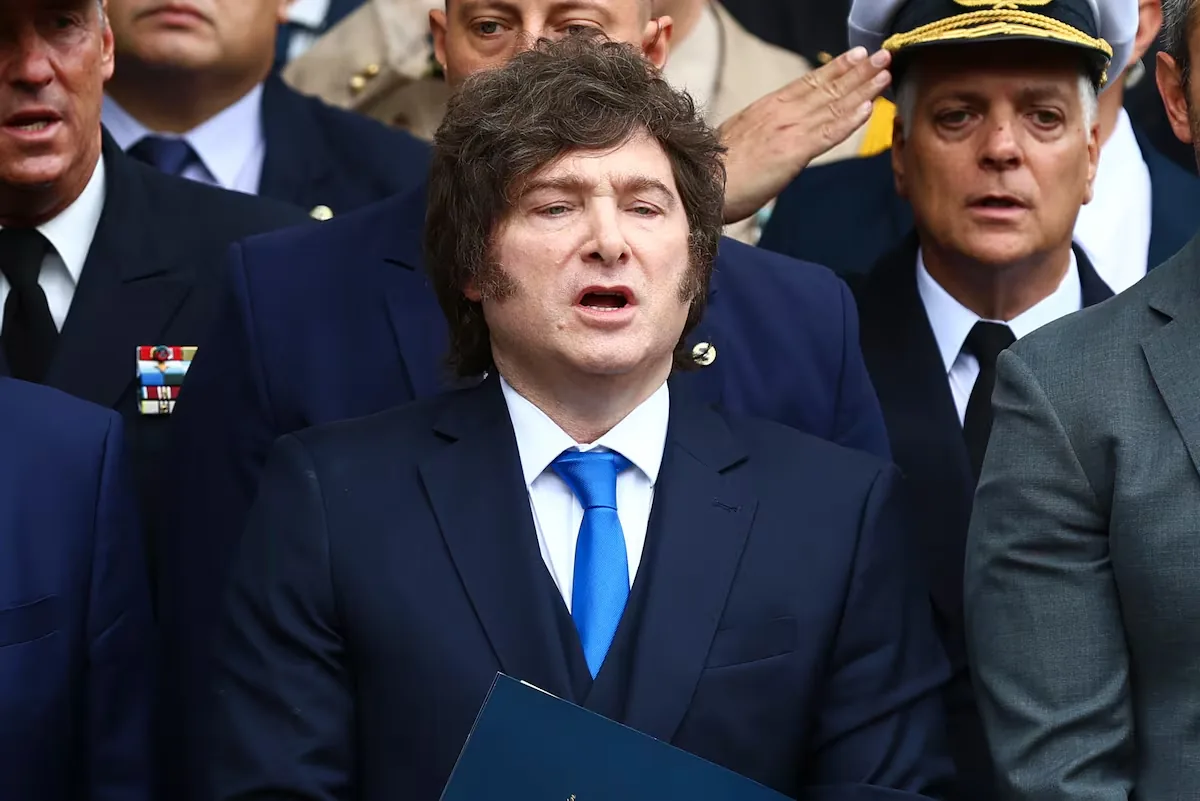



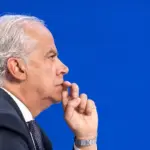

Javier Milei, who arrived at the Casa Rosada brandishing a chainsaw and made macroeconomic order his fundamental pillar, seems to have become a prisoner of his own dogmas. Social mood is beginning to sour due to the large number of Argentines who feel a worsening of their daily lives, and the Government faces the dilemma of how to oxygenate the economy without fueling inflation or altering the rigid foundations of its plan. Questioned even by sympathetic economists, the president has admitted for the first time that “not everyone is better off” with his government, but without self-criticism that would allow for changes in direction. “I will continue to maintain fiscal austerity: the chainsaw remains on,” he warned.
Read more Erik Saracho: “If they kill me now, the message that remains is that of a failed State”
While initially he managed to reduce the price increase from around 12.8% monthly — which marked November 2023, the last full month of Alberto Fernández’s government — to 1.5% in May 2025, something highly valued by the population, since then inflation began to accelerate and closed March at 3.4%, after ten months of escalation. Hopes of fulfilling the promise that monthly inflation would “tend to zero” in August or close the year around 10% are already lost, but the Government wants to avoid touching the levers that could make it jump and further complicate family incomes, hit by real wages that fell 6% between November and March, according to a report from Banco Provincia. The global context, with rising fuel prices due to the war in Iran, does not contribute to the picture.
During Peronist governments such as those of Cristina Fernández de Kirchner or Alberto Fernández, the decision to put more money into circulation was implemented with direct tools: transfers to specific groups (retirees, lower-income sectors, school-age children) or subsidized consumption (from food in supermarkets to public utility rates). “Platita” plans, as the opposition called them, drawing attention to the consequences they generated for fiscal accounts and inflation.
For a president who has repeated ad nauseam that “inflation is always and at all times a monetary phenomenon,” the possibility of issuing money to implement these types of measures is off the table. Policies that use public spending as an engine during low points in the economic cycle are “Keynesian garbage” for Milei, who is beginning to try other more discreet avenues that can stimulate consumption and investment.
This month, the Central Bank decided to reduce bank reserve requirements — the percentage of deposits that banks must keep immobilized to meet eventual massive withdrawals — which, along with other recent regulatory changes, seeks to lower interest rates and thus boost bank credit. A limit to this strategy is the growing delinquency of Argentine families, which makes banks very cautious when lending money. According to the consulting firm 1816, in February, delinquency stood at 11.2% for families, the highest value since 2004. “This data consolidates the idea that there is an economy with record GDP and even record private consumption, but which at the same time is showing difficulties in trickling down to broad sectors of society,” the report states.
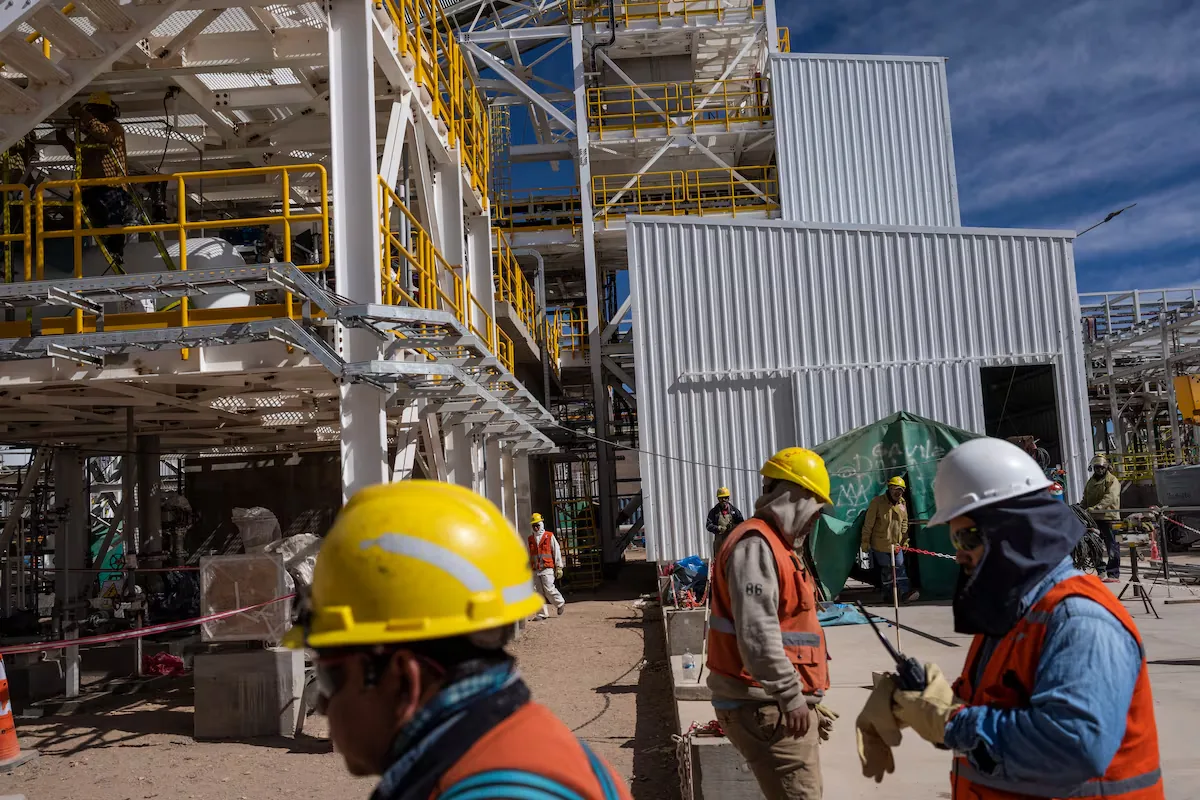
The economy is growing very heterogeneously, and while the most labor-intensive sectors (industry, construction, commerce) show signs of weakness, sectors that demand less employment (agriculture, energy, mining) are leading the way. Construction, for example, formally employs around 380,000 people and plummeted in 2024 with Milei’s arrival in government and his abrupt cut to public works. Now, initiatives such as the launch of new concessions for works on national routes are trying to restore some movement. In June, works will be underway on 9,000 kilometers of road corridors, and another 12,000 kilometers will be tendered, according to Economy Minister Luis Caputo.
For Matías Rajnerman, chief economist at Banco Provincia, a challenge facing the Government is how to ensure that any pesos it eventually manages to put into circulation do not end up being used to buy dollars, which would raise their value. In Argentina, dollar increases are very quickly passed on to local prices, fueling inflation. That is why Rajnerman identifies the current moment as a good window to try, as the annual harvest of Argentine agriculture begins to be sold to the world, counterbalancing the flow: dollars leave the system, but they also enter.
Minister Caputo does not believe there is a tension between lowering inflation and boosting the economy. “We will see a process of disinflation with greater growth,” he assured this Tuesday at the annual meeting of AmCham, the chamber representing US companies in Argentina, before promising that in April the country will enter “the best 20 months it has seen in recent decades.” His message is aligned with that of the president, who, although he has admitted economic problems for the first time and asked Argentines for “patience,” does not plan to alter his action plan. “The chainsaw does not stop. We will tie ourselves to the mast of the ship, we will not listen to the siren songs,” Milei assured in his closing speech at AmCham.
The ultra-liberal has other reasons to remain rigid in his plan. His “zero cash” fiscal policy is valued by the International Monetary Fund (IMF), which this Wednesday approved the second review of the extended facility program in force with the country and released a new resource contribution of approximately 1 billion dollars. Good coexistence with the international organization is key for Argentina, which is its largest debtor in the world, with a total debt exceeding 57 billion dollars.
For economist Sebastián Menescaldi, director of the EcoGo consulting firm, Milei has no short-term solution for the dilemma he faces. “For now, he can only prevent people’s discomfort from worsening and try to give the economy a bit more rope through monetary means, but at the cost of the dollar potentially having a correction and prices continuing at a higher inflation rate than proposed,” he summarizes. The president has in his favor that there is more than a year until the elections, which gives him some margin to attempt gradual changes that improve the mood before the economic hustle that the polls will generate again.
Read more The pact to contain diesel in Mexico is weakened by costs and specific supply problems