
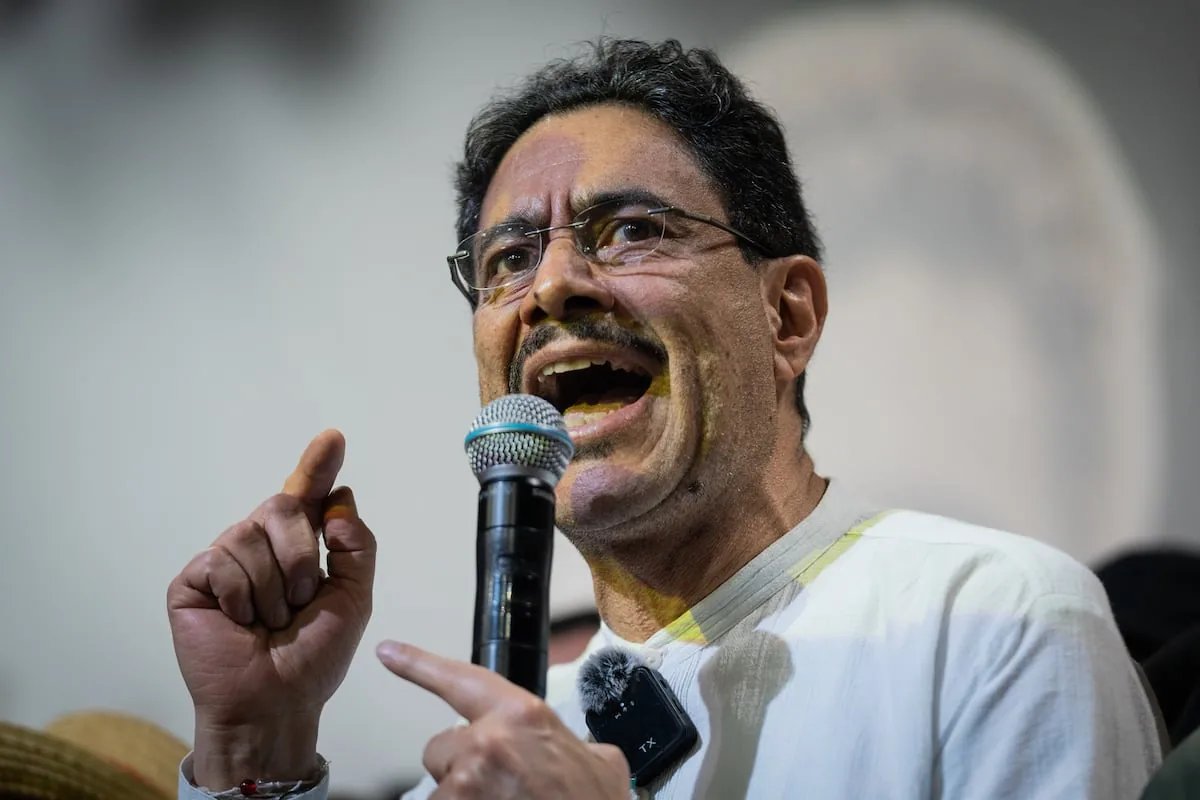
Finally, the possibility of a presidential candidate debate appears on the horizon. It’s good for democracy, it’s convenient to have it, but, according to what the candidates have said, it will be difficult to make it a reality because there is talk of so many conditions and there is so much distrust that bringing it to fruition is a major challenge for campaigns, for the media, and for democracy. Voters have the right to see the debate of ideas and arguments. Overcoming the many obstacles is the first step.
Read more The López Aliaga phenomenon: blind faith in times of evidence
The debate proposal now comes from candidate Iván Cepeda, after several aspirants insisted on the challenge for them to meet face-to-face directly. The Historical Pact candidate had refused to participate in the meetings that have been generated in various scenarios and now challenges the two candidates he describes as “the extreme right” to debate on “substantive proposals, visions of the country, and models of development and social equity.” The condition is that his representatives will define topics, moderators, and the setting because the candidate says: “I will not lend myself to media manipulation and political spectacle.”
The first obstacle is frequent in debates: Who will participate? Candidate Cepeda proposes debating with two candidates. What about the others? Sergio Fajardo immediately said he was ready and asked if “that call also includes those of us who are not the continuity of the Petro–Uribe polarization?” Claudia López, for her part, also said she is ready to debate and proposed that RTVC organize the debate. Who decides and under what parameters which candidates will go to a debate?
It has always been difficult for the media, guilds, universities, and various entities that organize presidential debates to decide whom to invite because on the ballot in each election there are aspirants with no real possibilities, and it is known that the more people participate in a debate, the less useful it is. One of the formulas used to refine invitations is to review polls. A minimum vote intention is set, which some place at 3 or 5 percent, and those above that threshold are invited. This does not mean that difficulties do not arise. A 1994 debate is well remembered when Andrés Pastrana and Ernesto Samper faced ideas in a meeting promoted by the news programs QAP and CM& when the then candidate Antonio Navarro Wolff appeared on set without prior notice to claim his space.
Those who are behind in the polls feel excluded, and strictly speaking, everyone should be invited for democratic reasons, but in practice, when there are so many candidates, there is a real impossibility of debating and thoroughly understanding what the aspirants propose, which contributes little to the democratic exercise. Sometimes the formal torpedoes what matters and what is real. In this case, defining the guests is not the only obstacle because Iván Cepeda proposes setting conditions for moderation and the setting. As Claudia López proposes, it would be interesting for public media to fulfill the task, but RTVC has become a space for official propaganda and little pluralism, which can generate distrust in the opposition. On the other hand, some private media, which have crossed editorial lines to oppose, can generate distrust in the official candidate. Perhaps a grand agreement between public and private media is required to agree on a meeting that serves everyone.
Read more De la Espriella resorts to Bukele’s iron fist and Milei’s chainsaw to bolster his government program
The other issue is political strategy. There is an official left-wing candidate and several right-wing and center candidates. This means that a debate can become an everyone against Cepeda. That can be an immense problem for the Government’s candidate or an opportunity to shine. It is also a possibility for the different candidates to show their nuances and differences, although it is clear that for all the others, the main contender is the Petrista senator.
There are also the topics that are usually open because a person aspiring to the presidency must answer for all matters of interest to citizens, and there can be no prior vetoes. In particular, candidates must answer for what generates interest in the campaigns: Iván Cepeda will have to face up to the errors of the Petro Government because he is the official candidate and proposes continuity. Paloma Valencia must answer for the sins of Álvaro Uribe, her mentor and political boss, and those of her party. Abelardo de la Espriella has not given satisfactory explanations about the serious accusations from his clients. Each one will have to answer and also propose ideas that go beyond the clichés of the campaign. Although they arrive scripted by their advisors, as always happens, debates sometimes manage to measure the caliber and character of the aspirants when they face unexpected questions or situations. That is why they are very useful for getting to know them and defining voting intention.
One more hurdle: Cepeda asks for no insults, and it would be desirable for that to be the case. However, the question is: Who defines what an insult means or what an aggressive or insulting comment would be for a candidate? Whenever one wants to moderate language, it is easy to fall into the temptation of censorship, and in a debate, freedom of expression should be sacred. The campaign is polarized, it is heated, and it takes place amidst distrust, which is the biggest problem facing democracy today. Hopefully, a way will be found for the candidates, whoever they may be, three, five, or six, to face each other and show the country why they believe they have the qualities to reach the Casa de Nariño.