








In politics, the problem is never the character. It’s the public. Extreme, erratic, or frankly unviable leaderships exist everywhere. What distinguishes a country is not that they appear, but that they prosper. And in Lima —a city that presumes itself to be informed and critical— a case has prospered that deserves attention beyond its borders: the sustained support for Rafael López Aliaga.
Read more De la Espriella resorts to Bukele’s iron fist and Milei’s chainsaw to bolster his government program
It is not about an ideological discrepancy or a debate between management models. The matter is more basic: we are facing a candidate whose public conduct accumulates episodes of vulgarity, aggression, contradiction, and an evident inability to self-control. A style that, by any minimum standard of governability, would be disqualifying.
However, a not insignificant fraction of the electorate supports him with conviction. Not despite that, but almost celebrating it. There lies the phenomenon.
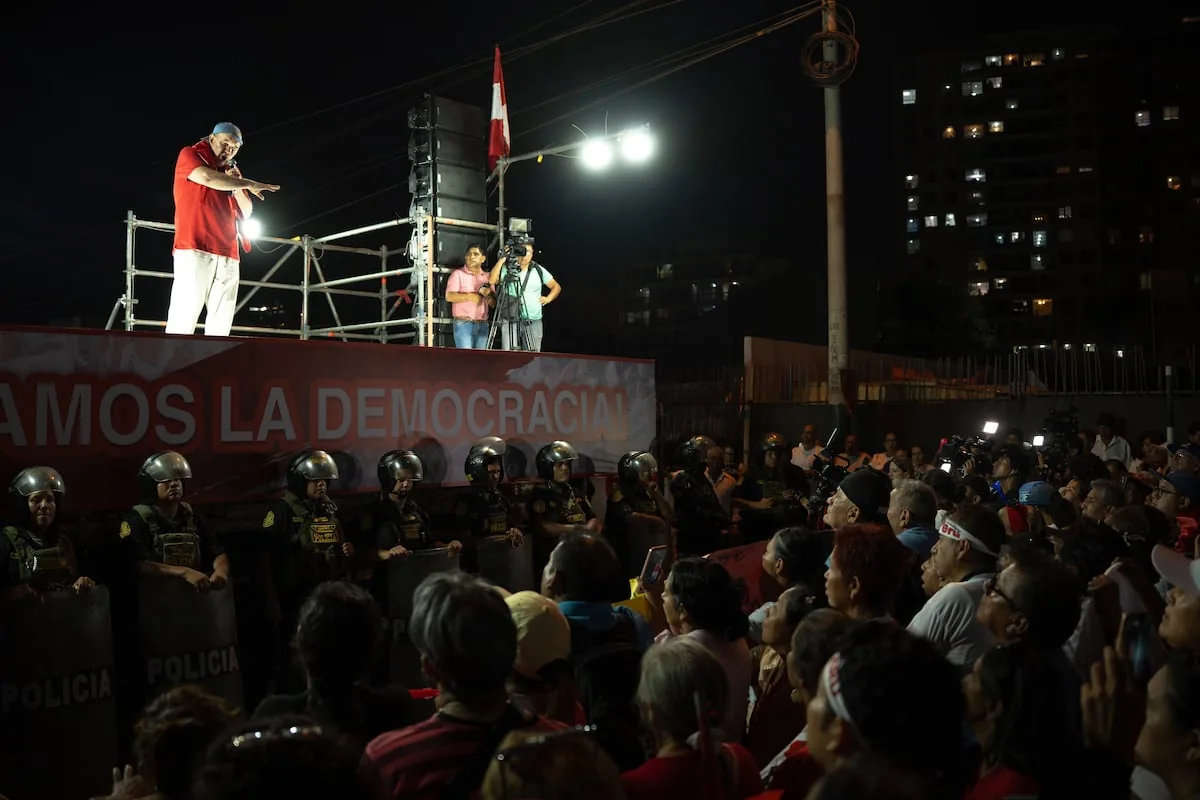
The recent trigger has been his narrative of electoral fraud: a serious accusation, without verifiable support, which has convened mobilizations accompanied by politically defeated or marginal figures. A chorus of vanquished individuals who, without votes or real support, take advantage of the effort and try to invalidate a democratic process. The Organization of American States has been clear: valid elections, without serious irregularities. The European Union has maintained the same. There are delays and logistical problems, as in almost every complex election in Latin America. But there is no evidence of structural fraud.
Evidence competes with faith. And faith, in politics, is often more resilient than facts.
What makes the case especially revealing is that the most forceful criticisms do not come from his ideological adversaries, but from his own trench. Jaime Bayly —a reference figure of the liberal right in Latin America— expressed public shame for López Aliaga’s threats, especially against the president of the National Elections Jury. He described him as a politician who speaks “like a thug” and “scoundrel,” questioning his moral standing to aspire to the Presidency. Rafael Rey, former congressman, former minister, former ambassador, and member of Opus Dei —the same institution to which López Aliaga belongs— was even more direct. In his program Rey con Barba, after the April elections, he said that López Aliaga’s insults, threats, slanders, and falsehoods “are not normal” and that their only possible explanation was “a serious psychological problem.” That someone of the same creed, the same ideology, and the same congregation disqualifies him in those terms says more than any opposition editorial.
The López Aliaga case also accumulates a structural inconsistency: he promises not to leave the mayor’s office and then leaves it. He offers management and delivers conflict. He announces order and practices insult. He presents himself as a outsider successful, millionaire, and benevolent while insisting with suspicious frequency on reminding people of it. His municipal management, filtered through concrete results, does not have much to show. It is a leadership in a permanent state of conflict, with the media, businesses, politicians, even with himself.
And here comes what is difficult to explain: despite all that —the evidence, the criticisms from his own camp, a municipal administration without notable achievements, a conduct that his own allies describe as psychologically concerning— there is a mass of people in Lima who continue to support him. With conviction. With fervor. It is disconcerting. It is worrying. And, frankly, it is incomprehensible.
The question is no longer who López Aliaga is, but why, knowing exactly who he is, there are still those who follow him.
Read more The government’s commitment to urban peace is diluted without agreements or disarmament