









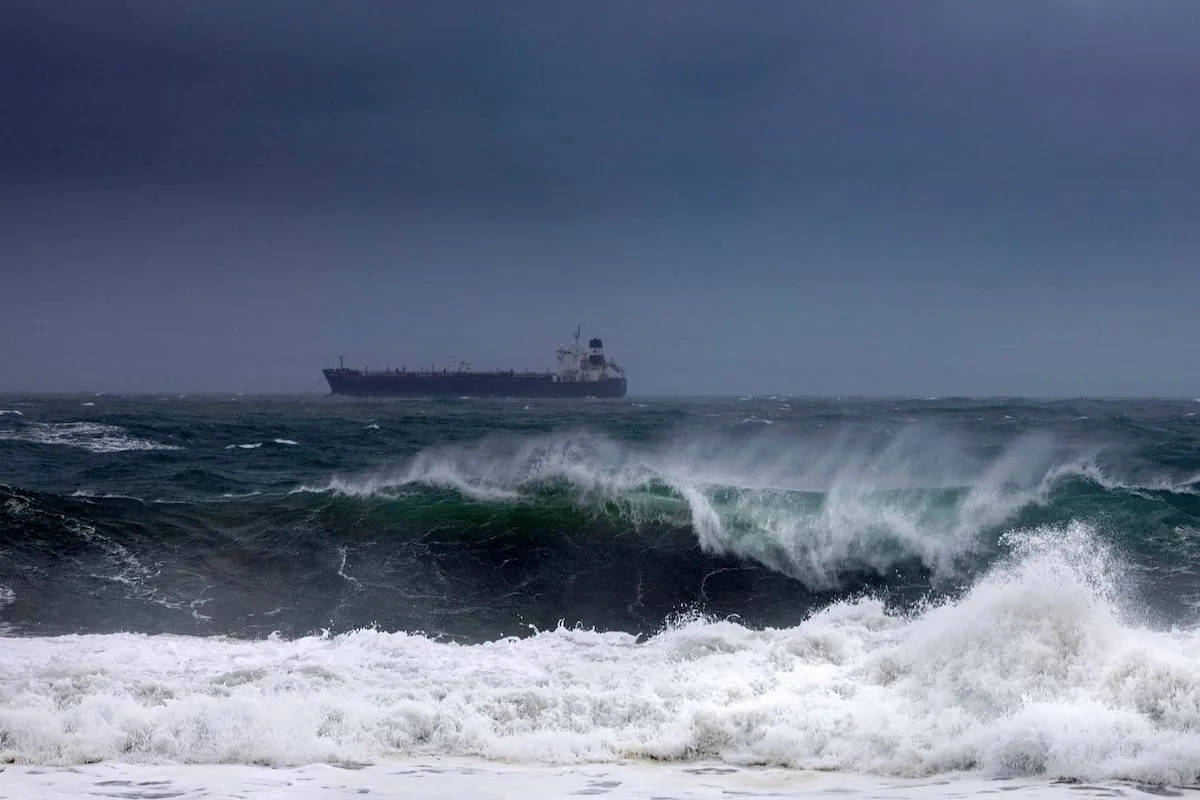
Mexico faces a new hurricane season with an eye on the highly probable formation of ‘El Niño’ this summer, a natural phenomenon that causes anomalies in the temperature of the Pacific’s surface waters, directly influencing the global climate and hurricane formation. Although it is not possible to know with certainty how many tropical cyclones will gain strength and become hurricanes, what their trajectory will be, or when they will make landfall, the National Water Commission’s forecast for the 2026 season, which runs from May to November, predicts above-average activity in the Pacific, and near or below the historical average for the Atlantic.
Read more What is the ‘Fair Rent Law’ against gentrification in Mexico City?
While the hurricane season in the Pacific statistically begins on May 15, tropical cyclones in the Atlantic start two weeks later, on June 1. The scientific community agrees that the conditions on both sides of the country’s coasts for the formation of tropical cyclones last for approximately six months, and therefore, November 30 of each year is considered the end of the season.
The historical record of the last century reveals that Mexico’s coasts are impacted by an average of 5.4 cyclones each year, with a higher incidence in the Pacific than in the Atlantic. 2025 was a below-average year, in which only two cyclones made landfall, one on each coast: Erick, a powerful Category 4 hurricane that rapidly intensified before impacting Guerrero and Oaxaca; and Barry, a tropical storm that caused record rainfall in northern Veracruz and southern Tamaulipas.
The most intense hurricanes in the Pacific, in ‘El Niño’ years
For meteorologists, the focus during this season will be on the Pacific: the warming of surface waters that will cause the formation of ‘El Niño’ acts as a fuel that enhances the appearance of more intense hurricanes, while calming the Atlantic. Christian Domínguez, tropical meteorologist at the Institute of Atmospheric Sciences and Climate Change at UNAM, recalls that the only two Category 5 hurricanes that have impacted the Pacific, Patricia (2015) and Otis (2023), formed during ‘El Niño’ years, which is why she considers it crucial to “keep an eye and strengthen monitoring on the Pacific coast, because we have signs that more intense hurricanes could occur.”
Read more Mexico is painted with thousands of murals for the World Cup to reclaim public spaces
Depression, storm, and hurricane: how tropical cyclones are classified
The Saffir-Simpson scale classifies tropical cyclones into three types, according to the intensity of their winds. Tropical depressions, with winds of 45 to 62 kilometers per hour, are identified by a number and represent the lowest level of a tropical cyclone. If they increase in intensity, they can evolve into tropical storms, the second stage of the scale, whose sustained winds reach between 63 and 119 kilometers per hour. Tropical storms receive a name previously defined by the World Meteorological Organization (WMO) in alphabetical order according to the progress of the season, and those with the potential to gain strength in a matter of hours or days can become a hurricane.
| Type of tropical cyclone | Wind intensity (kilometers per hour) |
|---|---|
| Tropical depression | 45 km/h to 62 km/h |
| Tropical storm | 63 km/h to 119 km/h |
| Hurricane | 120 km/h and above |
Hurricanes, in turn, are classified into five categories on the same scale according to the intensity of their sustained winds:
| Category (number) | Wind intensity (kilometers per hour) |
|---|---|
| 1 | 120 km/h to 153 km/h |
| 2 | 154 km/h to 177 km/h |
| 3 | 178 km/h to 209 km/h |
| 4 | 210 km/h to 249 km/h |
| 5 | Greater than 249 km/h |
Forecast for the 2026 hurricane season in the Pacific
In the Pacific Ocean, 18 to 21 tropical cyclones are forecast, of which:
Read more Regina Rodríguez Sirvent and Eduardo Mendoza, the bestsellers of Sant Jordi
- Between nine and ten will be tropical storms
- Five to six will be low-intensity hurricanes (category 1 or 2)
- Four to five will be major hurricanes (category 3, 4 or 5)
Forecast for the 2026 hurricane season in the Atlantic
For the Atlantic, Conagua forecasts 11 to 15 tropical cyclones, of which:
- Between seven and eight will be tropical storms
- Three to five will be low-intensity hurricanes (category 1 or 2)
- One to two will be major hurricanes (category 3, 4 or 5)