









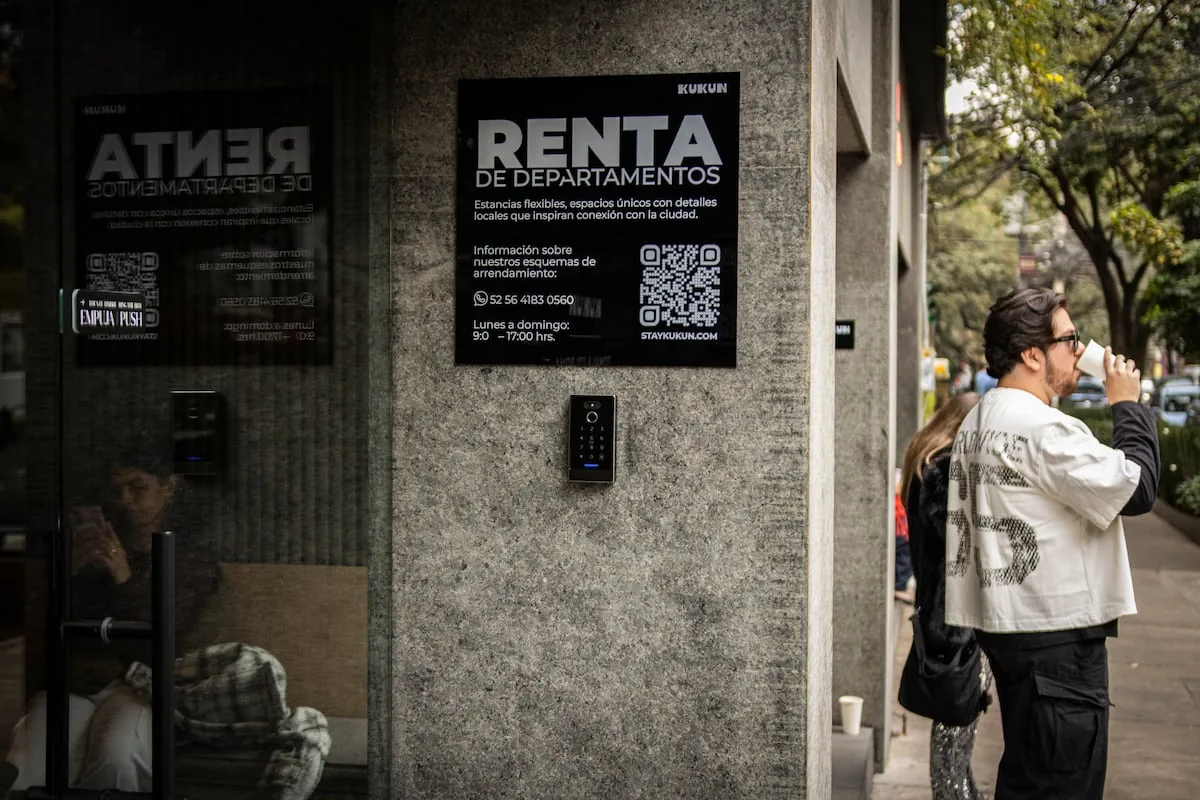
The Fair, Reasonable, and Affordable Rents Law is an initiative that Clara Brugada presents as the cornerstone of a comprehensive housing policy to curb excessive rent increases and gentrification in Mexico City.
Read more Mexico is painted with thousands of murals for the World Cup to reclaim public spaces
During the presentation, the Head of Government emphasized that around two million people live in rented housing in the Mexican capital, with more than 40% of the housing stock being rented in central areas. Between 2010 and 2020, the number of renters grew by 135,000, rents rose by more than 30% in some areas between 2019 and 2023, and housing prices doubled between 2015 and 2025, while nearly 40% of the poorest households live in rented accommodation and allocate almost half of their income to rent.
What the initiative seeks
The initiative comes in a context of sustained rent price increases and economic pressure on families who allocate a growing portion of their income to housing payments. The objective is for rents to remain within reasonable and predictable parameters, limiting increases to the annual inflation rate and avoiding adjustments that could lead to evictions or displacement of vulnerable populations.
In addition to intervening in rental prices, the proposal seeks to link rent regulation with the expansion of social and affordable housing, so that more inhabitants can access a home without being forced to accept abusive contracts. In this regard, the Mexico City government proposes increasing the supply of social housing and expanding the territorial land reserve for this type of development.
Key points of the ‘Fair Rents Law’
The reform presented by Brugada contemplates four main pillars, which the Mexico City administration has described as part of a “base reform” for the Fair, Reasonable, and Affordable Rents Law.
Cap on increases to inflation
The proposal foresees that rent increases will not exceed the inflation percentage reported the previous year, which seeks to curb disproportionate rises and provide greater predictability for tenant families.
Comprehensive social housing policy
It is contemplated to include in the local Constitution the obligation of the Mexico City government to significantly increase the supply of social and affordable housing, as well as access mechanisms, especially for low-income sectors and young people.
Read more Regina Rodríguez Sirvent and Eduardo Mendoza, the bestsellers of Sant Jordi
Creation of a public regulatory institution
The initiative proposes incorporating into the Constitution the creation of an organization responsible for promoting and defending rights and obligations in rental relationships, in order to balance negotiations between landlords and tenants and facilitate conflict resolution.
Right to neighborhood and community rootedness
The fourth pillar is the constitutional recognition of the right of all inhabitants to neighborhood and community rootedness, understood as the social, cultural, and economic bond built in a neighborhood or borough, which today is fragmented by the expulsion of the population due to rising housing costs.
Dignified, fair, and affordable housing for Mexico City families!
We present the four points of the proposed constitutional reform on housing that we will send to the @Congreso_CdMex.
This is the first step to provide the greatest legal support for a social need…
pic.twitter.com/lHxD5ccin9— Clara Brugada Molina (@ClaraBrugadaM) April 22, 2026
Gentrification and the right to the city
Brugada proposes the Fair Rents Law as part of a fight against gentrification in Mexico City: the process by which traditional neighborhoods are transformed by the influx of a population with greater purchasing power, driving up prices and displacing long-time residents. In this logic, the Mexico City government considers that the measure not only “protects” tenants but also contributes to social and territorial stability, and strengthens rootedness in areas where many inhabitants have developed their life projects.
However, the pending legislative discussion in the Mexico City Congress will be key to defining how these principles are concretized into applicable rules: what indices will serve as a reference for setting rents, what mechanisms will exist to review conflicts, and what sanctions will be applied in case of non-compliance.
Subscribe to the EL PAÍS Mexico newsletter and the WhatsApp channel and receive all the key information about the current affairs of this country.