

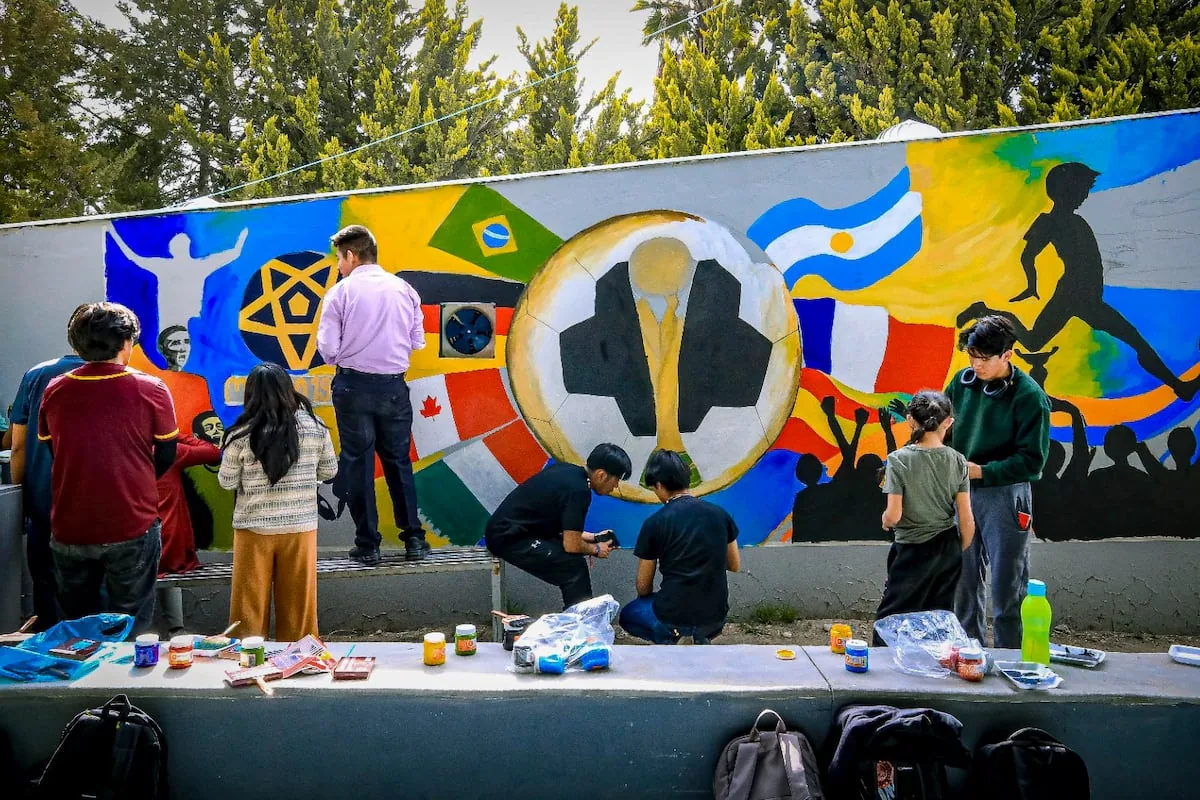
The revelry unleashed by a World Cup leaves its mark on the host country. On June 11, at the start of the World Cup, Mexico will be able to say that it is the only country in the world to host the maximum football tournament three times, four if the women’s tournament in 1971 is included. However, unlike 1970 and 1986, the business around the ball has boomed and, with it, everything has also become more expensive. From jerseys to tickets to watch a match, which reach figures of more than 50,000 pesos. Even to watch the matches on television, any fan must pay up to 1,000 pesos to follow all 104 matches. Faced with such opulence, thousands of young Mexicans have preferred to join the World Cup wave through almost 5,000 murals and all kinds of activities to not be left out of the party.
Read more Regina Rodríguez Sirvent and Eduardo Mendoza, the bestsellers of Sant Jordi
The Mexican Youth Institute (Imjuve) has promoted a series of events called “tequio” since 2025, which in Nahuatl means the construction of a community through the recovery of spaces. The idea was to involve young people in the 32 Mexican states. A few months ago, they invited teenagers to compete in a playful tournament of football “cascaritas” (pickup games) and pull-ups. “We held the tournament for everyone, for those of us who like football and probably don’t know how to play it. Just playing to socialize. 850,000 young people participated, there were 56,000 teams that played simultaneously throughout the country,” says Abraham Carro, the institute’s director, to EL PAÍS. All the activities they have done already add up to more than a million participants (1,058,265). The Mexican Government’s goal is for two million to participate by the end of the year, although there is no ceiling.
One of the activities that has captivated young people and executives is the murals. “The president asked us to create a social World Cup. Under that logic, we made the proposal: let’s combine the idea of the World Cup, football, and murals. Some murals have come out that… I am very excited to see [in person] the almost 5,000 murals. The next muralists are there. They have asked us: Did someone come here to paint them? No, no, no, it was a 15 or 16-year-old girl. We are promoting the creation of an arts laboratory that starts with muralism. To help us capture the next Frida Khalo or Siqueiros.
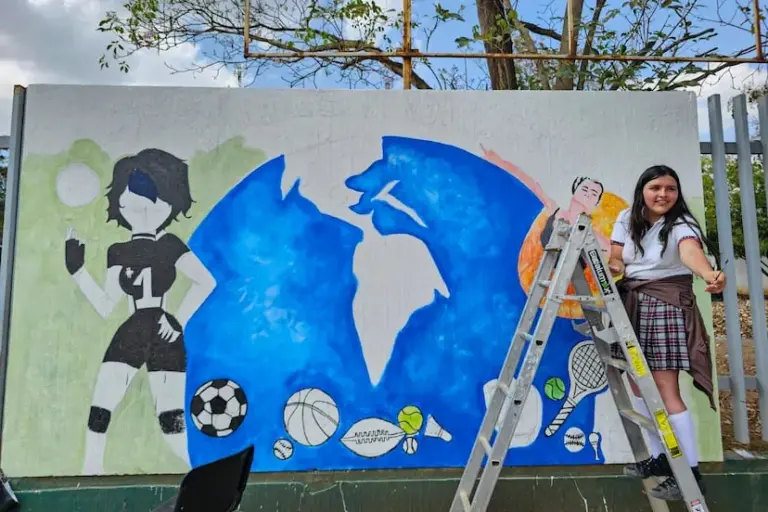
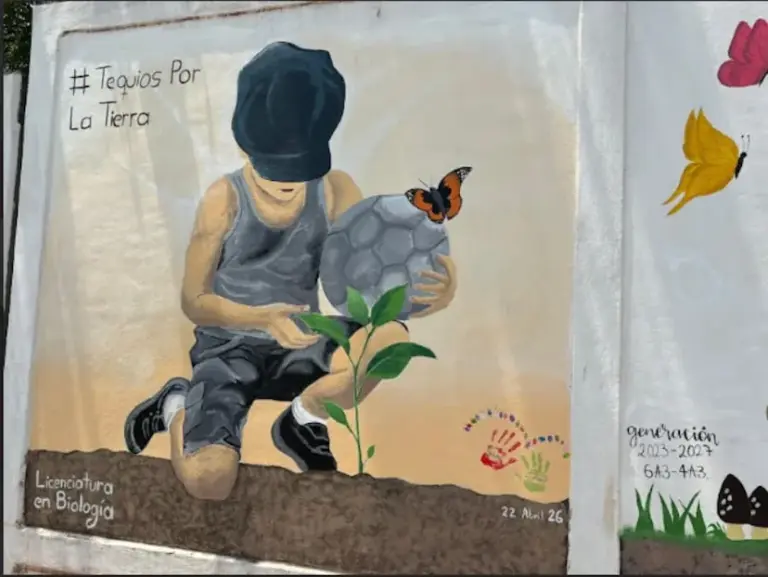
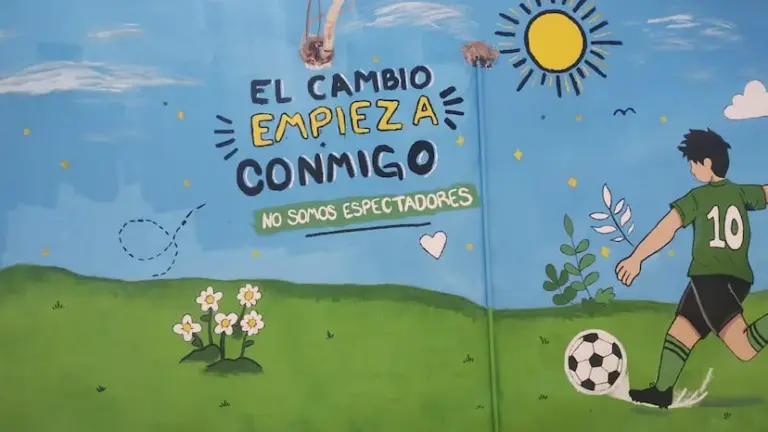
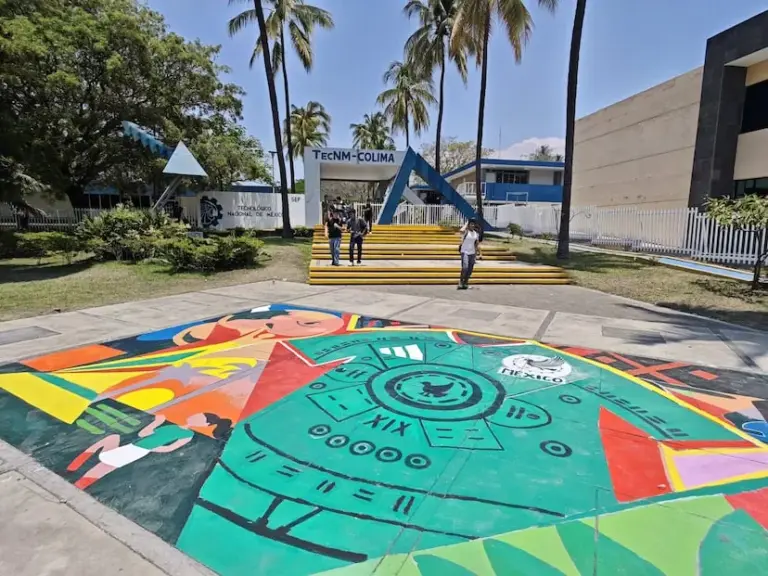
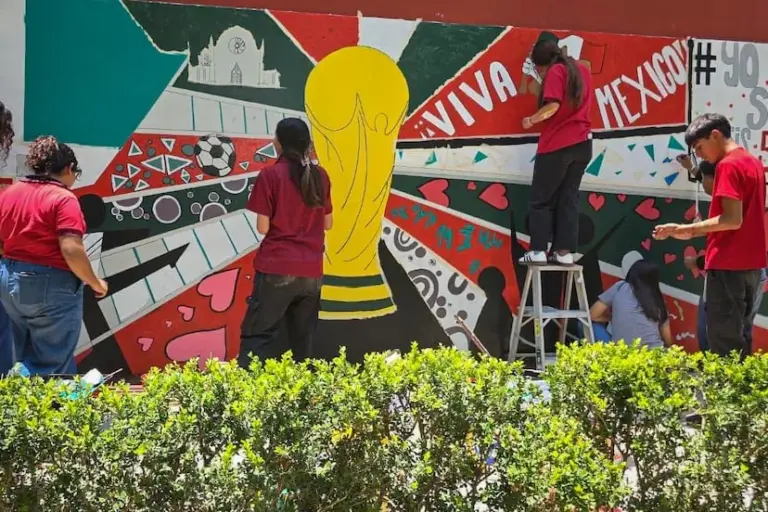
Messages shine through in the thousands of murals across every corner of Mexico. Abandoned walls, football fields, and school walls were used. In the town of Naco, Sonora, there is one that says: “Change starts with me. We are not spectators,” referring to a young man playing football in a green field, full of flowers. Or for example in Guerrero, where on a wall there is a child with a ball in hand watching a plant germinate. Another theme they tried to capture was unity among countries, one of FIFA’s principles and which is now threatened by various global conflicts.
The last activity took place on April 22 and coincided with Earth Day. Hundreds of young people took brushes and paints to combine the themes of the World Cup and the environment. “We are facing a youth very aware of their surroundings, aware of taking care of their planet. President Sheinbaum had and has great confidence in young people. Time has proven her right: young people today are becoming protagonists of their time,” says Carro. Hundreds of students and teachers dedicated themselves to reforesting parks and public squares in Tlaxcala, Michoacán, Durango, Chiapas, and Sinaloa.
Read more The EU urges progress on Ukraine’s accession after Orbán’s departure