








Bambu Lab A1 Mini
Elegoo Mars 5 Ultra
Creality K1C
The best 3D printer
It is increasingly common to want to manufacture your own parts at home: from a simple mobile phone holder to more complex prototypes or spare parts that are no longer available on the market. However, 3D printing still has a clear barrier: technical complexity. Between calibrations, materials, and configurations, it is not always an intuitive process. Precisely for this reason, these types of devices have evolved to make them more accessible. In this context, at EL PAÍS Escaparate we have tested three 3D printers with different technologies —filament and resin— to check their ease of use, quality, and versatility.
What are 3D printers for?
3D printers allow digital designs to be converted into physical objects by superimposing layers of material. This is not only useful for technical profiles, such as engineers or designers, but also for home users looking to create custom parts or repair objects.
Which 3D printers have we chosen and how have we tested them?
To select the models, we considered that they should represent the two main 3D printing formats: filament and resin. In addition, we looked for variety in print dimensions, connection types, and control systems. During the tests, we performed prints at maximum resolution to evaluate the final quality, assembled and disassembled each device, analyzed the noise level during operation, and tested different connection and usage configurations. We also assessed material compatibility, ease of maintenance, and durability in continuous use.
Why you can trust me?
I am a journalist specialized in product analysis, and in recent years, I have tested and compared dozens of devices and accessories for media outlets such as El País. My evaluation method starts from something very specific: understanding what a product truly offers in relation to its cost. Not only in specific tests, but also in daily use, because that’s where the details that make a difference are perceived. Beyond specifications, I am interested in how it performs in practice, how consistent it is over time, and what limitations appear when you integrate it into your routine. Because, in the end, a good product is not the most striking, but the one that best justifies its price in everyday life. That is the criterion with which I build each recommendation.
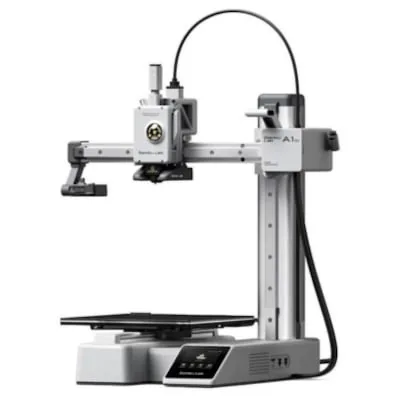
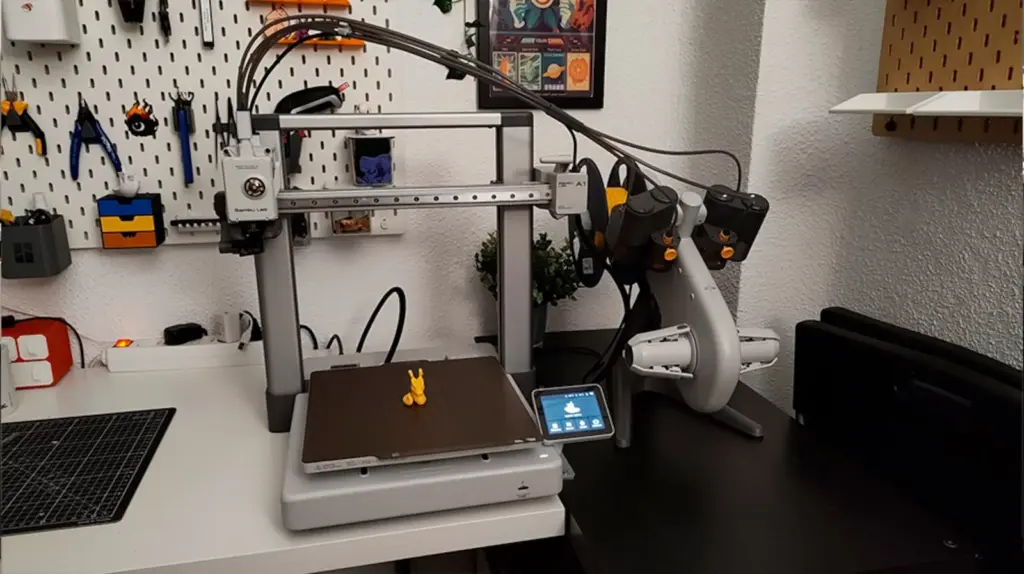
Bambu Lab A1 Mini Filament 3D Printer
Filament 3D printer with a clear focus on ease of use. It stands out for its automatic calibration, its plug and play system, and a very accessible experience, even for beginners. Although its print size is smaller, it offers a very balanced performance.
How does it work?
What has convinced me most about the Bambu Lab A1 Mini 3D printer is how easy it is to start using it from the very first moment. During the tests, I barely needed a few minutes to get it ready: it comes practically factory-prepared, and the automatic calibration system adjusts all key parameters without manual intervention. This, in practice, eliminates one of the main barriers to entry in 3D printing.
In addition, the one-touch filament loading and unloading system further simplifies the process. It is compatible with materials such as PLA, PETG, or TPU, which gives it considerable versatility, and its software is especially accessible. In this case, everything is designed so that the user does not have to struggle with complex configurations. Therefore, the experience is fluid and very controlled even in the first prints.
During continuous use, it has also seemed to me a reliable and robust machine. Maintenance is simple, and the safety system with automatic shutdown due to overheating provides peace of mind. It is true that it does not have WiFi connection —only USB— and that its print size is more limited than other models, but in practice, this only affects larger projects.
Even so, what ultimately makes the difference is its overall balance: it combines precision, speed, and, above all, ease of use. It is a printer that not only works well but also makes the entire process much more accessible.
Why do we recommend it?
The best:
- FFF (Fused Filament Fabrication) printing technology.
- Compatible with PLA, PETG, TPU, and PVA filaments.
- 2.4-inch touchscreen.
- Plug-n-play system.
- Very accessible software.
- Resistant to intensive use.
- Automatic shutdown due to overheating.
- Easy to clean and maintain.
To improve:
- No WiFi connection; USB only.
- Smaller print dimensions.
- Does not include a closed protective casing.
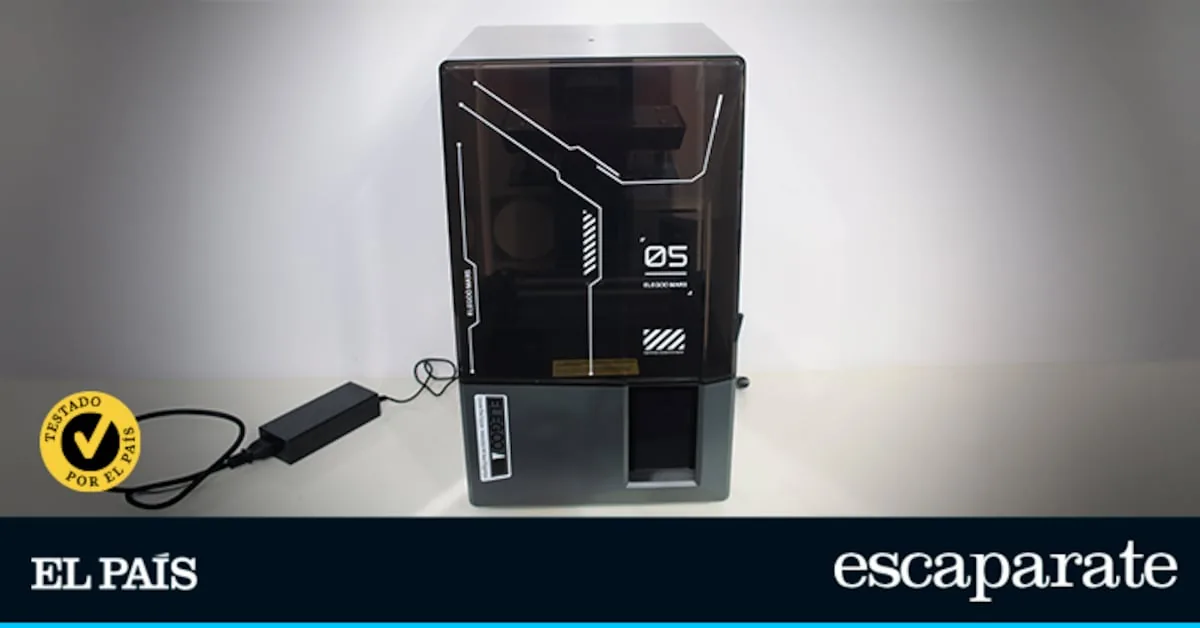
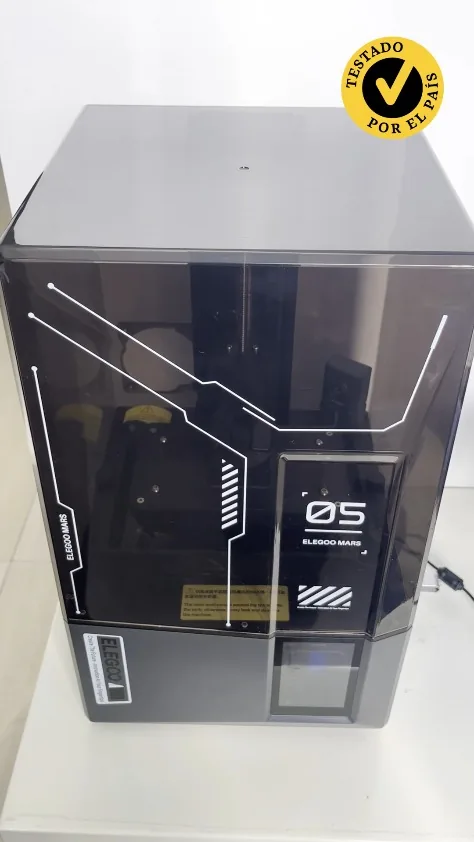
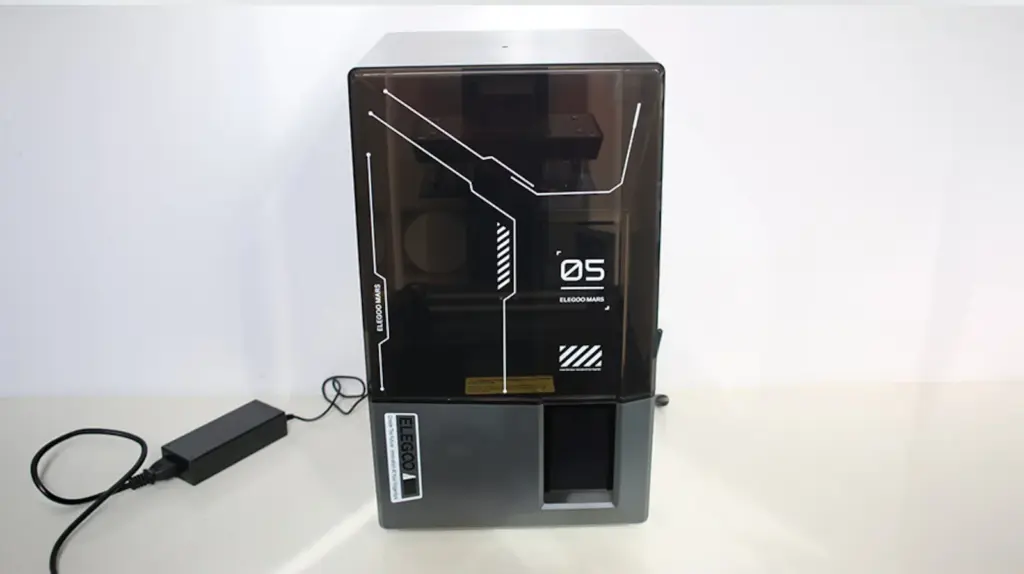
Elegoo Mars 5 Ultra Resin 3D Printer
Resin 3D printer with a professional approach, designed to achieve the maximum level of detail. It stands out for its high resolution, multiple control and monitoring systems, and a very precise experience, although more demanding in terms of maintenance.
How does it work?
In this case, what stands out most about the Elegoo Mars 5 Ultra 3D printer is the print quality. During the tests, the level of detail was outstanding, thanks to its high resolution and a very uniform lighting system. It is a printer clearly designed for precision work, where every small nuance matters.
In addition, it incorporates multiple intelligent systems, such as sensors that monitor the printing status or an AI camera that detects errors in real time. This, in theory, improves process control. However, in practice, the use of resin introduces an additional complexity that cannot be ignored.
Maintenance is more demanding: it requires immediate cleaning after each use, careful handling due to the material’s toxicity, and the use of a specific washer for the parts. Added to this is a smaller print size and less flexibility in materials.
Therefore, although it is a very powerful tool for specific jobs, it is less practical for general or domestic use. It is a printer that excels in precision but requires more time, care, and knowledge.
Why do we recommend it?
The best:
- Resin 3D printing.
- Easy to assemble.
- WiFi connection.
- Resistant to intensive use.
- Automatic shutdown due to overheating.
To improve:
- Smaller print dimensions.
- No dedicated software.
- Compatible only with resin.
- Changing resin is more complicated than filament.
- Must be cleaned immediately after each use.
- Requires a specific washer for cleaning.
Creality K1C Filament 3D Printer
Filament 3D printer with large print size and high speed. It is a robust and functional option, compatible with multiple materials, but with less automation and a less refined user experience.</p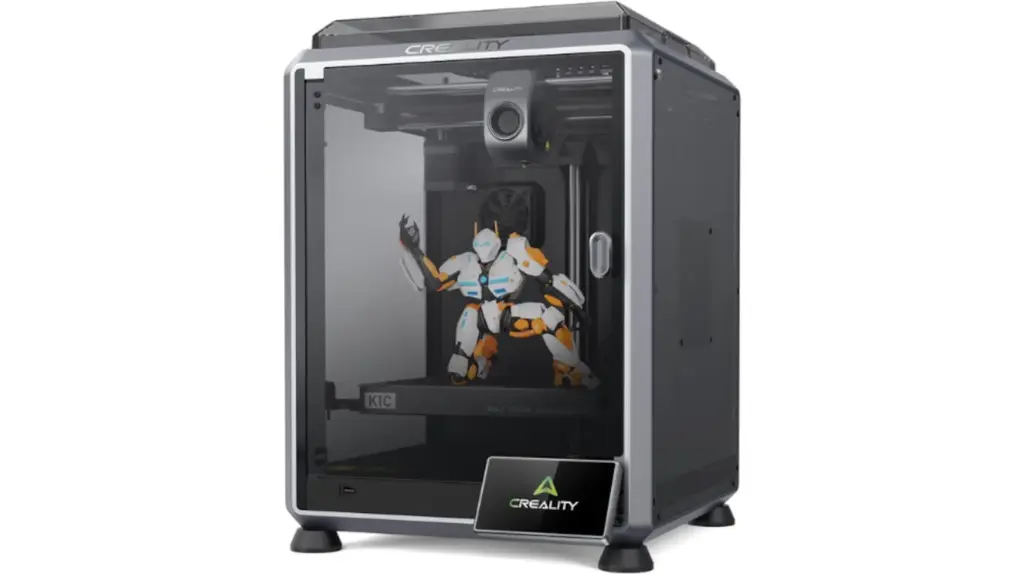
How does it work?
The main weakness of the Creality K1C 3D printer is the lack of advanced features that facilitate use. Although during tests it has proven to be fast and capable of working with different types of filament —including more demanding materials—, the experience is not as intuitive.
The large print volume is one of its strengths, as it allows tackling larger projects without limitations. In addition, WiFi connectivity and resistance to intensive use make it a solid option from a technical point of view. In this case, it performs well in the essentials.
However, elements that simplify the process are missing, such as a more advanced interface or more complete automation systems. This means that, in practice, it requires more user intervention.
In any case, it is a functional and reliable printer, especially for those who prioritize size and material compatibility. The problem is that it falls somewhat short in comfort and ease of use.
Why do we recommend it?
The best:
- FDM (Fused Deposition Modeling) printing technology.
- Compatible with Hyper-PLA, PLA, PETG, ABS, PLA-CF, and TPU filaments.
- WiFi connection.
- Large print format.
- Does not require dedicated software.
- Resistant to intensive use.
- Automatic shutdown due to overheating.
- Easy to clean and maintain.
To improve:
- No protective casing.
Frequently asked questions about 3D printers
Is it profitable to own a 3D printer?
The economic viability of this equipment depends on the specific use and the user’s production volume. For a hobbyist, real savings appear in repairing appliances or creating discontinued spare parts. In the professional field, the machine quickly amortizes its cost through rapid prototyping, as it eliminates the need for expensive industrial molds. The market offers very economical entry-level models that consume little electrical energy during operation. Therefore, the acquisition is beneficial if the owner designs their own objects and avoids buying expensive commercial solutions.
How much does one kilo of 3D filament yield?
The number of finished objects varies depending on the size of the part and the selected internal infill percentage. A standard one-kilogram spool of PLA allows the manufacture of about fifty chess figures with medium density. If the user prints hollow parts or with minimal support structures, the material is enough for hundreds of small units. It is vital to consider that the slicing software offers a precise calculation of the exact weight before starting the thermal process. Optimal use of the filament reduces waste and maximizes the efficiency of every euro invested in plastic consumables.
What is most profitable to 3D print?
The maximum profit lies in the production of personalized items or high-demand technical components in specific niches. Cases for electronic devices, ergonomic supports, and custom workshop tools have a market value far superior to their manufacturing cost. Likewise, the sector of miniatures for board games and exclusive decorative accessories generates notable profit margins. Printing cheap everyday objects, such as hangers or glasses, lacks financial sense compared to traditional mass production. The key to economic success lies in the exclusivity of the design and the resolution of specific technical problems.
*All purchase prices included in this article are updated as of April 28, 2026.
You can follow EL PAÍS ESCAPARATE on Facebook and Instagram, or subscribe here to our Newsletter.