









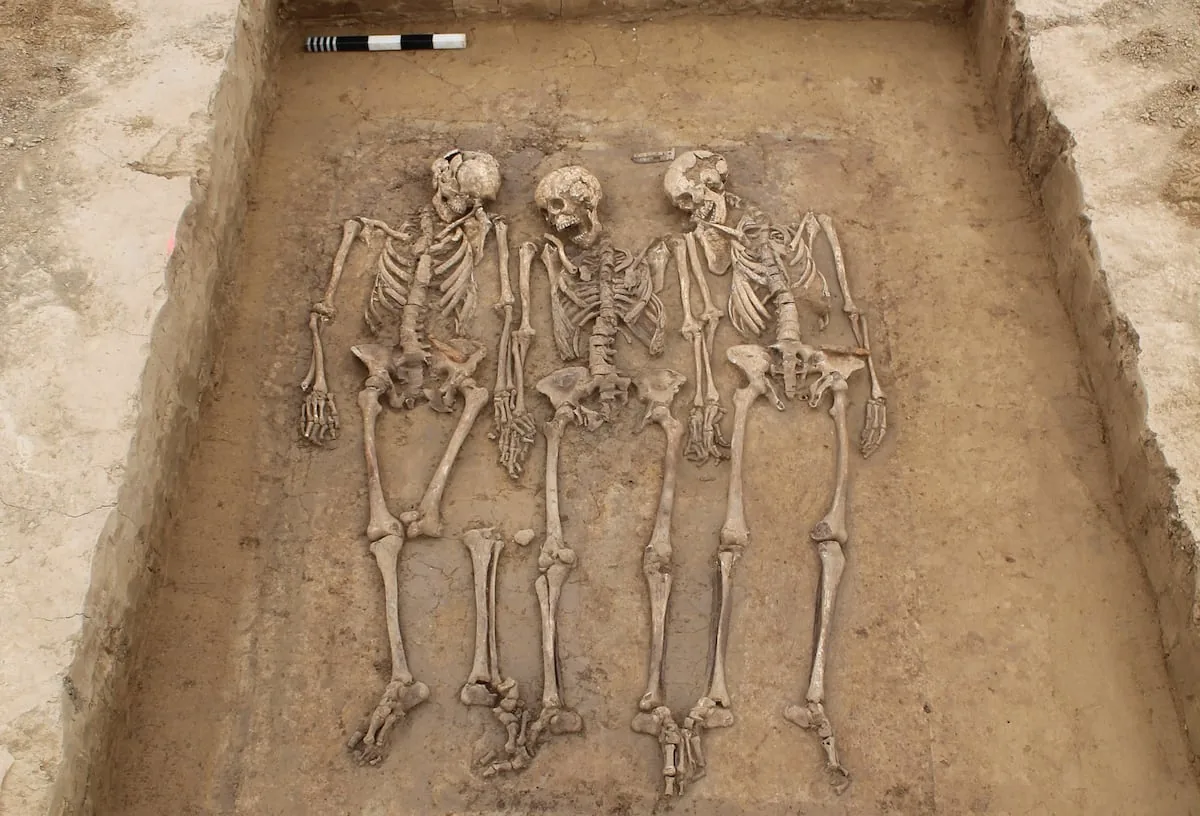
For centuries, along the entire northern border of the Roman Empire, local inhabitants coexisted with Roman citizens and their slaves, as well as the legionaries who guarded the limes, the imperial frontier. But there is no evidence that they mixed much. However, everything changed with the fall of Rome: the study of those buried in about twenty cemeteries in Germania shows that, without the empire of the lex romana, local inhabitants, citizens, slaves, and legionaries began to mix. The work, published in Nature, also tells how those families were, their life expectancy, or the orphanhood of the little ones at the beginning of the Middle Ages.
Read more The Supreme Court changes United States election rules with a decision that limits minority rights
“Before the fall of the Western Roman Empire, there were different social groups inhabiting the Roman territory,” says Professor Joachim Burger, geneticist at Johannes Gutenberg University Mainz (Germany) and senior author of the study, which is based on the analysis of the genome of hundreds of those buried along the Germanic border. “For the first time, we have genetically characterized both: one group had ancestors from northern Europe and probably lived as an endogamous minority in rural areas, working as agricultural laborers, possibly with lands assigned by the Roman administration,” he explains. The second group inhabited Roman cities, villas, and military settlements. “They represented almost all the genetic diversity of the Roman frontier, from Britain to the Balkans,” he details.
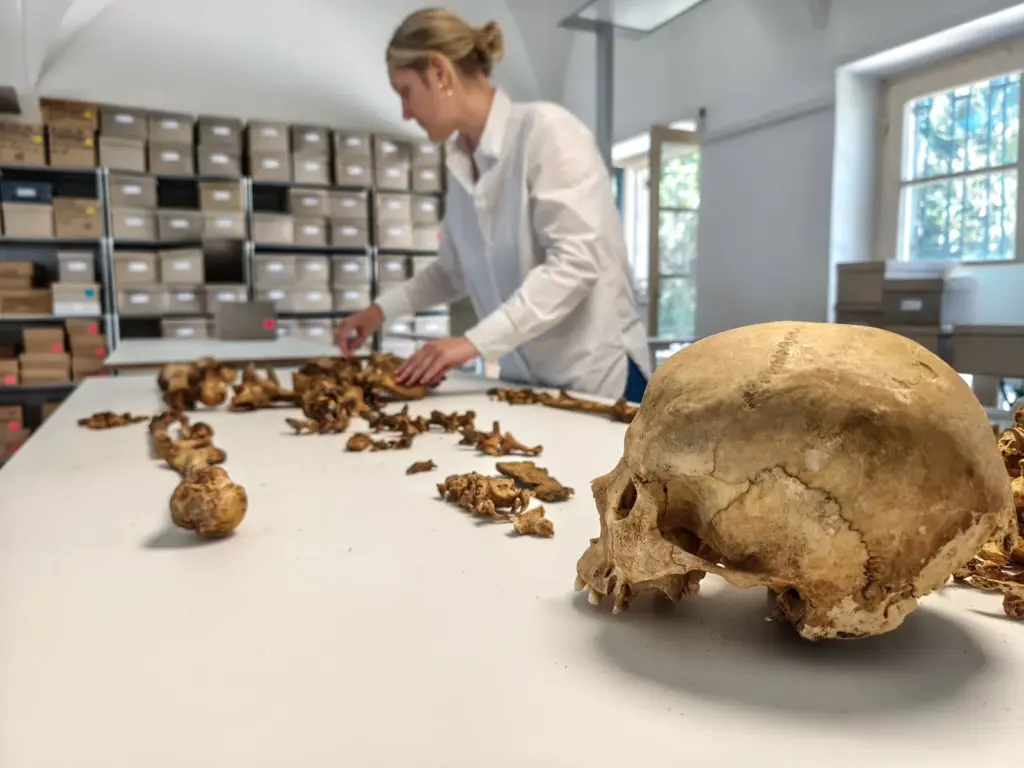
Combining genetic analysis with that of their bones, the grave goods of each tomb, the analysis of different isotopes in the remains, and other information from the various archaeological sites, they were able to mark the clear difference between before and after the Roman Empire. After the collapse of Roman state structures around the year 470 AD, the Roman group lost its institutional base. “Many had to find new homes and migrated throughout the territory, where they encountered peasants of northern ancestry. From the beginning, they started to mix,” Burger highlights.
In the Altheim cemetery, in the current district of Landshut, Lower Bavaria, they recovered bodies from the same year as the fall of the empire up to 620. They observe how the mixing grows over time. In the end, more than 3/4 of those buried there had northern European ancestry (about 34%), but also significant percentages of pedigree from central Italy (16%), the southeastern Roman territory, especially the Balkans (20%), and even northern Britain (about 9%).
Everything indicates that the imperial collapse burst the social structure from within and not the barbarian invasions. As soon as Rome’s power disintegrated, the Franks occupied the vacuum in southern Germania, where the study is focused. But its authors have found no genetic trace of their dominance. Moreover, their results dismantle the image of waves of barbarian invaders that ended up collapsing the Roman wall.
Read more Begoña Gómez will denounce Vito Quiles for an assault in a Madrid restaurant
“People from northern regions had already moved south in small groups long before the end of the Western Roman Empire and had gradually adopted Roman customs,” says Jens Blöcher, population geneticist also from Johannes Gutenberg University and one of the two first authors of the study, in a note. The northerners seem to have lived separately from the rest of the population, probably as agricultural workers, and tended to marry within their own groups, thus maintaining the genetic traces of their ancestors.
The other first author of the study, Leonardo Vallini, from the same university, adds that Roman administrative practices may have contributed to this separation. “Lands were often assigned to newly arrived groups under specific conditions, including marriage restrictions, to manage integration and maintain control,” he says. After 476, that legal and social framework burst.
Life expectancy of 40 years
The study has also allowed many demographic data from the beginning of the Middle Ages to be known. The infant mortality rate was high, but lower than it would be in later centuries. More boys than girls died: about 10 to eight before reaching seven years old. But in adults, the ratio reverses, probably due to the risk in childbirth, the authors point out. On average, men had a life expectancy of 43.3 years, compared to 39.8% for women. Today, it is the opposite.
Supported by genetics, the researchers were able to reconstruct family relationships. According to Burger, the rapid formation of families in both groups suggests a shared cultural framework. Long before the political end of the Roman Empire, both groups were already culturally connected through life within the imperial system. The arrival of Christianity may have intervened in this community of ideas. Burger, the senior author, explains: “The family structure we find in southern early medieval Germany faithfully reflects that of late Roman Antiquity. Since it was a fully Christian era, this pattern is essentially Christian.”