






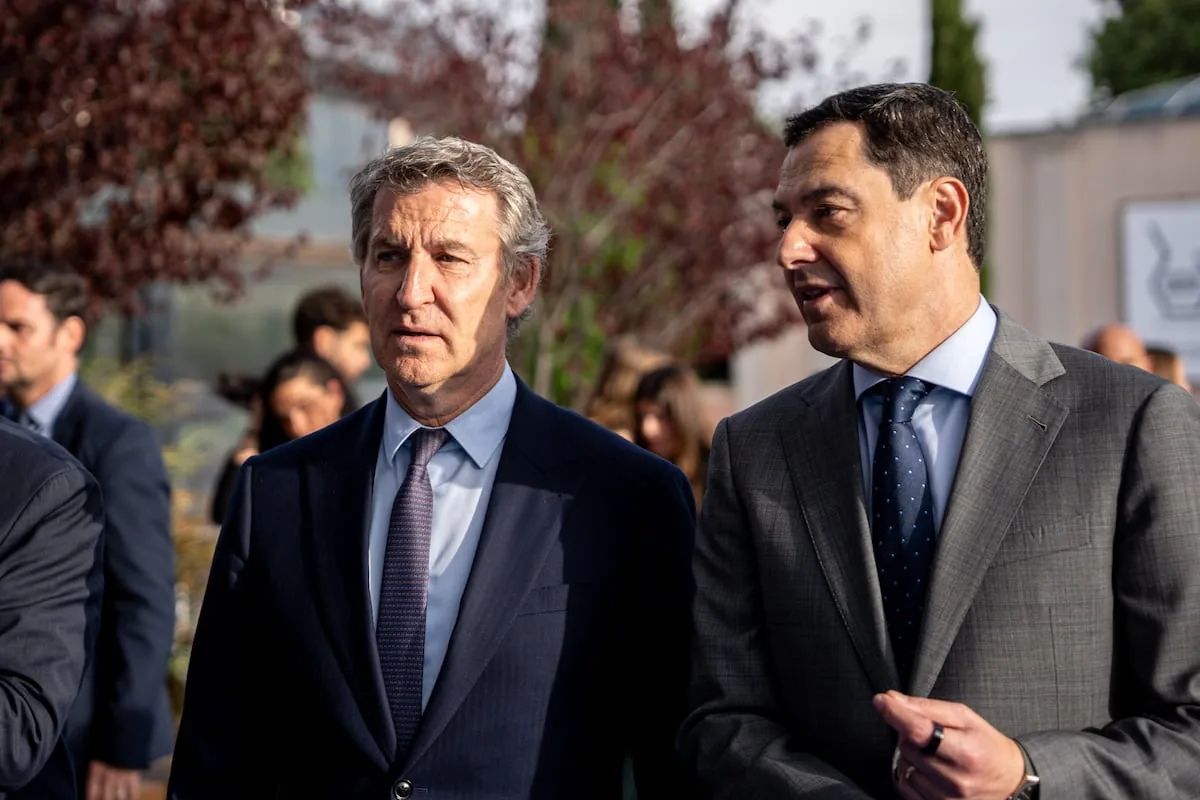
This Wednesday, during the last control session, when Alberto Núñez Feijóo had Pedro Sánchez in front of him in the only moment of the week when he can confront him, the leader of the PP focused on the doctors’ strike. Feijóo and the president will not have another face-to-face in Congress until after the Andalusian elections on May 17. The president of the Junta and also Génova have entered the health battle against the PSOE over the doctors’ strikes, which have increased waiting lists in some areas, blaming the delays on the Ministry. But the problem in Andalusia goes back further.
Read more The weather for the May Day holiday is marked by instability and storms
Waiting lists, along with the collapse of primary care, are two of the pending issues that Moreno has been dragging since he took office as president of the Junta just over seven years ago. During this time, despite the implementation of million-euro shock plans that include contracts awarded directly to private healthcare to refer patients, there has been little noticeable reduction in the number of patients waiting to be operated on or seen by a specialist, and the community remains at the top in terms of waiting time to enter the operating room or have an appointment with a specific professional.
The popular leader is aware that all his political rivals were going to focus the campaign on attacking his management in healthcare. The delays in waiting lists, overwhelmed since 2024, when after a year without publishing data, it was confirmed that more than 1.5 million Andalusians were waiting to be operated on or seen by a specialist, have been the main criticism of the mass demonstrations that Marea Blanca has been calling since November 2022. None of the shock plans have worked in these years, and neither has the million-euro investment in healthcare, 16 billion euros budgeted this year, served to tackle a problem that translates into a deterioration of care quality and the disenchantment of patients, who rate public healthcare the worst in the entire country. During all this time, there has been no doctors’ strike, and although the number of patients has been minimally reduced, waiting times remain well above the national average.
The latest data corresponding to December 2025 published by the Ministry of Health indicate that more than one million Andalusians (12% of the total population of the community) are on a waiting list (852,889 to see a specialist and 199,950 to enter the operating room), three times more than the national average in both cases. The inhabitants of this territory also take the longest to be operated on in all of Spain, almost six months (173 days), and are fourth, behind the Canary Islands, Navarra, and Aragón, in having to wait the longest to be seen by a specialist, four and a half months (136 days). In both cases, the deadlines are longer than six months ago (13 and 9 days).
Read more Queen Letizia advocates for the place of Roma women in the public space
To these problems was added last October the screening crisis after serious delays were detected in the diagnosis of these processes that have affected 2,317 women in Andalusia. This has been the main thorn in the side of Moreno’s two terms, whom all polls give victory, but with the doubt of an absolute majority on the next May 15. With that card on the table, the PSOE candidate and former vice president of the Government, María Jesús Montero, focuses much of her electoral message on attacking the Andalusian baron for healthcare management, accusing him of privatizing services while waiting lists are eternal.
But Moreno, instead of overlooking the healthcare issue, has decided to counterattack Montero and the rest of the political opponents by taking advantage of the doctors’ strike against the Minister of Health, Mónica García. Thus, during the presentation of the electoral program, on Monday in Antequera (Málaga), the popular candidate put numbers to the medical acts that had been left undone in the community in these months, 770,000, and the economic cost to Andalusian coffers: 100 million euros. He also reproached that citizens were going to hold the regional governments responsible for a problem, the statute of healthcare professionals, which is the competence of the central government. “From here I immediately urge her to sit down, negotiate, and end this situation that does so much damage to our healthcare system and for which we then have to face because citizens obviously are not here to know who is responsible. But if there is responsibility, it is with the one who does not have the capacity for dialogue nor the political will to sit down to negotiate to end a strike that is doing so much harm to our healthcare,” Moreno said.
Read more Much more than an iron: the Rowenta steam brush that also removes hair and lint (on sale today)