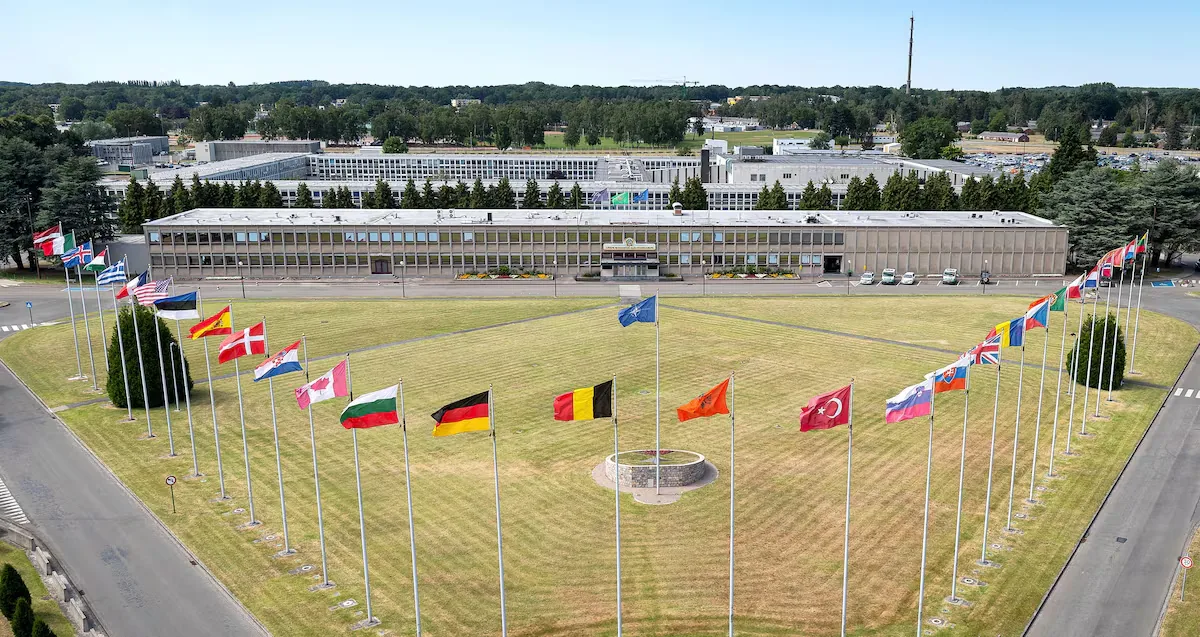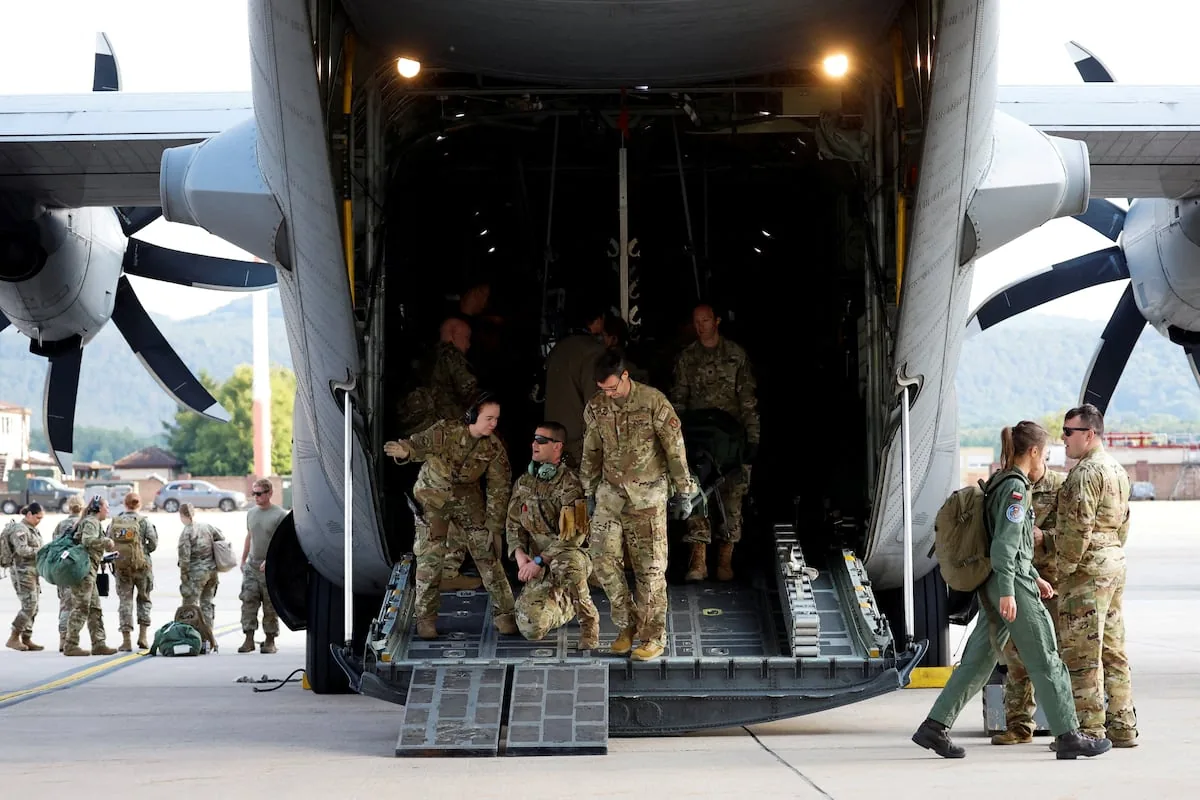






Germany’s Defense Minister, Boris Pistorius, highlighted on Saturday the strategic importance of the U.S. presence on German soil, following President Donald Trump’s announcement that he will withdraw 5,000 soldiers from the bases. “The presence of U.S. soldiers in Europe and especially in Germany serves our interest and that of the United States,” Pistorius emphasized. However, according to the minister, the measure “was foreseeable,” although he did not elaborate on that conclusion and downplayed the number of troops to be withdrawn. “Currently, we are talking about 5,000 U.S. soldiers out of a total of nearly 40,000 stationed in Germany,” he remarked.
Read more Mediapro begins a new phase after the closure of the ERE for 189 employees
NATO also said on Saturday that it is still “working” with Washington to learn the “details” of the announced “troop adjustment,” which for now has not been specified beyond the Pentagon’s intention to complete the withdrawal within the next six to 12 months.
Trump’s decision came days after German Chancellor Friedrich Merz stated that he considered Tehran to be “humiliating” the United States in the conflict. In a discussion with students, the German government head said Washington had “no strategy” and that “an entire nation” was being “humiliated” by Iranian authorities.
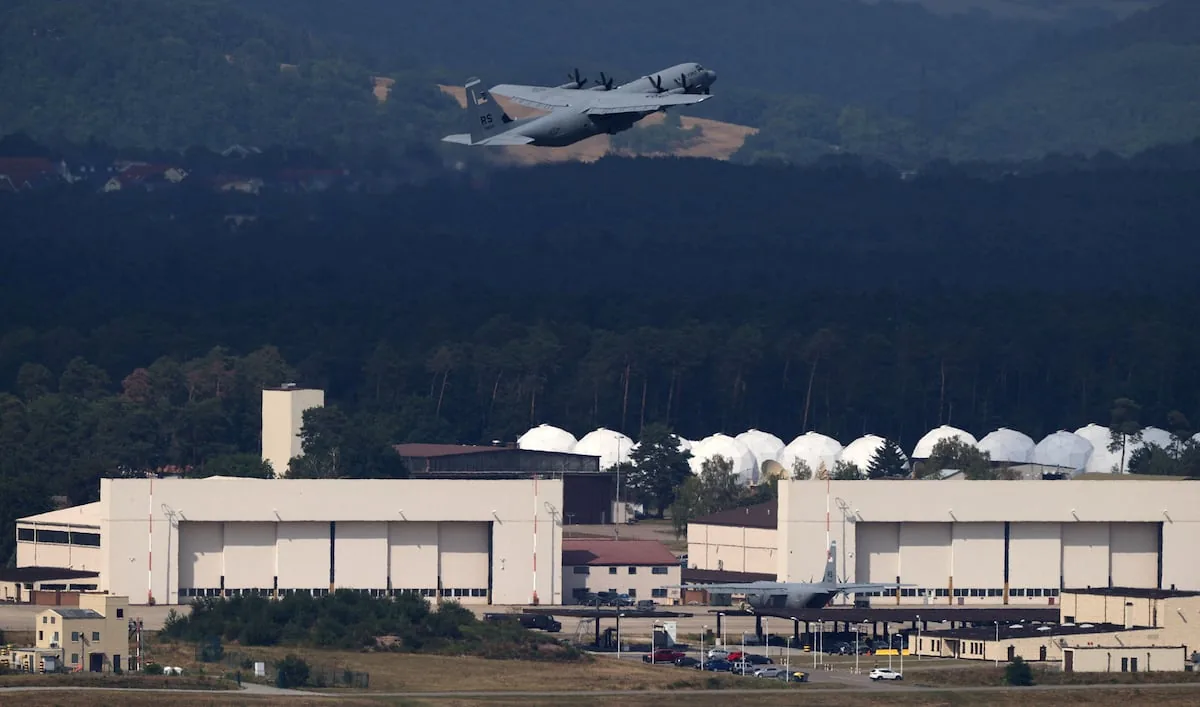
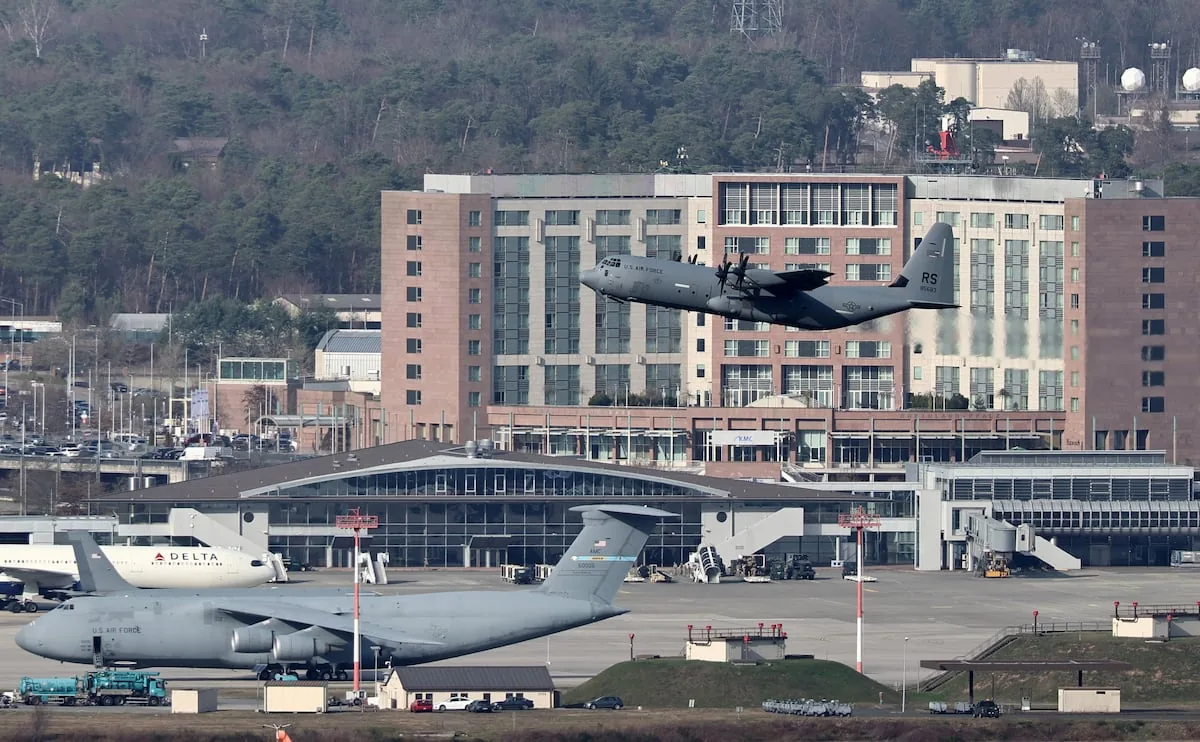
In response to Trump’s announcement, which also represents a new blow to NATO, Pistorius wanted to emphasize that military cooperation between the two countries will continue. “We work closely with the Americans, in Ramstein, in Grafenwöhr, in Frankfurt, and elsewhere, for peace and security in Europe, for Ukraine, and for joint deterrence,” said the Social Democratic minister. At the same time, he recalled that the U.S. armed forces in Germany are not only important for Europe, since from their bases, the U.S. also coordinates other military missions, for example, related to security policy interests in Africa and the Middle East.
According to U.S. military data, there are about 86,000 soldiers stationed in Europe, of which about 36,400 are in Germany. In total, the U.S. has 31 military bases called “persistent” — which it has used continuously for at least 15 years and over which it exercises some degree of operational control — in Europe (mostly in Germany, Italy, and the United Kingdom) and another 19 to which the U.S. Department of Defense has “access” on the Old Continent. Most are interoperable with NATO’s actions and needs, reports Macarena Vidal Liy from Washington.
These bases are of great importance for U.S. operations worldwide, and troops, weapons, ships, and planes are stationed there; drones are controlled, and the wounded are cared for. In Germany, among them are the U.S. European Command (EUCOM) in Stuttgart and the Ramstein Air Base in Rhineland-Palatinate, which serves as the nerve center of the U.S. Air Force. The United States maintains other important bases in Italy and Great Britain.
We are working with the U.S. to understand the details of their decision on force posture in Germany. This adjustment underscores the need for Europe to continue to invest more in defence and take on a greater share of the responsibility for our shared security – where we’re…
— NATO Spokesperson (@NATOpress) May 2, 2026
In the context of changes in the U.S. presence, Pistorius argued that the Alliance as a whole must reorient itself. “It is clear that NATO must be more European to continue being transatlantic,” he commented. “Europeans must take on more responsibility for our security,” he pointed out. According to the minister, Germany is on the right track, as the German Army “is growing, new equipment is being acquired more quickly, and important infrastructure is being expanded.”
Read more Worries of columnists: “My dream is to write a column that ends columnism”
An idea also emphasized by the Alliance itself. NATO spokesperson Allison Hart indicated that the organization is “working” with the United States to “understand the details” of the announcement. At the same time, however, she indicated that this announced “troop adjustment” “underscores the need for Europe to invest more in defense and take on a greater share of the responsibility for shared security,” referring in this regard to the agreement to increase defense spending to 5% of GDP by 2035 agreed at the Hague summit last June. “We continue to trust in our ability to guarantee our deterrence and defense as this process of moving towards a stronger Europe within a stronger NATO continues,” she added.
From Washington’s perspective, Germany was until now one of NATO and the EU’s top students, not only having committed to the Hague pledge to increase defense spending to 5% of GDP but also having initiated an internal process to triple its defense spending in the short term to 3.5% by 2029. Germany was also one of the countries that most pressured the European Commission to reach the trade agreement with Trump sealed last summer, which the American has now questioned again with his announcement — also very much aimed at Berlin and the powerful German automotive industry — that he wants to impose 25% tariffs on European car imports.
But Germany is not alone in facing Trump’s wrath. Besides Spain, the most repeated target of the Republican’s attacks in recent weeks, especially since Europe clearly told Washington that the war it unilaterally started with Israel against Iran — without consulting or informing its allies — “is not Europe’s war,” attacks against several European governments have multiplied, even with leaders until now allied such as Italy’s Giorgia Meloni.
Last week, just as EU leaders were meeting in Nicosia, Reuters leaked that the Pentagon was looking for ways to “sanction” “difficult” NATO allies who do not help in the conflict with Iran, such as Spain or also the United Kingdom. And this week, after lashing out at Germany for Merz’s criticisms and issuing the now fulfilled warning to withdraw troops from bases on German territory, he also extended the threat to Italy and Spain. “Italy has not helped us at all, and Spain [where there are two bases, in Morón and Rota] has been terrible; absolutely terrible,” he said, while again casting doubts on his commitment to NATO and efforts to support Kyiv against Moscow. “We have helped them with Ukraine, and when we needed them, they were not there to help us,” he lamented, reiterating a false complaint made by the only country that has invoked Article 5 in NATO’s history, after the 9/11 attacks, to which European allies responded immediately, with great human losses, as they reminded him earlier this year after Trump insulted the Old Continent again by saying allied soldiers had stayed “in the rear.”
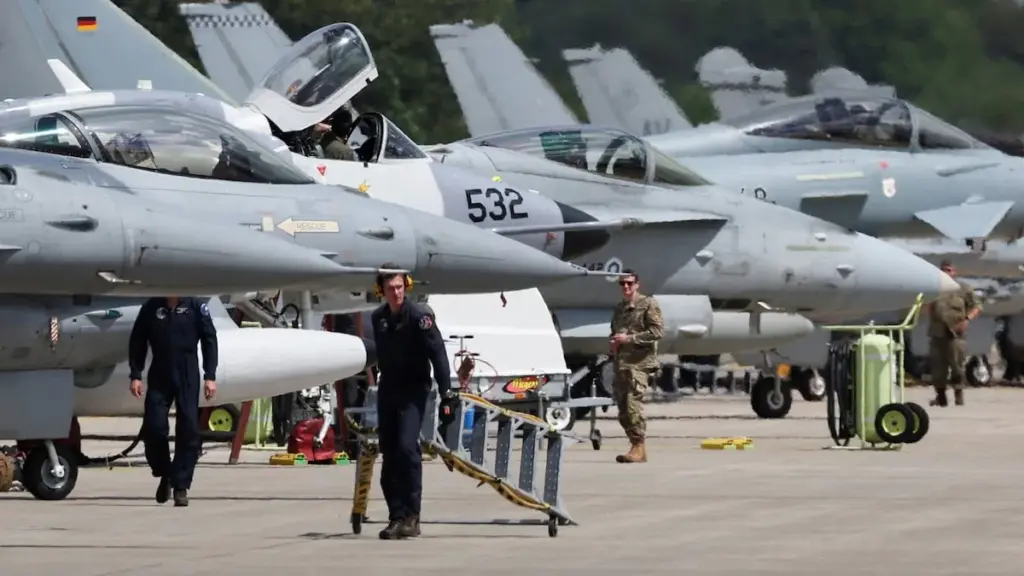
Jürgen Hardt, foreign policy spokesperson for the German conservative parliamentary group, has expressed concern about the announced withdrawal of 5,000 U.S. soldiers from Germany. According to his statement on the German broadcaster Deutschlandfunk, this somewhat undermines the common deterrence narrative that, as NATO partners, they remain united in Europe. “In the long term, U.S. troops would have to be replaced by European ones,” he indicated, but he believes Trump’s decision is motivated by domestic politics. “The legend is used that all the bad things that happen to the United States come from outside. The country is harming itself with this,” he said about something he believes many are “aware” of in the U.S., even on the Republican side. “The Ramstein base is very important for U.S. missions,” the politician emphasized.
U.S. soldiers have been in Germany since the end of World War II. The bases for stationing soldiers were, after the war ended, initially an occupation right as the other victorious countries had, France, the United Kingdom, and Russia. Then, in 1954, the Status of Forces Treaty was signed, which turned the occupation troops into allied defense forces. The treaty was confirmed with German reunification in 1990. Added to this are the NATO Status of Forces Agreements.
Trump had already threatened several times to withdraw soldiers from Europe. But in March, according to Chancellor Merz, Trump assured him during a visit to Washington that the U.S. wanted to maintain its military presence in Germany.
Read more Alma Guillermoprieto, at EL PAÍS Festival: “We are living the failure of the utopia of capitalism”